US Delivers 15-Point Ceasefire Proposal to Iran via Pakistan Amid Conflicting Signals on Peace Talks


US envoys have sent a 15-point ceasefire proposal to Iran via Pakistan, but Tehran has its own conditions.
Al Jazeera has confirmed that US President Donald Trump has issued a 15-point plan incorporating US and Israeli demands and proposals to end the ongoing war in Iran. This plan was delivered to Iran through Pakistan, which stated this week that it is ready to host peace talks.
Trump stated this week that there had been a 'very good and fruitful conversation' aimed at ending the war between Washington and Tehran. However, Iran has consistently denied that talks are taking place with the US. In response to Trump's claims, Iranian leaders have stated that America is 'talking to itself.'
As negotiations between Iran and the US were ongoing on February 28, the war initiated by the US and Israel has exacted a heavy toll. It has destabilized global energy and stock markets, obstructed shipping traffic, and caused humanitarian damage across West Asia.
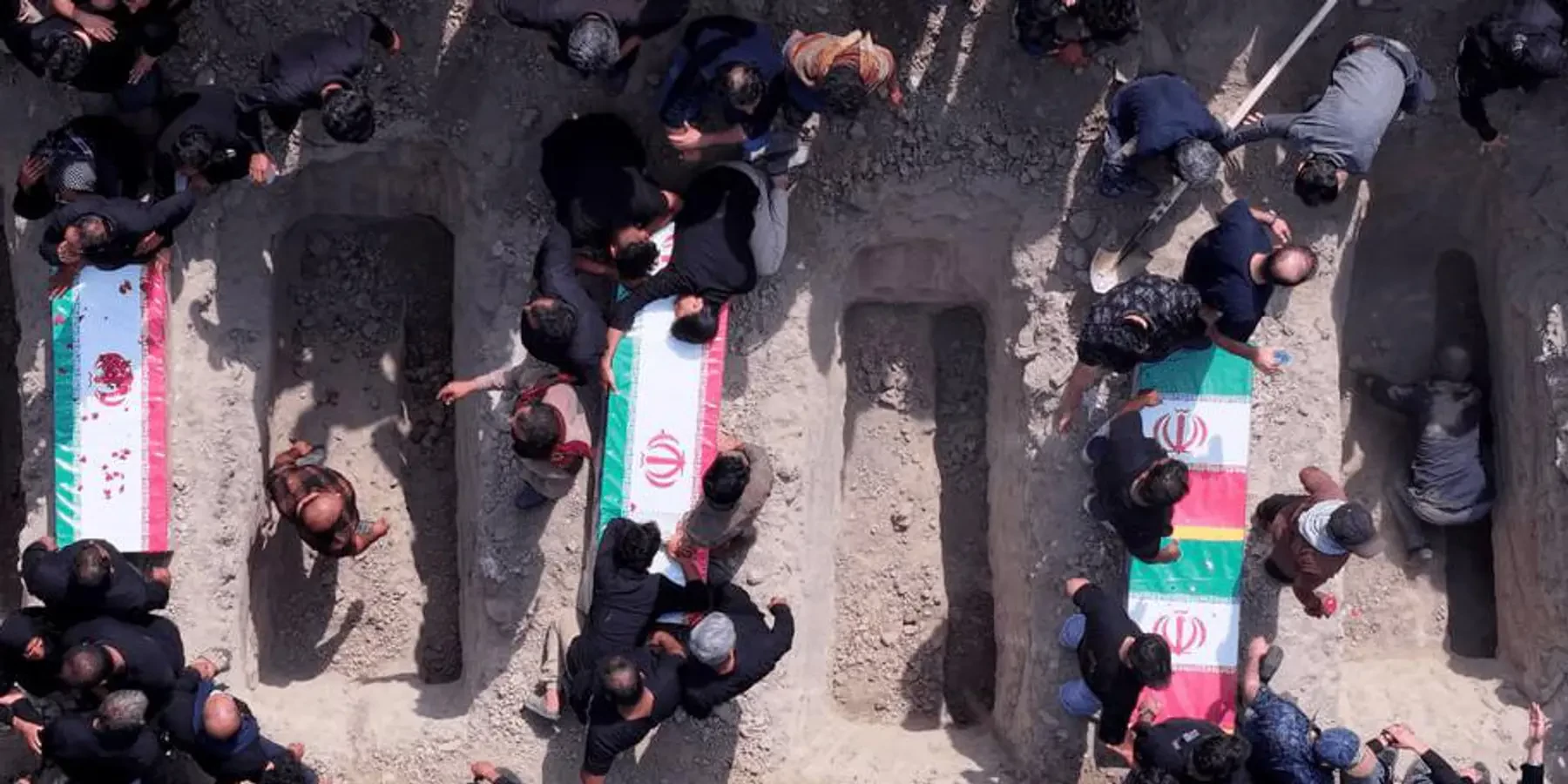
According to official figures from the Iranian Ministry of Health, 1,500 people have died and 18,551 have been injured in Iran alone as of Tuesday.
A few days after the US and Israel launched attacks on Iran, Iran's Islamic Revolutionary Guard Corps (IRGC) announced the closure of the Strait of Hormuz for shipping. Since then, it has begun allowing a small number of approved vessels, mainly flying Indian, Pakistani, and Chinese flags, to pass.
Furthermore, Iranian attacks on US military assets and energy infrastructure in the Gulf region have pushed oil prices above $100 per barrel, whereas the international benchmark Brent Crude was trading around $65 before the war.
Following the release of the Trump administration's 15-point ceasefire plan on Wednesday, global stock prices saw a slight increase, and oil prices dropped somewhat. However, observers say it is unclear whether talks are actually taking place, and even if they are, it is uncertain if they can reach a successful agreement given how divergent the demands of both sides are.
What is in America's 15-Point Plan?
As reported by Al Jazeera and US and Israeli media, the US has sent a 15-point peace plan to Iran via Pakistan, which includes negotiating terms for ending the war, including a one-month ceasefire while talks proceed.
John Hendren reported from Washington D.C. for Al Jazeera that Pakistan, Egypt, and Turkey are pressuring for a peace meeting between the US and Iran to be held in Pakistan's capital, Islamabad.

'While the US administration is preparing for peace talks, it is also preparing for war,' Hendren said, citing the expected deployment of about 3,000 US troops from the 82nd Airborne Division to West Asia.
None of the involved parties—America, Iran, Israel, or the mediating countries—have confirmed the detailed specifics of the 15-point plan. However, Israel's Channel 12 has released some details, claiming them to be the main points of the plan. Most proposals align with what the Trump administration has previously stated.
Some of the key points mentioned are as follows:
- A 30-day ceasefire.
- Dismantling Iran's nuclear facilities located in Natanz, Isfahan, and Fordo.
- Iran must make a permanent commitment never to develop nuclear weapons.
- Iran will transfer its stockpile of enriched uranium to the International Atomic Energy Agency (IAEA) and commit to allowing the IAEA to monitor all elements of the country's remaining nuclear infrastructure. Iran will no longer be allowed to enrich uranium domestically.
- Placing limits on the range and number of Iran's missiles.
- Ending Iranian support for regional rebel/proxy groups.
- Halting Iranian attacks on regional energy facilities.
- Reopening the Strait of Hormuz.
- Lifting all sanctions imposed on Iran, as well as ending the UN mechanism that allows for the re-imposition of sanctions.
- Providing US assistance for electricity generation at Iran's Bushehr civilian nuclear plant.
It is unclear to what extent Israel approves of the US talks with Iran. On Wednesday, Nida Ibrahim of Al Jazeera said, 'Israel agrees behind closed doors to the 15 points put forward by the US, but it is concerned about how many concessions President Trump will make to achieve them.'
'They fear that these 15 points might become a framework for potential negotiations, and that a one-month ceasefire might precede that... so President Trump might only get agreement on some of his points, not all of them,' Ibrahim reported.
- How have US demands changed since the war began?
Some demands—such as those related to Iran's nuclear program—remain the same.
During the 12-day war between Iran and Israel in June 2025, the US attacked the Natanz, Isfahan, and Fordo nuclear sites. These are uranium enrichment facilities where uranium can theoretically be enriched to a level capable of producing a nuclear bomb.
Under the terms of the Joint Comprehensive Plan of Action (JCPOA) that Iran made with other nations in 2015, Iran committed not to enrich uranium beyond civilian use and was subject to periodic inspections. However, Trump unilaterally withdrew the US from that agreement three years later.

The Bushehr power plant, which the US offered to support in its 15-point plan, is located about 750 kilometers south of Tehran. It is Iran's only commercial nuclear power facility and runs on uranium produced by Russia.
Other US objectives during the war appear to have shifted. While the US and Israel focused on Iran's nuclear program in last year's 12-day war, in the current conflict, they have been pressing for regime change in Iran.
On the first day of the war, February 28, Iranian state-run media confirmed the death of Supreme Leader Ayatollah Ali Khamenei in his office in Tehran.
A week later, Khamenei's younger son, Mojtaba Khamenei, was selected as Iran's new Supreme Leader, a decision Washington was reportedly unhappy with.
Following the appointment of the new Supreme Leader, Trump told NBC News, 'I think they made a big mistake. I don't know if it will last.'
However, the leaked 15-point plan makes no mention of regime change.
How has Iran reacted?
Iranian leaders claim that no talks of any kind are taking place between Washington and Tehran.
Iran's military leadership has stated that it cannot negotiate with the US, which has attacked Iran twice during ongoing talks over the past two years.
'Has the level of your internal struggle reached the stage where you [Trump] are talking to yourself?' said Ebrahim Jolfaghari, the top spokesman for Iran's Joint Military Command, mocking the US President on Iranian state TV on Wednesday.
'We can never get along with people like you. As we have always said... no one like us will make a deal with you. Not now. Never.'
Iran and Israel continued to attack each other on Thursday as well.

What are Iran's demands to end the war?
Although Iran's IRGC has made it clear it does not want to negotiate with the US, Iran has its own set of conditions for peace. On March 11, Iranian President Masoud Pezeshkian presented Iran's conditions for ending the war.
In a post on X, Pezeshkian stated that he had spoken with his counterparts in Russia and Pakistan and reaffirmed Iran's commitment to peace.
Pezeshkian wrote: 'The only way to end this war ignited by the Zionist (Israeli) regime and the US is the recognition of Iran's legitimate rights, payment of compensation, and firm international guarantees against future attacks.'
It is understood that Iran also wants all sanctions against it to be lifted.
In addition, Iran's state media outlet Press TV quoted an Iranian official over the weekend as saying that Tehran is demanding a new legal mechanism to close all US military bases in the region and to control transit through the Strait of Hormuz, which would formalize Iranian dominance over the waterway.
However, as Zaidon Alkanani of Georgetown University in Qatar told Al Jazeera earlier this month, this war has exposed some differences between the IRGC and Iran's political leadership.
Under economic and political pressure, President Pezeshkian has shown some readiness to negotiate an end to the war if Iran's demands are met, Alkanani said. But he added, 'For the IRGC, this is a fight for survival, and this security force seems ready to fight to the end to ensure that the US and Israel can never attack Iran again.'
'These differences and divisions (between the IRGC and political leaders) always existed before this war, but we feel them more now because the IRGC considers leading this regional war its right, which leads to many statements and stances contradicting President Pezeshkian's official statements,' Alkanani said.
Can talks happen, and what would be the main subject?
Some observers believe that Iran may be willing to talk on a limited basis.
On Tuesday, US broadcaster CNN reported, citing an unnamed Iranian source, that there was 'contact' rather than 'full negotiations' between the US and Iran.
According to the source, Iran is ready to listen to sustainable proposals brought forward to end the conflict. 'Iran is ready to give all necessary guarantees that it will never develop nuclear weapons, but it is entitled to the peaceful use of nuclear technology,' CNN quoted the source as saying, adding the further condition that sanctions must also be lifted from Iran.
Iran is one of the most heavily sanctioned countries in the world.
In 1979, the US-backed Shah was overthrown by the Islamic Revolution led by Ayatollah Ruhollah Khomeini, who returned from exile, and the country became an Islamic Republic following a referendum. The US imposed its first sanctions after the hostage crisis at the embassy in Tehran. This has affected the country's revenue, oil income, and aviation sector.
Therefore, experts believe that negotiations could be welcome as pressure mounts on Trump to end the war. However, they are cautious about predicting whether it will be successful.
'I see a 60 percent chance of negotiations for many reasons,' Iranian-American economist Nader Habibi told Al Jazeera on Tuesday.
Habibi noted that the cost of the war has been high for all parties. Trump is under pressure to control the war due to the impact on energy prices and stock markets from Gulf countries (which have faced Iranian attacks) and major economic partners.
He is also facing pressure from voters, whom he needs to appease before the US midterm elections scheduled for this November. Polls have consistently shown that most Americans do not support the war in Iran.
In addition to suffering humanitarian losses and major disruptions domestically, Iranian leaders are facing pressure from their neighbors to stop attacks on regional territory and energy infrastructure. Habibi added, 'Many mediating countries like Egypt, Saudi Arabia, Pakistan, and Turkey have succeeded in establishing communication channels with Iranian officials.' This, he suggested, paves the way for negotiations.
Israel and the United States had expected a short war, including regime change. But now they are revising their expectations and are aware of the high cost of a prolonged war, given Iran's capability to strike targets within Israel.
This specific news has been automatically translated by AI. As a result, there may be some inaccuracies or language errors.


_Yq85YOxh21.jpg)



_jqRIbYgb17.jpg)