Inquiry Commission Report Exposes National Investigation Department's Failure During Gen Z Protests


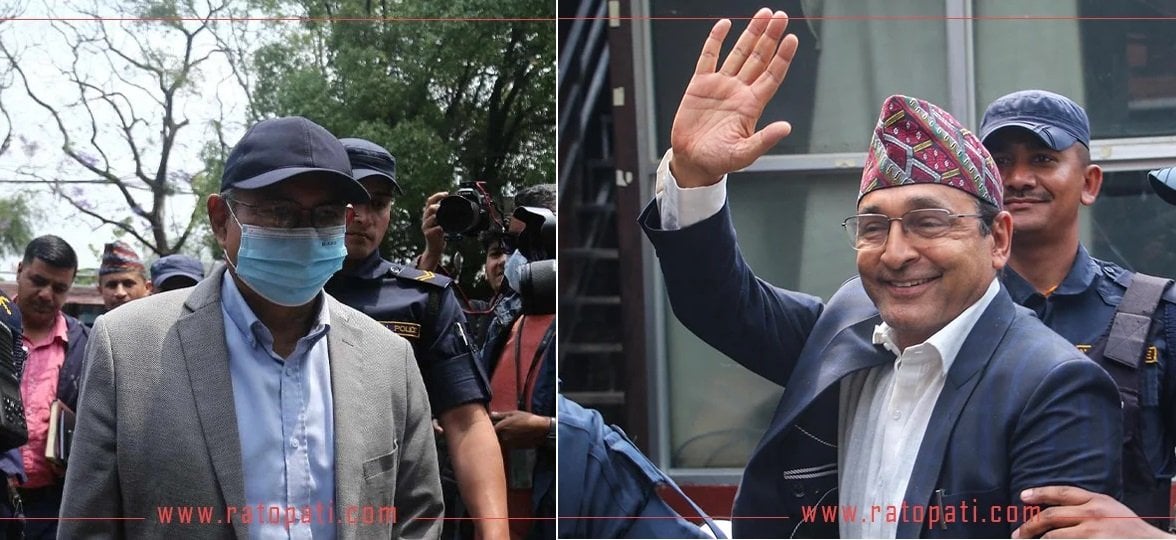
The report from the inquiry commission has exposed the fact that the National Investigation Department (NID), considered the eyes and ears of the state, completely failed during the Gen Z movement. The commission concluded that the country suffered irreparable loss of life and property because the then chief of this organization, Hutraj Thapa, who holds the main responsibility of identifying, analyzing imminent threats to national security, and alerting other security agencies in time, failed to perform his official duties.
It appears that the protests on Bhadra 23 and 24 escalated because the intelligence agency, which is considered the backbone of any country's stability, provided superficial and incorrect data instead of issuing prior warnings of potential threats. Based on the NID's erroneous assessment that only 3,000 to 5,000 protesters would gather on the streets of Kathmandu on Bhadra 23, other security agencies formulated their security plans.
According to the statements given to the commission by the Chief District Officer and police officials of Kathmandu, this incorrect information from the department led to lax security preparations. The report concludes that the vast difference between the actual number and the department's assessment clearly exposed Hutraj Thapa's professional weakness. Although Thapa attempted to evade responsibility by blaming the limitations of the internal mechanism for information gathering and the lack of cyber technology, the commission determined that as the head of a sensitive organization, he could not hide his shortcomings.
Thapa claimed to have only general knowledge about the Gen Z Movement, citing the lack of technology and skilled manpower to track social media activities in the modern era as an excuse. However, the confirmation that the intelligence chief abandoned his professional duty is evident from his failure to even conduct a basic monitoring of the intense activities occurring on open sources like TikTok, X, and YouTube.
More seriously, on the night of Bhadra 23, when the government lifted the ban on social media without consulting security agencies, Thapa remained silent instead of alerting the government to the severe security challenges that might arise. Adhering to the government's arbitrary decision created an environment for nationwide violence and looting on Bhadra 24.
The situation of intelligence officers working in districts outside the Kathmandu Valley was found to be even more dire. During on-site monitoring, the commission observed an extreme lack of proper training and morale among district-level officers. The failure to keep the subordinate mechanisms efficient and functional was another major failure of Thapa as the organization's chief. Remaining oblivious to the growing dissatisfaction among youth across the country and the mobilization happening through digital platforms suggests that the National Investigation Department has been reduced to a mere formality.
In conclusion, the failure of a crucial body like the National Investigation Department to accurately assess the situation and its extreme negligence in information gathering prevented other state organs from formulating strategies. As a result, there was significant loss of life and property on the streets on Bhadra 23 and 24, and national heritage sites were set on fire. The commission concluded that if Department Chief Hutraj Thapa had demonstrated professionalism in time and provided correct advice to the government, such a massive loss of life and property would not have occurred.
This specific news has been automatically translated by AI. As a result, there may be some inaccuracies or language errors.