Commission Report on Citizenship Movement Clashes Yet to Be Publicized Despite Demands


Kathmandu. The report of the commission formed to investigate the crackdown during the Citizenship Movement on Bhadra 23 and the subsequent vandalism on Bhadra 24 has not been made public, even though it has been submitted to the government.
Representatives of the Citizenship Movement and various political parties are demanding that the government publicize the report. However, the government has been avoiding its publication, citing that the report is still under study.
Former Attorney General and senior advocate Mukti Pradhan states that the public has the right to know the contents of the investigation commission's report in accordance with the spirit of the constitution.
'Everything remains open except for matters that must be kept confidential even in court,' he said, 'This is just the report of the investigation commission formed to probe the incidents during the Citizenship Movement; there seems to be no reason not to publicize it.'
Senior advocate Pradhan is of the view that publicizing the report shows transparency rather than keeping it shelved.
Pradhan stated that failing to publish the report concerning serious human rights violations could change how Nepal is viewed on the world map. The first investigation commission's report must be made public. Once the report is public, the process of implementation moves forward. After the report is made public, the government must convene a cabinet meeting and make a decision for its implementation.
How is the report implemented?
After reviewing the investigation commission's report, if matters requiring further investigation are identified, a decision on whether to file a case or not should be made to move forward. For this, the government must issue directives according to Nepal's existing legal provisions and procedures. The relevant bodies decide whether to prosecute or not once the file reaches them.
According to senior advocate Pradhan, the commission only provides suggestions and recommendations to the government; it points out the wrongdoings. In terms of implementation, the government can make a decision and direct the Office of the Attorney General and the investigating body, the police.
If the commission has identified specific individuals as guilty, further investigation must be conducted to clarify the reasons for their guilt. The commission does not designate plaintiffs and defendants. The government lawyer's office files the case, designating plaintiffs and defendants based on the investigation report submitted by the police.
Does the investigation commission's report go directly to implementation?
Senior advocate Mukti Pradhan states that the work of regular criminal investigation and the fact-finding conducted by the investigation commission are fundamentally different. He believes that a criminal case (allegation of murder) against any individual must be initiated by following the criminal procedure from the beginning. 'A case cannot proceed solely based on the report,' he said, 'The police must advance the criminal investigation.'
Pradhan explains that the existing law concerning government cases assigns the responsibility of investigation to the police and the responsibility of prosecution to the Attorney General or the government lawyer designated by him. He states that filing a case through any other means, bypassing that process, is not possible.
Criminal investigation proceeds only after examining facts and evidence
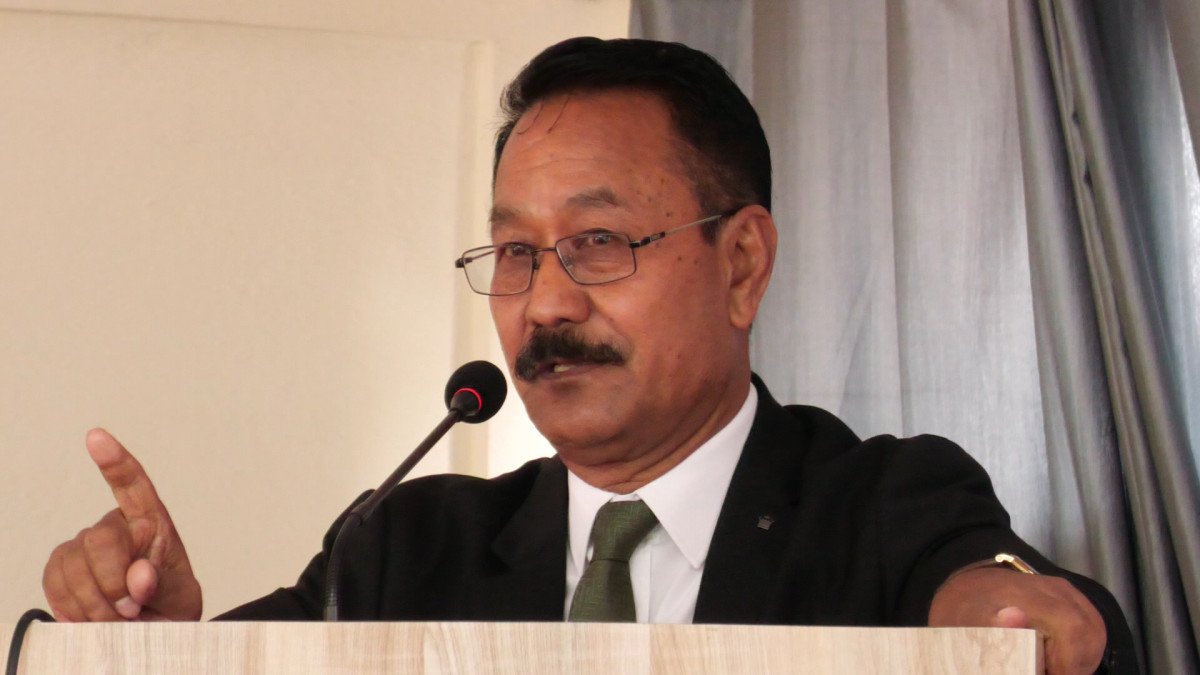
Senior advocate Rajupasad Chapagain states that the state must advance investigation and action to the relevant bodies based on the facts and evidence collected by the commission. He notes that there is no legal provision for any case to proceed solely based on the commission's report, nor has there been such a practice so far.
'The commission only investigates the facts and collects evidence, so it can only suggest, 'These individuals are guilty, investigate and proceed with action',' he said, 'For prosecuting the guilty, an investigation is conducted, and the case is registered in court under the criminal justice system. If further investigation is necessary, the police can also investigate.'
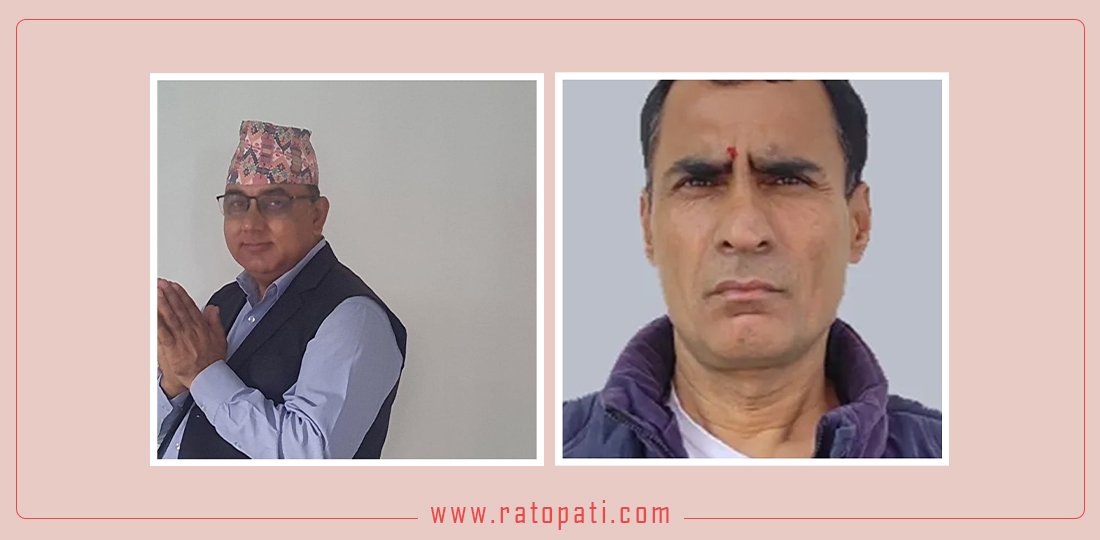
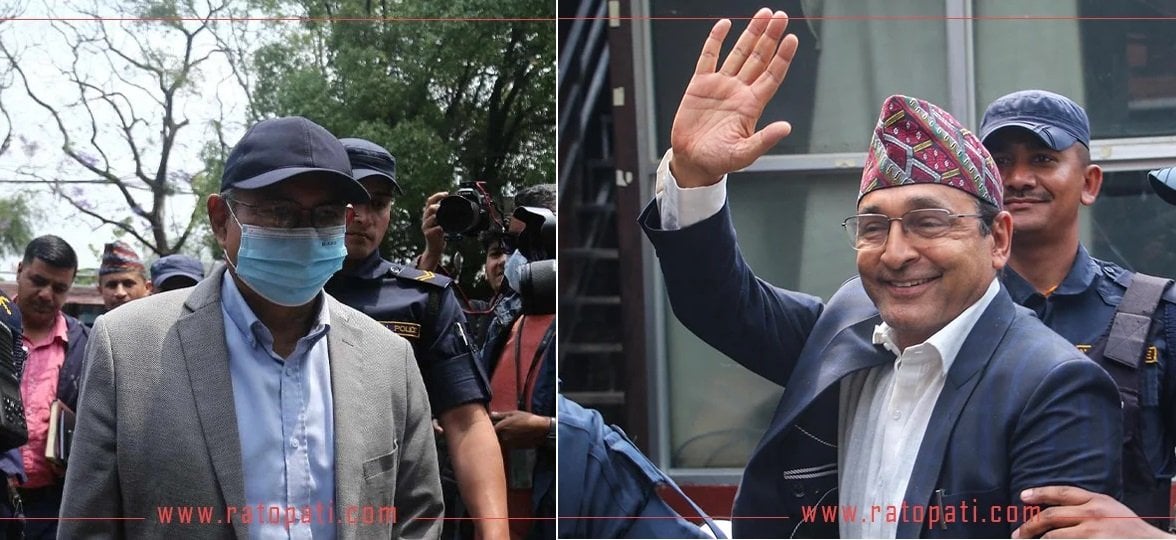
Will cases be filed against Oli, Lekhak, and Khapung based on the Karki Commission's report?
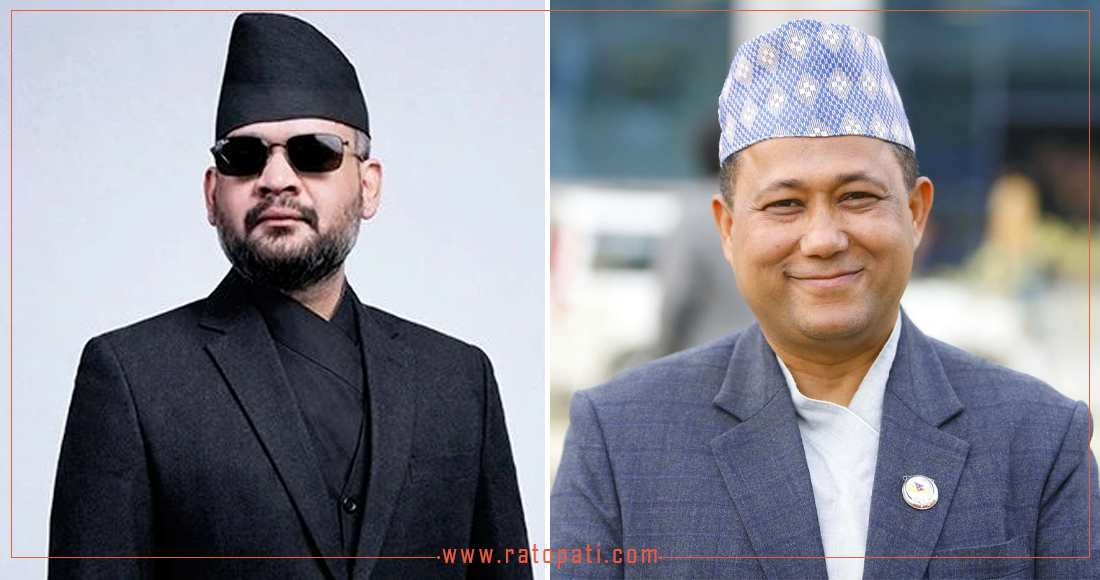
The investigation commission has submitted a report to the government recommending sentences ranging from 3 to 10 years for then-Prime Minister KP Sharma Oli, Home Minister Ramesh Lekhak, then-Inspector General of Police Chandrakuber Khapung, and others involved in the crackdown on the Citizenship Movement, under criminal offenses. However, the report has not yet been made public.
Legal experts state that one should not assume the report will be implemented immediately upon submission to the government. They suggest that the government must publicize the report and then direct the relevant bodies for its implementation.
According to legal experts, an investigation commission cannot declare any individual guilty, but it can recommend action by holding them accountable for their roles. The recent Karki Commission report recommended action against then-Prime Minister Oli, Home Minister Lekhak, and Police Chief Khapung. They argue that the process of action should move forward according to the regular procedure after examining the data, details, and analysis of the incident collected by the commission.
Previously, the Supreme Court interpreted in the case of former Chief of the Commission for the Investigation of Abuse of Authority (CIAA), Lokman Singh Karki, that the report of an investigation commission could not be meaningless. The Supreme Court interpreted that although the government is not legally bound to follow and implement the report, it must be accountable for the issues highlighted in the report.
Senior advocate Chapagain states that there is a legal provision that a case cannot be directly registered in court based solely on the report and recommendations prepared by any investigation or inquiry commission. Except for the CIAA, the reports of other investigation commissions must mandatorily complete the process of criminal investigation and prosecution for implementation.
Recommendations made by bodies such as the Truth and Reconciliation Commission, the Tax Settlement Commission, or the National Human Rights Commission are treated like a 'First Information Report' (FIR) lodged with the police. Such commissions cannot initiate cases themselves. After receiving the commission's report, the police must re-investigate the incident and proceed with filing the case through the government lawyer's office, which is the procedural arrangement.
Hearings will take place in regular courts
Chapagain states that cases of all natures, except transitional justice (incidents during the armed conflict), will proceed through the regular court system. He mentioned that a special court is arranged only for conflict-era cases, while other cases go through district and high courts following the regular process.
The same process will apply to over a thousand security personnel and other employees found guilty in the reports of various commissions. Prosecution will only proceed after the Police's Crime Investigation Department conducts further investigation under the direction of the Attorney General's Office. Experts emphasize that the government cannot grant impunity to individuals found guilty in the commission's report without investigation, and if it chooses not to file a case, there must be sufficient legal and factual basis for it.
It is not mandatory to arrest former prime ministers, home ministers, or high-ranking officials when bringing them under investigation, but the police retain the authority to take them into custody at any time if it appears that the individual might flee, destroy evidence, or obstruct the process during the investigation. 'Arrest is not the beginning of an investigation; it is only a necessity of the investigation,' said senior advocate Chapagain, 'Publicized commission reports clarify the facts, and based on those, there appears to be a legal pressure on the government to proceed with action.'
Were reports of past investigation commissions implemented?
It is found that reports of all past investigation commissions have not been implemented. Following demands for action against those suppressing the popular movement, an investigation commission was formed on Jestha 9, 2047 BS, under the chairmanship of then-Chief Justice Janardanlal Mallick. The commission began its work on Ashar 10, 2047 BS. The commission members included then-judges Udayaraj Upadhyay and Indraraj Pandey.
The commission was given four responsibilities: to investigate the loss of life and property from the popular movement from Falgun 7 to Chaitra end, 2046 BS; to determine whose fault caused the loss of life and property; and to submit a report assessing what actions the government should take during the popular movement.
Although the commission submitted its report after six months of study, the report has not been implemented to this day. The report had held former Prime Ministers Marichman Singh Shrestha and Lokendra Bahadur Chand, then Chairman of the Panchayat Policy and Investigation Committee Navraj Subedi, then-State Ministers Kamal Thapa and Niranjan Thapa, and leaders Pashupati Shamsher JBR and Sharad Singh Bhandari, among others, responsible for suppressing the movement that restored democracy. However, the report was not implemented.
Instead, those held responsible by the Mallick Commission repeatedly reached high positions in the country and participated in governance.
The second popular movement took place in 2062/063 BS. 25 people died and over four thousand were injured in the movement. Alleging a crackdown during the movement, an investigation commission was formed under the chairmanship of former Supreme Court Justice Krishna Jung Rayamajhi. Members included former Chairman of the Federation of Nepali Journalists Harihar Birahi, former Vice-Chairman of the Nepal Bar Association Ramprasad Shrestha, advocate Ramkumar Shrestha, and then-General Secretary of the Nepal Medical Association Dr. Kiran Shrestha.
The report, prepared by the commission after seven months, was submitted to the government on Kartik 30, 2063 BS, but that report was also not implemented. The report held 31 individuals who were in government from Magh 19, 2061 BS, to Chaitra end, responsible. The report suggested enacting laws to take action against everyone from Deputy Prime Ministers to Assistant Ministers during that period.
Those involved in suppressing the popular movement were later given political responsibilities. Lokman Singh Karki, accused of playing a role in suppressing the popular movement, was removed from his post as CIAA Chief due to ineligibility, in which the investigation commission's report also played a role. Among the investigations into the crackdown and human rights violations during the popular movement, some have yielded positive results, while others' reports are gathering dust in drawers.
This specific news has been automatically translated by AI. As a result, there may be some inaccuracies or language errors.