Nepal's Local Governments Grapple with Severe Administrative Officer Shortage Amidst Political Transition

Kathmandu. On Chaitra 13, Nepal is set to welcome Balen Shah (Balen) as its new Prime Minister. Following the CPN-UML movement, the interim government formed will facilitate elections, after which the Rastriya Swatantra Party (RSP) is poised to form a 'comfortable' government with nearly a two-thirds majority.
Balen, who contested the elections after resigning from his post as Mayor of Kathmandu Metropolitan City, is set to become Prime Minister following elections rooted in the CPN-UML movement demanding an end to corruption and good governance. Significant attention is being paid to how Balen, having led a local government, will address the issue of Chief Administrative Officers (CAO), a problem most acutely faced by local governments.
Balen is well aware of the CAO problem from his tenure as the Mayor of the Metropolis. However, even as the second local level elections have concluded and half the term has passed, the shortage of CAOs remains unresolved. Politicians who have led local levels expect Balen to take this issue seriously.
Running on 174 Acting Officials
As Balen prepares to become Prime Minister, 174 local levels across the country are operating under acting officials. Looking at the local governments, which represent the concept of 'Durbar (Palace) in every village' envisioned by the Constitution of Nepal, the lack of staff is a perennial problem. As of Chaitra 10, according to the Ministry of Federal Affairs and General Administration, the post of CAO is vacant in 174 local levels out of 753 nationwide, which is nearly a quarter of the total.
According to the statistics from the Ministry of Federal Affairs and General Administration, only 579 local levels have permanent appointments, while all remaining municipalities are forced to operate under acting or temporary officials. Consequently, everything from development construction to daily administrative tasks has been severely affected.
Permanent CAOs at the Under-Secretary level have been appointed in the six Metropolitan Cities of the country. The situation in Sub-Metropolitan Cities down to Rural Municipalities is dire. Six out of the eleven Sub-Metropolitan Cities lack a CAO, a position designated for a Joint Secretary level official from the Government of Nepal. With major and populous Sub-Metropolitan Cities lacking leadership, the implementation of large projects and policy decisions in those areas has stalled.
The situation in Municipalities and Rural Municipalities is even more critical. Out of 276 Municipalities nationwide, 90 have vacant posts for CAOs at the Deputy Secretary level, meaning nearly 33 percent of municipalities are currently running on acting officials. Similarly, 78 posts for Branch Officers are vacant in 78 out of 460 Rural Municipalities. In some of these municipalities, lower-level staff have been given acting responsibilities, while in others, staff from neighboring municipalities are forced to handle dual responsibilities. This staff shortage directly impacts budget expenditure, plan formulation, and service delivery at the local level, ultimately affecting ordinary citizens, local bodies have stated.
Madhesh Province Suffers Most from Staff Shortage
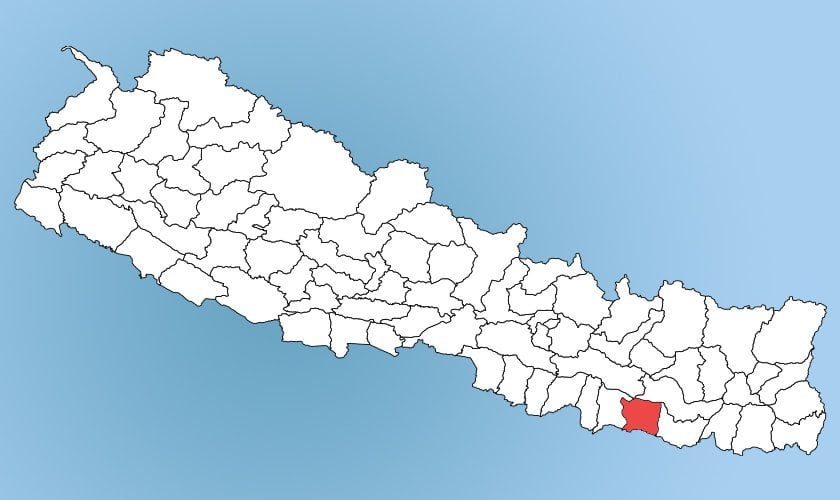
An analysis based on provincial distribution shows that Madhesh Province is suffering the most from the staff shortage. Out of 136 local levels in Madhesh, 57 do not have a CAO, which is the highest number in the country. The fact that 47 out of 63 municipalities in this province lack staff according to their sanctioned positions indicates how sluggish the administrative machinery of this province is. The rate of vacancies is also high in geographically remote provinces like Sudurpashchim and Karnali.
Out of 88 local levels in Sudurpashchim, 34 posts are vacant, and out of 79 in Karnali, 32 posts are vacant. In contrast, Bagmati and Gandaki Provinces, which are geographically more accessible, show comparatively higher attraction for employees, where the vacancy rate is significantly lower. This demonstrates that the old trend of employees preferring to stay in accessible, capital-centric areas and avoiding remote postings persists even under federalism.
No Heads in District Coordination Committees Either
Not only CAOs, but the vacancy of staff is equally challenging in District Coordination Committees and even within the Ministry itself. The post of District Coordination Officer is vacant in 24 out of 77 District Coordination Committees, and 23 Branch Officer positions remain unfilled in the Ministry of Federal Affairs itself. The absence of staff at the local level severely impacts not only daily operations but also financial discipline and accountability. Municipalities running on acting officials always face the risk of increased financial irregularities and the inability to make long-term decisions. Although the government talks about staff adjustment and new recruitment, geographical remoteness and employee reluctance are deepening the gap between accessible and remote areas.
Staff Shortage as a Chronic Disease
This problem is not new; rather, it has become a chronic disease. Even at the sensitive time of presenting the budget for the current fiscal year 2082/83, 201 local levels were without a CAO. In the first week of Ashadh, when municipalities are supposed to formulate their annual budgets and policies and programs, a large number of staff were absent from the Metropolis down to the Rural Municipalities.
Due to the lack of expert administrative leadership in technical and legal processes like budget formulation, there are numerous instances where many municipalities selected plans haphazardly and violated financial discipline.
Efforts made for staff management have also failed due to political instability and movements. Previously, the Minister for Federal Affairs and General Administration, Bhagwati Neupane, attempted a large-scale transfer and posting of staff with the resolve not to leave any municipality without leadership. However, before her plan could be implemented, the CPN-UML movement and the subsequent political equation change led to the fall of the government.
Problems with Both Representatives and Staff
According to ministry officials, both staff and elected representatives are responsible for the lack of staff at the local level. On one hand, employees are unwilling to leave Kathmandu and accessible areas, while on the other hand, representatives in some local levels do not allow employees sent from the center to report for duty. A trend has emerged where municipalities prefer to keep lower-level staff as 'acting' officials who work as their preferred or 'yes men'. Officials are hesitant to go to local levels due to the pressure exerted by representatives to make decisions against the law in some instances, and the fear of being unable to withstand such pressure.
Problem at the First Point of Contact
In Nepal's federal structure, the local government is the first and closest point where citizens feel the presence of the state. However, the lack of staff at this very point is weakening the essence of federalism. Not only CAOs, but many municipalities also lack Accounts Officers, which adds a major challenge to financial transparency.
Despite repeated appeals from organizations like the National Rural Municipalities Federation and the Nepal Municipalities Association to the federal government, a sustainable solution to this problem has not been found. Bhim Dhungana, Chairman of the Municipalities Association, says, 'Instead of strengthening local governments, the government is being negligent by not sending staff. This is obstructing overall service delivery.'
This specific news has been automatically translated by AI. As a result, there may be some inaccuracies or language errors.
_fjMKnvPt3r.jpg)