Minister Kumar Ingnam Reflects on Tenure, Calls Himself 'History's Most Failed Minister' in 'Warpar' Interview

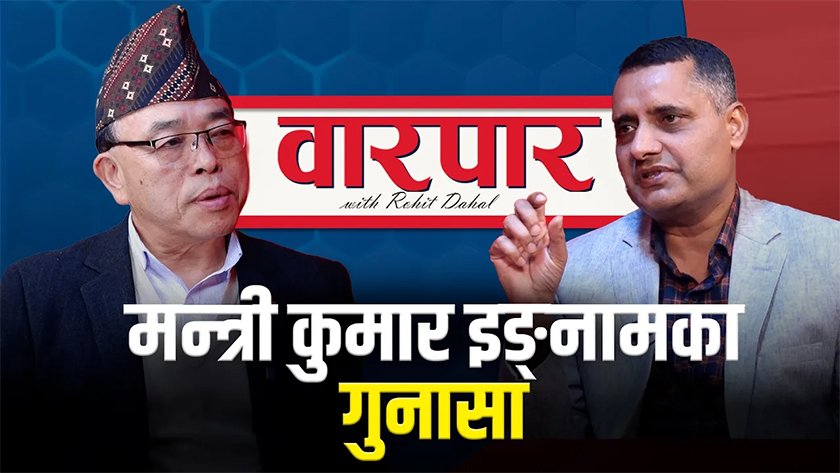
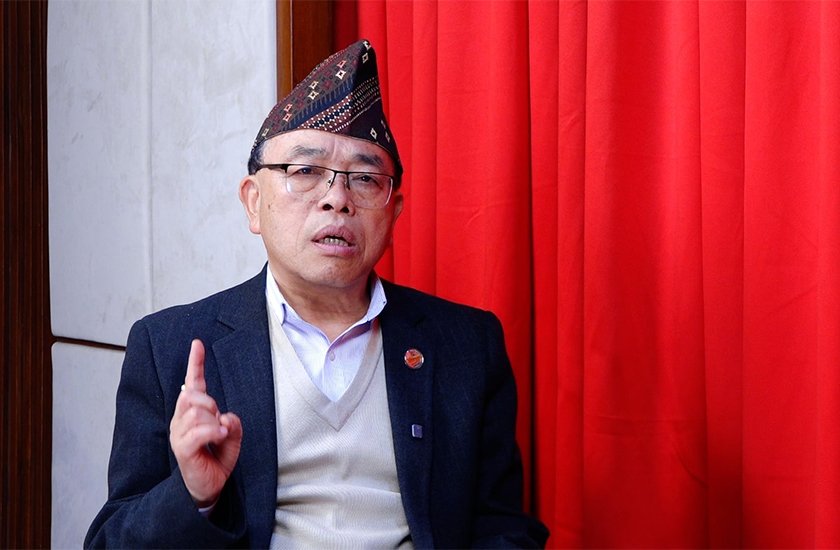
Kathmandu. Prof. Dr. Kumar Ingnam is the Minister for Land Management, Cooperatives, and Poverty Alleviation in the caretaker government. Known for his straightforward nature, he tends to be 'reactive' to things he disagrees with. An elected government is set to take charge in a few days, marking the departure of the interim government led by Sushila Karki.
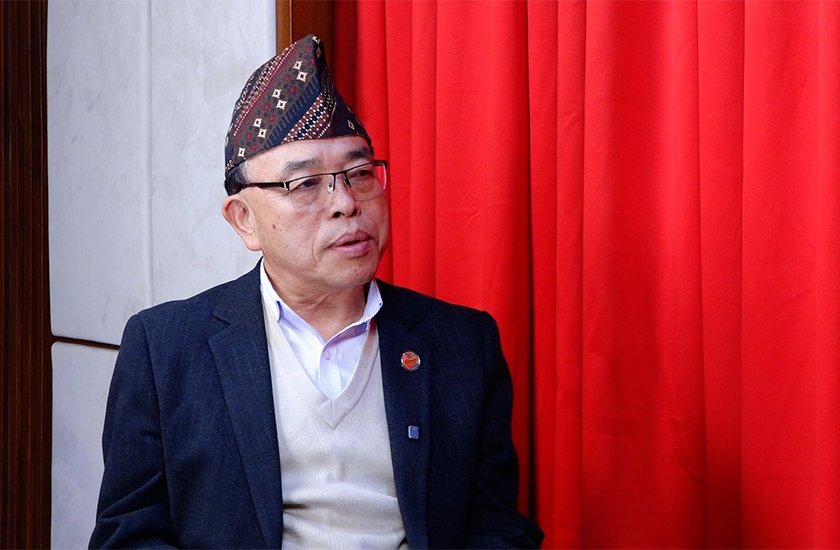
As his tenure nears its end, Minister Ingnam shared his bitter and sweet experiences in government during an interview with Ratopati's 'Warpar'. He frankly stated, 'I am the most failed minister, the most incompetent minister in history.' His main grievance was that he could not, or did not, achieve as much as he wished in the realm of good governance. Presented here is the edited excerpt of the conversation with Minister Ingnam (the full interview can be watched and heard in the video):
Other ministers used to retort when you said they couldn't work or failed. But now, you have made it easy for us by saying yourself—'I am the most failed and incompetent minister in history.' You admitted this, right?
Yes, I admit this. The work related to good governance did not go as expected. I failed in that regard. Because what I had targeted, what I thought would happen, did not happen.
Why couldn't you work?
Work depends on the team now. It depends on the working culture within the ministry. It depends on how that culture has developed and who the main actors are within that culture. That is the reason why the results did not materialize as I intended.
What were the obstacles you faced while trying to work?
First, the mindset of the employees. Second, some self-centered rules and regulations within the ministry, procedures kept in place to suit their own convenience for their protection—that is the second thing. The third thing is their lack of efficiency, in-efficiency.
Does this mean you stopped employees from taking bribes, and they didn't listen to you?
How could I allow them to take bribes? I couldn't tell them to take bribes, nor could I create an environment for it. How would I tell them to take bribes?
What were you trying to achieve?
As soon as I joined, I asked: Why is the Parliament building construction not completed after 6-7 years? Why did work that should take three years take seven years? Will it be completed now or not? Should the Secretary, Minister, or DG take responsibility for that? But they didn't do it, and they still haven't.
It is heard that you tried to transfer employees, which is not the job of this government. So, how would employees listen to you?
The main reason was his performance. There was nothing personal regarding the Ministry's Secretary. I didn't know him before that either. He is not someone who competes with me in my profession, nor is he my neighbor. He is not related to me by kinship, which would necessitate me taking action against him.
It is rumored that ministers receive significant financial benefits when transferring or appointing the Director General of building construction. Did people suspect you also went down that path?
He got two news items published. In the first news item, it was reported that there was maneuvering to take three crore rupees from Chakravarthi Bhandari.
Did the Ministry's Secretary get that news published?
The Secretary got it published, or one of them got it published.
Didn't you ask the Secretary?
After the news came out, I kept the Secretary with me and asked, 'How did this come out? You must prove it.' Chakravarthi was present right there. Although I hadn't specified who should be made the DG, he himself said, he himself appointed so-and-so as DG. After he said that, I had to say—'You had a deal to give me 3 crores, where is that money, bring it here.' He replied, 'How could that be? If that were true, I would have become DG five years ago.' Then, just recently, he was in a rush saying that money had to be returned. Is this the kind of absurd, stereotypical work employees do?
Did you fail to do anything for the cooperative victims as well?
I must say I couldn't. Because I thought there might be minor issues there, but it wasn't so. For instance, cooperatives were a large economic activity involving 1 crore 10 lakh people. 30 billion had been deposited. The economic movement resulting from that was a huge undertaking. If that had been utilized properly, the state's economic level would have risen much higher.
When it was ruined, the state's level dropped, international reputation was tarnished, and now it has even fallen to the grey-list. Many citizens were left in a situation where they had to live without homes. I thought it was possible. When I was briefed on the first day, I was told—the Ministry of Finance would provide about 1 arba 80 crore rupees.
The briefing was that we must pay the amount saved by individuals with less than 1 lakh in savings, and the Finance Ministry would allocate the budget. But the Finance Ministry never provided that money. There was no question of making that payment.
Did you also criticize the Ministry of Finance?
The Ministry of Finance turned out to be uncooperative. They still show high-handedness. Everything they like is right, and everything they dislike is wrong. Sometimes they say this is not sequential, sometimes they say there is no source secured for this, sometimes they say this won't happen now, that this is not policy-wise appropriate. But whatever they want, happens.
Another allegation against you was that you failed to take action against the Chinese Lama Bhupati Bajra Lama, the chairman of the Chinese Monastery Guthi in the Boudha area!
I took action. He took the position of priest after taking a bribe of five crore. I said it then, and I say it now.
That chairman position, he gave 5 crore to get the priest position? Who did he give the money to, the minister?
To the previous minister, that is, the previous Minister for Land Reform.
But you still couldn't remove him, right?
I took action. After I took action, the election code of conduct had already been enforced. He filed a complaint with the Election Commission, and the Election Commission was uncooperative with me. They told me not to take action against him for now. Then, after lobbying various power centers, he apparently reached the Prime Minister.
I had already told the Prime Minister that I would not proceed. I used to say, 'I will not work with this 'bribetaker',' and they were ready to go to court. Then the lawyer he hired also came to me, saying he would bring some documents to show me, and he brought documents too. But later, the Prime Minister himself said, 'Don't do this, relations with China will be damaged.' I don't know if relations with China will be damaged or not, but they played that card.
Under the pressure of which power center was that action stopped by the Prime Minister?
After that, the Election Commission sent another letter, and I stopped speaking on the matter.
Why couldn't the government make the Karki Commission's report public? What was discussed in the Cabinet?
A lot was discussed in the Cabinet. There was an understanding that making it public now would serve no purpose. What's the use of making it public if it cannot be implemented, or if it's not allowed to be implemented, a week from now when we leave? So why make it public?
Now that you are leaving, are you saying you won't become a minister again, or do you have hopes of becoming one if an opportunity arises?
There is no possibility of becoming one immediately. Why imagine otherwise?
Many ministers contested the elections; you didn't feel like it?
I am not that extraverted; I am introverted.
This specific news has been automatically translated by AI. As a result, there may be some inaccuracies or language errors.