Nepal's Meteorological Department Plans to Extend Weather Forecasts to Seven Days

Kathmandu. The Department of Hydrology and Meteorology has put forward a plan to extend its current three-day weather forecasting service to seven days. The department is preparing this expansion to minimize loss of life and property from weather-related disasters and to make forecasts more reliable.
According to Senior Meteorologist Raju Pradhanang of the department, three-day forecasts are currently being provided regularly through 'Numerical Weather Modeling'. In the near future, there are plans to extend this to seven days and to develop a separate mobile application and its own 'Decision Support System' to make weather information accessible to the general public. The department currently collects data from satellites, radar, radiosondes, and ground-based stations.
Pradhanang informed that the aviation weather service has been digitized, and 'Impact-Based Forecasting' has been initiated for 21 local levels. He noted that although significant improvements have been made in Nepal's weather technology since 2010, much work remains to be done. The department currently issues a weekly bulletin every Thursday for the agricultural sector and provides specialized services for mountaineering, aviation, and urban areas.
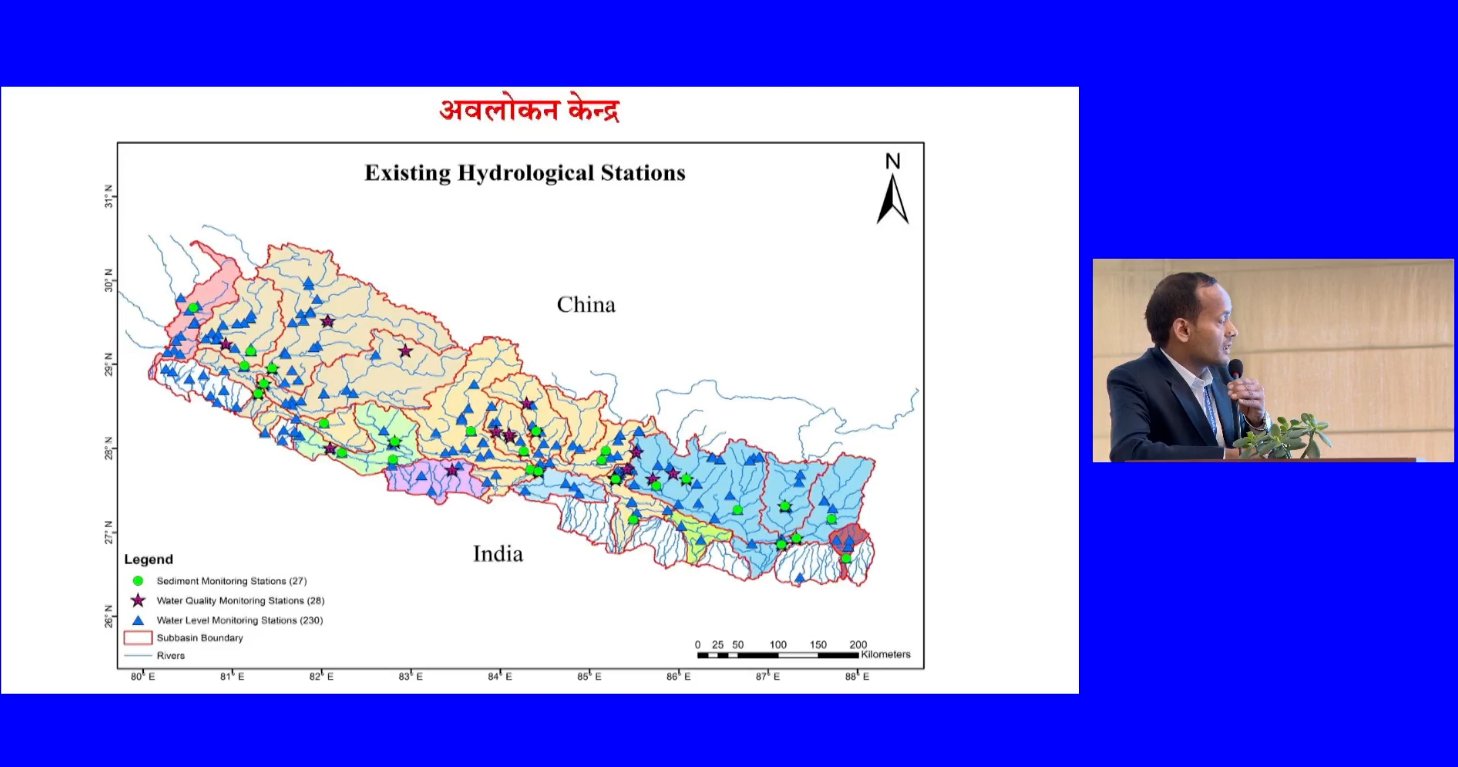
Meanwhile, Senior Divisional Hydrologist Ram Bikesh Ray of the department stated that significant work is also underway in the field of hydrology. According to him, 206 out of 230 water level monitoring stations across the country have become automated. The accuracy of flood forecasting in the Narayani Basin has reached 90 percent, and an 'Early Warning System' has been installed at the Chhorkholpa and Imja glacial lakes. The goal is to install such a system in four more glacial lakes in the coming days.
Ray pointed out that despite the expansion plans, a lack of technology and budget remains the main challenge. "We are trying to provide modern services, but inadequate technology, difficult geography, and budget cuts are causing problems," he said. Experts emphasized the need to develop a successful early warning system using sirens or loudspeakers for communities that lack access to information, noting that increasing extreme rainfall and drought due to climate change have added uncertainty to forecasts, and limited manpower has weakened research efforts.
This specific news has been automatically translated by AI. As a result, there may be some inaccuracies or language errors.