Supreme Court Faces Judicial Vacancies as Chief Justice Nears Retirement Amid Appointment Delays

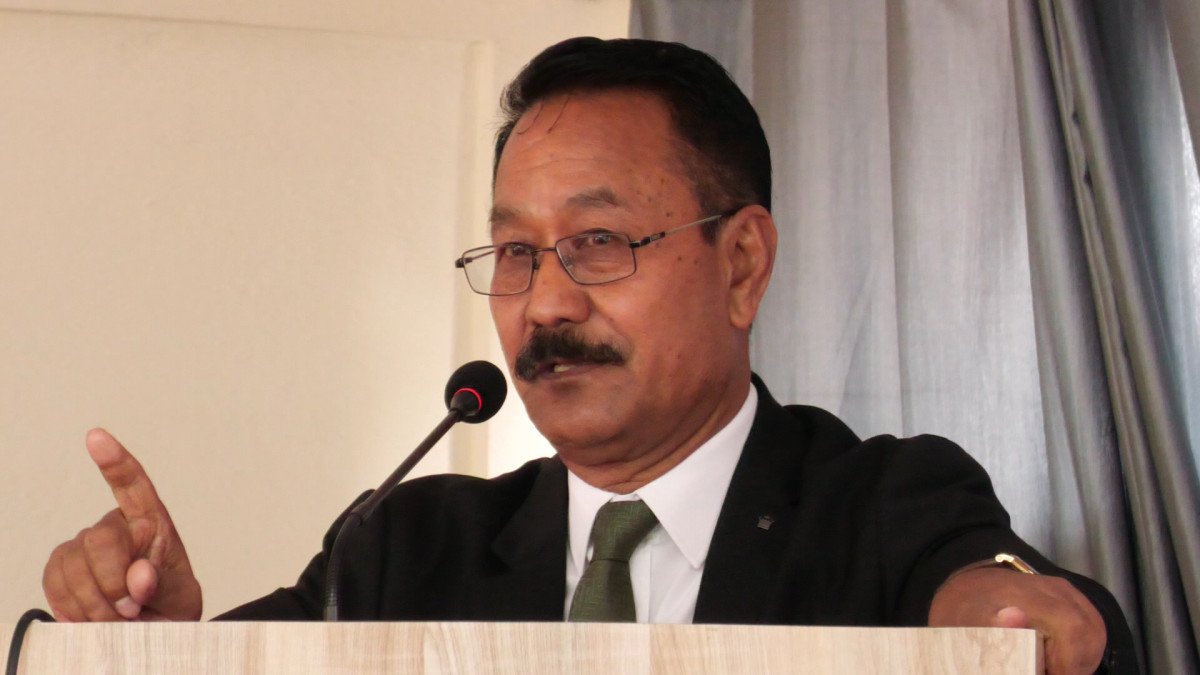
Kathmandu. Chief Justice Prakashman Singh Raut is set to retire mandatorily on Chaitra 18 due to reaching the age limit of 65 at the Supreme Court. Two judge positions are already vacant in the Supreme Court.
According to the Constitution, recommendations for new appointments to these positions should have been made one month before the Chief Justice and judges retire. Delays in judicial appointments have occurred due to the changed political course following the 'Genji' movement and the House of Representatives elections.
Supreme Court Justice Kumar Chudal retired on Kartik 9, 2082. Before that, Prakash Kumar Dhungana retired on Kartik 4, 2081.
Despite two vacant judge positions, Chief Justice Raut could not convene a Judicial Council meeting to recommend judges for the vacant posts. Following the 'Genji' movement on Bhadra 23 and 24, the dissolution of the House of Representatives meant that the Constitutional Council and the Parliamentary Hearing Committee were not in place, preventing the Judicial Council from making any decisions regarding judicial appointments.
The appointment of the Chief Justice requires a recommendation from the Constitutional Council, comprising the Prime Minister, Speaker, Deputy Speaker, and the Leader of the Opposition. Similarly, the appointment of Supreme Court judges requires a recommendation from the Judicial Council, headed by the Chief Justice. Such recommendations are only finalized upon approval by the Parliamentary Hearing Committee.
Even after the House of Representatives elections, the Constitutional Council is expected to take time to be fully constituted as the Prime Minister, Speaker, and Deputy Speaker are yet to be selected. Furthermore, the formation of the Parliamentary Hearing Committee will take additional time, leading to delays in the appointment of the Chief Justice and judges to the Supreme Court.
The Constitutional Council will only be fully formed after the Speaker and Deputy Speaker of the House of Representatives are elected. Moreover, recommendations for the Chief Justice and judges cannot undergo parliamentary hearings until the Parliamentary Hearing Committee is formed. Therefore, it is anticipated that some time will be required for the formation of the Parliamentary Hearing Committee and the completion of the parliamentary hearing process for the concerned individuals before appointments can be made.
In a writ petition filed alleging that judges were not appointed on time, contrary to the spirit of the Constitution, the Supreme Court issued a mandamus order in favor of the Judicial Council on Bhadra 18, 2081, directing the recommendation of judges one month before the posts become vacant.
Despite the mandamus order issued by the joint bench of Supreme Court Justices Hari Prasad Fuyal and Binod Sharma in the name of the Judicial Council and the Chief Justice (Chairperson of the Judicial Council), the Supreme Court has not been able to secure judges in a timely manner.
In the final verdict on the writ registered by Advocate Deepak Bikram Mishra on Shrawan 13, 2075, the Supreme Court ruled that the provision for appointment one month in advance in the Judicial Council Act and the Constitution was made with the objective of ensuring that judges are continuously in service at the Supreme Court, and ordered compliance with this provision.
In 2074, then Chief Justice Gopal Parajuli and his successor Chief Justice Om Prakash Mishra failed to convene the Council meeting for a long time. After a large number of judge positions became vacant in the Supreme Court, Mishra filed a Public Interest Litigation in Shrawan 2075. Hearing this writ, the Supreme Court ordered the strict implementation of Section 4 of the Judicial Council Act after 7 years.
Section 4 of the Council Act specifies the period for recommending appointments. Section 1 states, 'The Judicial Council shall ascertain the position of the Supreme Court judge who is due to retire due to the age limit and shall recommend for appointment at least one month prior to such position becoming vacant.'
The Constitution stipulates that the Chief Justice chairs the Judicial Council. It is stated that the senior-most judge of the Supreme Court shall be a member of the Council. The decision of Bhadra 18, 2081, directed the implementation of Section 4 of the Judicial Council Act concerning the recommendation of judges for both the incumbent Chief Justice and the prospective Chief Justice of the Supreme Court. However, the mandamus order of the Supreme Court does not appear to have been implemented.
What does the Constitution state?
Article 129 of the Constitution contains provisions regarding judicial appointments. This article mentions the appointment and qualifications of the Chief Justice of Nepal and Supreme Court judges. Sub-article 1 of this article states that the Supreme Court shall have a maximum of 20 judges in addition to the Chief Justice.
Sub-article 2 states that the Chief Justice shall be appointed by the President upon the recommendation of the Constitutional Council, and other Supreme Court judges shall be appointed by the President upon the recommendation of the Judicial Council.
Sub-article 3 states that a person who has worked as a Supreme Court judge for at least three years is eligible for appointment to the post of Chief Justice. Since parliamentary hearings are required and take time, there is a practice for the Council to send a roster of eligible individuals for the Chief Justice to the Constitutional Council one month in advance.
Sub-article 5 states that a Nepali citizen who has obtained a Bachelor of Laws degree and has worked as the Chief Justice or a judge of the High Court for at least five years, or has obtained a Bachelor of Laws degree and has continuously practiced as a Senior Advocate or Advocate for at least fifteen years, or has continuously worked in the field of law or justice for at least fifteen years and gained recognition as a distinguished jurist, or has worked in the Gazetted First Class or higher position in the Judicial Service for at least twelve years, shall be deemed qualified for appointment as a Supreme Court judge.
This specific news has been automatically translated by AI. As a result, there may be some inaccuracies or language errors.