Acting Finance Commission Chief Discusses Revenue Sharing, Grants, and Fiscal Federalism Challenges


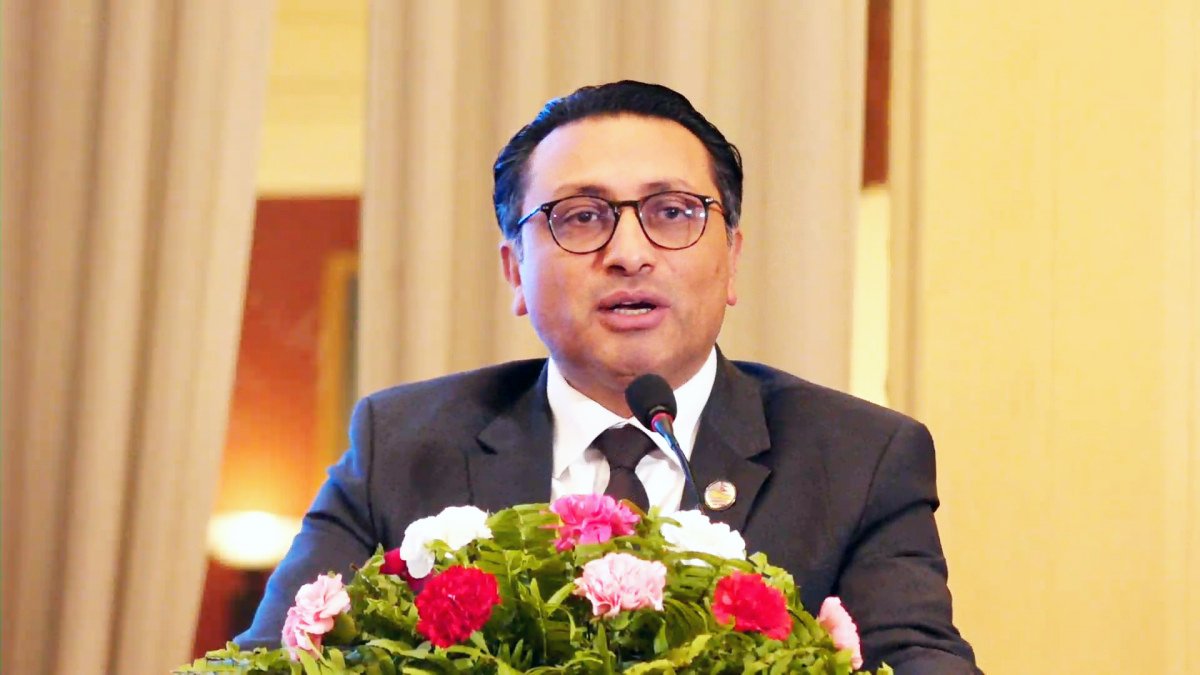
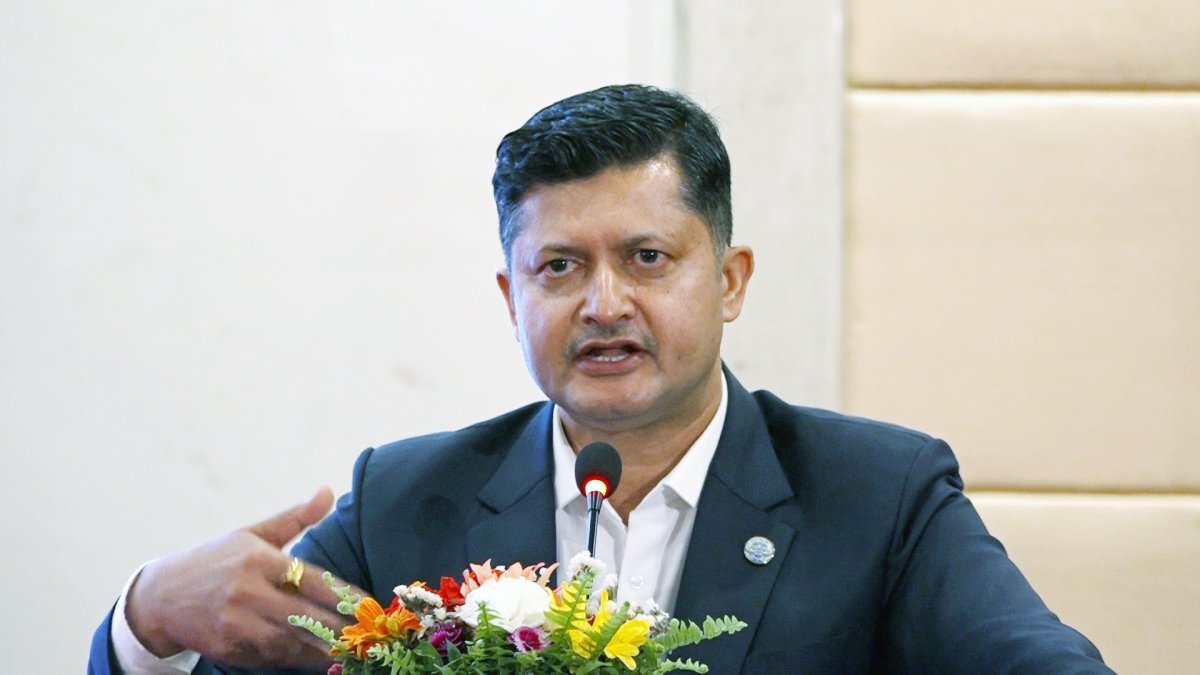
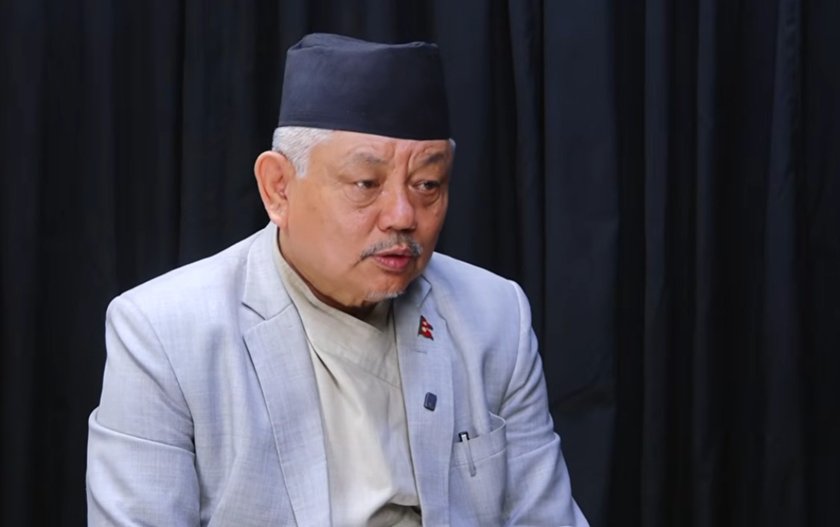
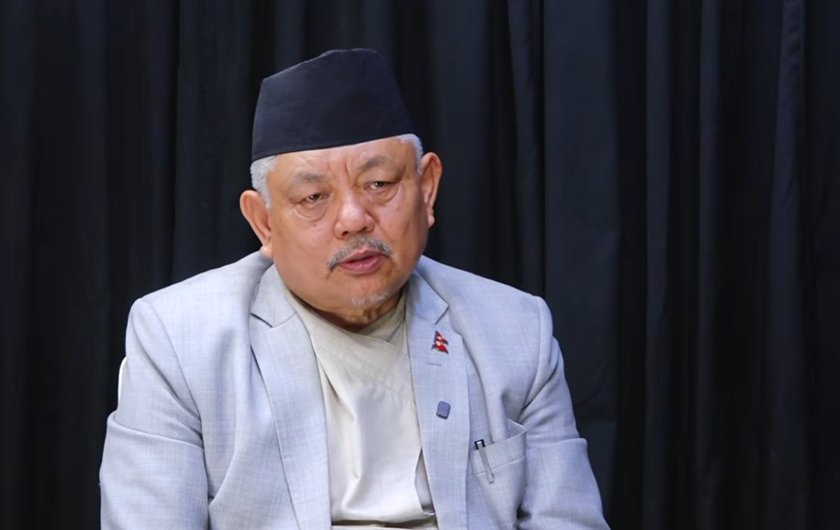
Kathmandu. Juddha Bahadur Gurung is the Acting Chairman of the National Natural Resources and Fiscal Commission. Gurung has been leading this constitutional body for the past year after Chairman Balananda Poudel retired due to the age limit.
The Commission advises the government on revenue sharing between the federal, provincial, and local levels, recommending grants, determining limits for internal borrowing, and resolving issues between different levels of government.
In the context of the budget preparation process for the fiscal year 2083/84, the Commission has already submitted its recommendations this year. Here is an edited excerpt of the conversation with Gurung focused on this topic (the full interview can be viewed and heard in the video):
The National Natural Resources and Fiscal Commission determines the formula for revenue sharing, conditional grants, and equalization grants to be distributed to provincial and local levels, and sets the internal borrowing limits for all levels of government annually. What is special about this year's recommendations?
The National Natural Resources and Fiscal Commission has been acting as a guardian of fiscal federalism for the past 7-8 years. The Constitution mandates it to recommend the sharing of revenue, recommend equalization grants, recommend the basis for conditional grants, recommend royalties from natural resources, and recommend the basis for complementary and special grants.
However, currently, the Commission only makes recommendations in four areas: revenue sharing, equalization grants, conditional grants, and royalties from natural resources.
We have made three recommendations for this year. The first recommendation is for equalization grants, which include grants provided to provinces and local levels. Last year, it was around NPR 148 billion. This is about a 4 percent decrease compared to the previous year. Three main criteria are used when recommending equalization grants: minimum, formula-based, and performance-based.
For performance-based assessment, there are 17 indicators for local levels and 11 indicators for provinces. We make recommendations based on an evaluation of how they have performed. A problem observed this time was that although we sent correspondence on Bhadra 15, many local levels did not respond until the end of Poush.
After we called and requested data, 450 municipalities sent the data; the rest did not. Therefore, we evaluated the data obtained from the Ministry of Federal Affairs, the Ministry of Finance, and the Office of the Auditor General. About 60 percent of municipalities responded; 40 percent did not.
What reason did you find for 40 percent of municipalities not responding to the performance assessment? Was it due to a lack of information or a lack of interest?
This suggests that the understanding of fiscal federalism among the municipalities is somewhat weak. In our study, 16 municipalities in Madhesh Province have not scored above 40 points for the past three years. We personally visited there and provided training. There has been some improvement, but it has not met the targets we set. The priority of the municipalities seems to be more on development construction, with less interest in fiscal governance and indicators.
What is the basis for minimum and formula-based grants?
For the minimum grant, we use data from the 2078 census and the area obtained from the Department of Survey, giving them a 50-50 weightage. We recommend that every municipality receives a minimum development budget of about NPR 7 crore.
For the formula-based grant, socio-economic disparities are considered. For instance, the Multi-Disparity Index, which looks at economic development, human development, poverty levels, and the gap in education, health, and infrastructure, is used as the basis.
What are the recommendations regarding conditional grants?
There are six bases for conditional grants. This is mainly linked to the 16th Plan, the policies of the Government of Nepal, and international commitments (such as the Sustainable Development Goals). Conditional grants are funds sent to fulfill the commitments made by the government in sectors like education, health, and literacy.
Our recommendation is that conditional grants should be given in a 'block' format, not by specifying a particular project, but based on outcome indicators. For example, consider Bhaktapur Municipality. There are houses everywhere, but conditional grants for goat farming were sent from above.
There is no place for goat farming in Bhaktapur; they need money for the conservation of archaeological structures. Therefore, instead of specifying 'raise goats' from above, giving a block grant under 'Agriculture' or 'Livestock' allows municipalities to spend according to their needs.
How is the amount of the grant determined?
We do not determine this. There is a 'Resource Estimation Committee' chaired by the Vice-Chairman of the National Planning Commission, where we are also members. This amount is determined based on the estimation of how much revenue will be collected. However, for revenue sharing, the law has a clear provision.
What is the modality for revenue sharing?
According to the Intergovernmental Fiscal Management Act-2074, there are 12 titles of revenue: 6 taxes and 6 non-taxes. There is a provision to give 15 percent of Value Added Tax (VAT) and excise duty on domestic production to the provinces, 15 percent to the local levels, and 70 percent to the federal government.
However, in practice so far, 15 percent of all revenue is not being sent. Only 15 percent of the revenue collected from VAT and excise duty is being sent to provinces and municipalities. Last year's revenue was NPR 13.65 trillion, and the shared amount was only 15 percent of about NPR 6 trillion.
For royalties, 50 percent goes to the federal government, 25 percent to the concerned province, and 25 percent to the concerned municipality. We have created a formula based on the affected area, population, and area to determine who gets how much. The environmental impact assessment report of the concerned project is used as a basis to see how affected a municipality is.
What are the recommendations regarding internal borrowing? What is the basis for determining the borrowing limit for municipalities?
We have set a limit for the federal government to raise internal debt up to 5.5 percent of the Gross Domestic Product (GDP). For provinces and local levels, they can borrow up to 12 percent of the sum of their received revenue and revenue sharing. Previously, this was 10 percent; we increased it to 12 percent after COVID-19. But the irony is that no municipality or province has been able to utilize this borrowing facility yet.
There are two reasons for this. First, the legal and administrative structures have not been established. Second, the willingness of the federal government also seems somewhat low. The federal government worries that municipalities might face problems if they borrow too much. Municipalities have taken small loans through avenues like the Urban Development Fund, but they have not borrowed up to the limit recommended.
How do you evaluate these ten years of fiscal federalism implementation?
We are still in the initial stages. Leaders still have the mindset of 'I will bring the budget, I will allocate it.' But the work of development and implementation belongs to the local levels. Some municipalities, such as Dhangadhi in Kailali, Himli in Bajura, Kaligandaki in Syangja, and Baglung Municipality, have done very well. They have shown excellence in mobilizing their own resources. The level of understanding is gradually increasing.
You yourself are nearing the end of your term. What contribution did you make while at the Commission?
While at the Commission, we made the recommendations that needed to be made regularly. Besides that, I feel I made two or three main contributions. First, I shed light on the area of fiscal federalism through a publication called 'Fiscal Federalism Mirror.' Second, I myself published 80-90 articles on fiscal federalism in various newspapers so that the general public could understand it.
Third, we reached 180 municipalities and trained more than four thousand representatives and employees. Fourth, we have studied and recommended bringing new natural resources such as solar, wind energy, waste-to-energy, and radio frequency under the scope of royalty. We have also recommended that the NPR 3.75 billion royalty collected from telecom should be shared. We have found that these efforts of ours are broadening the scope and level of understanding of fiscal federalism.
Video/Photo: Manoj Khadka/Ratopati
This specific news has been automatically translated by AI. As a result, there may be some inaccuracies or language errors.