Nepali Congress Leader Outlines 27 Reasons for Electoral Defeat in Review Report

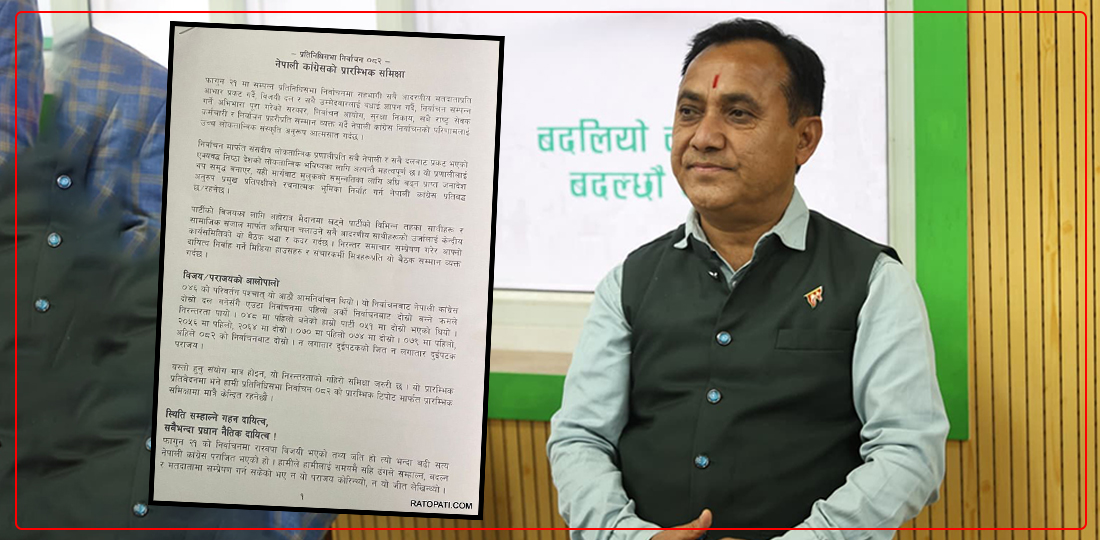
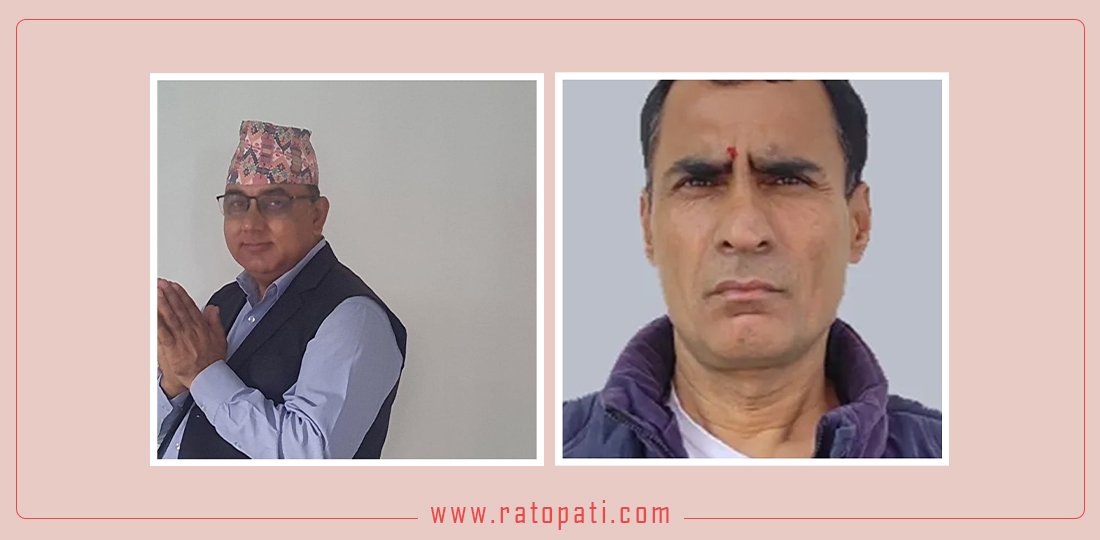
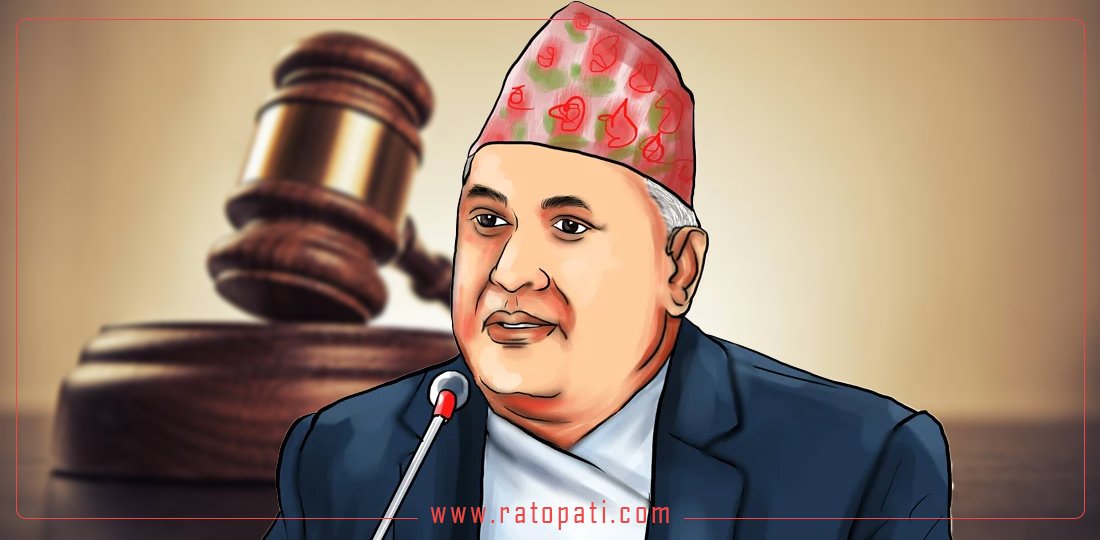
Kathmandu. The Vice President of the Nepali Congress and Coordinator of the Central Election Operation Committee for the House of Representatives elections, Bishwaprakash Sharma, has pointed out 27 reasons for the party's defeat. Presenting a report titled 'House of Representatives Election 082: An Initial Review of the Nepali Congress' during the Central Working Committee meeting that began at the party's central office in Sanepa on Friday, Sharma detailed 27 causes for the loss.
Sharma submitted a 14-page report to the Central Working Committee meeting. In the report, which focused on the Special General Convention held from Poush 27 to 30 in Bhrikutimandap, Kathmandu, and the election, he noted that despite the party's defeat, there remain 7 reasons for hope.
In his electoral review, Sharma cited the non-cooperation of some leaders in candidate selection and election campaigning as a significant reason for the defeat. He pointed to the failure to adapt and reform politics in line with the new constitution after it was enacted, the country's inability to secure a prime minister who could govern for a full five-year term over the past 75 years, public disillusionment due to the repetition of old faces in the new government, and the emergence of disorder due to the failure to provide stability in policy and order as reasons for the loss.
Furthermore, Sharma cited public disappointment stemming from unfulfilled expectations from the two-thirds majority government of 074, dissatisfaction within the party ranks and among citizens due to the use of alliances to win elections, and public dissatisfaction surfacing through events like the 079 local elections, the 079 federal elections, and the rebellion on Bhadra 23/24 as reasons for the defeat.
The report also highlighted dissatisfaction within the party ranks and public disillusionment arising from the alliance with the Maoists in the election and the subsequent power alliance with the UML, as well as the failure of the party to act as the main opposition, leading to public grievances being voiced on the streets, as reasons for the defeat.
_ZYAYMWej7d.jpg)

_plltJ8BMSw.jpg)
_BiXpS8EjTp.jpg)

He further blamed the old image of being unable to publicize the party's achievements, coupled with the tendency of the government to avoid necessary tasks and engage in unnecessary ones, for yielding negative consequences.
Asserting that weaknesses identified by the party's founder, B.P. Koirala, six decades ago still persist, Sharma also named factionalism and personality-centric politics within the party as reasons for the defeat. Sharma concluded in the report that excessive politicization and power-sharing in both governmental and non-governmental sectors during the tenure of a party-led government established a negative image for the party.
The report also presented the failure to control corruption and establish good governance, and administrative and overall sector delays that harass citizens, as reasons for the defeat, alongside the overshadowing of positive national achievements by negative narratives that influenced the public. The inability to free citizens from the 'slavery' of 'algorithms' and facing criticism for failing to communicate the Congress's contribution to private sector development were also listed as causes for the defeat.
The tendency to create a psychology around foreign employment as if it were a crime, the failure to understand the psychology of Non-Resident Nepalis and convey the country's reality, and the insufficient time to convey the message of change brought by the Special General Convention to the voters were also cited as reasons for the defeat. Sharma noted that the party was defeated in the election because its organizational structure, based on the old model, could not handle the new challenges.
7 Reasons for Hope
The report mentioned that despite the electoral defeat, some rays of hope could be generated. Sharma's report stated that the political and economic policies adopted by the Congress, even in defeat, have become the common path for other parties.
Sharma's report mentioned that the Congress will play a responsible opposition role in the parliament and that the Special General Convention has energized the party ranks, instilling energy among general party members to develop a new situation.
The report noted that the Special General Convention has brought about a new circulation of blood and saved the party from reaching a bad state, and Sharma expressed hope for support from the intellectual sector to move the party forward with new plans. Sharma concluded that even among those who disagreed with the Special General Convention, the sentiment to move the party forward united on the path of new possibilities is strong.
He stated that since public dissatisfaction has become a thing of the past, there is now time to convey the good work done in the past to the public and move forward with a new resolve.
Self-Reflection and Respecting the Mandate
Sharma reiterated the Congress's commitment to embracing the election results in line with high democratic culture. He noted that the election has further strengthened the faith of Nepalis in the parliamentary democratic system. Simultaneously, he emphasized the need for a deep review of the election results.
Sharma's report also mentioned the need for a deep review of the continuous trend of Congress being the first or second party over the last 34 years, not considering this situation merely a coincidence.
Moral Responsibility is a Collective Duty
Sharma stated that while accepting the Congress's defeat, its moral responsibility lies not just with one leader or committee but with the entire party structure. Sharma asserted that although Gagan Thapa's resignation is respected as a gesture of morality, the Congress party as a whole is responsible for the overall defeat.
He pointed out that the party had to face the election in a short period after the Special General Convention and failed to convey the message of change to the citizens.
In the report, Sharma also mentioned that the resignation offered by President Thapa should be rejected. Sharma wrote that seeking immediate results after a new leadership takes charge for a short period is not logical, and relinquishing command that can steer the party through adversity to favorable conditions would be unjust to the organization.
This specific news has been automatically translated by AI. As a result, there may be some inaccuracies or language errors.