Middle East Tensions Threaten Livelihoods of Over 1.7 Million Nepali Workers, Expert Warns


Kathmandu. Tensions between the US-Israel and Iran have impacted Gulf nations, where over 1.7 million Nepalis reside. Iran is currently retaliating by targeting US military bases in various Gulf countries.
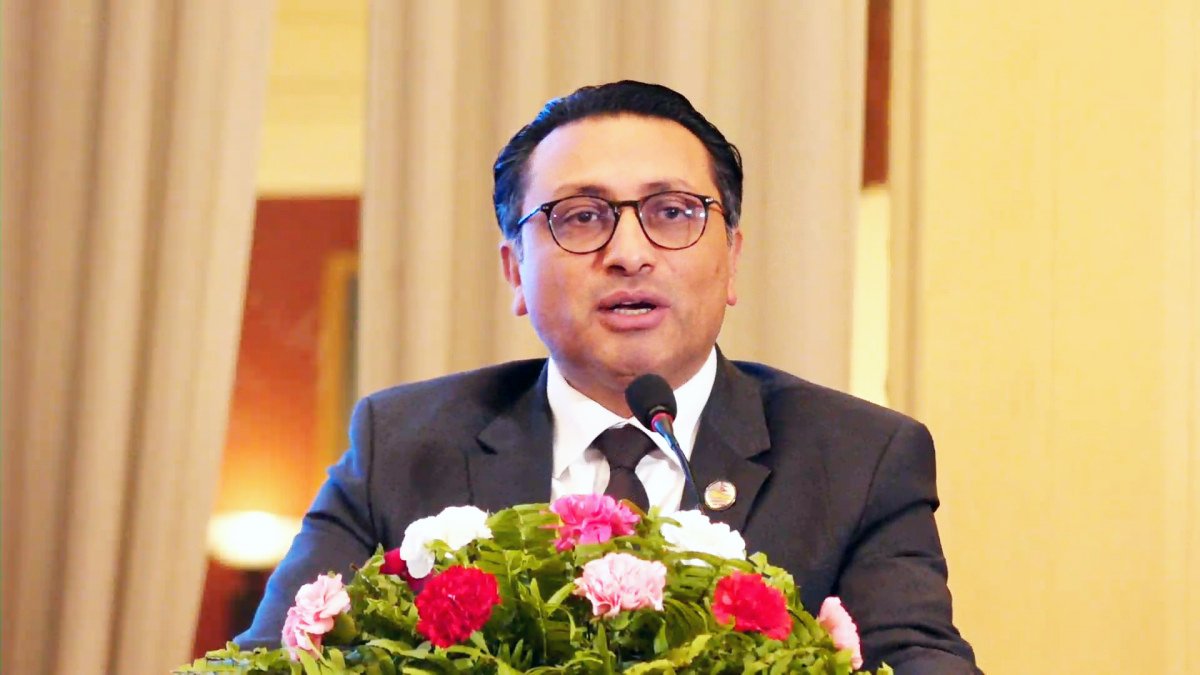
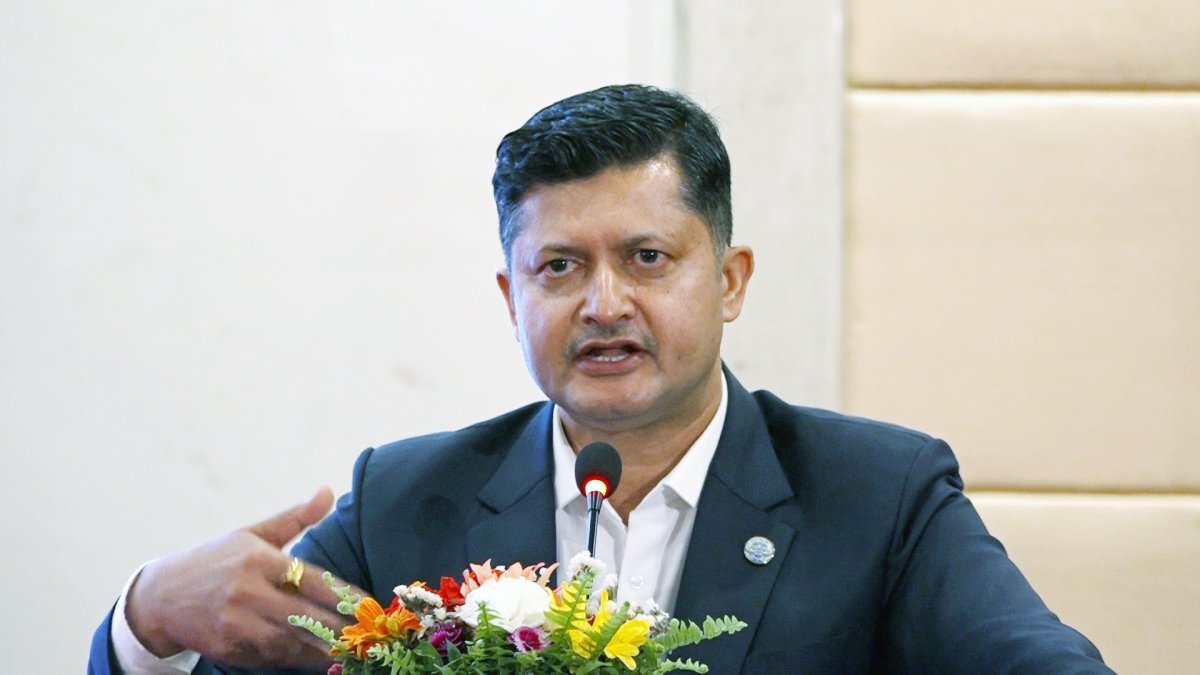
So far, more than 75,000 Nepali citizens have registered their details to return home. In an interview with Ratopati, labor migration expert Dr. Jeevan Baniya discussed the impact on Nepal's foreign employment sector, the government's rescue efforts, and future challenges. This is an edited excerpt:
What kind of impact will the recent tension in the Middle East have on Nepal's foreign employment sector?
Apart from Malaysia, a large portion of our foreign employment is concentrated in the Gulf countries. This tension will first shrink employment opportunities for those planning to go abroad. Secondly, it creates uncertainty for those already working there. Some workers' visas are expiring, and it is time for them to return.
However, due to the tension, they might not be able to return on time, increasing costs, and there is uncertainty about whether the employer will arrange the return ticket later. The ticket price might be higher later compared to now, which will impose an additional financial burden.
What long-term effects will the war in the Middle East have on the families of Nepali workers in affected countries and on Nepal's economy?
The livelihood, education, and health of the children of most migrant workers depend on this income. On one hand, there is a fear that earnings will stop or decrease, and on the other hand, inflation is rising due to the increase in fuel and consumer goods prices. This suggests that it will be difficult for workers' families to manage their households. On the other side, if there is significant physical destruction there, some employment might be created for reconstruction. But the main concern right now is the safety of the Nepalis residing there.
How do you view Nepal's internal unemployment situation and the challenges this crisis will add?
The national average unemployment rate in our country is 10.7 percent, but for youth, it is around 22 percent. Due to this tension, new youths will be unable to go abroad, and those returning from there will also remain in the country, further increasing the unemployment rate. As the number of unemployed youth increases, disillusionment and dissatisfaction towards the state will grow, which could take the form of social movements or unrest. This is a major challenge for good governance and stability.
If a situation arises where Nepali citizens need immediate evacuation from affected countries like Israel, the US, and Iran due to the ongoing conflict, what do you see as the government's preparation and capacity?
There are 1.7 to 1.8 million Nepalis in the Gulf countries alone. We have neither sufficient aircraft nor sufficient budget to evacuate such a large number at once. This is a very difficult task. However, the government is trying to coordinate by forming a task force and liaising with embassies and the diaspora (expatriate Nepalis).
For now, a form is being filled out to identify who is in trouble and who wishes to return. But if the problem deepens, work needs to be done at the grassroots level, for which our preparation needs to be stronger.
Is it true that Nepal's foreign employment dependency and the policies adopted by those countries are also affecting us, not just due to the current conflict between Israel, the US, and Iran in the Middle East?
Absolutely, we have become too dependent on foreign employment. Countries like Saudi Arabia and Kuwait have adopted policies prioritizing their own citizens (e.g., Saudization). They are employing their own citizens in high-skilled jobs and restricting foreigners to lower-level work. Malaysia also occasionally decides not to hire foreign workers. Therefore, foreign employment is never a safe or permanent solution.
Through elections, the Rastriya Swatantra Party is about to form a new government with nearly a two-thirds majority and a new mandate in the country. In this situation, the foreign employment sector is being affected. What work should the new government undertake in the employment sector, and what are its challenges?
Job creation is not solely the responsibility of the Ministry of Labor. It requires coordination across all sectors such as agriculture, tourism, hydropower, and industry. We have three tiers of government (Federal, Provincial, and Local), but the local level lacks the budget to create employment. Secondly, 84 percent of our employment is in the informal sector, which lacks social security and minimum benefits.
In agriculture, more than 90 percent is informal. Therefore, formalizing employment and guaranteeing decent work is a major challenge. For self-employment, access to capital alone is not enough. Market management for produced goods, insurance, irrigation, and a support system for technology are needed. Another key factor is skills.
There must be a match between the skills the market demands and the skills we are providing. 70-80 percent of the money sent by Nepalis from abroad is spent on education, health, and daily consumption.
If the government provides quality education and health services for free or at a low cost, the compulsion for people to go abroad to earn a lot of money will decrease. Therefore, employment should be viewed not just as a project but as structural reform.
This specific news has been automatically translated by AI. As a result, there may be some inaccuracies or language errors.