Iran's Strait of Hormuz Closure Signals Shift in Global Economic Warfare Dynamics

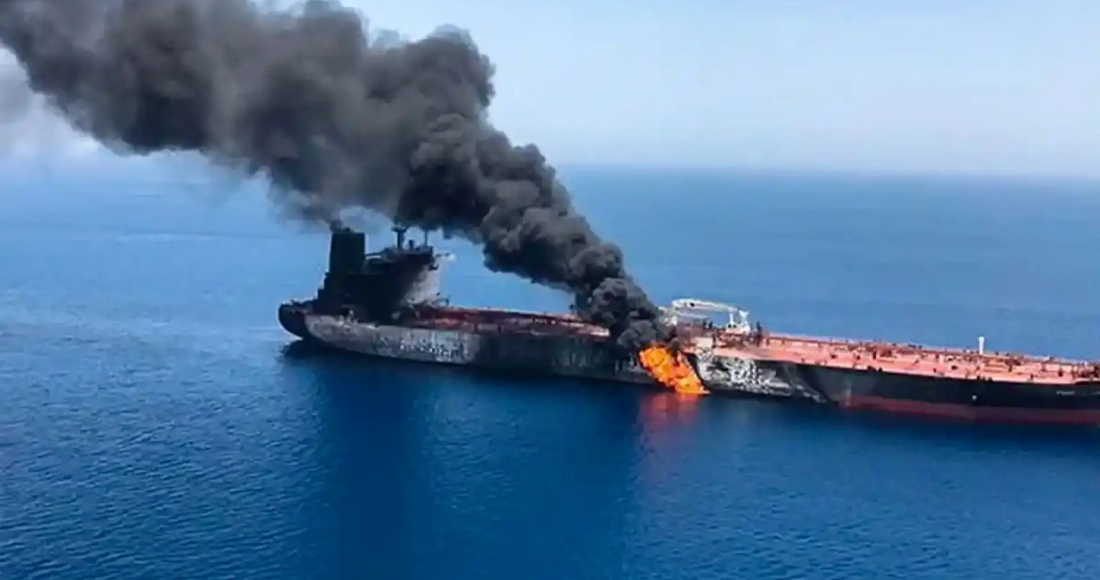
Iran's effective closure of the 'Strait of Hormuz' has begun to impact the global economy. The threat by Iran to halt maritime traffic in the Gulf region is being viewed as retaliation in an asymmetric war against the United States and Israel.
However, this move by Iran is not new. It is largely mimicking steps previously taken by the United States. Iran has copied the methods employed by the US when imposing blockades and sanctions. Due to the Iranian action, a key global economic 'choke point' has become a powerful weapon to bring rivals to their knees.
This is not the first time the Trump administration has faced a backlash from rivals due to its own actions. He has previously been met with responses using economic weapons. Upon being elected for a second term as president, he launched an attack on the global trade system. He imposed heavy increases in customs duties on goods from all countries, both friends and foes.
Some of America's allies agreed to trade deals, accepting the increase in customs duties. They needed to preserve their relationship with Washington. But not all countries were ready to yield in that manner. China stood firm and began taking further retaliatory measures. As soon as the US began tightening export restrictions towards the end of 2025, China started retaliating by restricting the export of 'rare earths' (scarce minerals).
In the decades following the Cold War, the US held an effective monopoly on major economic sanctions. But times have changed. Now, Iran and China have clearly demonstrated that the era of American dominance in economic warfare is over.
When China weaponized the 'critical minerals' exported from its country, it directly affected US industries in the defense, aviation, and transportation sectors. Production slowed down across North America and elsewhere, leading to situations where production volumes had to be cut.
They have closed the Strait of Hormuz with the help of missiles, drones, and traps. As a result, 20 percent of the flow of global oil and gas trade has been halted.
Chinese pressure on America's supply chain forced Trump to withdraw his aggressive measures. The agreement reached between Xi Jinping and Trump in South Korea last October brought a ceasefire to the economic skirmishes between China and the US. It appears that agreement is still holding between the two countries.
By starting another war in the Middle East, Trump has opened a path to even greater risk. Everyone is experiencing economic damage worldwide due to the extensive use of dominance in the Middle East. Immediately after abandoning the path of 'maximum pressure' economic sanctions on Iran and opting for open conflict, the Iranians have also taken up their economic weapons.
They have closed the Strait of Hormuz with the help of missiles, drones, and traps. As a result, 20 percent of the flow of global oil and gas trade has been halted. One-third of total trade has come to a standstill.
Thus, the question arises: what does the end of the unipolar era in economic warfare mean for the world economy? One thing is certain: the United States and its allies will have to face harsh 'trade-offs' (bargaining). They must be prepared to face significant losses when attempting to impose economic sanctions on the oil market.
The deep impact of the blockade imposed on Iran on energy prices has created a situation where sanctions on Russian oil had to be temporarily lifted. The European Union, which recently stopped buying gas from Russia, is also facing the necessity of purchasing fuel from Russia to avoid economic damage. As a result of the economic weapon wielded by Tehran, the need has arisen to soften the economic war with Moscow.
Although other countries repeatedly face economic pressure, it is not guaranteed that they will find better alternatives than the US right now. Nevertheless, the failure of US economic sanctions is certainly not a small event.
History shows examples where the long-term use of economic weapons or economic sanctions has pushed the targeted country towards self-reliance and seeking new partners.
From 2017 to 2021, Qatar faced an economic blockade by neighboring countries, which ultimately failed. The economic sanctions imposed by the 'Economic Community of West African States' (ECOWAS) against the military governments of Mali, Burkina Faso, and Niger also ultimately failed.
China's tightening of 'rare earth' exports targeting Japan and coal imports targeting Australia ultimately made them more aggressive against Beijing. Such failures are not unusual.
History shows examples where the long-term use of economic weapons or economic sanctions has pushed the targeted country towards self-reliance and seeking new partners. Diversification of trading partners gradually weakens the pressure.
Since 2022, Russia has shifted its trade towards Asian economies to circumvent sanctions imposed on it. Similarly, Chinese companies began moving their production elsewhere to avoid US high tariffs. To escape the impact of US restrictions on 'chip' exports, China significantly accelerated the pace of domestic innovation.
In today's global economy, constrained by economic sanctions, the greater the pressure created, the greater the decline in returns. Certainly, the political and diplomatic utility of economic sanctions is continuously decreasing. Even when they do not yield the expected results, economic sanctions have long been considered an alternative to open warfare.
After the US attacks in Iran and Venezuela, such claims also lost credibility. Now, instead of avoiding military action, economic sanctions are opening the path towards more violent clashes. There is a fear that the world, currently engaged in economic war, might sooner or later descend into actual war.
(The author is a professor at Cornell University.)
This specific news has been automatically translated by AI. As a result, there may be some inaccuracies or language errors.