Newly Elected Nepali Lawmaker Pledges to Donate Salary and Benefits to Support Victims of 'Genji Movement'
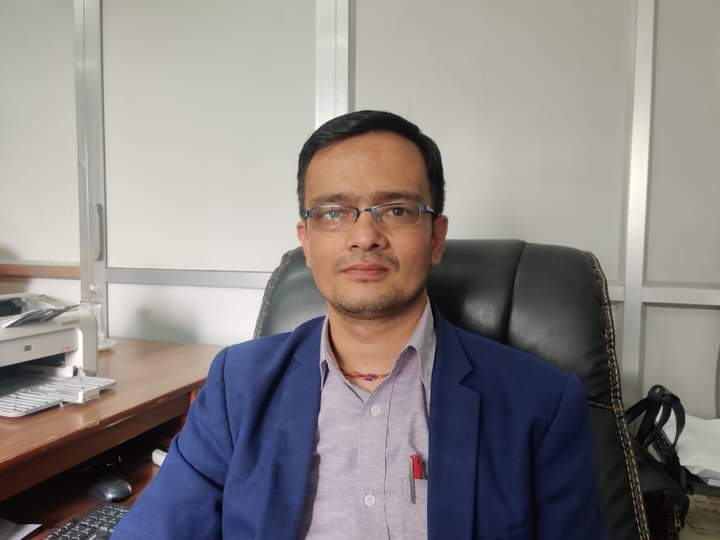
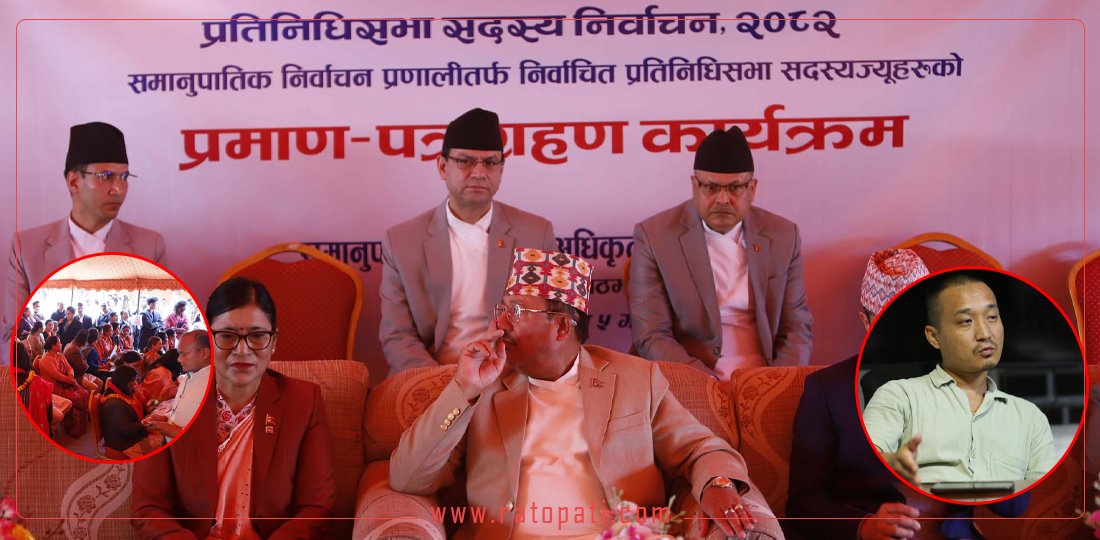
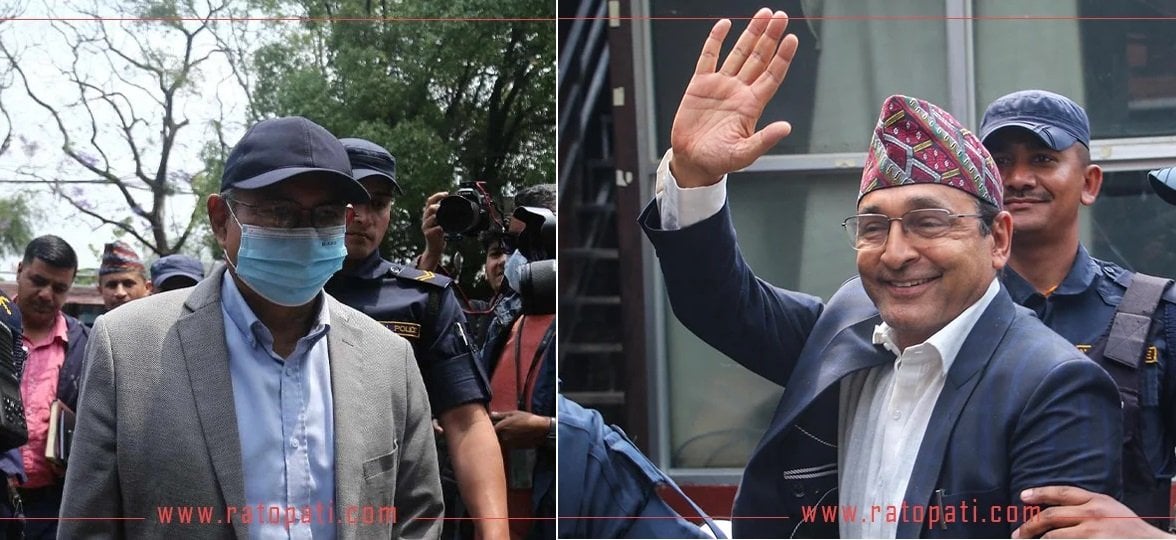
Kathmandu. Sudin Gurung, elected from Gorkha-1 in the recently concluded House of Representatives election, announced that he will not use the salary and other benefits he receives as a Member of Parliament (MP) for personal use. Gurung is an MP from the Rastriya Swatantra Party (RSP).
During a two-day orientation organized by the RSP for its elected MPs, MP Gurung stated that he would spend his salary on the health, education, and employment of those injured in the 'Genji Movement'.
Responding to reactions following his statement that he would not spend the facilities received from the state as an MP for himself, Gurung clarified on social media that his own hard work and business are sufficient for him. He wrote, 'Having been raised in a culture of supporting those in need, this is entirely my personal wish and a judicious decision, which I have demonstrated through action, not just words. I stood up for the people yesterday, I am on the same path today, and I will remain so tomorrow.'
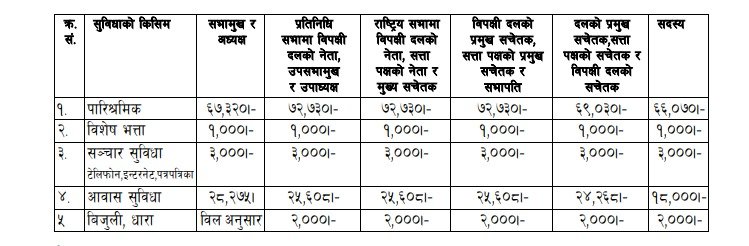
With this statement from the newly elected MP Gurung, questions have arisen regarding the exact amount of an MP's salary and what additional facilities they receive. According to the Act Relating to the Remuneration and Facilities of the Office Bearers and Members of the Federal Parliament, MPs receive a monthly salary of NPR 66,070. Besides that, upon being elected and arriving in Kathmandu for the first time, MPs receive reimbursement for their travel expenses (air or bus ticket) upon submission to the Parliament Secretariat. Depending on the elected district, they receive money equivalent to the cost of travel from their district to Kathmandu, including local transport to the airport and the flight ticket. If there is no airport nearby, they receive the amount mentioned on the bus ticket upon submission to the Secretariat.
Additionally, the Secretariat provides MPs with an allowance of up to NPR 2,500 per day for food and snacks consumed during the journey to Kathmandu. Since the Secretariat only covers this expense for 2.5 days, they receive an additional NPR 6,250 under this head.
After being elected, the Secretariat provides MPs with NPR 15,000 once in five years for furniture expenses. For MPs who do not have a residence in the Kathmandu Valley, a monthly house rent of NPR 18,000 is provided, and for those who own a house in Kathmandu, a monthly allowance of NPR 9,000 is provided for maintenance. The Secretariat also provides NPR 3,000 monthly for mobile phones, newspaper purchases, or online subscriptions, and NPR 2,000 monthly for water and utility bills, informed Ekram Giri, Joint Secretary and Spokesperson for the Secretariat.
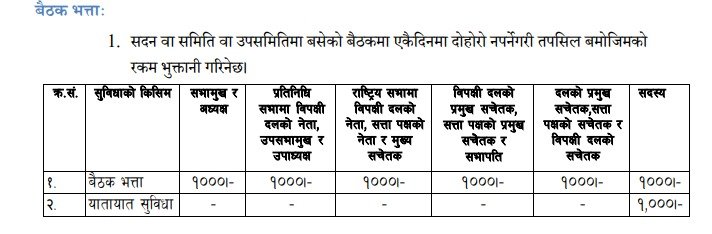
MPs receive a meeting allowance of NPR 1,000 and a transportation allowance of NPR 1,000 on days when parliamentary committees or the Parliament session is held. If the Parliament session and a committee meeting occur on the same day, MPs do not receive double allowances or transportation benefits. The Secretariat has informed that on days when both parliamentary committees and Parliament sessions are held, MPs receive a meeting allowance of NPR 1,000 and a transportation allowance of NPR 1,000.
Political parties deduct 'levy' from this money received by the MPs. After the leader of the respective party's parliamentary group sends a letter instructing the deduction of the levy and depositing the amount into the party's account, the Secretariat deducts the corresponding amount and sends the remaining money to the MP's account. The amount for the levy is sent to the party's account.
The government led by Sushila Karki abolished the facility of a personal secretary equivalent to an officer provided to MPs. If the government wishes to allow MPs to keep personal secretaries again, the Act Relating to the Remuneration and Facilities of the Office Bearers and Members of the Federal Parliament will need to be amended to add this provision. Previously, the provision was made to allow MPs to keep an officer-level personal secretary to make their work more effective.
The facility was removed by the government formed after the 'Genji Movement' following reports of misuse, as most MPs appointed relatives as personal secretaries and collected their salaries.
MPs who need to travel abroad for official government or parliamentary work are provided with a red passport by the government upon the recommendation of the Secretariat, based on necessity. This arrangement is made so that having a diplomatic passport facilitates travel within and outside the country without hassle at immigration.
Complaints About Low MP Facilities
Complaints about the low facilities received by MPs are heard from time to time. MPs often complain that the salary provided by the government is insufficient to cover expenses for food and snacks when meeting constituents from their districts, assistance needed during illness, travel to and from the district, and costs for study and research. However, the government does not seem to have initiated any process for increasing these facilities.
Federal Parliament Secretariat Spokesperson Giri stated that complaints about insufficient facilities have been received repeatedly in the past. 'The House of Representatives is just beginning now. In the past, there used to be complaints about low facilities,' he told Ratopati.
What Do Experts Say About Refusing Facilities?
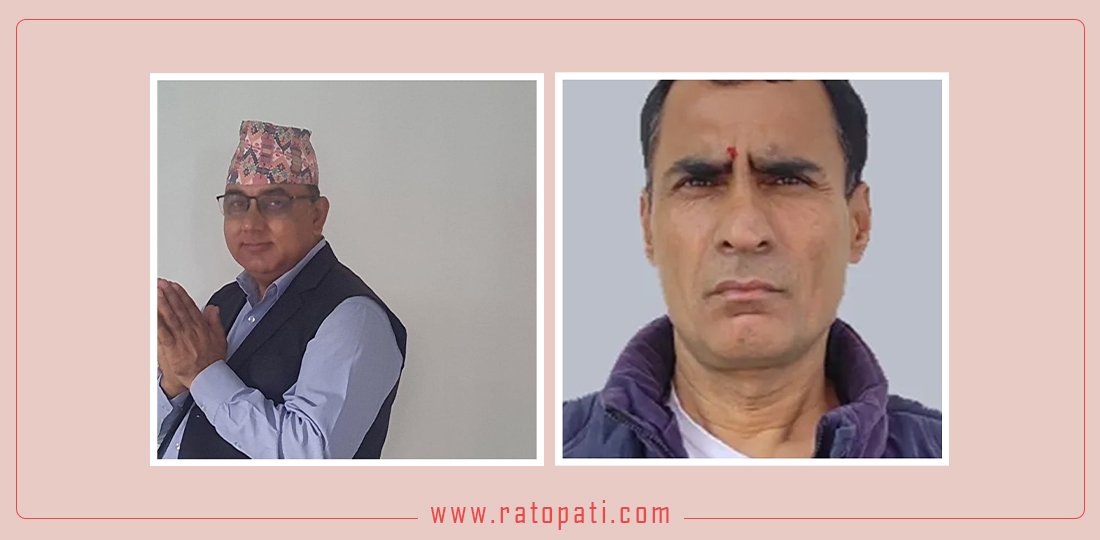
Experts suggest that MPs saying they will not take facilities is merely a 'stunt'. Constitutional expert Senior Advocate Dr. Bhimार्जुन Acharya stated that saying they will not take facilities is just for publicity. 'When MPs say they won't take facilities, it's just a stunt and publicity. It has no meaning,' Dr. Acharya told Ratopati. 'It is the duty of an MP to perform the tasks determined by the constitution, voters, and law. They should receive remuneration according to the law for performing those duties. Saying they won't take it is just propaganda.'
He mentioned examples where those who previously said they wouldn't take any facilities were later implicated in irregularities. 'We have seen instances where those who said they wouldn't take facilities in the past were themselves involved in corruption,' said Dr. Acharya.
Former Secretary General of the Federal Parliament Secretariat, Bharat Raj Gautam, clarified that one has the right to voluntarily refuse facilities. He mentioned that there have been such examples before. 'One can voluntarily say they won't take it. Otherwise, it is better to work while taking the facilities entitled by law,' Gautam told Ratopati.
This specific news has been automatically translated by AI. As a result, there may be some inaccuracies or language errors.