Rastriya Swatantra Party's Deputy General Secretary Outlines Eight Key Bills for Five-Year Term


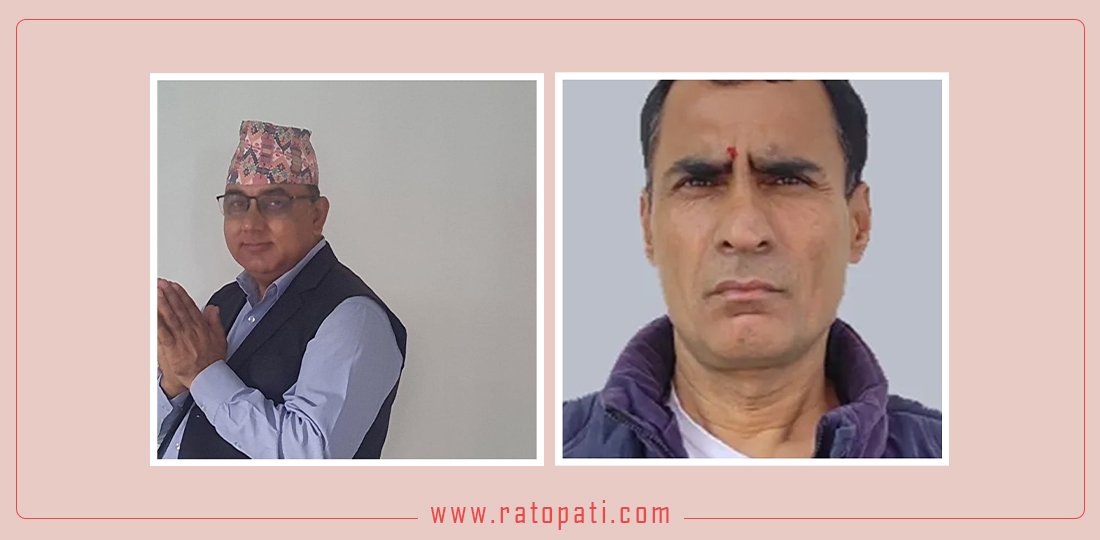
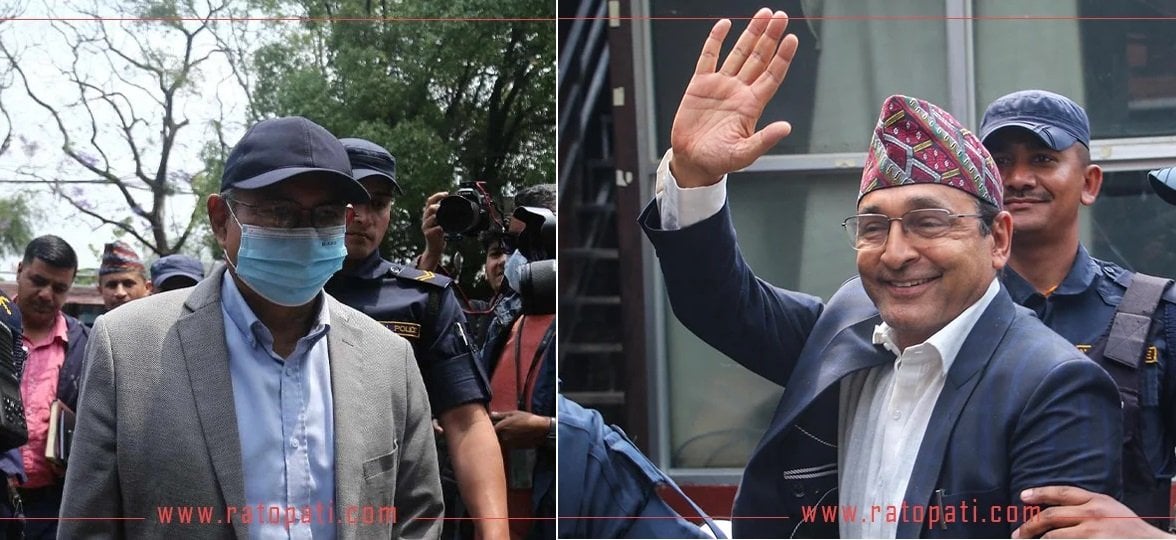
Kathmandu. Bipin Kumar Acharya, Deputy General Secretary of the Rastriya Swatantra Party (RSP), has clarified his intention to work on eight essential bills during his five-year term in office. Acharya, who was elected as a member of the House of Representatives after defeating CPN-UML General Secretary Shankar Pokharel by a significant margin in the Dang-2 constituency, had made this commitment to the general voters even before the election.
While his party is preparing to form a government securing nearly a two-thirds majority in the House of Representatives election held on Falgun 21, he is busy with internal preparations to get the bills he promised to the voters endorsed by the Parliament. He presented the bills he wishes to work on during the two-day residential orientation and introductory program for newly elected members of parliament held in Gwarko, Lalitpur, on Chaitra 3 and 4.
If the 8 bills envisioned by Acharya are passed by the Federal Parliament, lawmaking will take a new dimension. Whether the government formed under his own party's leadership will take ownership and present the bills he proposed in the Parliament in the future is another matter. Although there might not be difficulties in enacting laws as the RSP will have a majority in every thematic committee formed in the House of Representatives, and its party will lead the executive and legislative branches, there is a challenge in implementation due to zero presence in the National Assembly, as some issues require constitutional amendments.
Nevertheless, the 'blueprint' of the bills presented by Acharya has created a new debate. A brief overview of the objectives of the bills he presented is as follows:
Citizen Voice Bill
Civil society, acting as the permanent opposition to the government, has been holding demonstrations at Maitighar Mandala for 12 years because public forums are closed. On Bhadra 23, 23 people attained martyrdom when the then government brutally suppressed the peaceful protest organized by the Gen Z generation against corruption and malpractice. Due to the destruction that occurred on Bhadra 24 following the Gen Z killings, important state properties, business establishments, private residences of leaders, and central offices of political parties were set on fire. Acharya clarifies that the objective is to mandatorily link the voice of the citizens with the formal process of Parliament, compel the Parliament/Government to respond in writing within the stipulated timeframe, and make policy formulation transparent, participatory, and result-oriented, as the government failed to pay attention to the peaceful movement in time, causing great loss to the country.
'The popularly elected government must listen to the voices of the citizens. The tendency of daily street protests without being heard has caused great loss to the state. The voice of the citizens must be mandatorily linked to the formal process of Parliament by setting specific criteria,' he said.
Malicious Prosecution Bill
He explained this as a bill concerning compensation for individuals held in pre-trial detention, state liability, and accountability for malicious prosecution. This is the biggest problem seen in Nepal. When any person is maliciously prosecuted in court, they remain detained for years. However, even if the court later acquits them, their reputation, prestige, honor, and all paths to progress in society are closed, and there is no law to ensure compensation from the state or the concerned party.
Although many countries in the world have legal provisions regarding compensation, a mandatory law has not been enacted in Nepal. Keeping this in mind, Acharya clarified the objective of the bill.
'The objective is to justly address the economic, social, and human losses suffered by individuals later proven innocent after being held in pre-trial detention, to prevent the cost of 'wrongful detention' from falling upon the victims, and to bring those who maliciously pursue wrong prosecutions/procedural misuse to legal accountability to discourage such practices in the future,' he said.
'Right to Recall' Bill
The objective of this bill is to recall and replace public representatives who make commitments to voters before the election but fail to return to their constituencies even after five years in office, and to ensure their accountability to the public under certain conditions. Since Article 69 of the RSP's statute also includes a provision for 'Right to Recall,' he concludes that it will be easier to enact the law through Parliament when the government is led by his own party.
Acharya says, 'The objective is to keep members of the House of Representatives (First-Past-the-Post and Proportional Representation) continuously accountable to the people, to provide a constitutional path to recall public representatives who have lost public trust after the election through constitutional/democratic means, and to reduce the dissatisfaction, frustration, and inertia created by the compulsion to 'wait for five years'.'
Emergency Court Bill
He concludes that the Emergency Court Bill is necessary to ensure immediate hearings when citizens' faith in the judiciary is broken due to court cases not being decided for years after registration. According to Acharya, the objective of this bill is to prevent delays in justice for matters directly related to an individual's freedom, life, security, and fundamental rights, to control the practice of postponing hearings or refusing to accept writs citing reasons like government holidays, strikes, or time expiration, and to provide institutional capacity for the court to remain active 24 hours a day in emergency situations.
Time Card Bill
He stated the necessity of enacting a law regarding time cards to discourage delays in service delivery in government offices. Acharya concludes that this bill is necessary to end the delays, the prevalence of middlemen, commissions, and bribery occurring in every government office.
AI Usage Bill
He understands the need to legislate for the responsible use of AI in government productivity, education, agriculture, health, and public services, capacity building, data-digital infrastructure, and result-oriented implementation. Acharya explains that the objective of this bill is to institutionalize AI as a tool to increase national productivity rather than fearing regulation, specifically to make bureaucracy (government service) faster and more result-oriented, to improve the quality of education and health, to reduce costs and increase income in agriculture, and to transform state resources and means into data-based decisions.
Local Infrastructure Allocation (Equity and Transparency) Bill
Acharya informed that the objective of this bill is to allocate budgets based on the mathematical weighting of infrastructure needs indices, rather than political influence, and to make the selection and expenditure of every project transparent on a public digital dashboard. While campaigning, he gave examples of how budgets are allocated in local levels based on access when visiting voters' doorsteps.
He presented the example that in Dang-2, roads were paved in areas where influential people reside, even if there were few households, while areas with 50/60 households still had unpaved roads. He states that this problem is not limited to Dang-2 but exists across the country.
Industry-Society-Environment Balance and Responsibility Bill
Acharya understands that this bill is essential to mandate the compulsory measurement of the impact of industry establishment on settlements and the environment, the determination of buffer zones, and the use of modern pollution control technology.
This specific news has been automatically translated by AI. As a result, there may be some inaccuracies or language errors.