CPN-UML Suffers Historic Low in Karnali Province Elections Amid Shifting Political Landscape

Surkhet. Following the 2056 elections, a popular slogan resonated in Karnali: "Districts of Karnali, Fortresses of UML." In that election, the CPN-UML won in all five districts of the former Karnali region. UML leaders and cadres chanted this slogan on that occasion.
Prior to that, electoral competition in Karnali was primarily between the Nepal Workers' and Peasants' Party (NWPP) and the Nepali Congress. After the 2051 elections, as most NWPP leaders and cadres merged with the UML, the UML emerged as a strong political force.
Currently, the various districts within Karnali Province typically had two to three constituencies. Nar Bahadur Hamal won from Dailekh-1, Ratna Sharma from Jajarkot-2 for the UML, while Prakash Jwala also won in Salyan in 2056.
The Maoists, emerging strongly after the armed conflict, became a powerful force in the 2064 elections. Nevertheless, the UML secured victories in Dailekh-2, Surkhet-1, and Surkhet-2.
In the 2070 elections, the UML won both constituencies in Dailekh, Dolpa, Mugu, and Salyan-2 through individual electoral contests. Subsequent elections involved alliances. In the 2074 House of Representatives election, the UML won 6 seats in Karnali after forming an alliance with the Maoists.
In the 2079 elections, when the Maoist-Congress alliance was formed, the UML was limited to zero seats in the direct contests. However, based on popular votes, it became the leading party in proportional representation.
In this recent House of Representatives election, the UML performed very weakly in Karnali. According to leaders, this is the weakest performance for the UML in Karnali since the establishment of the Republic.
The UML failed to win any constituency in the direct contests except for Dailekh-2. According to the UML's internal reporting for the province, Surkhet, Dailekh, and Salyan were considered winnable areas. The reason was that even though they didn't win directly in 2079, the UML received more proportional votes here compared to other parties. However, in Surkhet-2, the Rastriya Swatantra Party (RSP) won, pushing the UML to third place, while in Salyan, they finished fourth.
In the previous election, although the UML was defeated, they were competing for the second spot; this time, even in areas considered UML strongholds, they finished third and fourth.
After the 2079 elections, UML leader Yamalal Kandel used to say, "Although we appeared weak when the two major parties united in the direct contests, we are the first party in Karnali based on popular votes."
As he stated, in that election, the UML became the leading party in Karnali, securing 183,130 votes. However, this time, the UML failed to achieve good results either in direct contests or in proportional representation.
Karnali is a traditional stronghold of political parties. The Nepali Congress secured 5 direct seats and received the highest proportional votes, over 141,000, while its rival UML shrank to third place with 120,863 proportional votes.
A provincial-level UML leader stated that the votes received this time were not as expected, even when contesting alone. "We suffered a huge loss this time; we didn't get good votes even in the areas we expected," the leader said. "In the past, Karnali had no presence in UML's internal politics, and there was neglect in parliamentary politics, from making central ministers to every constitutional matter. But this time, we have a Central Secretary within the party, and the provincial government leadership is ours. Most local level leadership positions are also held by our colleagues, yet we did not receive the votes we expected."
In his understanding, the UML has reached its weakest position in Karnali since the establishment of the Republic this time. Instead, the new political party, the RSP, has surpassed the UML this time. Although the number of direct and proportional members of parliament is equal (2/2), the RSP is ahead of the UML based on the votes received.
The RSP surpassed both the UML and CPN (Maoist Centre), securing the second position with 133,749 proportional votes. Even with various communist factions uniting, the CPN (Maoist Centre) won 4 direct seats in Karnali and finished fourth in proportional votes.
However, the proportional standing of the CPN (Maoist Centre), which considers Karnali its base area, is limited to fourth place this time. The CPN (Maoist Centre) received 107,101 proportional votes. Parties analyze that this election was beneficial for the Congress in Karnali and posed a challenge for the UML and CPN (Maoist Centre).
- Why did the UML shrink in Karnali?
The UML has not won elections in Jajarkot, Kalikot, Jumla, Humla, and Rukum West since 2056. However, even when the Maoists were dominant in 2064, the UML won elections in places like Dailekh and Surkhet.
Dailekh is like a fortress for the UML. In Dailekh, which has two constituencies, the electoral competition has traditionally been between the UML and the Congress, with the Maoists being much weaker compared to these two parties. However, this time, the Congress won in Dailekh-1. In the proportional representation, the RSP has a high number of votes here.
The votes received by the UML in all areas are unexpected. According to Tekraj Pauchai, Vice-Chairman of the UML Provincial Committee, the number of organized members of the UML in the province before the 11th General Convention was over 52,000.
It has now dropped to 48,000. Organizationally, the UML is still a strong force. But the results were not as expected.
"A review of the election results is currently underway in every district, and a review of the district feedback will also take place at the provincial level," Pauchai told RatoPati. "The reasons will become clear after that."
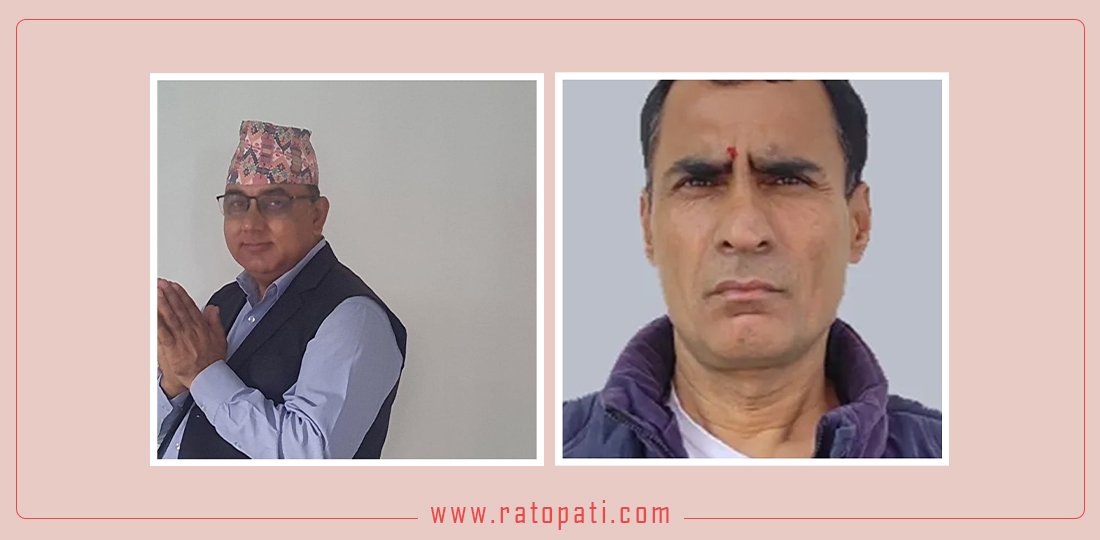
UML Provincial Chairman Gulabjung Shah himself was a candidate in Salyan. He received the fourth position in terms of votes. He cited the impact of the UML split, all forces uniting against the UML, and the public wave towards the RSP as reasons for the UML's weakness in Karnali.
However, the UML split occurred in 2078, and despite that, the UML secured popular votes here in 2079. "Over the past decade, we carried out many party transformation efforts, from the Mechi-Mahakali campaign, which had contained the Maoists. The Congress was also not progressing in a traditional manner. Thus, in 2074, the UML became a strong party," Shah says. "After that, the CPN (Maoist Centre) was formed, it split, and it fragmented."
He stated that the impact of that split was reflected in this election. He attributed the UML's popular vote gain in 2079, even after the split, to the rise of the RSP and its non-entry into Karnali.
"In 2064, the Maoists rose, and in 2079, the RSP rose, but it hadn't entered here. This time, it rose powerfully," Shah said. "With the rise of the RSP, the attack was on the UML, which caused damage to us."
UML leader Binod Kumar Shah stated that the impact of the party split still persists. As he mentioned, the impact of the split is evident in districts like Salyan, Dolpa, and Kalikot.
Prakash Jwala, who won from UML in Salyan in 2056/2070, is now in the CPN (Maoist Centre) via the Unified Socialist Party. He was once a powerful UML leader in Salyan. In Kalikot, veteran leaders like Prem Bahadur Singh, who won after contesting for the UML, are in other parties. In Dolpa, Dhan Bahadur Budha, who won in 2070/2074, is in the CPN (Maoist Centre). In Dailekh-1, Ammar Bahadur Thapa, who led the UML for a long time and contested elections for the UML multiple times, is in the CPN (Maoist Centre). In Mugu, Chandra Bahadur Shahi, who won multiple times for the UML, is currently in the CPN (Maoist Centre). This has a direct impact on these districts.
Leader Shah, who is currently a minister in the Karnali government, considers the dominance of individualistic character over party policy and principles within the UML as another reason for its weakness.
"Party discipline could not be maintained, and the policies adopted by the party could not be implemented," he said. "The tendency to speak individually instead of adhering to organizational methods and procedures, and raising personal issues even where they shouldn't be raised, spread negative sentiment towards the party, and that also had an effect."
This specific news has been automatically translated by AI. As a result, there may be some inaccuracies or language errors.