Analysis of Nepal's Recent Election: A Shift in Political Landscape and Voter Expectations
In Nepali politics, we have heard various names for revolutions or uprisings, ranging from bullet revolts and ballot revolts to political upheavals and even aircraft mutinies. Following the historic 2007 change that Nepali politics always remembers, the 2015 general election results, the 2046 change followed by the 2048 outcome, the mandate from the People's War in 2064, the endorsement of the Madhes movement, and the vote revolution carried out by citizens through ballots after the special election held on February 21 are considered historic.
All political parties accept that the people are the ultimate sovereign. To put it in the style of Gagan Thapa, the President elected from the special general convention of the Nepali Congress, the recent election has proven that the people are not slaves or corpses of any particular political party.
It appears that the people have succeeded in breaking down the impregnable fortresses erected by leaders of Nepali political parties to protect their legacy. However, breaking down one 'Jai Nepal' fortress, another 'Lalkilla' (Red Fortress), and the crimson red fortress soaked in the blood of martyrs, only to erect another fortress in the name of a 'Blue Revolution,' will amount to nothing more than a party-slave mentality.
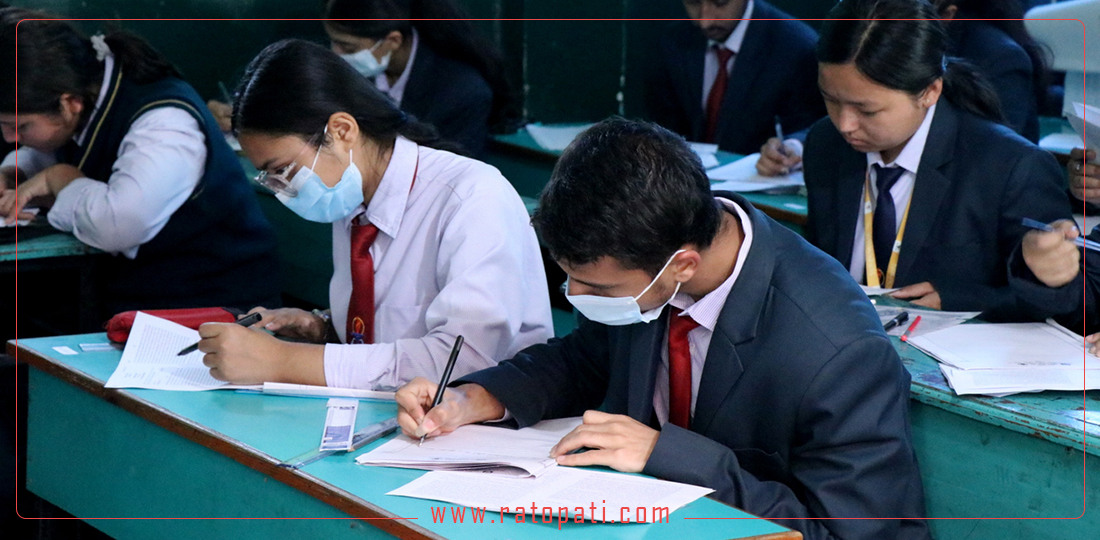
The atmosphere following the 'Gen-Z' movement made the election more complex than a regular electoral contest. With the rebellious energy seen among the youth of the new era, distrust towards the old leadership, and a strong desire for direct results, the election occurring was a happy time for the people and a sign of defeat for the old political parties.
Today's voters cannot be swayed by philosophical doctrines and lectures on knowledge. Those involved in politics easily understand that emotional and symbolic appeals by leaders only serve to retain their party's organized cadres. Voters do not cast their ballots merely by reading policy documents during an election. They look at the dreams promised in previous elections, observe the faces of leaders they could not trust, and give a vote of hope to the new ones.
It seems the people sought to send a message that they are moving beyond traditional ideological boundaries, not just by supporting leaders who speak the language of the rule of law, good governance, and alternatives to the established leadership, but by conveying that 'this old style no longer works.' This means the current result is largely an expression of public outrage, the search for alternatives, and an immediate political shock.
The latest updated election statistics indicate that the growing dissatisfaction with old parties, the search for alternatives, and the demand for a new political language have all surfaced simultaneously. However, it is certainly not the case that the mandate was overwhelmingly cast to annihilate the old parties. What interests this writer even more is the visible mandate that the alternative to democracy must also be democracy. The Nepali Congress received the public mandate to remain the legal opposition by giving nearly a two-thirds vote share to the Rastriya Swatantra Party (RSP).
This means the public psychology must also be understood: that both the ruling and opposition sides are democratic forces. In other words, it appears the people have established another democratic force as an alternative to the Congress.
Looking at the election results, the size of the growing communist force in Nepali politics has become even more pathetic. After winning the 2064 election riding on the momentum of the Maoist armed insurgency that began in the 2050s, the communist and leftist forces were Nepal's largest political power until the Constituent Assembly, a position they maintained continuously until the parliament dissolved six months ago.
When viewing this entire scenario in conjunction with the mandate from the February 21 election, it marks the first time since the early 2020s that Nepali leftism has shrunk to such a small size. However, it cannot be said that the influence and justification of communist ideology in Nepali politics have ended. The CPN-UML has an alternative in the CPN (Unified Socialist), and a dynamic democratic party stands in the middle ground as an alternative to both.
Politics appears simpler from the outside than the reality is. As the saying goes, it is as easy for a passenger sitting in a seat to tell the driver to 'drive slowly,' 'apply the brakes,' or 'stop there' as it is challenging for the driver to operate the vehicle. Similarly, running the state is a matter of responsibility, balance, and foresight. For the RSP, established in Ashad 2079, it was easy to contest the election held in Mangsir of the same year, win 21 seats, sit in the opposition, advocate for good governance, and remain silent on some issues as part of a coalition government. That ease is now gone.
It is natural that with the historic mandate expressed through the election comes equally large public expectations. However, now is not the time to question the RSP's manifesto and agreement papers. But their democratic practice in parliament, political character, and political behavior towards the opposition party will be monitored from day one.
History tells us that the government formed by the majority mandate in 2015 did not last. There was a mid-term election in 2048, and the Maoist government in 2064 could not stabilize. Even when the UML-Maoist alliance received a two-thirds mandate in 2074, the parliament was dissolved twice. Now, the RSP, established by the wave of the Gen-Z revolt, must learn from the past, treat the people's vote as the first and last opportunity, remain faithful to the people, and proceed cautiously.
There must be a development of a political culture that respects the votes cast by the citizens of a landlocked country and remains grateful to the people. They voted for a stable government for five years and political stability even within a multi-party system. Therefore, the people must be thanked for this election result.
This specific news has been automatically translated by AI. As a result, there may be some inaccuracies or language errors.