Rastriya Swatantra Party Faces Internal Strife Over Leadership Amidst Government Formation Prospects

The Rastriya Swatantra Party (RSP) has secured the 'mandate' to form the government by displacing traditional political parties in the House of Representatives election held on Falgun 21.
The path to government formation for the RSP opened after the Election Commission published the results of the House of Representatives elections (First-Past-the-Post and Proportional Representation). However, the Election Commission stated that it would take two to three days to submit the final election report to the President.
The process for forming a new government will only move forward after the President receives the Commission's report.
The RSP, which delivered a major blow to the old political parties that have held state power for three and a half decades, succeeded in winning 182 seats, nearly a two-thirds majority. Senior RSP leader Balen Shah is set to lead the most powerful single-party government in eight years.
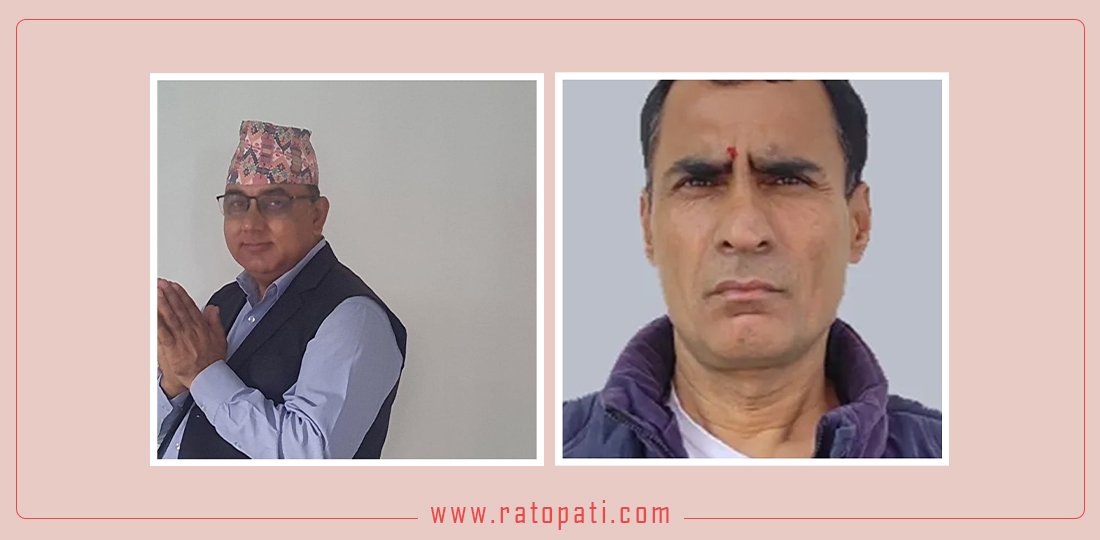
On Poush 13, a 7-point agreement was reached between RSP Chairman Rabi Lamichhane and former Kathmandu Metropolitan City Mayor Balen Shah regarding party and government operations. Point number 4 of that agreement stipulated that Rabi Lamichhane would remain the party chairman and Balen would be nominated as the future Prime Ministerial candidate. The implementation of this agreement is currently conflicting with Nepal's Constitution and the RSP's statute.
Article 76(1) of the Constitution states that the President shall appoint the leader of the parliamentary party that commands a majority in the House of Representatives as the Prime Minister.
Conversely, Article 66 of the RSP's statute mandates an election among party members for the parliamentary party leader before the election. If the party leader is defeated in the general election, an election will be held among the aspiring candidates for the parliamentary party leader from among the elected members of parliament. It is stated that the person securing 50 percent plus one vote in the competition will become the parliamentary party leader.
Due to this provision in the statute, there is discussion that Balen may not be able to become the parliamentary party leader. Following the election results, there is also significant discussion about discord at the leadership level regarding making Balen the Prime Minister as per the agreement.
The speculation of a growing power struggle between Rabi and Balen is further fueled by the fact that the top leaders of the establishment faction have not made a clear statement regarding the agreement.
The absence of Balen at the Secretariat meeting held at the party office on Sunday and the fact that only Rabi's name was listed for the orientation program for MPs starting Tuesday in Gwarko, Lalitpur, are being closely watched in political circles.
In the 67-year history of parliamentary elections, four powerful governments were formed, but none of them completed their full term. The RSP has received the opportunity to form a single-majority government in the recently concluded election after overcoming various ups and downs. Since both Rabi and Balen are ambitious individuals with limited experience in parliamentary politics but a strong drive to work, there is apprehension that this opportunity might also be lost.
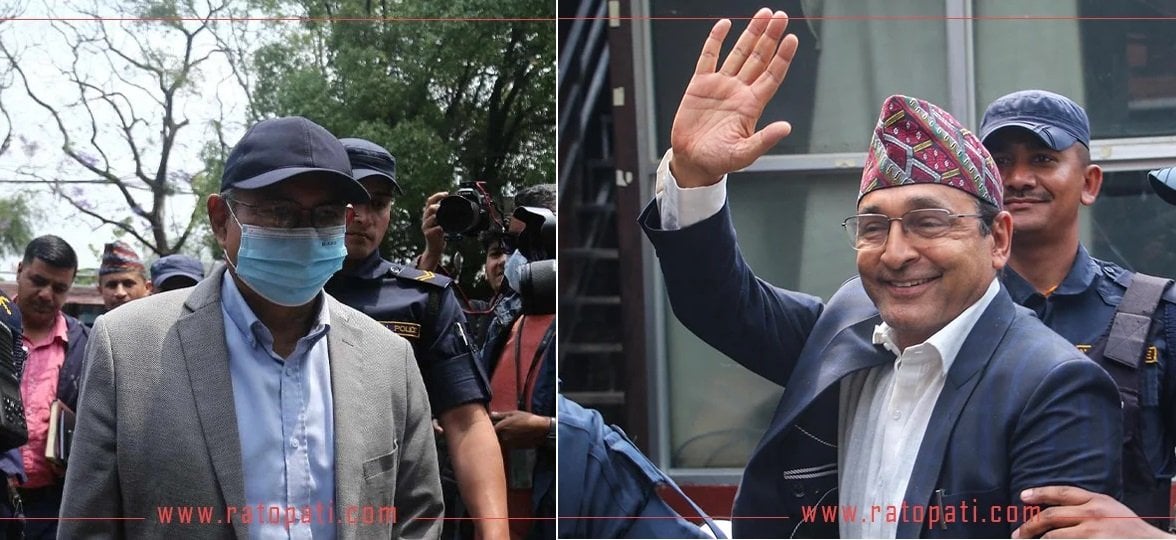
Constitutional expert Dr. Bhim Arjun Acharya expresses concern whether the RSP government, like previous ones, might meet an untimely end due to the intoxication of power. He suggested that the public mandate should not be insulted by the conflict between the two individuals, as reports of friction between Rabi and Balen are surfacing.
'The people have given the RSP nearly a two-thirds majority, not trusting the old political parties. Such an opportunity is rarely available in history. In the past, many governments failed due to internal power and authority struggles,' Acharya said. 'I advise that the RSP government should not dissolve due to power and ego. It should work well, keeping in mind the Constitution, the law, and geopolitical balance.'
The absence of Balen at the Secretariat meeting held at the party office on Sunday and the fact that only Rabi's name was listed for the orientation program for MPs starting Tuesday in Gwarko, Lalitpur, are being closely watched in political circles. However, Deputy Chairman DP Aryal stated that both leaders would participate in the closing ceremony on Wednesday.
General Secretary Kavinra Burlakoti stated that it would take a week to form a new government. He mentioned that the process of forming a new government would proceed after the selection of the parliamentary party leader. He said that since the people trusted the RSP and brought it to this height, they must work in a way that sets a 'role model'.
'The people have trusted us and brought us to this height. There is no place higher than this to go. We must show that we value the people's trust by becoming a role model,' Burlakoti told Ratopati. 'We have arranged a training program until Wednesday to orient the newly elected MPs before the parliament session begins. Only then will the government formation process move forward.'
The main reasons for the RSP achieving this height in just three years since its establishment appear to be embracing the 'Gen Z' uprising in Bhadra, the corruption and irregularities perpetuated by old political parties over the years, the violation of the Constitution, laws, social values, and norms, and the repeated rotation of the same individuals or parties in government.
Joint General Secretary Bipin Kumar Acharya asserts that there is no bitterness between Rabi and Balen as rumored outside. He stated that Balen will become Prime Minister according to the past agreement.
'There is no disagreement between the Chairman and the Senior Leader as reported outside. Balenji will become Prime Minister as per the past agreement. I do not think the party statute is an obstacle to making him the parliamentary party leader,' Acharya said.
The main reasons for the RSP achieving this height in just three years since its establishment appear to be embracing the 'Gen Z' uprising in Bhadra, the corruption and irregularities perpetuated by old political parties over the years, the violation of the Constitution, laws, social values, and norms, and the repeated rotation of the same individuals or parties in government. Analysts suggest that the courage shown by Rabi in establishing alternative politics as mainstream and Balen's popularity among the youth worked as a strong chemical reaction.
Professor Lokraj Baral stated that the RSP reached this height due to the public's disillusionment with old political parties and the popularity of Balen among the youth. 'The main reason for the RSP getting excessive votes is the public's aversion to the old parties. Another reason is the wave of support for Balen,' he said.
He stated that the reports circulating about the deteriorating relationship between Rabi and Balen are just rumors. 'The Election Commission has not yet submitted the final report to the President. The Commission itself is saying it will take until the 5th to submit the report. The government formation process will not move forward until the President receives the report,' he said.
Four Powerful Governments in the Past That Did Not Complete Their Term
After the establishment of democracy in 2007 BS, there was a debate about the Constituent Assembly election. However, due to the power struggle between Matrika Prasad Koirala and B.P. Koirala within the then Nepali Congress, eight years were spent on government formation and dissolution. The debate over the Constituent Assembly election weakened due to the tripartite power struggle between the King, Congress, and the Rana power structure. The general election was announced in 2015/016 BS. In the election for the 109-member House of Representatives, Congress won 74 seats, a two-thirds majority. However, before completing its term, on Poush 1, 2017 BS, then King Mahendra dismissed the government and imposed the autocratic Panchayat system.
Professor Baral argued that the elections of 2017 BS and 2082 BS cannot be compared. He clarified that at that time, the King held full executive power, and he dismissed the government and dissolved parliament because the socialist agenda brought by then Prime Minister B.P. Koirala would not fulfill his self-interest.
'The King did not like the socialist program brought by B.P. He feared it would become popular among the people. When his self-interest could not be fulfilled by B.P., he dismissed the government and dissolved the elected parliament,' he said.
Baral stated that although the King at that time desired to make Suvarna Shamsher the Prime Minister, there was no problem in the relationship with B.P. 'There was no power struggle between Suvarna ji and B.P. The King did not wish for B.P. to be the Prime Minister. Suvarna himself proposed making B.P. the Prime Minister,' he said.
Senior Congress leader Omkar Prasad Shrestha recalls that the agenda was to pass the vote of thanks on behalf of the government after King Birendra addressed the parliament. The dispute escalated after then Prime Minister Girija Prasad, without consulting Kisunji and Ganesh Man, took action against six ministers.
Senior Congress leader Omkar Prasad Shrestha stated that the government fell due to King Mahendra, not internal squabbles within the Congress. 'There was no dispute between Suvarna and B.P. regarding becoming Prime Minister. In 2014 BS, a Satyagraha had to be organized against the then government. Suvarna ji himself handed over the party presidency to B.P. through a special general convention,' he said. 'The government fell at that time because of King Mahendra. The King was not satisfied with B.P.'s revolutionary program. The elite classes were against the government.'
Shrestha confirmed that B.P.'s wife was unwilling to let B.P. become Prime Minister. He clarified that B.P.'s wife stood in favor of making Suvarna the Prime Minister, seeing the political inauspiciousness that would arise because Mahendra was hesitant to appoint B.P. as Prime Minister.
Shrestha admitted that governments formed after the 2046 political change could not complete their full term due to internal conflicts within the party.
In the 2048 BS election, Congress won a majority with 110 seats. Since the acting chairman of Congress, Krishna Prasad Bhattarai, was defeated in the election, General Secretary Girija Prasad Koirala became the Prime Minister. Prime Minister Koirala's action against six ministers from his own leadership angered Krishna Prasad Bhattarai and Ganesh Man Singh. The ministers facing action at that time were Basudev Risal (Minister of Water Resources and Communication), Sheikh Idris (Minister of Labor and Social Welfare), Dhundiraj Shastri (Minister of Industry), Chiranjibi Wagle (Minister of Supply), Taranath Ranabhat (Minister of Law, Justice, and Parliamentary Affairs), and Gopalman Shrestha (Minister of Commerce).
Shrestha recalls that the dispute escalated after then Prime Minister Girija Prasad took action against six ministers without consulting Kisunji and Ganesh Man, when the agenda was to pass the vote of thanks on behalf of the government after King Birendra addressed the parliament.
'The agenda was to pass the vote of thanks in parliament, but 36 Congress MPs defeated the proposal. After the government's proposal failed, Girija Prasad called a parliamentary party meeting at Baluwatar,' Shrestha said. 'In that meeting, the Prime Minister said, 'I resign, I will dissolve parliament.' Everyone in the parliamentary party asked him not to dissolve parliament. But he did not listen. Sometimes, everything gets ruined due to anger.'
In 2075 BS, the two communist factions merged to form the Nepal Communist Party, but the government collapsed in 40 months due to the power and authority struggle seen between the two chairmen, KP Oli and Prachanda.
According to Shrestha, by the time of the 2051 to 2056 elections, unpopularity towards the Congress leadership had greatly increased. Anticipating a major loss in the election under Girija's leadership in such a situation, Congress nominated the 'saintly leader' Kisunji as the Prime Ministerial candidate, similar to how Balen is being put forward now.
In the 2056 BS election, Congress won 111 seats. Although Kisunji became Prime Minister as per the prior agreement, he was removed after nine months, and Girija Prasad himself became the Prime Minister. Amidst the escalating Maoist insurgency on one side and the internal wrangling within Congress on the other, King Gyanendra dismissed the elected government in 2059 BS and seized power. In 2061 BS, Gyanendra took all state power into his hands.
In 2062 BS, the 12-point agreement was reached between the rebel Maoists and the 7 parliamentary political parties. Based on this foundation, the 2062/063 People's Movement overthrew the monarchy.
Although the Federal Democratic Republic was formally established in 2065 BS, subsequent governments failed to meet the aspirations of the people. In the Constituent Assembly elections of 2064 and 2070 BS, no party secured a clear majority. Due to unstable governments and growing public dissatisfaction, the two major leftist components, CPN-UML and CPN (Maoist Centre), formed an alliance for the 2074 BS election. The people endorsed the Left Alliance with overwhelming votes, similar to how the RSP is viewed now.
In 2075 BS, the two communist factions merged to form the Nepal Communist Party, but the government collapsed in 40 months due to the power and authority struggle seen between the two chairmen, KP Oli and Prachanda. Over the 18 years since the establishment of the Republic, the repeated power-sharing and electoral alliances among Congress, UML, and Maoist Centre led to extreme public dissatisfaction. As a result, this culminated in the 'Gen Z' movement explosion on Bhadra 23 and 24.
Analysts suggest that if the RSP continues the weaknesses of these old parties, the fate will be even worse.
This specific news has been automatically translated by AI. As a result, there may be some inaccuracies or language errors.