Supreme Court Hearing on Ravi Lamichhane's Case Sparks Conflict of Interest Concerns Over Judge
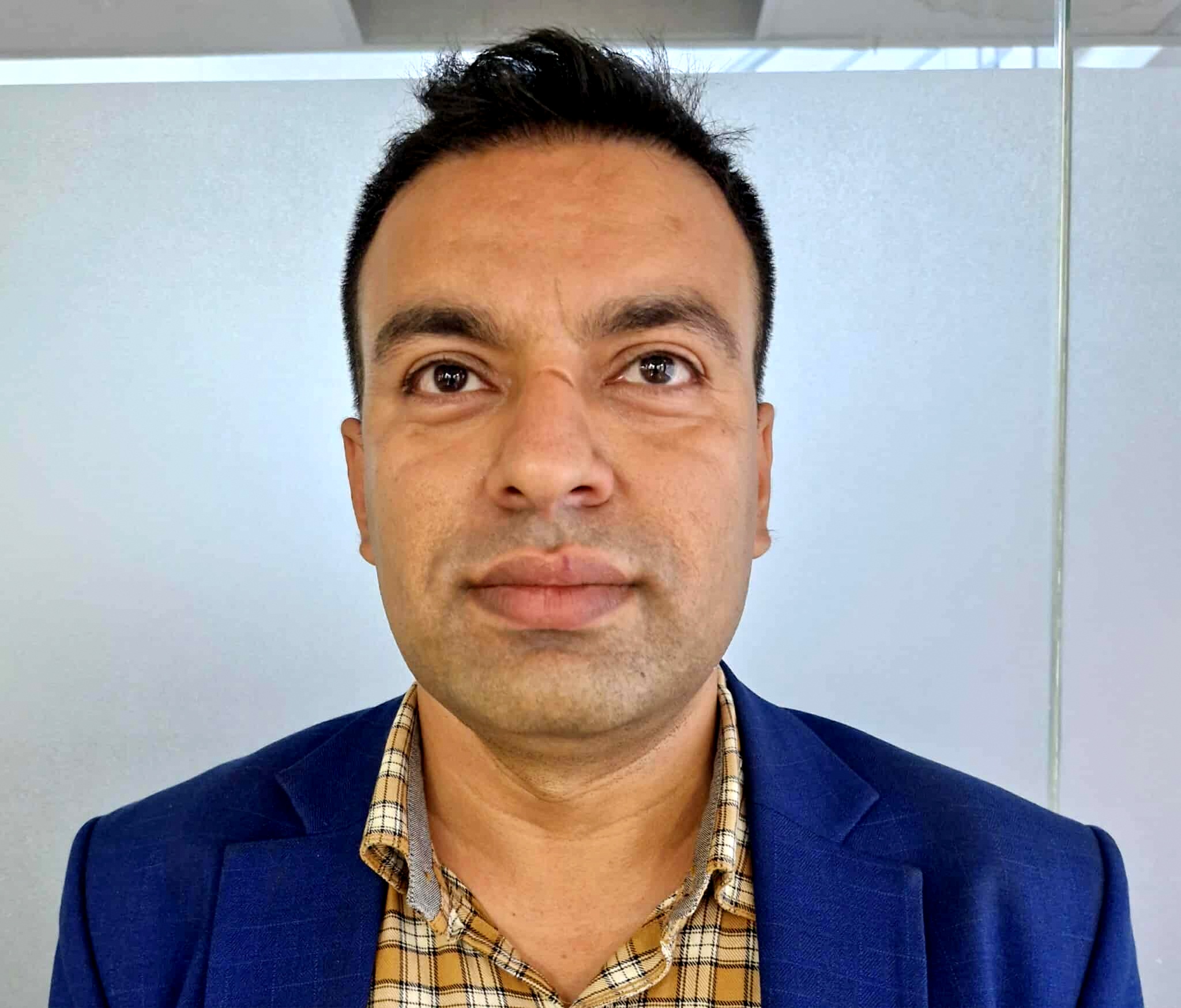
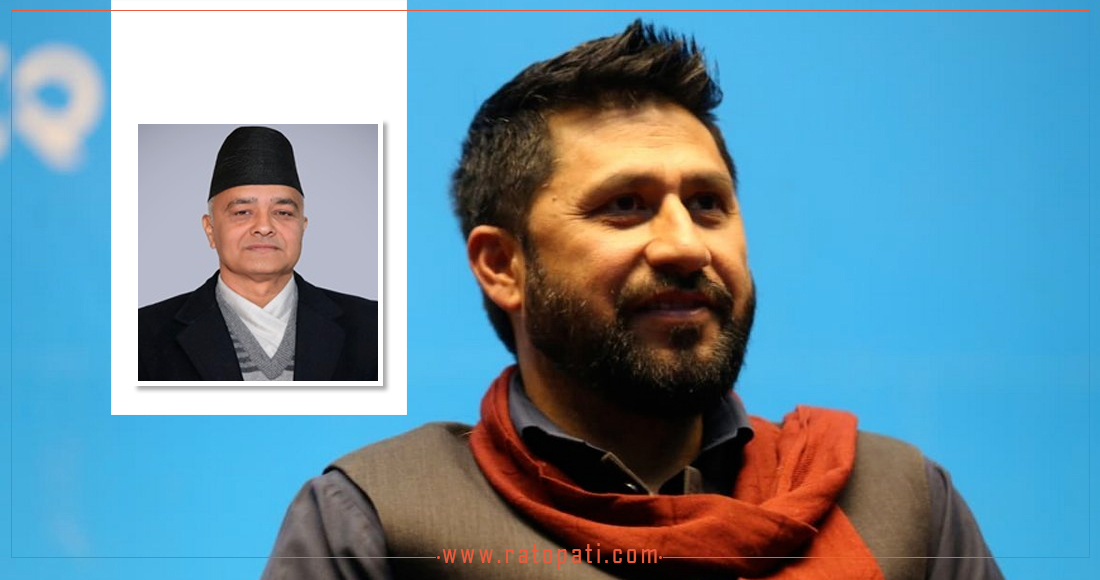
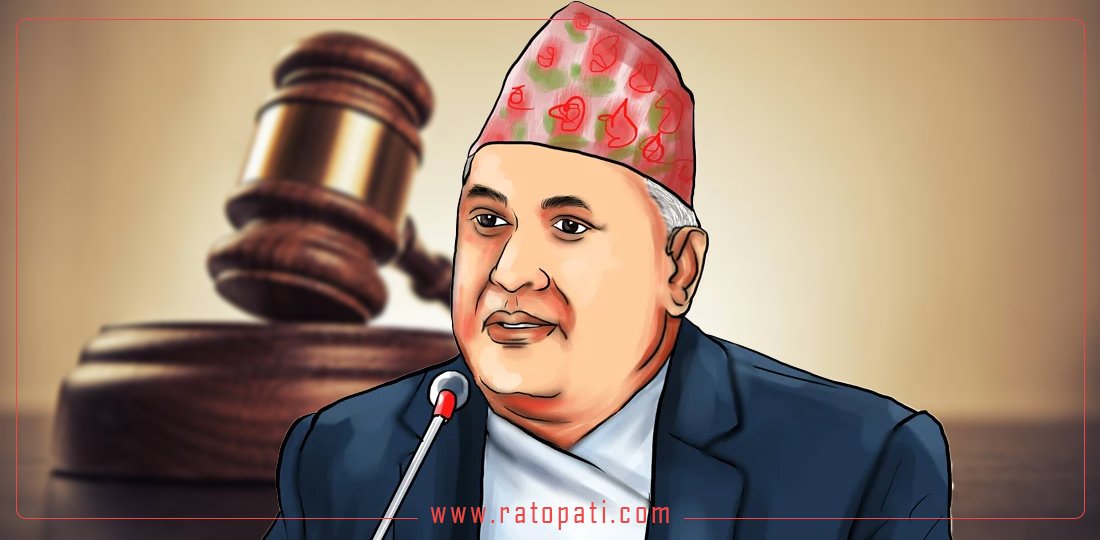
Kathmandu. Questions have arisen after Supreme Court Justice Sunil Kumar Pokharel heard the writ petition challenging the withdrawal of the charges of organized crime and money laundering filed against Rastriya Swatantra Party (RSP) Chairman Rabi Lamichhane in connection with cooperative fraud.
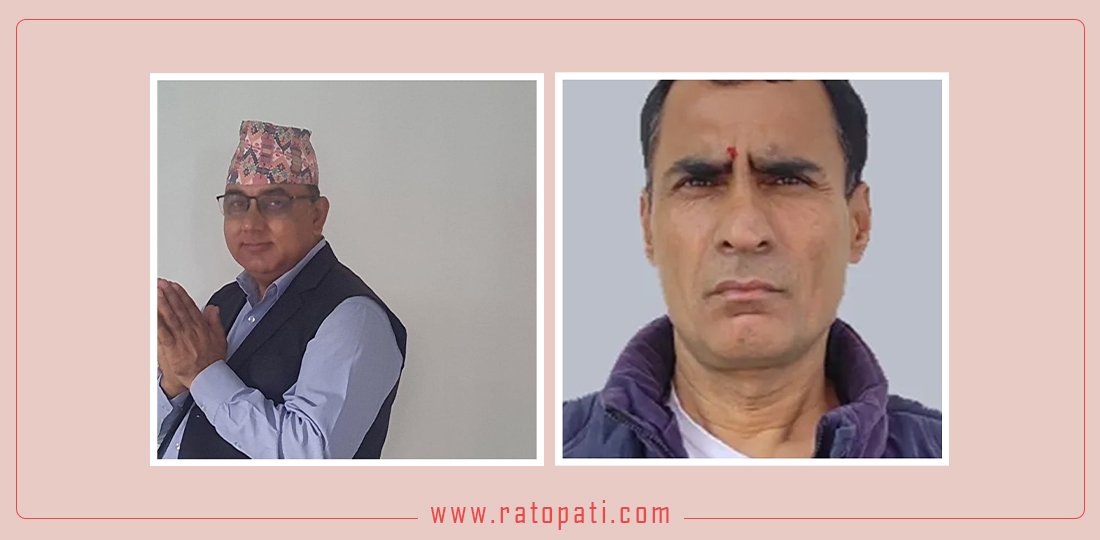
Previously, lawyers raised objections in the bench, arguing that Justice Pokharel's hearing of Lamichhane's case would constitute a conflict of interest because he had previously served as Lamichhane's legal counsel and argued his case. Nevertheless, after Justice Pokharel stated that the hearing would not be halted, the proceedings advanced in the bench including him.
The writ against the amendment of Lamichhane's charges is being heard by a joint bench of Justices Sharanga Subedi and Sunil Kumar Pokharel. "In this case, which has been under hearing since Thursday, Senior Advocate Surendra Bhandari initially raised an objection in the bench, stating that neither judge should hear the case, but the hearing proceeded after Justice Pokharel insisted on hearing the matter," said a lawyer present in the bench.
Senior Advocate Bhandari argued before the bench that Justice Pokharel should not hear the case because "Rabi Lamichhane was previously your client." However, the hearing moved forward after Justice Pokharel stated that he had observed a cooling-off period of one year during which he would not hear the case, and now he has decided to hear all cases.
Senior Advocate Bhandari questioned the bench, "Your Honor! How can we trust and how can impartial justice be served when you hear Ravi's case?"
In response, Justice Pokharel informed those present in the bench, "I had previously decided not to hear cases where a conflict of interest arises. Now that the cooling-off period is over, I have decided to hear all cases," said a lawyer present in the bench. The lawyer added, "He also mentioned that he would state his reasons for hearing Rabi Lamichhane's case in the final verdict."
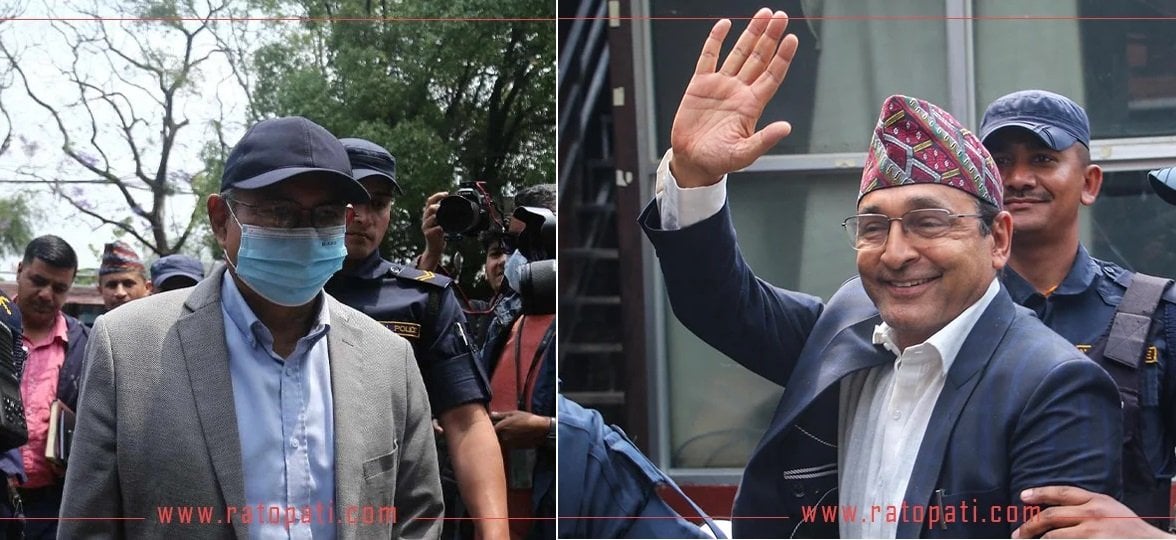
Justice Sharanga Subedi also faced questions regarding whether she should hear this case, in which Lamichhane is the respondent. Justice Subedi had previously ordered the registration of the complaint filed because the police refused to register the complaint alleging that Lamichhane committed cooperative fraud. Questions were raised about whether she could hear this case, as it is related to that matter and she had already expressed an opinion on it.
The hearing commenced after Justice Subedi stated that the situation is different now than before, and she could hear the case.
Advocate Ananta Raj Luintel suggests that it would have been better if the judge had recused themselves after lawyers raised questions about the bench. "After lawyers raised questions in the bench, he should have said, 'I will step away from this matter,'" he said. "The judge should have been able to keep himself away from cases involving a conflict of interest."
He argues that from a judicial perspective, it is better if such cases are not heard by the concerned judge. He added, "He will have to answer why he heard it."
Another lawyer, Murari Sapkota, also believes it would have been better if Justice Pokharel had not heard the writ petition against the withdrawal of charges against Rabi Lamichhane. "Looking at the judicial code of conduct, he should not have heard this case," Advocate Sapkota said. "It would have been better if he had distanced himself from that case."
Sapkota stated that after being questioned in the bench with "You should not hear this case," Justice Pokharel should have been able to say, "I will not hear it," but he failed to do so. He added, "If we proceed this way, questions will arise about how the fair and impartial justice envisioned by the law can be achieved."
The judicial code of conduct stipulates that a judge should not hear cases where they have represented a party. Advocate Sapkota further explains that since such matters are also related to the impartiality of the judge, they should keep themselves away from controversy.
Section 1 of the Muluki Civil Procedure Code, 2074, specifies the cases that a judge should not adjudicate, hear, or decide. Section 271(1)(a) states that a judge cannot hear a case in which they or their close relative have an interest, stake, or concern. Clause (b) covers cases where the judge was once an attorney or witness; clause (c) covers cases where the judge has already made a decision or final order in a lower court; clause (d) covers cases where the judge has previously given an opinion on whether the case should proceed or not; and clause (e) covers cases where, for any other reason, there is a fundamental conflict of interest for the judge or a member of their immediate family, or a conflict of interest with a person mentioned in clause (a).
How will Lamichhane's case proceed?
The Supreme Court is set to conclude the hearing and deliver a verdict on Lamichhane's case today (Tuesday). If the Supreme Court rejects the writ filed against the decision of the Office of the Attorney General, the path for Lamichhane to become a Member of Parliament and a Minister will be cleared. If the two charges related to money laundering and organized crime are amended, only the cooperative fraud case will remain against Lamichhane.
If the case is withdrawn, Rabi Lamichhane will not have to face suspension as an MP due to the money laundering case. Furthermore, it will be easier for him to reach settlements with the complainants in the cases pending in five different courts. However, if the Supreme Court orders to overturn the decision of the Office of the Attorney General, the cases of money laundering and organized crime against Lamichhane will remain pending until a final decision is reached, which will block Lamichhane's entry into Parliament.
If the Supreme Court refuses to overturn the decision of the Office of the Attorney General, the government lawyer's offices in Kaski, Rupandehi, Kathmandu, and Parsa will file applications in the district courts to withdraw the two charges. Currently, the government lawyer's offices in Kaski and Rupandehi have already filed applications in the District Courts of Kaski and Rupandehi for the amendment of the case. Due to the pending case in the Supreme Court, the District Courts in Kaski and Rupandehi have kept those applications in status quo.
The case related to cooperative fraud and money laundering against Lamichhane is pending in the Kaski District Court. Additionally, cases related to cooperative fraud and organized crime are filed and currently pending in Rupandehi, Kathmandu, and Parsa. If the Supreme Court clears the way, the District Government Lawyer's Offices can file applications stating the basis and reasons for withdrawing the case.
If the district courts permit the amendment of the case to withdraw the charges of money laundering and organized crime linked to Lamichhane, the path will open not only for him to become an MP but also to hold ministerial and public office. He will not be deprived of becoming an MP or a Minister due to the cooperative fraud case alone.
Advocate Tulsi Ram Pokharel states that if the charges of organized crime and money laundering connected to cooperative fraud against Lamichhane are amended, there will be no obstacle for Lamichhane to hold public office, let alone become an MP. "Suspension of an elected MP only occurs if they are jailed; the MP's position is not suspended merely because a civil case is filed in court," he said. "Rabi was charged with supplementary prosecution for money laundering and organized crime alongside cooperative fraud. This is what has prevented Ravi from becoming an MP."
Pokharel stated that if the supplementary prosecution charges are amended, there will be no hindrance for Lamichhane to hold public office. He added, "The government could file a case for cooperative fraud, but it also seems that the case was added somewhere to entangle Ravi in legal complications."
According to Advocate Pokharel, since the charge of money laundering against Lamichhane originated from offenses like cooperative fraud, this charge is not an independent or primary offense but merely an auxiliary charge dependent on the cooperative fraud offense. If cooperative fraud is the predicate offense, the added claims of money laundering and organized crime are auxiliary charges dependent on the cooperative fraud case. He explained that if the primary case is not proven or is dismissed, the auxiliary claims dependent on the primary case will automatically be dismissed.
"The Evidence Act, Section 34, stipulates that the burden of proving the claims made in the indictment rests with the government. If the government believes that such a claim cannot be proven, it can amend the claim," Advocate Pokharel said. "If such a provision were not made, the public prosecutor would have to argue cases where they might lose or fail to prove their claims after a case is filed, rendering the government's obligation to prove the claim ineffective."
Three writs have been filed in the Supreme Court against the decision of Attorney General Sabita Bhandari to direct the District Government Lawyer's Offices to amend the charges of organized crime and money laundering, along with cooperative fraud, pending in various districts against Lamichhane. Following Attorney General Bhandari's decision, government lawyer's offices in Kaski, Rupandehi, Kathmandu, and Parsa were directed to amend the two charges against Lamichhane.
This specific news has been automatically translated by AI. As a result, there may be some inaccuracies or language errors.