Jürgen Habermas, Influential Post-War German Philosopher, Dies at 96

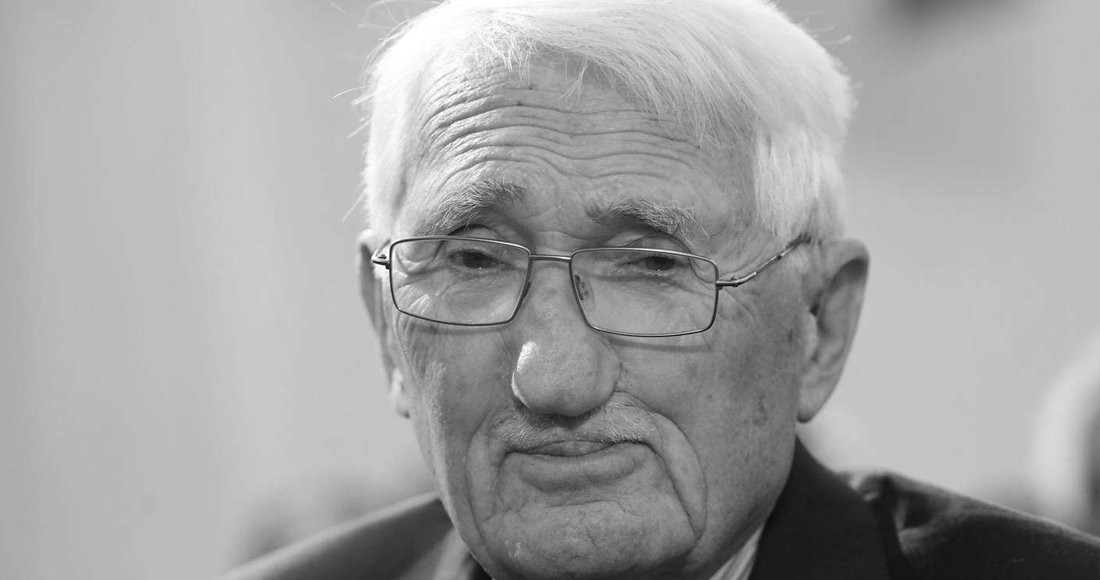
Jürgen Habermas, one of the most influential and widely cited philosophers and public intellectuals in post-World War II Germany, died on Saturday in Starnberg, southwest of Munich. He was 96 years old.
His publisher, Suhrkamp, confirmed his death.
Over a career spanning more than half a century and dozens of books, Habermas strongly countered the prevailing 'postmodern pessimism' regarding truth and reason. He steadfastly defended the ideals of the Enlightenment and the potential for individual and social freedom.
He is best known for introducing the concept of the 'public sphere' in the early 1960s. He theorized that the rise of democracy is only possible, and can only survive healthily, when there exists a public sphere for free deliberation outside of state control.
This concept influenced many academic fields, from political science and history to media studies, leading to thousands of research papers and books on the subject.
Habermas, a disciple of the renowned 'Frankfurt School of Critical Social Theory' and later its leader, held a greater belief in the possibilities of modernity than his mentors, Theodor Adorno and Max Horkheimer. He viewed the Enlightenment as an 'unfinished project.' Therefore, he believed it could be corrected by improving communication between people.
Beginning in the 1970s, he wrote about the 'ideal speech situation,' where people come together on an equal footing and arrive at the truth through rational dialogue. He further expanded this idea in his major work, 'The Theory of Communicative Action' (1981).
He argued that constructing consensus through conversation subjects ideas to the 'hard test of merciless public debate,' enabling citizens to 'collectively influence their social future.'
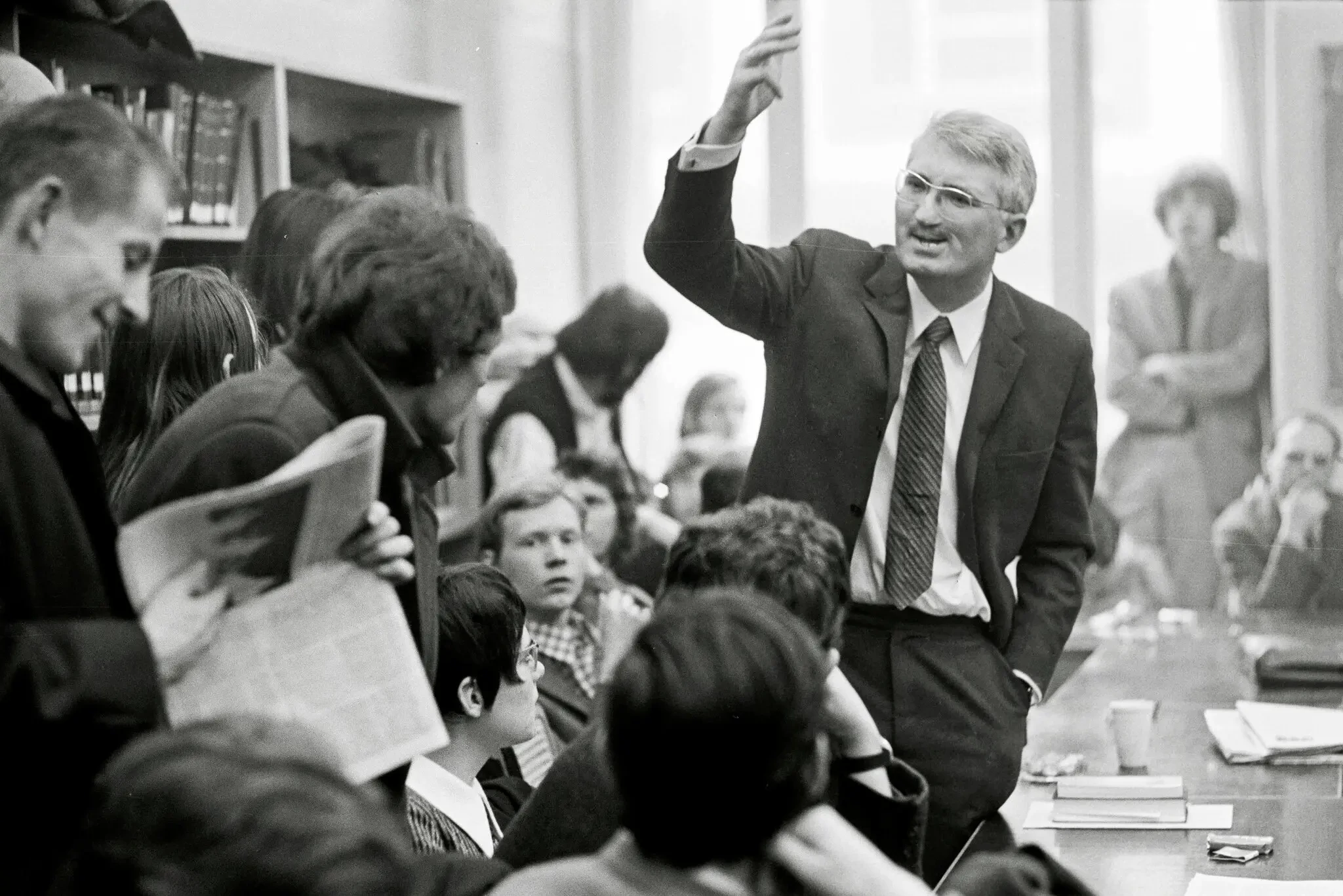
The devastation and death of World War II had made many thinkers skeptical that 'reason' served the common good. However, Habermas saw rational communication as an opportunity to revitalize democratic society.
In a 2005 interview, he said, 'I was always convinced that daily conversation and discussion put pressure on people to give reasons, to be a little more rational, and to answer questions like why did you say that? Why did you do that? And searching for that rationality inherent in our daily language became my inspiration.'
His Fame is Renowned
Habermas received many honors, including the prestigious 'Erasmus Prize' in 2013 and the 'John W. Kluge Prize' in 2015. When 'Times Higher Education' magazine compiled a list of the most cited authors in the humanities in 2007, Habermas ranked seventh, ahead of Freud and Kant.
American philosopher Ronald Dworkin wrote on Habermas's 80th birthday, 'Jürgen Habermas is not only the world's most famous living philosopher; his fame is renowned in itself.'
Although his philosophical writings were extremely complex and dense (one American intellectual described them as being as difficult as 'chewing glass'), Habermas also worked in another style. He continuously wrote opinion pieces on contemporary issues in German newspapers.
His main concern centered on the state of democracy and the fear that a violent and exclusionary social order, like the one he experienced in his youth, might return to society.
He constantly warned against the rise of nationalism and any attempt to forget or normalize the Holocaust (the genocide of Jews). He wrote, 'We who live in Germany have an important responsibility. Even if others do not feel it, we Germans must keep alive the suffering of those killed by our own hands, without distortion.'
He enjoyed intellectual battles. His most famous controversy in the 1980s is known as the 'Historikerstreit' or Historians' Debate. In it, he attacked right-wing German historians who were arguing to revise history by claiming the Holocaust was not a unique catastrophic event.
Symbol of Hope
Habermas was criticized by some as 'naive and impractical.' Postmodern leftists attacked him for his belief in universal truth, and neo-conservative rightists attacked him for his emphasis on compromise and consensus.
It was remarkable that a person who spent his adolescence in the 'Hitler Youth' could advocate that human society could move toward stable democracy and integration through dialogue. American philosopher Thomas Nagel said in an interview, 'He was a symbol of hope emerging from a dark history.'
Ernst Friedrich Jürgen Habermas was born on June 18, 1929, in Düsseldorf, Germany. He grew up in Gummersbach, a town about 30 miles east of Cologne. He was the middle of three children in a middle-class Protestant family.
His lip was cleft, and he underwent multiple surgeries in his youth to correct it, but the treatment was never fully successful. Because of this, he had difficulty speaking. He later said, 'Being bullied as a child gave me special sympathy for those who were excluded by society.'
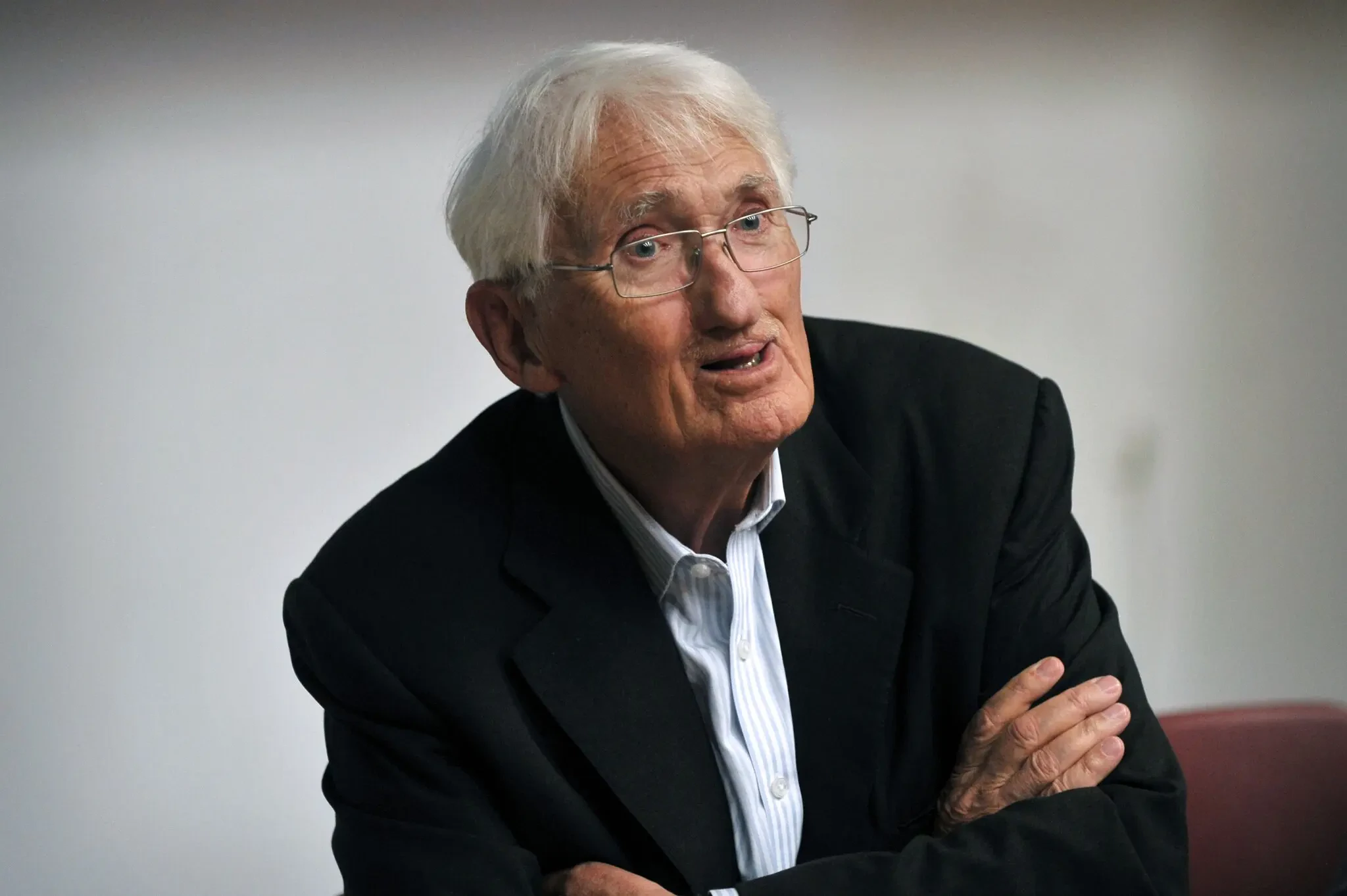
Like many Germans of his generation, he was drafted into the Hitler Youth at the age of 10. His father was a member of the Nazi Party and served as a Major in the Wehrmacht (Nazi Germany's armed forces). In the autumn of 1944, when he was 15, he received a letter summoning him to fight on the Western Front.
In February 1945, when military police came looking for him, he was coincidentally not at home. A few weeks later, Allied forces arrived in Germany, and he was spared military service.
Growing up in the shadow of the genocide known as the 'Holocaust,' Habermas began to develop his political and philosophical outlook. The Nuremberg Trials made him deeply aware of the 'collective inhumanity' committed by his own countrymen. For him, this was the first shocking event.
In 1953, at the age of 24, while studying at the University of Bonn, he sharply criticized Martin Heidegger, the greatest living German philosopher of the time. He questioned Heidegger's failure to acknowledge his Nazi past. When Heidegger's 1935 work, 'Introduction to Metaphysics,' was republished, the reference to the Nazi Party's 'inner truth and greatness' had not been removed.
Habermas wrote, 'Is it not the primary duty of a thinking person to clarify the responsible actions of the past and to keep the knowledge of them alive?'
From 1956 to 1959, Habermas worked as Theodor Adorno's first assistant at the famous 'Institute for Social Research' at the University of Frankfurt. The neo-Marxist Jewish intellectuals there were seeking a new worldview to understand the world by applying philosophical ideas to social problems.
However, Habermas disagreed with the pessimistic tone in Adorno and Horkheimer's 'Critical Theory.' The war had made them skeptical of modernity. According to Habermas, they understood the consumer culture of capitalism as a 'complete system of illusion' that destroyed individual identity.
The Public Sphere
In 1959, Habermas left the Frankfurt School and completed his second doctorate at the University of Marburg. His dissertation, which became the book 'The Structural Transformation of the Public Sphere' in 1962, focused on how reason and communication could help free people from illusion.
He presented the history of the birth of the 'public sphere' in 18th-century coffee houses in Britain and France. With the help of newspapers, middle-class men discussed politics and attempted to reach consensus on matters of common concern. For Habermas, that was a kind of golden age where rational communication helped build a democratic society.
'When being rational was not fashionable, he was a rationalist,' said Matthew Specter, a professor at the University of California, Berkeley, and Habermas's biographer, in an interview. 'He developed a sophisticated and dialogical concept of reason that convinced the post-war European generation that the Enlightenment belief in criticism and progress could be made meaningful again, even after the devastation of 20th-century fascism and communism.'
Habermas took over Horkheimer's position at the University of Frankfurt in 1964 and successfully guided the Frankfurt School into the next generation. From 1971 to 1981, he directed the 'Max Planck Institute' in Starnberg for ten years, after which he returned to Frankfurt. He taught there until his retirement in 1994.
Even in the final decades of his life, he continued to lecture extensively at American institutions such as Northwestern University and New York University.
His family includes his wife, Ute Habermas-Wesselhoft, and two children, Tillman and Judith Habermas. His other daughter, Rebecca Habermas, who was a professor of modern history at the University of Göttingen, passed away in 2023.
'Oh, Europe'
In his later years, Habermas was particularly concerned about the state of the European Union project. This concern was reflected in the title of his 2008 book, 'Oh, Europe.'
He believed that an integrated democratic union like the European Union could best resist the destructive effects of global capitalism and nationalism. However, he was saddened to see this concept being weakened by market and social forces.
In the early 2010s, many magazines referred to him as 'The Last European.'
Habermas also paid attention to the place of religion in the public sphere. Inspired by the growing hostility towards Muslims in Europe, he wrote about 'post-secular' society, where he attempted to reconcile the atheist tradition of the Enlightenment with modern religion, and faith with democratic institutions.
This was part of his lifelong ideal where the greatest number of citizens deliberate together about the state of their society. In an article published in 'The New York Times' in 2010, he expressed regret over the resurgence of nationalist tendencies in European politics.
He wrote, 'Democracy depends on the belief that there are still spaces left to collectively shape a challenging future.'
This specific news has been automatically translated by AI. As a result, there may be some inaccuracies or language errors.
_OmeV4uvYg3.jpg)