Middle East Tensions Highlight Nepal's Vulnerability and Push for EV Adoption


The escalating aerial attacks and counter-attacks between Israel-America and Iran have made the Gulf region a center of conflict. Iran has continued its retaliatory attacks after the US and Israel attacked Iran for several weeks. The tension that arose following the US and Israeli attacks on Iran starting February 28 shows signs of prolonging.
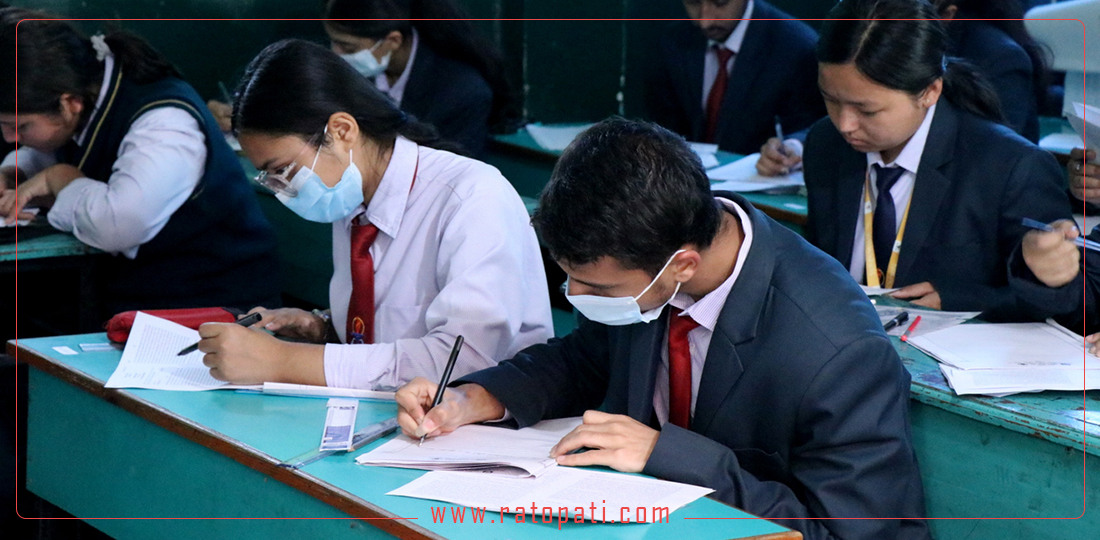
The impact of the war, which began after the US and Israel attacked Iran, has reached from the energy market to daily life. There has been a major upheaval in the global oil market. Due to fuel shortages in many countries, schools are on the verge of closure.
The effects of the war are beginning to be felt worldwide. This is leading to a continuous rise in the prices of fuel and food items.
Iran is currently targeting the fuel reserves of countries hosting US military bases. This is starting to create a severe disruption in the global supply chain. The conflict raging in the Middle East has reached Nepal.
The impact is beginning to show in both the kitchens and on the roads of Nepal, which imports over 80 percent of its petroleum products from India. A severe shortage has appeared in the market for Liquefied Petroleum (LP) gas after the international fuel supply system was disrupted. On the other hand, the queues of the general public to fill up at petrol pumps are gradually lengthening. This crisis scenario has once again exposed Nepal's dependent economy and the weak foundation of its energy security. Among the fuel imported into Nepal, consumption is highest in the domestic sector (kitchen), transportation, and industrial sectors. A large portion of foreign exchange reserves is spent on purchasing this fuel.
Whenever there is a situation of war or tension in the international arena, Nepal has a history of facing such blockades or shortages. But now, the need to increase the use of domestically produced hydropower and other alternative energy sources as a substitute for fuel has become apparent.
Now, the situation demands that induction stoves replace gas and electric vehicles (EVs) replace petroleum-fueled vehicles in Nepal. The government has also been providing concessions on the import of electric vehicles for the last few years.
Due to the government's promotion of electric vehicles, the use of electric vehicles on the roads has been continuously increasing recently. However, despite the increase in private vehicles, there has been little change in the public transportation and industrial transport sectors.
As the winter season reduces water levels in Nepal's rivers, leading to decreased electricity generation, the Nepal Electricity Authority (NEA) is importing electricity from India to manage the supply. According to the NEA, imports from India began in Poush to manage electricity demand. Currently, the peak hour electricity demand in Nepal is 2300 MW, but production is only 1800 MW. The NEA needs to import 150 to 200 MW daily from India to manage the electricity supply.
Currently, Nepal has permission to import 1054 MW of electricity daily from India. This permission is valid only until December 31 (i.e., Poush 17). In Kartik, India's Central Electricity Authority approved the NEA to purchase 1054 MW round-the-clock electricity from the Energy Exchange Market (IEX).
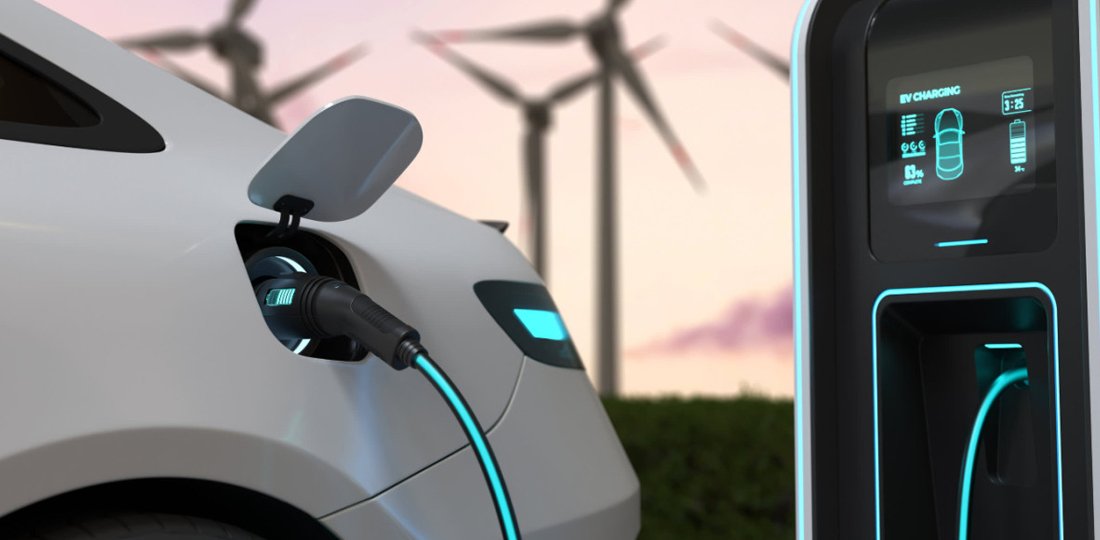
Nepal is authorized to purchase up to a total of 1,054 MW of electricity through bidding on the exchange market via the Dhalkebar-Muzaffarpur cross-border transmission line (600 MW), from Bihar (300 MW), the Mainiya-Sampatiya cross-border transmission line (50 MW), and the Tanakpur-Mahendranagar line (54 MW). India will review the approval granted for electricity purchase after December. NEA Spokesperson Rajan Dhakal stated that there is no problem in managing production and import for the use of electric vehicles, even if it means importing from India.
He said, 'There will be no problem with charging electric vehicles. The Authority is always ready to promote electric vehicles. Charging stations have been operationalized across the country for this purpose. Service is currently being provided from there.'
Surendra Upreti, President of the Nepal Automobile Dealers' Association (NADA), states that considering the conflict in the Middle East and the potential crisis of petroleum products, electric vehicles (EVs) are the best option.
However, he noted that it is not possible to completely transform Nepal's entire transport sector to electric vehicles overnight. President Upreti mentioned that while there is no immediate scarcity of petroleum products in the market, Nepal will eventually have to move towards EVs in the long term.
'There is no shortage of diesel and petrol in the market right now, so there is no need to panic,' said President Upreti, 'but if the conflict in the Middle East prolongs, this situation could become critical. Therefore, the government's policy of promoting electric vehicles and the increasing attraction towards EVs are very positive.'
EV Use Enthusiastic in Private Vehicles, Negligible in Public Transport
While the use of electric vehicles has increased significantly in private vehicles in Nepal, it remains low in public transportation. Public transport and freight transport consume more petroleum products than private vehicles. However, the operation of electric vehicles in public and freight transport is still minimal.
President Upreti stated that the use of electric vehicles in private vehicles in Nepal is very encouraging. According to him, electric vehicles now account for about 76 percent of the share in private vehicle sales.
However, he pointed out that the presence of electric vehicles in mass transportation (public buses) and freight vehicles (trucks, etc.) is almost zero.
'When we talk about transportation, we must look at public transport and freight vehicles, where EV usage is negligible. Similarly, in two-wheelers (motorcycles/scooters), 90 to 95 percent still run on petrol,' he said, 'This makes the complete transformation of the entire transport sector to EVs very challenging.'
He added that if the tension in the Middle East increases, there is a possibility of problems not only in petroleum products but also in the supply of EV parts and components. He stated that the impact on the global supply chain could increase the price of EVs and their parts, and make it difficult for factories to meet demand.
As the price hike and supply challenges of petroleum products continue to mount, this situation is becoming both a compulsion and an enabler for Nepal to move forward with the use of electric vehicles. Similarly, Ganesh Karki, President of the Independent Power Producers' Association, Nepal (IPPAN), stated that Nepal should view the escalating conflict in the Middle East and the potential petroleum crisis it might cause as a golden opportunity to become energy self-reliant.
President Karki stated that the government must take immediate policy steps to eliminate dependence on fuel by increasing the production and consumption of domestic hydropower.
'Such crises occur in the world market from time to time; this is the biggest opportunity for us and the country,' Karki said, 'We must at least make ourselves self-reliant in energy and agriculture. Nepal currently has gas and fuel storage capacity sufficient for only 10 days; what happens if the supply stops? Therefore, this is the right time to find alternatives.'
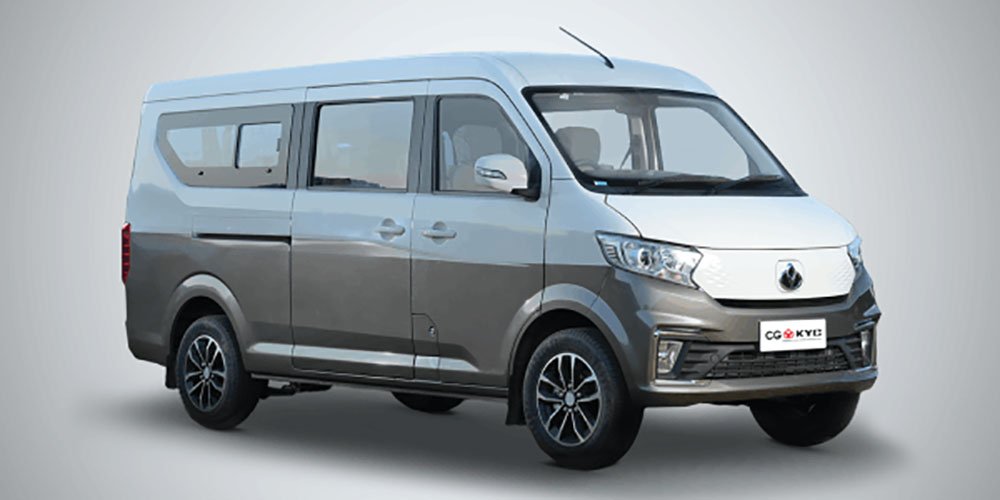
President Karki emphasized the need to increase the use of electricity in vehicles running on diesel and petrol, from private to public transport, and in industrial factories. He stated that there is a risk of both transport and industry coming to a standstill if diesel and petrol imports stop, and thus, necessary infrastructure must be built for the electrification of public transport.
'What happens if electric vehicles (EVs) are increasing now, but tomorrow there is no petrol and electricity is also not being generated?' he questioned, 'Therefore, along with increasing production, sufficient charging stations for charging vehicles in the morning and evening in places like Kathmandu, and upgrading transformers and structures for the use of induction stoves, must be done.'
Karki mentioned that petrol, which was Rs 90 per liter during the COVID period, later reached Rs 200, and if it reaches Rs 300 to 400 in the international market in the coming days, the Nepali economy cannot sustain it. To avoid this, he suggested that the government should work towards a goal of cutting gas and petroleum product imports by 90 percent within the next few years.
'The government should bring a new policy on how to convert existing diesel and petrol-run vehicles into electric ones,' he said. IPPAN President Karki stressed that instead of panicking after a crisis hits, the government and all stakeholders must focus on planning in advance to increase electricity production and domestic consumption.
Nepal's Global Leap in Electric Vehicles
The leap Nepal has taken in reducing dependence on petroleum products has become exemplary for the world. Nepal holds the second position globally in the market share of electric vehicle (EV) sales.
According to data from the International Energy Agency and Ember (including both battery electric and plug-in hybrid), Nepal ranked second globally in the share of EVs among new cars sold worldwide in 2025. The European nation of Norway holds the first position globally, setting a record by capturing 97 percent of its total new car sales through EVs in 2025. After Norway, Nepal ranks second globally with EVs making up 73 percent of its total new car sales.
In 2019, the share of EVs in new car sales in Nepal was only 8 percent. In the period between 2019 and 2025, Nepal achieved a historic surge of 61 percent in EV sales share. During the same period, European countries like Finland and Denmark, considered advanced in electric vehicles, achieved growth of only over 50 percent.
In terms of volume, China remains the world's largest EV market. Data shows that over 13 million EVs were sold in China in 2025 alone.
In 2019, electric vehicles were still a matter of luxury or specific purchase in most countries. However, this transformation achieved by Nepal in a short period clearly shows the changing consciousness of Nepali consumers and their hunger for energy transition.
Status of Electric Vehicle Imports
The sudden increase in the use of electric vehicles in Nepal is not without reason. It is linked to gradual development and the impact of government policies. According to the Department of Customs data, a total of 31,386 electric vehicles have been imported into Nepal up to the fiscal year 2081/82. The initial phase was very slow. In fiscal year 2076/77, only one electric vehicle with a capacity of 100 to 150 kW was imported. But in the subsequent years, this figure has not looked back; it has been continuously increasing since then.
In FY 2077/78, only 249 EVs were imported, including 120 up to 100 kW, 25 between 50-100 kW, 51 between 100-150 kW, and 53 between 150-200 kW. Vehicles worth about NPR 657.843 million were imported this year.
In FY 2078/79, imports increased to 1,807 vehicles, worth NPR 5.32055 billion. In FY 2079/80, EV imports more than doubled, with a total of 4,050 vehicles imported, valued at NPR 11.840895 billion. Small vehicles, up to 50 kW (3,759 units), dominated this year. In FY 2080/81, there was a qualitative and historic increase in EV imports, with 11,701 electric vehicles entering Nepal, nearly three times the previous year, costing NPR 29.482794 billion. This year, 4,571 vehicles up to 50 kW and 6,885 vehicles between 51-100 kW were imported.
In the last fiscal year, the number of electric vehicle imports reached 13,578. This year, while vehicles worth NPR 31.76 billion were imported, the government successfully collected NPR 19.70 billion in revenue.
The change in the choice of Nepali consumers is evident. Previously, consumers were limited to small-range vehicles up to 50 to 100 kW, usable only within cities. However, since last year, users have started showing interest in vehicles with longer ranges and higher capacities.
Data from the first seven months of the current fiscal year 2082/83 (Shrawan to Magh) also shows that the attraction towards EVs continues to rise. During this period, Nepal imported a total of 5,804 units of electric cars, jeeps, and vans worth over NPR 13.8477 billion from various countries worldwide. The government collected NPR 8.46 billion in revenue from this.

Lesson to Learn from the Crisis: Electrification from Kitchen to Road
The supply problem caused by the conflict between Iran and Israel might be a temporary event, but the message it sends is long-term. As long as Nepal remains dependent on petrol, diesel, and LP gas, the Nepali economy and the daily lives of its citizens will always remain at risk.
The increasing use of induction stoves as an alternative to gas in kitchens from cities to villages is a positive start. The Nepal Electricity Authority needs to make electricity supply reliable.
Furthermore, this EV revolution seen in the transport sector can prove to be a boon for Nepal's economy. The use of electric buses and minibuses is increasing in public transport, and the projection that EVs will account for 73 percent of private vehicle share could stop billions of rupees currently spent on petroleum imports from leaving the country. It will lead the country towards energy self-reliance by increasing the domestic consumption of cleanly produced hydropower within Nepal.
The government should now maintain stability in tax rates to encourage the use of electric vehicles, expand a network of state-of-the-art charging stations nationwide, and further strengthen the electricity distribution system.
This specific news has been automatically translated by AI. As a result, there may be some inaccuracies or language errors.