Non-Resident Nepali Association World Conference Sees Diminished Glory Amidst Internal Strife

Kathmandu. At one time, hearing the name of the Non-Resident Nepali Association (NRNA) used to fill the chests of Nepalis worldwide with pride. This organization, operating under the slogan 'Nepali for Nepalis,' was the center of hope for millions of Nepalis living abroad. The government also accorded great importance to the NRNA.
However, by the time the 12th World Conference of the association began in Kathmandu on Saturday, a significant decline in this pride and attraction was felt. While past world conferences saw participation at the level of the President or Prime Minister, this time only the Foreign Minister attended, and the participation from the NRNA itself was in low numbers.
Experts suggest that the NRNA's reputation is deteriorating daily due to increasing political interference and internal factionalism within the organization. There has been extreme controversy within the NRNA for the past few years, which led to the division of the NRNA. Amidst this, although a unity agreement was recently reached between the divided factions with the aim of returning the NRNA to its former state, the World Conference starting Saturday lacked the usual excitement.
Established in 2003, although the organization now has a network spanning over 90 countries, the unhealthy competition for leadership, positional tug-of-war, and legal battles that reached the Supreme Court have weakened its prestige. The enthusiasm seen in delegates at the conference, which began in a one-star hotel in Kathmandu, is absent; instead, concern for the future and uncertainty are more evident.
Speaking at the opening session of the conference, founding chairman Dr. Upendra Mahato gave an emotional statement. He hinted that the personal interests of the leadership were primarily responsible for the decline in the organization's prestige. Mahato stated, 'When we built this organization, we kept the interests of Nepal and Nepalis at the center, but today the fight for position and prestige has brought the organization to the brink of collapse.' He emphasized that the NRNA should be a common garden for all Nepalis, not an affiliate organization of any political party, and noted that the current division has caused despair among Nepalis living abroad.
A major reason for the decline in attraction towards the NRNA is the extreme politics that has infiltrated it. Direct interference and support from political parties in Nepal during the organization's elections have sidelined independent and expert individuals. As a result, the organization is losing its originality. Other former chairpersons speaking at the event also questioned the organization's financial transparency and working style, warning that if a path of reform is not adopted, the relevance of the NRNA will completely vanish.
In the past, the NRNA had been raising a strong voice for 'NRN Citizenship,' collective investment, and the security of Nepalis employed in foreign jobs. Some achievements were made, but recently the organization has become more entangled in internal complications than in its own agendas.
Consequently, general non-resident Nepalis have begun viewing it merely as a club for the wealthy and powerful. Complaints that the NRNA has failed to do concrete work, especially for the laborers sweating it out in the Gulf and Malaysia, remain unaddressed.
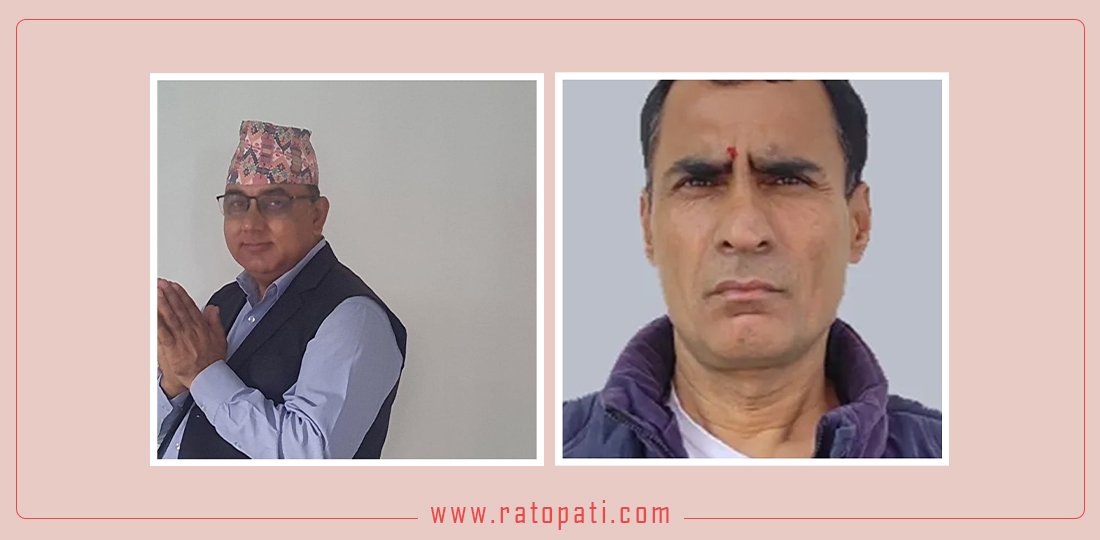
The current leadership at the conference attempted to send a message of unity. Executive Chairman Dr. Badri KC and Chairman Mahesh Shrestha claimed they agreed to end the differences between them and unite the organization. However, delegates do not seem convinced whether this agreement is merely a political strategy or genuinely aimed at saving the organization's prestige. In informal discussions inside and outside the conference hall, questions like 'What do I gain by joining the NRNA?' have started to surface, which were rarely heard in previous conferences.
Foreign Minister Balananda Sharma, who attended the conference on behalf of the government, also urged the NRNA to come together in unity. Sharma drew attention to the fact that the internal disputes of the NRNA were negatively affecting the country's diplomatic prestige.
This time, sessions on topics such as 'Contribution of Non-Resident Nepalis to Nepal's Economy,' 'Participation of the Second Generation,' and 'Labor and Social Security' were conducted at the conference. However, more than these policy discussions, everyone's attention is fixed on the upcoming leadership and the unity it might bring. Activists say that if this conference fails to truly integrate the organization and factionalism is not ended, the danger of Nepalis abroad seeking an alternative to the NRNA is increasing.
Former Chairman RK Sharma stated that the 12th World Conference must not be just a formal gathering but must be able to restore the lost trust of the NRNA. He mentioned that the absence of some former chairpersons at the conference made the event feel somewhat lackluster.
Some Achievements Amidst Controversy
Despite the internal strife, some achievements have been made within the NRNA. Executive Chairman Dr. Badri KC claimed a major success at the policy level even when the organization was on the verge of division. He interpreted the commencement of the process to implement the Non-Resident Nepali Citizenship, a demand raised for 20 years, as the organization's biggest victory. Dr. KC said, 'We were in a very difficult situation internally, but during this time, we achieved the NRN citizenship that we had been demanding for 20 years. This has legally connected Nepalis worldwide with their motherland forever.'
Another Executive Chairman, Mahesh Kumar Shrestha, presented a list of concrete work done by the organization in the economic and social sectors. He stated that it has been proven that the NRNA not only talks but also works.
He said, 'The establishment and initiation of the operational process for the NRN Nepal Development Fund of 10 billion rupees is a major achievement in mobilizing our collective capital.'
Similarly, Shrestha interpreted the role played by the NRNA in enrolling approximately 2 million Nepali workers abroad into Nepal's Social Security Fund as a historic achievement.
He said, 'The construction of the Laprak settlement in Gorkha, sending oxygen concentrators during the COVID-19 period, and the humanitarian aid provided during the recent Jajarkot earthquake confirm that the NRNA has always been a friend in Nepal's time of need.'
Founding General Secretary and former Ambassador Bhim Udas stated that the NRNA has succeeded in bringing not only capital but also knowledge and technology to Nepal. He mentioned success in connecting the skills of Nepali experts living abroad with Nepal's policymaking through the 'Brain Gain' campaign.
Similarly, former Chairman Binod Kunwar praised the NRNA's activism during crises, even though the fight for position and prestige had affected the organization's image. He opined that the aid sent by the sweat and blood of Nepalis living abroad during disasters like earthquakes and pandemics validates the organization's relevance.
Kunwar said, 'There may be problems within the organization, but the blood and sweat of the NRNs working in the field have provided great support to Nepal's development and crises; no one can devalue this.' Former Chairman Sharma stated that if the organization is to return to its former glory, there is no alternative to uniting and joining hands for Nepal's development and prosperity. This view is shared by former chairpersons Jiba Lamichhane, Bhavan Bhatt, and others.
Efforts for Consensus in Leadership
The 12th World Conference of the NRNA is scheduled to conclude on Tuesday after electing a new leadership. It is reported that efforts are being made this time to elect the leadership through consensus. Chairman Shrestha stated that intensive discussions are underway following the opening session for this purpose.
Following discussions held earlier, Chairman candidate Robin Sherchan has already withdrawn his candidacy and agreed to take the position of Vice Chairman. Shrestha mentioned that efforts are being made to reach a consensus on other positions as well.
It is stated that emphasis is being placed on consensus to avoid increasing disputes in leadership selection through elections, as seen in the past. So far, Hemraj Sharma and Rabin Bajracharya are candidates for the Chairman position, and efforts are underway to persuade Rabin to withdraw and make Sharma the unanimous chairman. Similarly, Ramsharan Simkhada and Chiranjibi Khadka are candidates for the General Secretary position, and efforts are being made to reach a settlement for that post as well. The election committee has stated that some positions are being filled unanimously.
This specific news has been automatically translated by AI. As a result, there may be some inaccuracies or language errors.