India's Supreme Court Grants Passive Euthanasia for Man in Coma for 13 Years

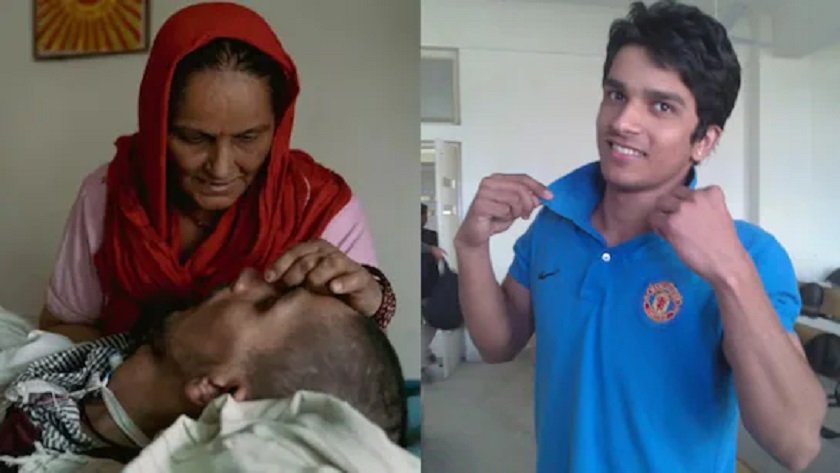
Kathmandu. India's Supreme Court on Wednesday delivered a historic verdict on euthanasia, granting permission for passive euthanasia to 31-year-old Harish Rana, who has been in a coma for 13 years.
Harish, a permanent resident of Ghaziabad, is currently on a life support system. This is the first such case in India. A bench comprising Justices JB Pardiwala and KV Viswanathan directed Delhi's AIIMS hospital to gradually withdraw Harish's life support system. The court stated that this process must be carried out in a manner that preserves the patient's dignity.
Doctors have declared Harish to be suffering from a condition called quadriplegia. In this state, the patient is completely dependent on a feeding tube and ventilator support. It has been stated that there is no possibility of recovery from this. Due to being bedridden for about 13 years, Harish has also developed bedsores, and his condition is continuously deteriorating.
This situation is extremely painful for Harish. Seeing him like this has become mentally very difficult for the family. The expenses for the ventilator, medicines, nursing, and care over the years have been so substantial that the family has become financially exhausted and weakened.
What is Passive Euthanasia?
Passive euthanasia means stopping or withdrawing external life support or treatment given to keep a seriously ill person alive, so that the patient can die naturally. The Supreme Court delivered this verdict on an appeal filed by Harish's mother, Nirmala Rana, and father, Ashok Rana, seeking permission for euthanasia.
This specific news has been automatically translated by AI. As a result, there may be some inaccuracies or language errors.