Speculation Rises Over National Independent Party's Pledge to Make Balen Shah Prime Minister Amid Election Success

Kathmandu. As the results of the House of Representatives election held on Falgun 21 are nearing completion, the new political party, Rastriya Swatantra Party (RSP), is approaching a near two-thirds majority. According to the Election Commission's data as of Monday afternoon, RSP is close to a two-thirds majority combining both direct and proportional representation seats. Out of 165 constituencies in direct elections, RSP has won 125 seats, while it has crossed 4 million votes in proportional representation. The Commission expects all vote results to be published by Falgun 27.
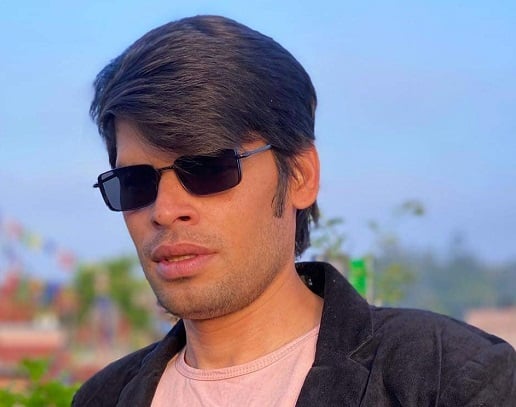
With results that surprised everyone, there is considerable speculation in political circles regarding the elevation of senior leader Balen Shah as Prime Minister, as per the prior agreement. There is significant doubt as to whether RSP, which represents an alternative political stream, will demonstrate the old political parties' tendency to make agreements and then fail to implement them, or if it will implement the agreement honestly.
On Poush 13, a 7-point agreement was reached between RSP Chairman Rabi Lamichhane and former Mayor of Kathmandu Metropolitan City, Balendra Shah. Point number 4 of that agreement states that Rabi will be the party chairman, and Balen will be the parliamentary party leader and the candidate for the future Prime Minister.
“Rastriya Swatantra Party Chairman Rabi Lamichhane will remain, and after the upcoming House of Representatives election, Balendra Shah will be the parliamentary party leader and the candidate for the future Prime Minister,” the agreement stated.
However, following the election victory, various public comments made by Chairman Rabi Lamichhane and Vice Chairman Dol Prasad Aryal to journalists have led to widespread criticism. Controversy has erupted on social media over the statement made by Vice Chairman Aryal, who was elected from Kathmandu-9, regarding the implementation of the agreement.
When asked about the implementation of the seven-point agreement to make Balen the Prime Minister, he replied, “I need to check what is written in that agreement myself. I don't have everything memorized. If what you are saying is written there, then whatever is written will be done.”
When pressed if the agreement would not be deviated from by even an inch, Aryal responded that he saw no need to promise the journalists.
“I do not see the necessity to promise you. The party is being formed. Leaders will come elected from the party,” he said. “There are senior leaders and the Chairman. There is the party's Central Committee, discussions will happen there. A parliamentary party will be formed. We must abide by the decision made there.”
Chairman Rabi was also asked similar questions, but various suspicions have arisen due to his evasive answers. He avoided the question of whether Balen would be made Prime Minister for the full five years. Given that Rabi, who won by a huge margin from Chitwan-2, has various cases related to cooperative fraud, organized crime, and money laundering pending in different courts, he does not appear to be in a position to become Prime Minister immediately.

While various doubts persist about making Balen the Prime Minister, Joint Secretary Bipin Kumar Acharya has stated that the prior agreement will be honestly honored. He claimed that the media is unnecessarily trying to create confusion regarding the statements made by the party leadership.
“Politics is about honesty. The party moves forward through rules, procedures, and processes. There is a Central Committee. A parliamentary party will be formed. Balenji is a senior leader. There are party members. If there is a problem, there will be a collective discussion,” he told Ratopati. “We will honestly implement the agreement made in the past. There will be no deviation from the prior agreement. An attempt is being made to viralize just one clip on social media by distorting the reality. We are cautious about this.”
In 2074 BS, the agreement between the then CPN Chairmen KP Sharma Oli and Pushpa Kamal Dahal 'Prachanda' to alternate running the party and the government was not implemented, leading to the split of the party and the fall of the CPN government. At that time, CPN had won 174 seats. Eight years later, RSP has the possibility of forming a government with nearly a two-thirds majority. Arguments are being made in political circles that Balen cannot become Prime Minister according to RSP's statute as well. Article 66, Sub-article 8 of the statute provides for the selection of the House of Representatives parliamentary party leader. It states that the leader will be selected through a competition among interested elected candidates before the election.
“An election will be held for the selection of the House of Representatives parliamentary party leader among the interested candidates chosen for proportional and direct representation in the federal election from the party before the federal election,” the statute provides.
Sub-article (b) states that all general members of the party will be eligible to vote in the election as per Sub-article (a). It is mentioned that the candidate who secures the votes of (50 percent + 1) of the total valid votes cast in the election as per Sub-articles (a) and (b) will become the parliamentary party leader for the party. If no candidate secures (50 percent + 1) of the votes, there is a provision for a re-election between the two candidates who received the most votes.

“If any candidate fails to secure (50 percent + 1) of the total valid votes, a re-election will be held between the two candidates who received the most votes, and the winning candidate will be the parliamentary party leader for the party,” the statute states.
Advocate and newly elected RSP Member of Parliament Yagyamani Neupane asserts that regardless of any provision in the statute, the prior agreement's implementation will not be hindered. “The reason it is included is to implement democratic values and norms. But if there is a single candidate for any post, they will be automatically elected. In the current context, there is no need to amend the statute,” he said. “It is impossible to alter the seven-point agreement. The country cannot run in the old way. Firstly, morality is something that must be held in the highest regard. We will move forward by reviewing how political parties in Nepal have failed until today.”
He mentioned that the provision in the statute was felt to need amendment when Chairman Rabi was jailed during his remand hearing. “The feeling arose that the provision in the statute was ambiguous. When Rabi sir was arrested in connection with the case, he lost his parliamentary seat. The plan was to move forward by resolving obstacles so that the parliamentary party leader position would not remain undecided,” he said. “There was a discussion on whether to amend the statute or interpret the ambiguous provision. As discussions progressed, the decision was made to manage with the Deputy Leader for now.”
Therefore, Neupane argues that the provision in the statute will not impede the implementation of the agreement. “The statute has a provision for going to a vote if there are two candidates; if the leader is chosen unanimously, the statute will not be an obstacle,” he said. “Unlike the old parties, we will not make an agreement first and then do something else. The statute mandates that if there are multiple candidates, it should go to a vote.”
He explains that leaders of old political parties failed because they lacked political morality, lacked the capacity to lead the country to prosperity, and were oblivious to what the opposition or citizens were saying.
This specific news has been automatically translated by AI. As a result, there may be some inaccuracies or language errors.