Pakistan Becomes Top Recipient of Chinese Arms Exports as Global Arms Trade Shifts, SIPRI Report Shows

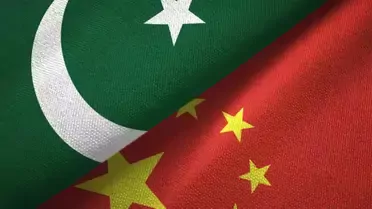
Significant changes are being observed in the global arms trade patterns in recent years. According to a new report from the Stockholm International Peace Research Institute (SIPRI), Pakistan has become the largest importer of arms from China. The report indicates that approximately 61% of the major arms exported by China between 2021 and 2025 went to Pakistan.
The report further states that about 80% of Pakistan's total arms imports came from China during this period. This figure was 73% in the 2016–20 period, showing an increase in the latest period. Although China supplied major arms to 47 countries during this timeframe, the report highlights that the largest share went to Pakistan.
According to SIPRI, Pakistan climbed from tenth place among the world's major arms importers in 2016–20 to fifth place in 2021–25. Pakistan's arms imports increased by 66% between these two periods, accounting for about 4.2% of the global total arms imports.
The report also addresses India's situation in South Asia. SIPRI stated that India became the world's second-largest arms importer in 2021–25, accounting for 8.2% of total global arms imports. According to the report, India's arms imports appear to be primarily motivated by tense relations with China and Pakistan. The report notes that tensions between these two countries periodically escalate into military clashes, mentioning that both sides used imported weapons during a brief conflict between India and Pakistan in May 2025.
However, the report shows a slight decline in India's overall arms imports over the last decade. It mentions that India's arms imports decreased by about 4% between the 2016–20 and 2021–25 periods, linking this to the expansion of domestic arms design and production capabilities. Nevertheless, the report points out that delays in indigenous production persist.
Despite this, SIPRI states that India remains dependent on foreign suppliers for many major military systems. According to the report, India's plans and orders to purchase 140 fighter jets from France and six submarines from Germany indicate that reliance on foreign sources will continue.
India also appears to have diversified its sources for arms procurement in recent years. The report indicates that while India traditionally purchased large volumes of arms from Russia, it is now showing an increased inclination towards Western countries, particularly France, Israel, and the United States. The share of Russia in Indian arms imports dropped from 70% in 2011–15 to 51% in 2016–20, and further down to 40% in 2021–25, the report notes.
According to Simon Wezeman, a senior researcher at the SIPRI Arms Transfers Programme, concerns about China's growing military capabilities and its strategic objectives are influencing the defense policies of many countries in Asia and Oceania. He noted that many countries in the region still rely on imported weaponry.
Wezeman cited the example of South Asia, stating that the main reasons for India's large-scale arms imports are the challenge posed by China and the long-standing conflict with Pakistan, which receives a large volume of arms from China. He mentioned that imported weapons were also used during the military tensions between India and Pakistan in 2025, and both countries are nuclear-armed states.
SIPRI's analysis shows that a large portion of global arms imports between 2021 and 2025 was concentrated in a few limited countries. Ukraine, India, Saudi Arabia, Qatar, and Pakistan jointly accounted for about 35% of the global total arms imports.
Looking at global arms exports, the United States became the largest exporter. The report states that the US accounted for 42% of global arms exports during this period. France became the second-largest exporter with a 9.8% share, while Russia ranked third with a 6.8% share.
The report also shows a significant decline in Russia's arms exports in recent years. Russia's exports, which accounted for 21% of global arms exports in 2016–20, fell to 6.8% in 2021–25. Decreased exports to major customers such as Algeria, China, and Egypt are cited as the main reasons.
Meanwhile, arms imports in Europe have increased significantly due to the ongoing war in Ukraine and rising security concerns. According to the report, Europe accounted for the largest share of global arms imports for the first time since 1960.
The report indicates that Europe currently accounts for 33% of global arms imports, Asia and Oceania for 31%, and West Asia for 26%.
This specific news has been automatically translated by AI. As a result, there may be some inaccuracies or language errors.