Accidental Perfection: How India's Top Order Mastered the T20 World Cup Final


Ahmedabad. The scoreboard read no runs (0-0) and four balls had been bowled. Sanju Samson had already made his presence felt with excellent performances in his previous two innings. But this was a new day, the day of the biggest match.
He was facing an opponent against whom he had struggled so badly just a few weeks ago that he lost his place in the team because of it. Trent Boult was swinging the new ball beautifully and had even appealed once for LBW.
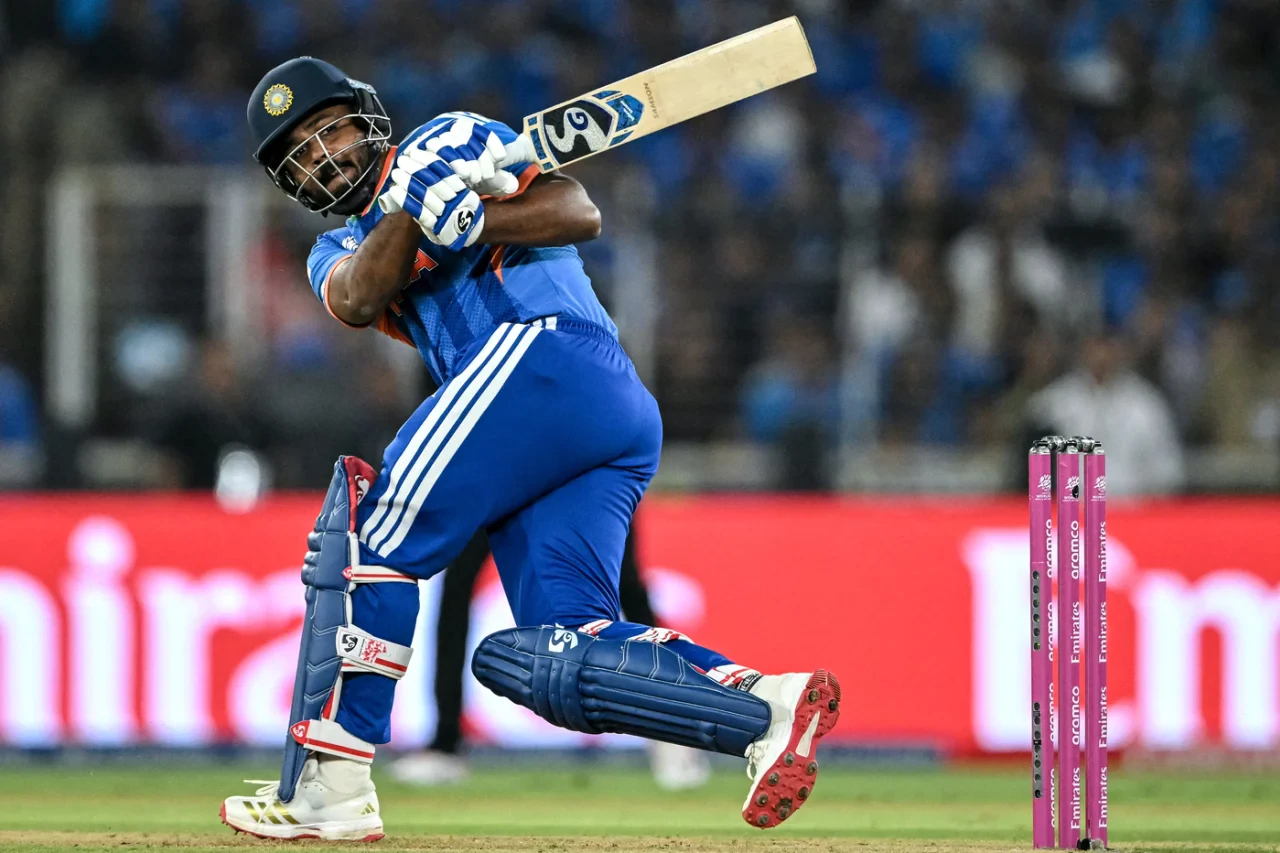
Then Samson stepped out of his crease and sent Boult's ball over the long-on boundary.
Of course, he would do that. This was Samson's fifth match in this T20 World Cup. This was his fourth opportunity to take the strike in the first over. In every previous instance, he had hit a six in the first over, and this time he repeated it.
This is Samson. This is how he bats. Why would he bat differently just because it was the final match?
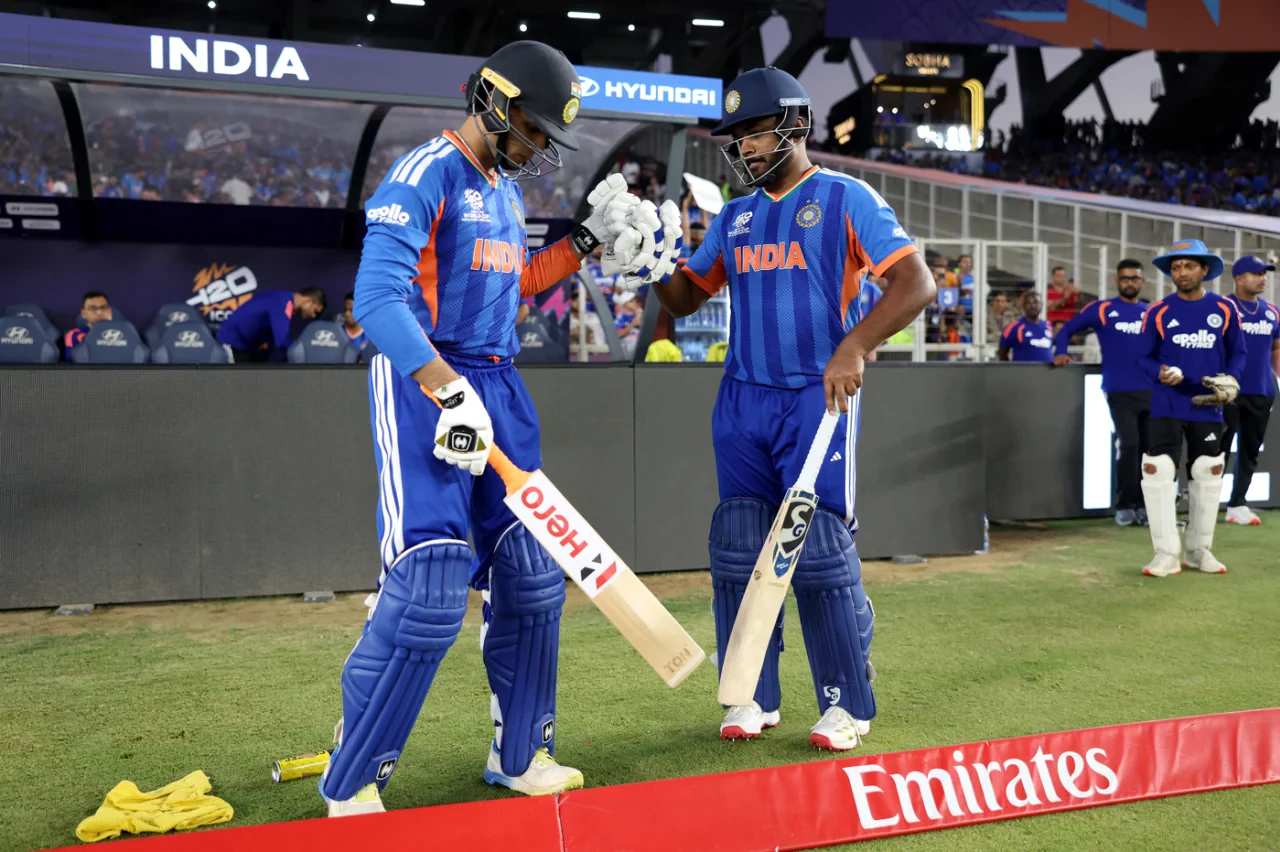
On the third ball of the second over, Abhishek Sharma did something he rarely does. He played a purely defensive shot. His poor performance throughout the tournament, especially his struggle against off-spin bowling he was currently facing, had brought him to this position.
But he wasn't going to bat like that for long. If he did, he wouldn't be Abhishek. He had struggled to score runs for most of the tournament, but he hadn't stayed at the crease long enough to determine if he was in form or not.
Today it became clear that he was not in form—at least not in the form we had been seeing, where his movement was clear and his body was always perfectly balanced to open up his arms. Today he was scoring runs, but he wasn't completely in rhythm.
But he played an innings that only he can play. He completed his half-century in just 18 balls, the fastest of this tournament and his third-fastest fifty in T20 Internationals. He stepped out of the crease, created space, and lofted the ball over the off-side. When Jacob Duffy packed the field on the off-side and bowled short-of-a-length away from him, he shuffled across the crease and hit it over midwicket.
He was doing all this while struggling to middle the ball. More often than not, his shots were slicing rather than connecting cleanly. On a few occasions, he lost his balance and the ball edged away towards the fine-third boundary. The mishits landed in the gaps between fielders or in areas they couldn't reach even with a dive. When he got out, his control percentage on the ball was 71.4, and even that figure seemed higher than reality.
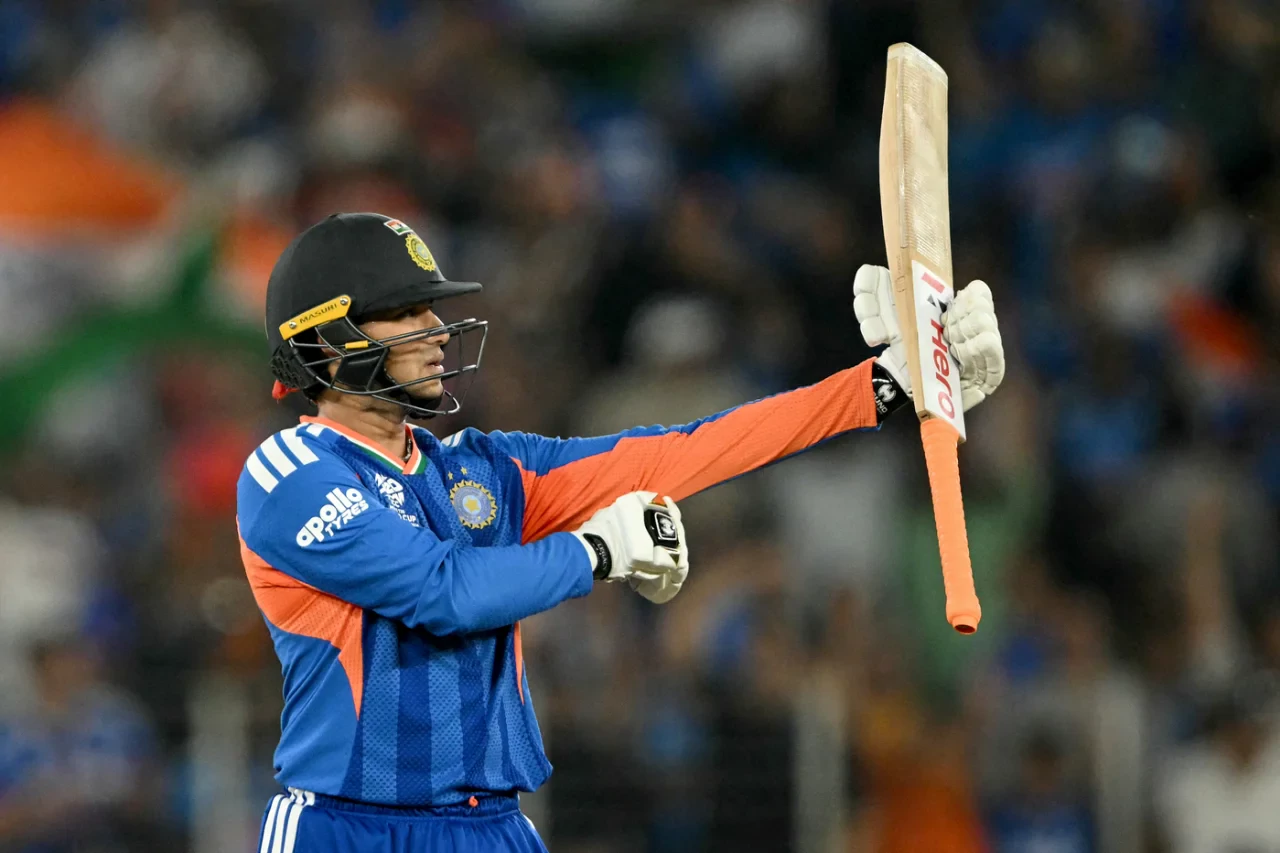
When you think of great innings, you remember those where the batter conquers the situation and the bowling, showing otherworldly confidence. Abhishek has played many such innings. But this was different, and great in its own way. A batter who is not consistently scoring runs, not middling the ball well, doubting himself. He admitted this in the post-match interview, yet he hasn't stopped taking risks by believing in his own style and shots. And that too in a World Cup final. A batter who was willing to lose control of the ball and risk getting out cheaply to make an impact on the game.
However, he did not take that risk against the off-spinner. And that off-spinner, Glenn Phillips, conceded only five runs in that over. He didn't bowl after that. And he wasn't even the main off-spinner India expected to face.
New Zealand had left out Michael Bracewell, who had dismissed two left-hand batters from South Africa in the same over in the semi-final.
Why didn't New Zealand give Phillips another over? Why did they leave out Bracewell? The reason could be India's other opening batter, Sanju Samson.
Samson was not in India's starting playing XI in this World Cup. But due to the problems India faced in the first half of the tournament, especially the struggles of the pure left-handed top three batters against off-spin in the powerplay, he found a way back into the team. Samson was brought in specifically to break the one-sided lineup of only left-handed batters.
In the semi-final against England, even with Samson at the other end, Abhishek got out early playing a risky shot in the air against the off-spinner (Will Jacks)—although he had already hit two fours off Jacks in the same over. But here in the final, Abhishek respected Phillips and left the responsibility of that match-up to Samson.
Whether Samson took that responsibility or not, his presence was becoming this option for Abhishek.
Samson's entry had another impact on the Indian team: moving Ishan Kishan from opening to number 3 and Tilak Varma from number 3 to number 5. This solved another major problem India was facing.
Up until the Super Eight game where they lost by 76 runs against South Africa, India's scoring rate against spin in the first 10 overs (6.95) was the worst among all full-member nations in this tournament.
Abhishek was getting out quickly repeatedly, while Kishan scored runs quickly against spin but also got out just as quickly (77 runs off 47 balls in the first 10 overs, out four times). This meant that Tilak at number 3 and Suryakumar Yadav at number 4 had to face a lot of spin, and both were finding it very difficult to accelerate the scoring. Batting in the first 10 overs, Tilak scored only 30 runs off 30 balls against spin, and Suryakumar only 26 runs off 31 balls, without getting out.
Samson's entry stopped the opposition from immediately deploying an off-spinner. This pushed Kishan into a role where he could spend more time at the crease during the middle initial overs. In this process, he aggressively batted against the main spinners of the opposition, not giving them a chance to dominate against Tilak or Suryakumar as they might have.
When Mitchell Santner brought on his left-arm spin bowling on Sunday, Samson took no risks against him. Apart from a four with an orthodox back-cut, he only rotated the strike, handing the responsibility to Kishan.
That night, Samson scored 10 runs off 11 balls against Santner, while Kishan added 21 runs off just 10 balls, hitting his trademark two leg-side sixes. This was an old style of risk-sharing, but India wisely decided not to take unnecessary risks against Santner, possibly considering him New Zealand's main weapon.
Those risks were unnecessary because Samson, Abhishek, and Kishan were severely punishing almost all other bowlers. This included match-ups where the type of bowler didn't match but the quality did. Rachin Ravindra had proven to be an unexpectedly excellent wicket-taker in this World Cup.
But India showed him no respect on this batting pitch in Ahmedabad. Even when Abhishek got out chasing a wide ball in Ravindra's first over, the Indian batters didn't hold back.
When New Zealand dared to give Ravindra a second over, Samson thrashed him for three consecutive sixes. These were all classic Samson shots: a straight hit after stepping out of the crease, a merciless pull shot over midwicket, and an inside-out shot over wide long-off.
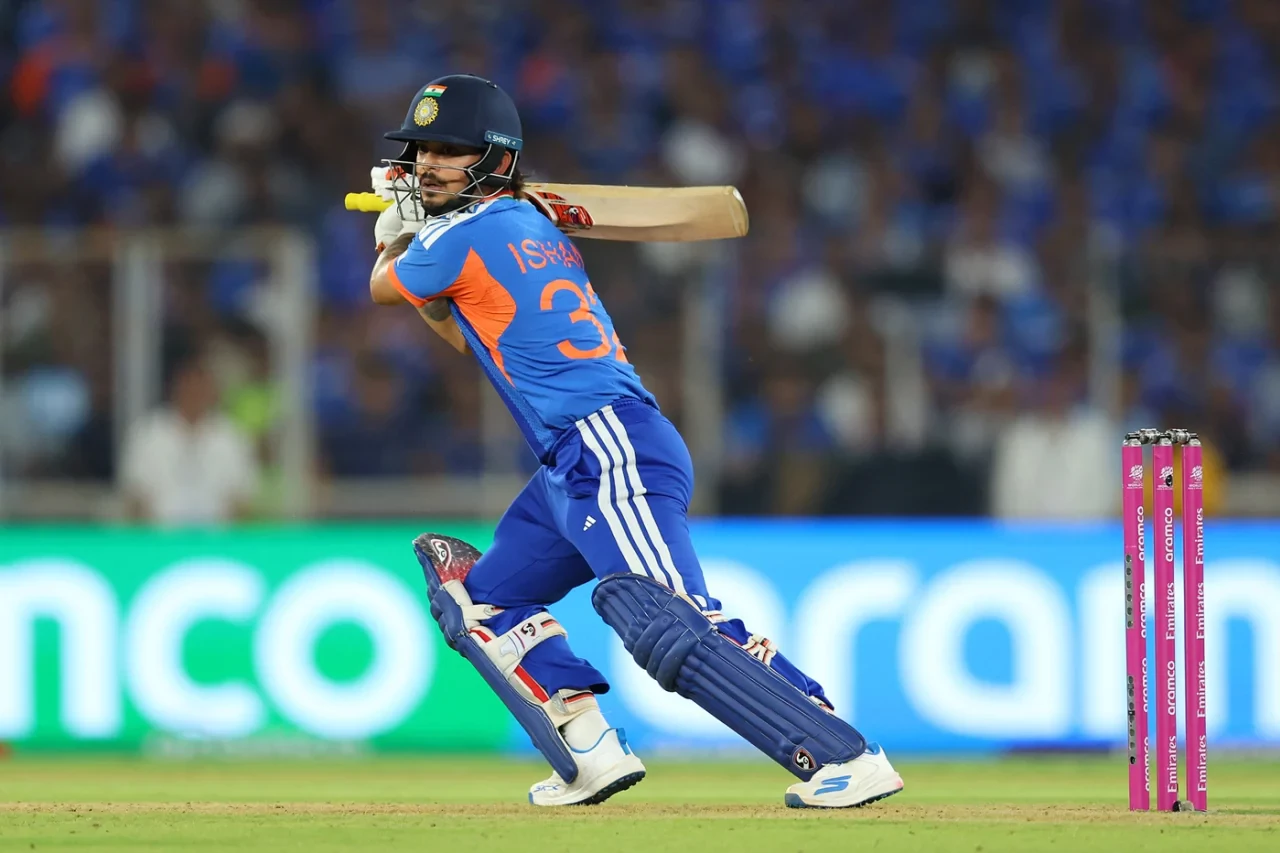
Before that, Kishan had hit Ravindra for two consecutive fours as soon as he arrived at the crease. The first four made it clear why India is much more dangerous when Kishan faces spin in the middle overs than Tilak or Suryakumar.
That was a good ball from Ravindra, bouncing on the pitch and coming onto the stumps, leaving no room to open the arms, and with enough fielders on the leg-side boundary. This is a safe ball for spinners to bowl in the middle overs. But Kishan opened his hips, punched the ball straight with the middle of the bat, and found a way through the gap between long-on and deep midwicket.
It is no coincidence that Samson's entry and the subsequent batting order change completely transformed India's fortunes against spin. From that point on, India became the team with the best average against spin in the first 10 overs (36.75). Although they were only mid-table in terms of scoring rate in the Super Eights, a run rate of 8.64 was a significant improvement from the start of the tournament.
This reshuffle also did not affect India's aggression in the final overs, as Tilak Varma fit comfortably into Rinku Singh's role of pace-hitting (hitting against fast bowlers). After the order change, Tilak scored 62 runs off 25 balls faced against fast bowlers in the death overs (17-20) at a strike rate of 248.00. He hit seven sixes, including three against Jofra Archer in the 19th over of the semi-final in Mumbai.
Tilak didn't have to do much on Sunday. That day belonged almost entirely to Samson, Abhishek, and Kishan. Together, these three scored 195 runs off 92 balls, and at one point even made the spectators dream of a 300-run total again.
This was a top-three that complemented each other perfectly. They played in partnership, complementing each other, didn't give the opposition easy match-ups, and kept every bowler under extreme pressure with their aggression and variety of shots. It looked like a top order prepared with great foresight, but it was almost coincidental.
Kishan wasn't even in India's World Cup plans until the final series before the World Cup. If two events beyond his control—Tilak missing the series due to injury and Samson struggling with loss of form—hadn't coincided with him being in excellent form, he wouldn't have even made the playing XI.
Samson went from being a guaranteed opening-keeper to competing with Jitesh Sharma in the middle order, then back to being an opening-keeper, then out of the playing XI... and then back into the team.
Abhishek Sharma went from being the world's number 1 T20 batter to not scoring a single run in the entire group stage of the World Cup.
All these events were necessary for this magical top-three to form. And when it did, magic happened, resulting in one of the best top-order batting performances in T20 history on cricket's biggest stage.
This specific news has been automatically translated by AI. As a result, there may be some inaccuracies or language errors.