International Women's Day Celebrated Globally with Focus on Rights and Justice
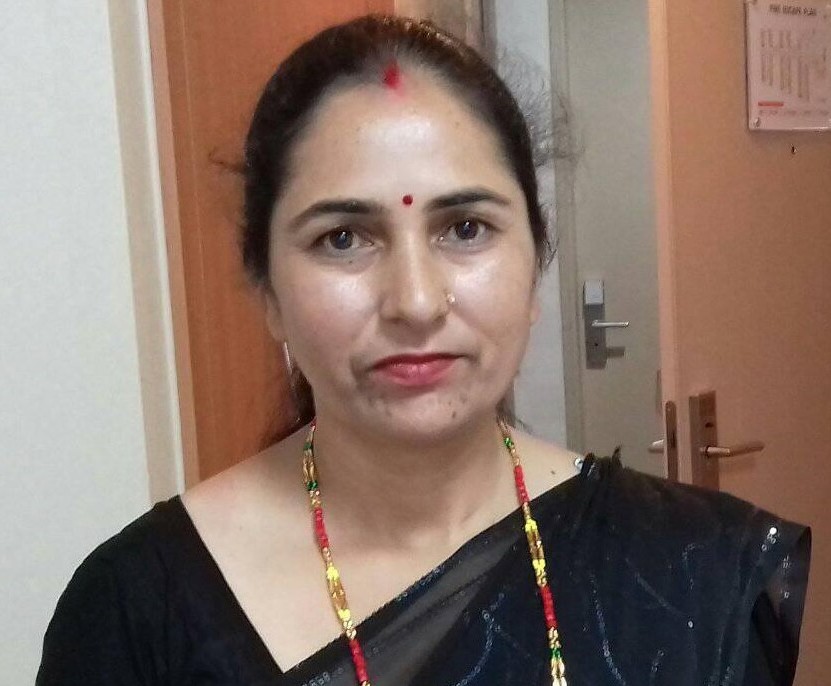

International Women's Day, observed globally as a special day since 1911, is being celebrated worldwide on March 8 this year. The international theme set for this year is 'Right, Justice, Action for All Women and Girls'.
In Nepal too, the day is being celebrated nationwide with various awareness programs under the theme 'Rights, Justice, and Opportunity with Action for All Women and Girls'. International Women's Day remains a priority for multifaceted stakeholders including government bodies, the non-governmental sector, civil society, and media personnel as a special day to herald gender equality and women's empowerment, just as it is in the global community. It is regarded as a special festival that sows the seeds of gender equality and women's empowerment in Nepal.
As human rights issues gained international discussion and recognition, the issue of women's rights began to take center stage globally. Even today's modern society gives significant priority and importance to International Women's Day. Its background is traced back to a massive demonstration held in New York in 1908. For this demonstration, a struggle committee was formed in 1907 at a conference of leading women from around the world held in Mexico City, USA, led by Clara Zetkin. The gender issues raised from the massive rally and assembly, organized by Zetkin, a German women's rights activist, involving 15,000 women from around the world, remain alive today concerning women's rights, gender equality, and women's empowerment. Following this movement, which raised issues such as appropriate working hours to manage women's workload, equal pay for equal work, and women's suffrage, the role of the American Socialist Party was pioneering in advocating for Women's Day. While the American Socialist Party's pioneering work gained strong international recognition, Clara Zetkin's contribution is placed at the forefront. As it was first celebrated in Austria, Denmark, Germany, and Switzerland in 1911, this year marks the 116th International Women's Day.
The popularity of March 8, which carries the global identity of International Women's Day, seems to have oriented the world towards the campaign for women's rights. Following the dissolution of the League of Nations in 1945 and the establishment of the United Nations, the UN Commission on the Status of Women was established. Most of the issues raised during the first session of this Commission in 1947 were incorporated into the Universal Declaration of Human Rights. The 70th session of the UN Commission on the Status of Women is being held in New York, USA, from March 9 to March 19, raising the issue of access to justice for women and children. Attention will also be drawn to the need for UN member states to establish inclusive and equitable justice systems, repeal or amend discriminatory laws, and end harmful practices existing in underdeveloped countries, requiring the establishment of strong institutional structures to raise women's issues.
International Women's Conferences led by the United Nations have also made significant contributions to women's empowerment and development. The year 1975 can be considered a golden year from the perspective of women's rights. The first World Conference on Women was held in Mexico City, USA, in this year. This conference declared 1975 as the International Women's Year and the decade from 1975 to 1985 as the International Women's Decade. The objective of this declaration was to eliminate gender discrimination, which had become an obstacle to global development. In the meantime, the United Nations issued the Convention on the Elimination of All Forms of Discrimination against Women. Nepal has been a party to this Convention, issued on December 18, 1979, since April 22, 1991.
Similarly, the Second World Conference on Women was held in Copenhagen, Denmark, in 1985. This conference reviewed the progress of the International Women's Decade from 1975 to 1985. The Third World Conference on Women, held in Nairobi, Kenya, in 1990, issued the Nairobi Forward Looking Strategy as a global strategy for gender equality and women's empowerment. Furthermore, the Fourth World Conference on Women held in Beijing, China, spurred the global community towards clearer results. The Beijing Platform for Action, issued by the Fourth World Conference, proved to be a guiding document for identifying 12 critical areas of concern regarding women's rights and for mainstreaming these concerns through the internal policies, plans, programs, and institutional structures of member states.
Gender policies were formulated in most countries worldwide under this document. The practice of gender-responsive budgeting was adopted to make annual programs gender-friendly. The establishment of separate bodies to address women's issues gained global priority. Ultimately, gender-responsive governance proved to be the tool for achieving gender equality. It cannot be denied that today's world is accelerating development by considering gender equality as the main destination, evidenced by the strong competition among nations to achieve Goal 5 of the Sustainable Development Goals, issued in 2015 with 17 targets, which is considered the ultimate goal for achieving complete gender equality in the world.
Nepal also appears to place high priority on achieving gender equality through women's rights, empowerment, and gender mainstreaming. Immediately after becoming a party to CEDAW, 1979, the Ministry of Women and Social Welfare was established in B.S. 2052. This facilitated the mainstreaming of gender in development. The Women Development Program, operational since the fiscal year 2038/039, has been effectively implemented, resulting in the economic and social empowerment of rural women. The establishment of the National Women Commission in B.S. 2058, the recognition of the Women Commission as a constitutional body by the current Constitution of Nepal, the establishment of ministries dealing with women's affairs under provincial governments, and women's branches at the local level give the impression of a women-friendly governance system in Nepal.
Speaking of women-friendly policies, the current Constitution of Nepal is recognized globally as a women-friendly document, which prepared the ground for a significant leap in women's political journey. The results of this are clearly visible in the opportunities women secured in past elections in the three tiers of the legislature. Numerous legal arrangements have been made to ensure victims of violence against women access justice. The National Women Commission is providing necessary services to bring remote women within reach of justice through the 'Call Us' helpline 1145. Women, Children, and Senior Citizens Service Centers of the Nepal Police have established the identity of a women-friendly system in the country through objective investigation and prosecution of violence victims from 223 locations across the country. At the One-Stop Crisis Management Centers operated in government hospitals in 97 locations, all necessary services are provided in one place to ensure access to justice for women victims of violence. Given that violations of women's rights often occur within the household, accounting for 80 percent of reported incidents of violence against women in Nepal, the activeness of judicial committees at the local level has given victimized women the real feeling of Singha Durbar right at their doorstep. Although Nepal is still in the least developed status, it can be seen that it is engaging in healthy competition with other countries in the world on the journey towards gender equality.
Despite substantial efforts in women's rights and empowerment over the past few decades, relatively little progress has been made in indicators related to women's empowerment due to challenges such as the persistence of harmful customs, practices, and traditions, extreme gender discrimination, the non-economic valuation of women's care work contributions, and women-targeted programs only reaching the well-connected.
To realize this year's International Women's Day theme, it is necessary to shift from the concept of gender and development to a rights-based concept, invest in the empowerment of women at risk of violence, establish a streamlined and clear justice system, and establish gender-sensitive bodies capable of empowering women in marginalized and at-risk communities. It is the need of the hour to formulate and implement clear policies, plans, strategies, and action plans to achieve the national targets addressing gender issues within the stipulated timeframe, prioritizing collaboration with multi-stakeholders at all stages of implementation.
This specific news has been automatically translated by AI. As a result, there may be some inaccuracies or language errors.