Voters Express Deep Dissatisfaction with Political Parties as Election Campaign Enters Final Phase

Kathmandu. The election campaigning for the House of Representatives election has reached its final stage. Political parties participating in the election, their candidates, and independent candidates have reached out to the voters with their respective agendas, seeking votes in their favor. Based on this, voters will cast their mandate through the 'ballot' on Thursday.
During field reporting in some districts of Sudurpashchim and Lumbini, most voters interviewed by Ratopati not only complained that the parliamentarians they elected in past elections failed to perform as expected but also accused them of failing to implement even a small fraction of the commitments they made during election time.
Although candidates from old and major parties listed the development works done in the past to seek votes, it did not seem to have much impact on the voters. Voters were found to have made their standard of living the main criterion for evaluation.
Issues such as a family member from most households being employed in foreign employment or being compelled to go abroad, the inability to earn a living by working in the homeland, the lack of quality and accessible education and health services, the failure to complete projects started years ago on time, and the poor and vulnerable not feeling any change in their lifestyle from completed projects increased dissatisfaction among voters.
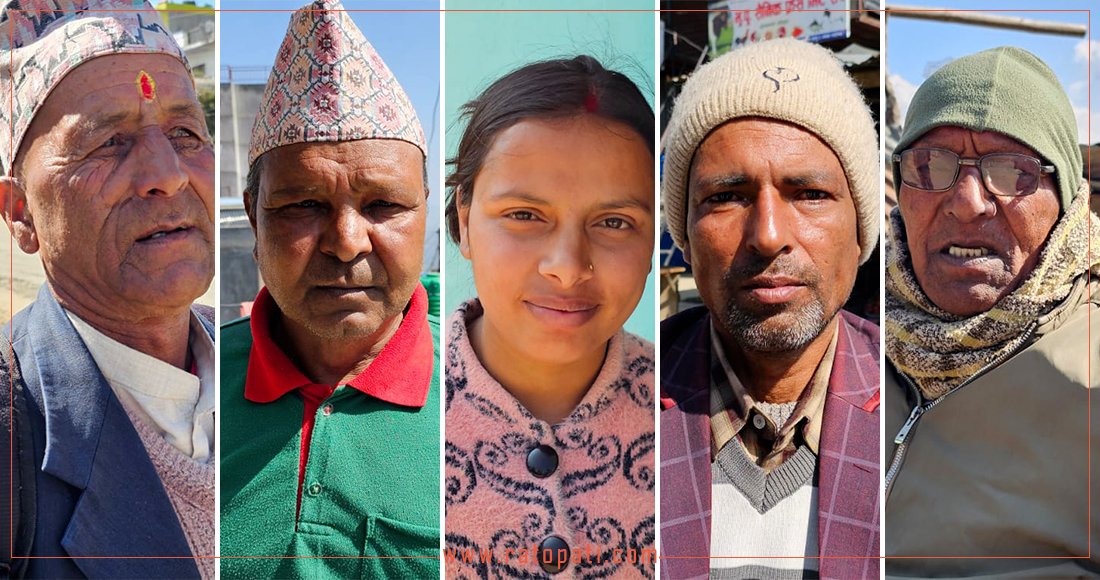
Parshuram Bohora, 71, from Shuklaphanta Municipality-10, Kanchanpur, who has been surviving on the earnings of his son working as a laborer in India, is worried about having to send his son to 'Mugnal' (abroad) for sustenance in his old age, when his son should be his support. He said, 'Leaders always come asking for votes saying they will provide employment, build roads, build drains, and give land ownership papers, but our household cannot manage without my son going to Muglan. If they had worked according to what they said, would my son have had to go to India?'
Another main reason for the widespread public dissatisfaction was found to be the frequent change of government in between the mandate given by the people for five years through elections, and the parties being preoccupied with power-centric issues rather than matters directly concerning the daily lives of the people.
Paridatta Awasthi, a resident of Ganyapadhura Rural Municipality-1, Dadeldhura district, speaking to Ratopati, stated that development works have not gained momentum due to the lack of political stability in the country. He said, 'Parties are always busy playing games of forming, sustaining, and collapsing governments. When will they ever assess whether development works were done on time, what plans to advance, and what results the people will get from them?'
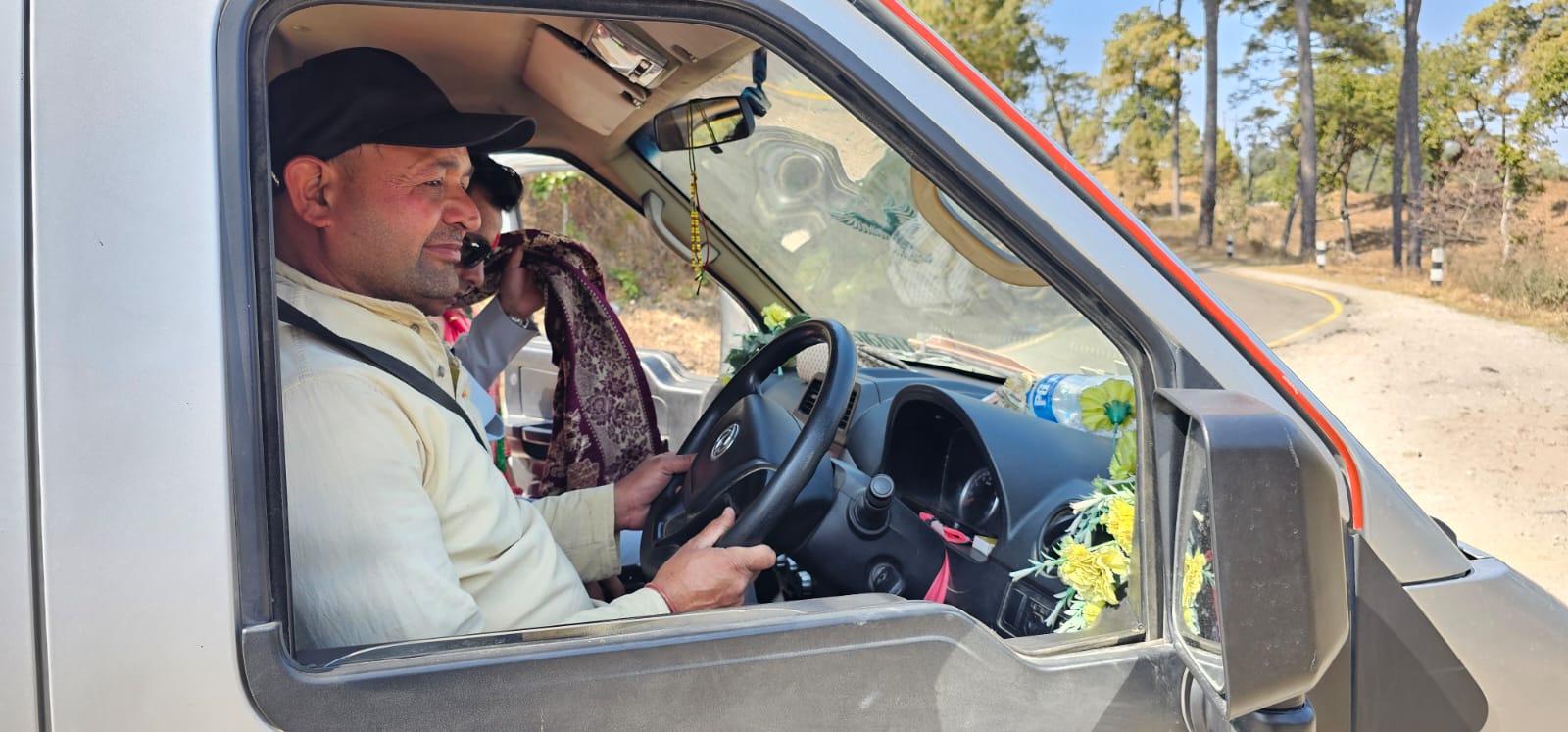
He sees a need for change in the country. He described the upcoming election as an appropriate opportunity to bring about change. 'The people must elect a single party with enough majority to form a stable and honest government towards the people,' he said. 'If these same old parties become decisive again, what improvement will come in the state of the country?'


Manorath Pant, from Amargadhi Municipality-5, Dadeldhura district, also stated that the people should cast their votes in the election in such a way that a single party receives a full majority. He said, 'We have seen all the so-called major parties; when they led the government multiple times, there was no achievement for us. What if something happens if we give votes to a new party that can run the government confidently for five years! If it doesn't work, we can change our minds after five years!'
Impact of Internal Strife in Congress
Most voters who survive by working for wages and daily labor appear disgruntled with the old parties. On the other hand, the main party, Nepali Congress, is plagued by internal strife.
The Congress, which elected new leadership through a special general convention, is not openly receiving support from the former establishment faction, i.e., the Sher Bahadur Deuba faction, especially in the Sudurpashchim Province. Congress workers appear disheartened even in Deuba's home district, Dadeldhura. Yet, Deuba has been elected in every parliamentary election from this district since 2048 BS.

There is intense anger among Congress workers in Sudurpashchim Province over Deuba being removed from leadership and not even being allowed to contest as a candidate. Voters also say that the election feels incomplete without Deuba.
Bhojraj Bhatta from Amargadhi-9 said it is strange that his own party did not allow Deuba, who led the party for two terms, to contest. His question is, 'If a party cannot do justice to its own leader who has led the party, what will it give to the people?'

Congress workers in districts like Kanchanpur and Kailali also appear divided in their mindset, which seems likely to create a crisis for the party's candidates.
Voters in other districts of Sudurpashchim Province expressed similar sentiments to Bhatta. Their complaint was that it was strange that Congress did not want to field candidates who had won in the previous elections.
While one faction of the party is enthusiastically campaigning after changing leadership through a special general convention, the other faction is found to be sitting disheartened and lethargic, like soldiers who have lost a war. The polarization seen within the party will only become clear after Falgun 22 regarding what and how much impact it will have on the election results.
How much is the influence of 'Shedding Skin' in CPN?
The Communist Party of Nepal, formed by the merger of various parties including CPN (Maoist Centre) and CPN (Unified Socialist), is trying to attract the youth vote by stating that the demands and issues of the Jana Andolan (People's Movement) are legitimate. However, it has not had a major impact on the labor, poor, and Dalit-Janajati classes.
Despite party unity among various factions, some voters analyze the Communist Party of Nepal as 'Maoists who have shed their skin.' The impression on the public is that even though the party's name has changed, the leaders at the top are engaged in power politics and have failed to do any effective work. CPN candidates are seeking votes in their favor by advocating for the protection of achievements gained from the Second People's Movement, safeguarding the constitution, and ending corruption and malpractices.


Helkumar Dangora from Krishnapur Municipality-4, Kanchanpur district, says there is no room for hope or trust in any old party anymore. 'We listened to Maoist in 064 BS, Congress in 070 BS, and we listened to and trusted UML and Maoist in 074 BS,' said the person displaced during the reserve expansion, 'They all deceived us. We still haven't received permanent settlement.'
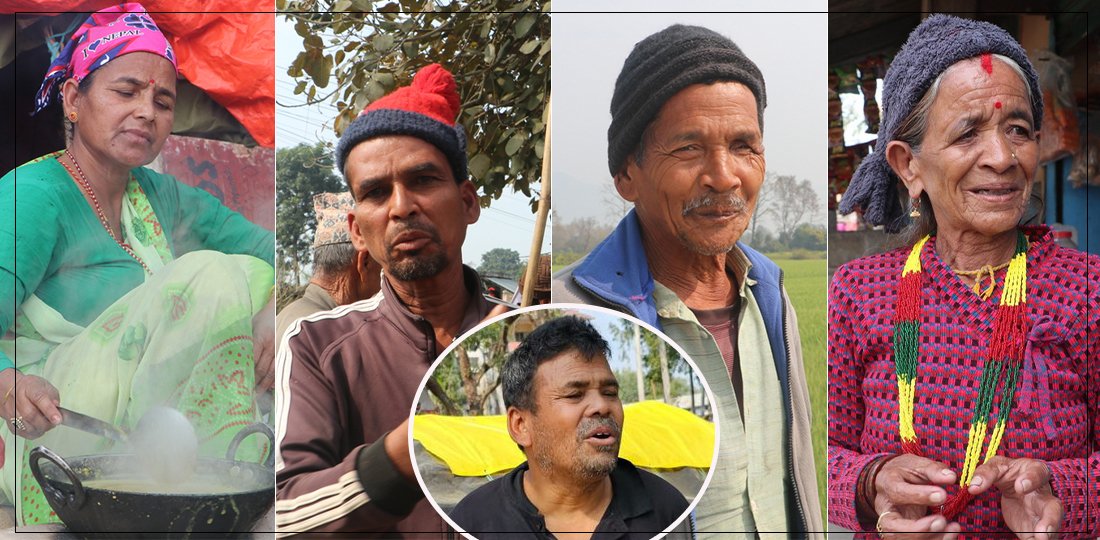
Tara Rana from Butwal Sub-Metropolitan City-18 is not interested in voting for any party. She is also uninterested in the classification of new and old parties. 'In 064 BS, Maoist was also new, there was hope that they might do something,' she said. 'If a party established after fighting such a long People's War could not work in the interest of laboring classes like us, what will others do now?'
Dangora and Rana are merely representative figures. Many voters expressing similar opinions were found in various districts of Sudurpashchim and Lumbini Provinces.
UML Candidates are on the Defensive
UML leaders and candidates have faced questions in various places regarding the suppression of the Jana Andolan and the death of more than 70 youths. Public anger towards UML appears comparatively higher than towards other parties.
Furthermore, CPN (Unified Socialist) candidates, leaders, and workers are found to be criticizing UML more than other parties during election campaigning.
UML candidates express sorrow over the loss of life and property during the Jana Andolan, but they are not seen openly answering whether the then Prime Minister KP Sharma Oli had a role in that incident.

Voters are found to be seeking clear answers from UML on this matter. Some UML candidates also mentioned that they are facing an uncomfortable situation during campaigning due to controversial statements occasionally made by party chairman KP Sharma Oli and some leaders close to him. However, they requested that their statements not be disclosed as being made in formal conversations.
Rastriya Swatantra Party Trying to Capitalize on Disgust with Major Parties
Candidates from the Rastriya Swatantra Party (RSP), established as an alternative political force, appear to be trying to capitalize on the public's existing disgust with major parties rather than focusing on their own agendas.
RSP candidates have been seeking votes 'for change' from senior citizens, the labor class, and young voters who are surviving by sending family members to foreign employment. They are striving to assure people that the country's situation will change now, although they do not present a concrete plan on what that change will be or what state it will bring the people's standard of living to.

The influence of RSP is seen more among the working class and families of those in foreign employment. Many people seem to trust this party, especially because Balen Shah joined RSP. Trust in Balen Shah and Rabi Lamichhane is visible even among some voters who do not know who has been nominated by RSP in their constituency.
Some RSP candidates avoided facing questions by stating that there is 'a policy not to give interviews to the media.'
Voters Appear Conscious
In previous elections, even ordinary voters were seen openly campaigning in favor of various political parties. Now, candidates from major parties are seen reaching doorsteps with limited cadres.
Voters, who feel that the promises made by candidates in past elections were abandoned after they were elected, are now unable to trust such empty assurances and promises.


It seems difficult for candidates from major parties to step outside the circle of cadres and engage in a dual dialogue with ordinary voters. While candidates are busy seeking alternative campaign methods to avoid unfavorable questions from voters, voters are confident about the option they possess (freedom of franchise).
Voters have a long record of who was elected from their constituency, who among them is a candidate now, and what work they have done. Many of them even have knowledge of how the country's situation deteriorated and what could have been done to improve the country's and people's standard of living.
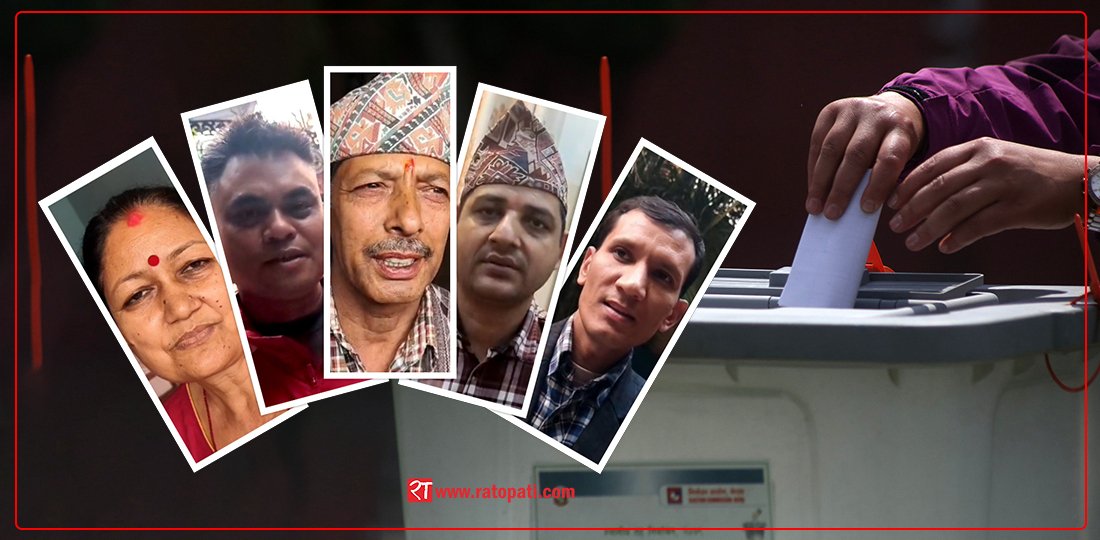
Narayan Rawat from Ghorahi Sub-Metropolitan City-16 commented that the loss of employment opportunities and the decline in the country's economy occurred because many government factories opened during the Panchayat regime were sold off for a pittance in the name of privatization after the restoration of democracy. 'So many people are unemployed in the country; jobs can only be provided if factories are opened,' he said. 'Because people cannot find employment here, they have to go abroad.'
Khemraj Kharel from Omsatiya Rural Municipality-2, Rupandehi, states that despite old parties being elected multiple times and leading the government with the promise of changing the standard of living of the people, the country's situation has become increasingly worrisome.
'The existing industries and factories have also been sold, and new industries have not been opened,' he said. 'Now, everything from lentils, rice, vegetables to fruits is imported. Nepal used to export rice earlier. How can the country develop by destroying industries? How can the government control market prices by destroying state-owned industries?'
This specific news has been automatically translated by AI. As a result, there may be some inaccuracies or language errors.