
Political Analyst Krishna Pokhrel Discusses Shifting Voter Dynamics and Election Significance


As part of the election special 'Ground Zero' series, the Ratopati team traveled to Biratnagar. The team held discussions and dialogues with various personalities focusing on the election itself.
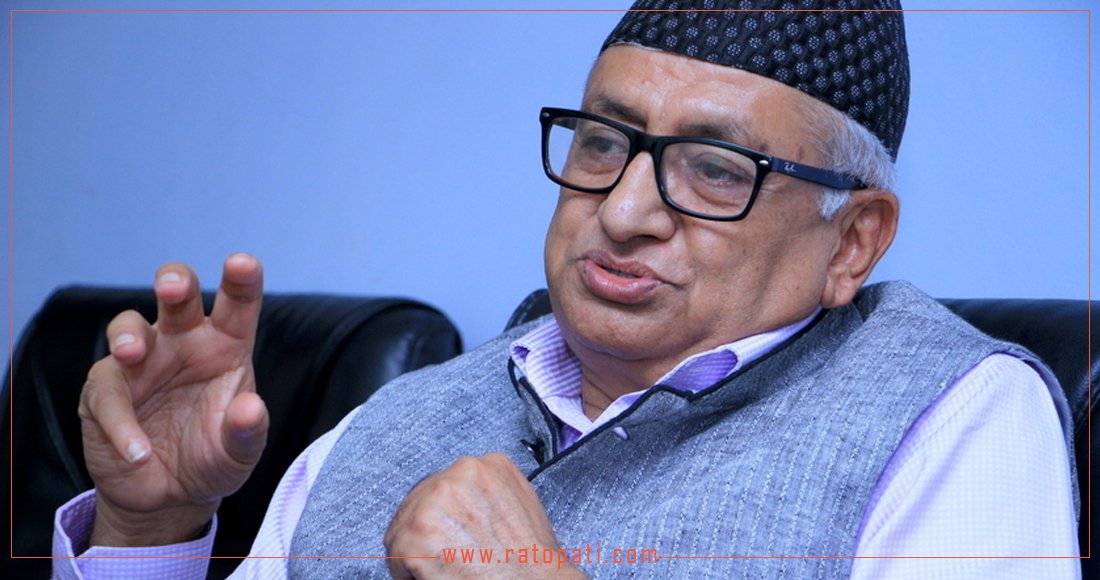
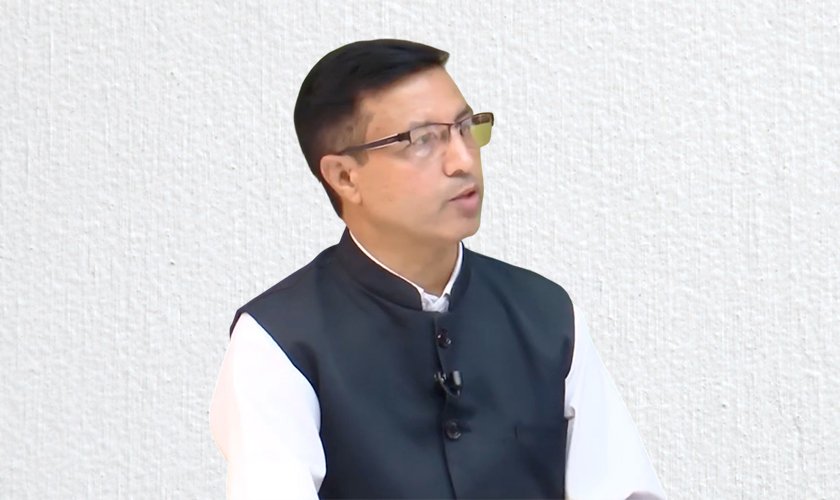
In this context, we have the well-known political analyst and professor Krishna Pokhrel with us. Presented below is the edited excerpt of the conversation with Mr. Pokhrel:
- Some say this election arrived unexpectedly. Do you see any difference in the agenda compared to the previous election?
The 'Jeth's Genji Rebellion' showed how helpless our state mechanism was. The state mechanism collapsed within two days. However, the President skillfully brought it back on track. This general election became a crucial means to bring the country back on track. Therefore, I consider this an unexpectedly arrived general election.
To be honest, neither the political parties nor the general public were prepared for this election. Initially, I thought some might not accept it well, but now the country is completely election-focused. Even the party that initially opposed participating in the election has now come to the point where they believe the election should happen at this time. I view this as a positive scenario.
Regarding the difference between the past and the current election, the manifestos or declarations issued by the parties used to be merely a ritual, 'like tying a cat during a Shraddha ceremony.' Looking at past experiences, neither the winning party nor the government took them seriously, nor did the voters investigate them.
However, I feel this election will break that situation. Parties are trying to include more practical programs in their manifestos. In developed democratic countries, this is called an electoral promise. The party forming the government must present a report card to the voters on how they fulfilled their promises, what they are currently doing, and why they couldn't complete certain tasks. If they fail to do so, they should face defeat in the next election.
In past elections, there was a belief that a particular constituency, province, or caste/class was a stronghold for a specific party. But this time, that belief has been completely shattered. The narrative that a certain constituency or community is a stronghold for a particular party and that votes will only go to them has broken down. Voters are currently in a fluid state. They can go anywhere. I cannot say what the situation is in Rolpa and Rukum, but voters are fluid everywhere else. Therefore, votes can only be garnered by pleasing or convincing the voters. I do not see a situation anywhere where they can assume, 'This area is ours, the votes won't go anywhere else.'
- It is heard that voters are asking candidates more questions this time. Do you think so?
Yes, that is clearly visible. This might be due to past experiences, access to social media, and the awareness instilled in their guardians by the youth who have gone abroad. Compared to the past, voters are now looking candidates in the eye and asking questions.
- As an analyst from this very province, I want to ask: Balen Ji unexpectedly came to contest the election in Jhapa-5. Why did he risk coming to compete directly against UML Chairman and former Prime Minister KP Oli, leaving convenient areas like Dhanusha, Mahottari, or Kathmandu? Wasn't he brought to a place where he couldn't win?
My view on this matter is slightly different. The entire blame for the explosion that occurred in Nepal on Bhadra 23-24 falls on the then Prime Minister. Balen Shah was the person offered the Prime Minister position at that time. His decision to not accept it and go directly to contest in Jhapa probably means he felt he could only do justice to the blood and sentiment of the youth by confronting the main political leadership that suppressed the movement yesterday.
Many say Rabi Lamichhane set Balen up in a place where he would lose. However, according to my information, Balen had a plan to contest from there even before the party unification. Just as he conducted a minute study when contesting in Kathmandu, he had his team previously investigate the positive/negative aspects and the basis for victory in Jhapa. His thinking might have been, 'If we are going to compete, let's compete with the tiger.' He must have gone there thinking that this would create a national wave, and if a major leader could be defeated in his own stronghold, a new resurgence could be brought to the country's politics.
- Shouldn't one also be safe to defeat the opposition? There is talk that he has put himself in an insecure position!
From the outside, it might seem that way to us. But the person who made the decision to go and fight there must have done so after careful consideration. Look at the current situation; former Prime Minister KP Oli is in a very defensive position in his own constituency! In the past, Mr. Oli used to have his cadres campaign for votes, and he would only appear as the election symbol. But now, he has to remain focused on his own area. Because of this, I don't think Balen's decision was wrong. However, it is an election, and we cannot definitively say what the voters will decide right now.
- So, is your understanding that Balen came there with the intention of winning?
Yes, he came to contest the election after thoroughly studying the situation and being confident that he could win. Initially, I thought that since Balen went to contest in the toughest place, he would only be busy there and unable to dedicate time to party promotion in other parts of the country. But looking now, Balen appears to be the candidate who can dedicate the most time across election constituencies nationwide. No other leader has been seen campaigning so widely across the country.
- Some divide the Genji movement into three parts: the first part saw the government removed, the second part brought change within the Congress, and the third part is the election. Perhaps Balen Ji is completing this third part. Is there another factor, Hark Sampang, and what is his influence in Koshi Province?
The way I view Hark Sampang is that he is an organic political personality of Nepal. Looking at his style of speaking and presentation, some things are very blunt and might not be liked by others, while some things are very endearing to his voters.
There is an important factor in this election: the influence of youth residing outside the country on the election inside the country. This factor also applies to Hark Sampang. Balen utilized this the most in the Kathmandu Metropolitan City election yesterday. Balen's victory in the area predominantly inhabited by the Newar community, considered the core area, was greatly influenced by youth residing abroad, not just those within the country.
This time, the influence of youth from outside the country on the voting behavior of Nepalis will be clearly visible. I see the largest share of this going to RSP (Rastriya Swatantra Party). Similarly, some portion is likely to be taken by Kulman Ghising's Ujyalo Nepal Party and the Shram Sanskriti Party.
Hark Sampang has made a significant contribution to creating an election atmosphere in the eastern hills. He started aggressive campaigning even before the election. Looking now, he faces more challenges in the constituency where he is contesting, but his party appears to be making a good impact in other areas of the eastern hills.
Speaking of Jhapa, KP Oli used to form alliances with the RPP to secure the votes of the indigenous communities there. This time, the RPP has its own candidate. If the votes that used to go to Oli are taken by Hark Sampang's party, I see the biggest loss not for Balen, but for KP Oli.
- Does your statement mean that the traditional political strongholds are crumbling due to the entry of figures like Hark Sampang, Kulman Ghising, and Balen Ji? Will there be a major shift in the election results in Koshi Province?
They will certainly crumble. As I said earlier, the old belief that this area is a stronghold for someone is completely collapsing this time. There will be a big upheaval in the results.
- Then who will be weakened the most by this?
This will weaken the one who was strongest yesterday the most. I see that very situation happening.
- On the other hand, leadership change happened within the Congress, and figures like Gagan came in. In the context of Madhesh, an interesting point is that Balen Shah, from the Madhesi community, is being put forward as a future Prime Ministerial candidate, but he is not contesting from Madhesh. This creates some ambiguity there. However, Congress President Gagan Thapa is campaigning in Madhesh himself as a future Prime Ministerial candidate. How do you view this?
This has two aspects. Firstly, I have seen a strange sight in this election. When I walk on the streets and ask rickshaw pullers, vegetable sellers, or farm laborers, they don't care who the candidate is. They only care about Balen and the bell symbol or the election symbol. This was not the situation in past elections.
As soon as the discussion about making Balen the Prime Minister started, two Madhesh-based parties (JSP and Lospa) came together. They also tried to stir up psychology by saying, 'He is not a Madhesi.' But the truth is that the proposal of a son of Madhesh for Prime Minister for the first time in Nepal's history has greatly excited the Madhesi community.
As for the Nepali Congress, Gagan Thapa and Bishwa Prakash Sharma refreshed the party by holding a special general convention. On the other hand, the UML's general convention brought division and disputes instead of refreshing the party. The Congress being refreshed and Gagan Thapa contesting elections in Madhesh might somewhat break the swing of Madhesi votes towards RSP, in my opinion.
- The opposition alleges that RSP gained nothing from the Jan-Dhan loss and the burning of half the country during the movement on the 23rd and 24th—that they got nothing but ashes! What did RSP gain?
When that incident happened, the country was not under anyone's control. When the country was not in the hands of those in power, whose hands would it be in? A huge cloud of uncertainty was looming over the country. Looking now, I see three parties—the CPN (Communist Party of Nepal), Nepali Congress, and RSP—taking ownership of that movement. UML is in a position where it cannot claim ownership because the incident occurred under its leadership. Therefore, UML tried to construct a narrative of geopolitical interference to save itself, which the general voters are not believing.
Initially, RSP was also somewhat behind in this movement. When Rabi Lamichhane brought out a document from jail on the 24th, prisoners and criminals were released from jails across the country. The entire blame for that fell on Rabi's head. But later, RSP played a 'master stroke' by bringing Balen into their party. This increased RSP's status not just quantitatively but also qualitatively.
- Many are saying that there will be more uncertainty after the election. There is advice from some that it would be good if Balen, Rabi, and Gagan Thapa unite after the election?
The main thing is what wisdom the political parties show after the election. A minimum common program can be formulated even before the election to form a stable government. If no one gets a majority, the Congress believes the government should be formed under the leadership of the largest party. Looking at international practice too, either a coalition is formed under the leadership of the first party, or the second. The practice of the first and second parties forming a government only happens during a national crisis.
The coming days are very challenging for Nepal. Collective intelligence is needed now. Because the country cannot run on the intelligence of just one person anymore. The parties forming the government must align their respective manifestos and determine a common program. Tomorrow, they must be in a position to clearly explain to the voters, 'We made these promises, but because we didn't have a full majority, we could only do this much.' Therefore, more than the election itself, prudence is greatly needed in the political scenario after the election.
- Finally, a serious question is often raised about Balen Ji: he is not ready for public debate, does not answer voters' questions, and does not even listen to questions. Shouldn't a future Prime Minister participate in debates about his programs and plans?
There are two things here. First, when the organizers proposed a debate including KP Oli, he directly refused it. Second, those who have been in politics for a long time might have their own expertise and style of debating. But Balen has only been in politics since the mayoral election. Therefore, he believes in delivery more than in speeches and debates. I have seen him interact well with the general voters in his constituency.
Another point is that he has such a huge craze now that if he starts speaking publicly to the general voters, he won't be able to move forward even an inch. Because a crowd surges like that of film heroes, it is impossible to move forward by being surrounded and talking to everyone. He might have felt that if he starts talking in one place like this, he has to give time everywhere, which is not possible during my election campaign.
This specific news has been automatically translated by AI. As a result, there may be some inaccuracies or language errors.
_Eqo5W0NMVM.jpg)