Major Political Parties Pledge Chure Conservation in Election Manifestos Amid Skepticism

Kathmandu. Political parties have reached out to voters across the country for the House of Representatives elections scheduled for February 21. Parties competing in the electoral arena are releasing their respective manifestos and making various commitments to the electorate.
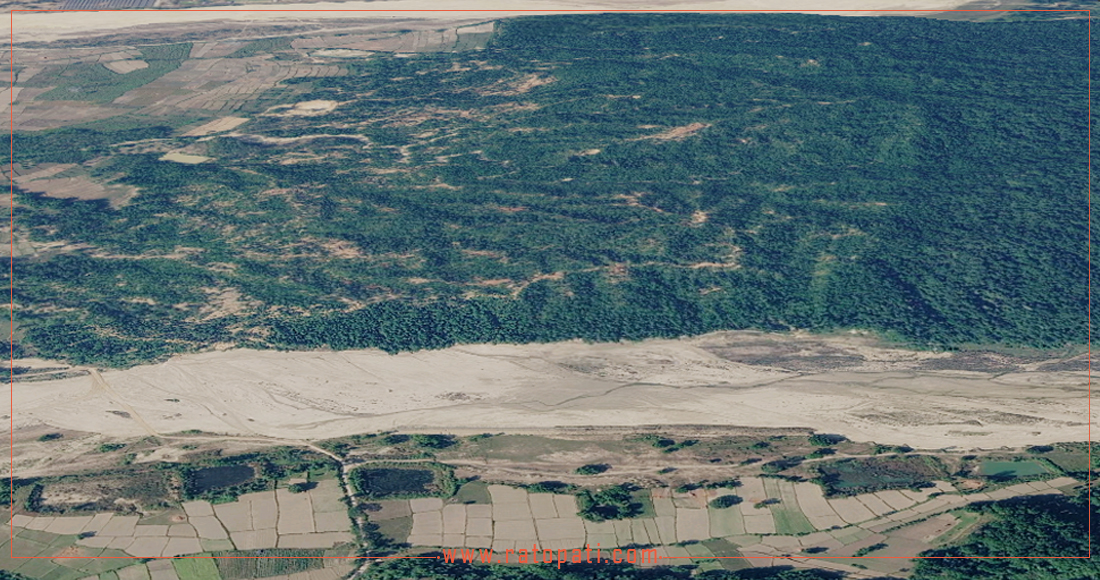
Parties have made employment, good governance, education, and health their main issues. Alongside these issues, every party has prioritized the conservation of the Chure range, which is directly linked to the Terai-Madhesh region. The biggest problem in the Terai-Madhesh is the exploitation of the Chure. Chure exploitation leads to water scarcity, soil erosion, floods, and landslides.
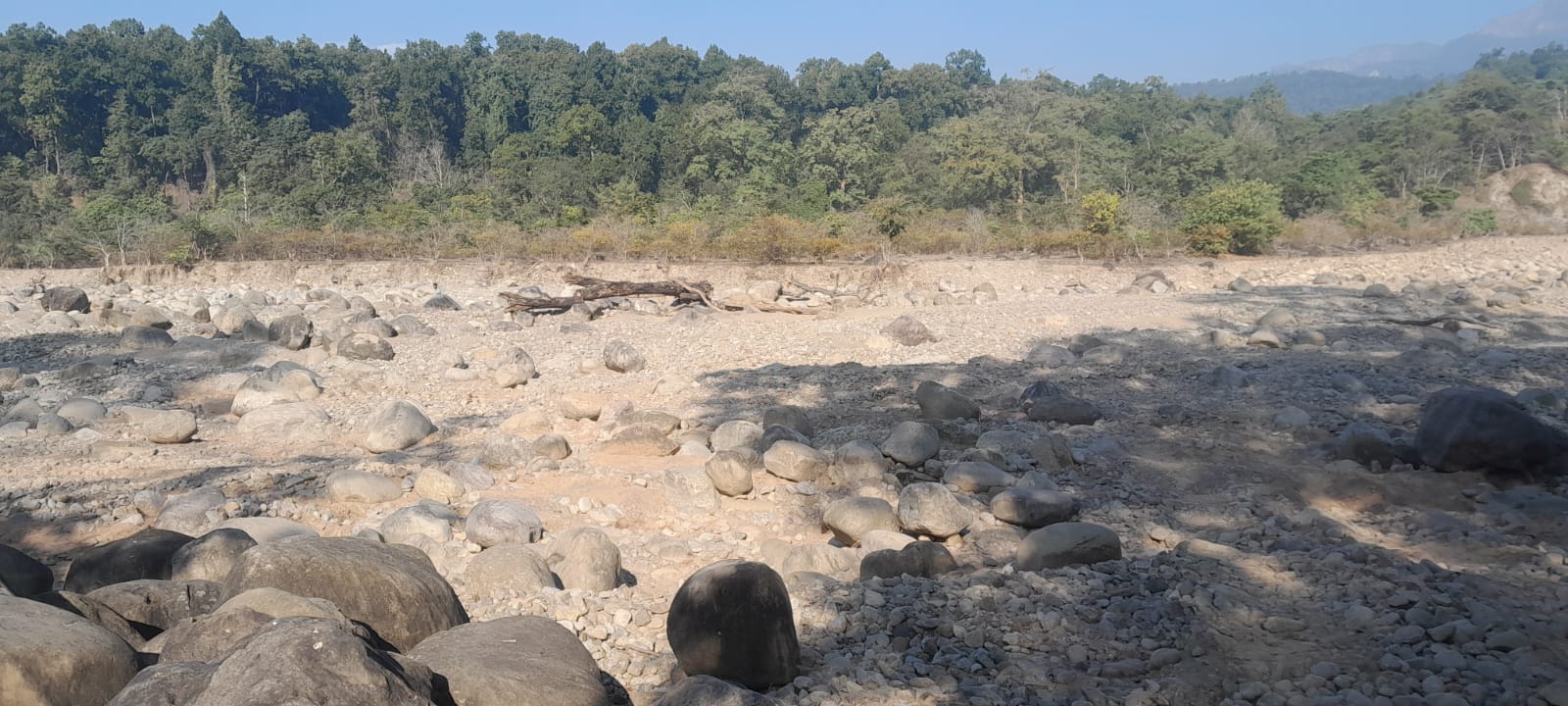
The Chure region is considered the basis for the water resources, agricultural system, and ecological balance of the Terai-Madhesh. However, deforestation, illegal excavation of stones, gravel, and sand, and unplanned development over the years have made Chure exploitation a serious problem. In this context, major parties have committed to formulating policies for Chure conservation and mitigating its effects.
The Nepali Congress claims to have improved the quality of forest areas through community forests, leasehold forests, and expansion of protected areas in its manifesto, presenting the conservation of Chure-Terai-Madhesh as a continuation of its visionary reform programs. Allowing the transport and sale of trees grown on private land like agricultural crops, and promoting private investment in hydropower through liberal economic policies are among the Congress's priorities.

Furthermore, the Congress manifesto includes a commitment to launch a campaign to replenish the declining groundwater level in the Madhesh and Terai regions through natural recharge, Chure conservation, and the use of drones to plant grass and seeds.
CPN-UML has emphasized resolving land-related issues for farmers in the Chure region. According to the manifesto, farmers cultivating land in the Chure region will be provided with land registration certificates (Purtas). Furthermore, linking the dire water crisis in Madhesh Province to deforestation, Chure exploitation, and declining groundwater levels, the party has put forward a policy to manage rivers, collect rainwater, plant trees, construct ponds, and control unplanned deep boring.
For this, CPN-UML has also mentioned a multi-source financial strategy to mobilize investment from bodies such as the World Bank, Asian Development Bank, and the International Climate Fund, alongside the government's budget.
The Communist Party of Nepal, led by Prachanda, has put forward forest, environmental conservation, and disaster management as primary agendas. The manifesto mentions stopping illegal encroachment and exploitation, and carrying out quality afforestation in areas stripped bare by fire, floods, and landslides. The commitment to conserve the Chure and Siwalik mountain ranges to prevent the Terai-Madhesh from turning into a desert, along with providing land registration certificates to farmers in the Chure region based on their cultivation, is also included in the CPN's manifesto.
Rastriya Swatantra Party (RSP), chaired by Rabi Lamichhane, has also presented Chure conservation linked with forest, environment, and disaster management in its manifesto. RSP has put forward controlling illegal exploitation, afforestation in damaged forest areas, Chure-Siwalik conservation, and the resettlement of landless communities with land ownership. RSP has also mentioned the commitment in its manifesto to provide land ownership certificates to farmers in the Chure region.
Janata Samajbadi Party Nepal (JSPN), chaired by Upendra Yadav, has committed to adopting a long-term strategy to maintain environmental balance, considering the Chure region as the lifeline of Madhesh. Concluding that the risk of Madhesh turning into a desert is increasing due to soil erosion, floods, riverbank cutting, and drought conditions, JSPN has adopted a policy to advance integrated programs for forest conservation, river control, soil conservation, and improvement of local livelihoods.
The implementation of a long-term master plan for river siltation and erosion control, conservation of water sources and drinking water springs, strict control over the extraction of soil, sand, and gravel, and management of the Chure region are also included in JSPN's manifesto.
Chure conservation appears to be a common issue in the manifestos of most parties. However, Vishnu Sah, a Chure protection activist from Siraha, stated that past experiences show a large gap between policy commitments and practical implementation. He alleged that although parties commit to Chure conservation in every election, they pay no attention once the elections are over.
Floods, inundation, drought, and water crises have been occurring in the Terai-Madhesh due to Chure exploitation. A majority of the country's population resides south of the Chure region. The destruction of the Chure continues to affect a large segment of the country's population.
This specific news has been automatically translated by AI. As a result, there may be some inaccuracies or language errors.