Analysis of Political Turmoil: Nepali Leaders' Electoral Fortunes Amidst Shifting Alliances

Kathmandu. In the 17 years since the establishment of the Federal Democratic Republic, 15 governments have been formed, but none have completed a full term. During this period, 13 democratically elected governments and two non-political governments were formed. Following the collapse of the Nepali Congress and CPN-UML coalition government due to the 'Jeevanji' movement on Bhadra 23 and 24, the interim government led by former Chief Justice Sushila Karki is preparing to hand over power to an elected government after completing the elections on Fagun 21.
This election is being viewed as a referendum between traditional and new alternative political parties. Former Prime Minister and CPN-UML Chairman KP Sharma Oli has interpreted this election, held under special circumstances following the 'Jeevanji' movement, as a 'struggle between building and destroying the nation.'
Oli, who was the Prime Minister during the 'Jeevanji' movement, has been accused by the new political party Rastriya Swatantra Party (RSP) of murdering 23 'Jeevanji' youths. Parties including UML and Congress have accused RSP Chairman Rabi Lamichhane and senior leader Balen Shah of playing a role in creating destruction in the country.
In Nepal's politics, which has seen upheaval every decade, there is discussion in political circles that this election could deliver a major shock to the old parties: Nepali Congress, CPN-UML, the Communist Party of Nepal, and Madhes-centric parties. Here, we attempt to examine the defeats and victories experienced by then-Prime Ministers and former Prime Ministers in various elections.
In the 2048 BS election, then-Prime Minister Krishna Prasad Bhattarai was defeated. CPN-UML General Secretary Madan Kumar Bhandari, who entered open politics after the political change of 2046 BS, defeated then-Prime Minister Bhattarai in Kathmandu-1.
In the 2064 BS Constituent Assembly election, senior leaders of parties like Congress and UML were defeated. It is anticipated that influential leaders of the old parties might also be defeated in the upcoming election, which follows a major upheaval.
With the RSP wave sweeping the country as it enters the election for the second time, claiming ownership of the 'Jeevanji' movement, traditional parties appear to be on the defensive. Since the 2062/063 Jan Andolan (People's Movement), the country has held two Constituent Assembly elections and two House of Representatives elections.
Since then, KP Oli has served four times, Prachanda three times, Sher Bahadur Deuba twice, and Madhav Nepal, Jhalanath Khanal, Dr. Baburam Bhattarai, Khil Raj Regmi, and Sushil Koirala once each as Prime Minister. The series of defeats and victories of former Prime Ministers in the two Constituent Assembly elections and two House of Representatives elections held during this period appears interesting.
- Tourist Candidate Prachanda
Prachanda, who led the Maoist armed struggle from 2052 to 2062 BS, entered peaceful politics following the 12-point agreement in 2062 BS. Participating in parliamentary competition for the first time through the 2064 BS Constituent Assembly election, he has been winning almost every constituency he contested since, except for one. In 2064 BS, Prachanda won by a huge margin from Kathmandu-10 and Rolpa-2.

In the second Constituent Assembly election held in 2070 BS, he was defeated in Kathmandu-10 but won from Siraha-5. At that time, Prachanda secured the third position in Kathmandu-10 with 12,859 votes. Rajendra Kumar KC of Congress won with 20,392 votes, while his closest rival Surendra Manandhar of UML secured 13,619 votes.
In 2064 BS, Prachanda had defeated Congress's Rajendra Kumar KC in the same constituency by a margin of over 12,000 votes. Although defeated in Kathmandu in 2070 BS, Prachanda was elected from Siraha-5. He was elected securing 15,244 votes, while the closest competitor, Lilanath Shrestha of UML, secured 14,223 votes.
In 2074 BS, after the formation of the Left Alliance between UML and CPN (Maoist Centre), Prachanda contested from Chitwan-3. He was elected securing 48,276 votes. His closest competitor Vikram Pandey of RPP secured 38,935 votes.
In the 2079 election, Prachanda left Chitwan-3 and contested from Gorkha-2. He was elected securing 26,109 votes, while the closest competitor Kabindra Burlakoti of RSP secured 12,639 votes. Currently, he has filed his candidacy from Rukum East, a Maoist stronghold, leaving Gorkha-2. Prachanda, who formed the Nepali Communist Party by uniting 26 leftist components including CPN (Unified Socialist), has been claiming his party will be a decisive force after the election. This time, he is challenged by Kusumdevi Thapa of Congress, Lilamani Gautam of UML, and Lakhan Kumar Thapa of RSP.
- Madhav, Who Became PM After Being Defeated
CPN-UML General Secretary Madhav Nepal, who was defeated in Kathmandu-2 and Rautahat-6 in the 2064 BS Constituent Assembly election, resigned from his post as soon as the results were announced. Similar to the current RSP wave, there was a Maoist wave everywhere at that time. The Maoists became the first party by winning 229 seats in the 601-member Constituent Assembly election. UML had to settle for the third position by winning 108 seats.

After Prime Minister Prachanda resigned over the Chief of Army Staff Rukmangad Katuwal case, Nepal became Prime Minister on Jestha 11, 2066 BS. Before that, the Prachanda government had appointed Nepal as the Chairman of the Constitutional Committee. After Prachanda resigned, Nepal became a member of parliament by getting a parliamentarian close to him to resign. He became Prime Minister with the support of Congress and Madhesi parties.
In 2070 BS, Nepal was elected from Kathmandu-2 and Rautahat-1. Nepal was elected from Rautahat-1 securing 8,361 votes. His closest competitor Ajay Kumar Gupta of Madhesi Jana Adhikar Forum (Democratic) secured 8,023 votes. In the 2074 BS election, Nepal was elected from Kathmandu-2. Nepal secured 27,366 votes, while his closest competitor Deepak Prasad Kuinel of Congress secured 14,903 votes.
In 2029 BS, Nepal was elected from Rautahat-1 with 33,522 votes. His closest competitor Ajay Kumar Gupta of UML secured 26,922 votes. Nepal, who is the Co-coordinator of the CPN (Unified Socialist), is contesting from the same constituency this time. However, he is in a difficult position as the Commission for the Investigation of Abuse of Authority (CIAA) has filed a corruption case against the cabinet led by Nepal in 2066 BS in the Special Court regarding the misappropriation of land belonging to Patanjali Yogpeeth. Even if he wins the election, he will not be able to hold a parliamentary role until the case is resolved. This time, Nepal is challenged by veteran leader Anil Kumar Jha, who is contesting from Nepali Congress. Ajay Gupta, the old rival from UML, Rajesh Kumar Chaudhary from RSP, and Yogendra Rai Yadav from JSP Nepal are in the competition.
- Jhalanath 'Ring Out'
Jhalanath Khanal, who was elected Chairman at the 8th General Convention of UML held in Butwal in 2065 BS, is now out of the electoral contest. Khanal became Prime Minister on Magh 13, 2067 BS.
In the 2064 BS election, he was elected from Ilam-1. In 2070 BS, Khanal was elected from Ilam-1 but was defeated in Sarlahi-1. He was elected from Ilam-1 with 17,342 votes. His closest competitor Himalaya Karmacharya of Congress secured 15,527 votes.
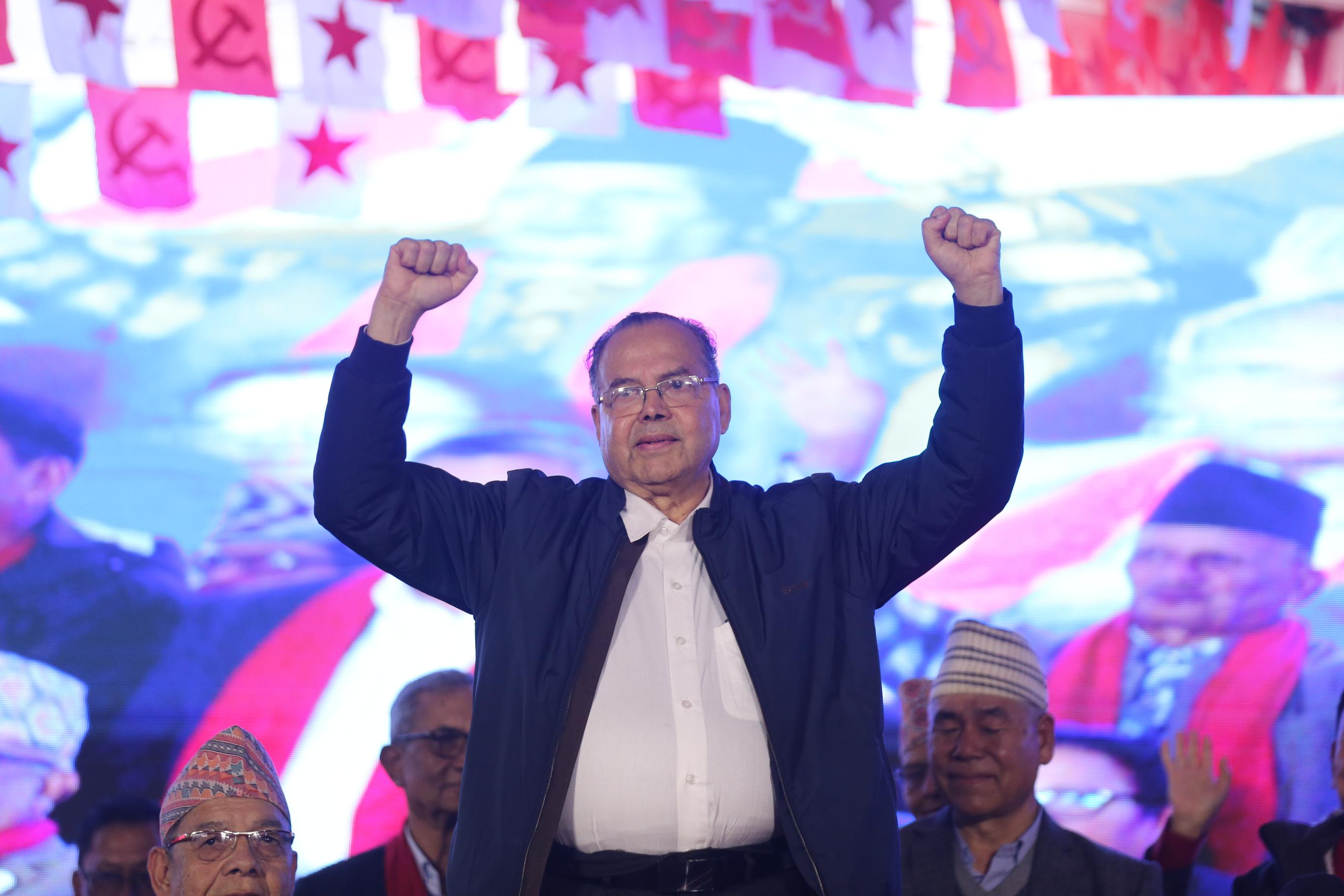
When Khanal was defeated in Sarlahi-1, Shambhulal Shrestha of Maoist was elected with 9,476 votes. Khanal secured 8,791 votes.
In 2074 BS, Khanal was elected from Ilam-1 securing 36,805 votes. His closest competitor Bhupendra Kattel secured 19,638 votes.
In 2079 BS, Khanal, contesting from CPN (Unified Socialist), was defeated. Mahesh Basnet of UML won with 25,753 votes, while Khanal secured 23,089 votes.
- Baburam, Who Left the Field for Prachanda Last Time, Stepped Out Himself This Time
Former Prime Minister Dr. Baburam Bhattarai, who was consecutively elected from Gorkha-2 in 2064, 2070, and 2074 BS, withdrew his candidacy this time, leaving the field open for competitors. Bhattarai was elected in the first Constituent Assembly election after the Maoists came to the peace process, securing over 46,000 votes.

In 2070 BS, he was elected in Gorkha-1 but was defeated in Rupandehi-4. In Gorkha, Bhattarai was elected with 22,824 votes. His closest competitor Kiran Babu Shrestha of Congress secured 8,971 votes. In Rupandehi-4, Bishnu Prasad Paudel of UML was elected with 19,577 votes, while his closest competitor Surya Prasad Pradhan of Congress secured 13,632 votes, and Bhattarai finished third with 11,934 votes.
Bhattarai was Prime Minister from Bhadra 12, 2068 BS to Chaitra 1, 2069 BS. In the 2074 election, Bhattarai was elected from Gorkha-2 with 31,807 votes, while his closest competitor Narayan Kaji Shrestha of CPN (Maoist Centre) secured 24,933 votes.
In the 2079 election, former Prime Minister Prachanda left his constituency for Bhattarai. This time, after filing his candidacy from the Progressive Democratic Party, he withdrew his candidacy at the last moment. In Gorkha-2 this time, Lekhnath Neupane from CPN (Maoist Centre), Prakash Chandra Dawadi from Congress, Kabindra Burlakoti from RSP, and Milan Gurung from UML are candidates.
- Sushil, Who Built the Image of a Constitution Maker
Sushil Koirala, then acting President of Congress, was defeated in Banke-3 in the 2064 BS election. At that time, then-interim government Prime Minister Girija Prasad Koirala did not contest the direct election. Influential leaders of Congress and UML were defeated in the first Constituent Assembly election.
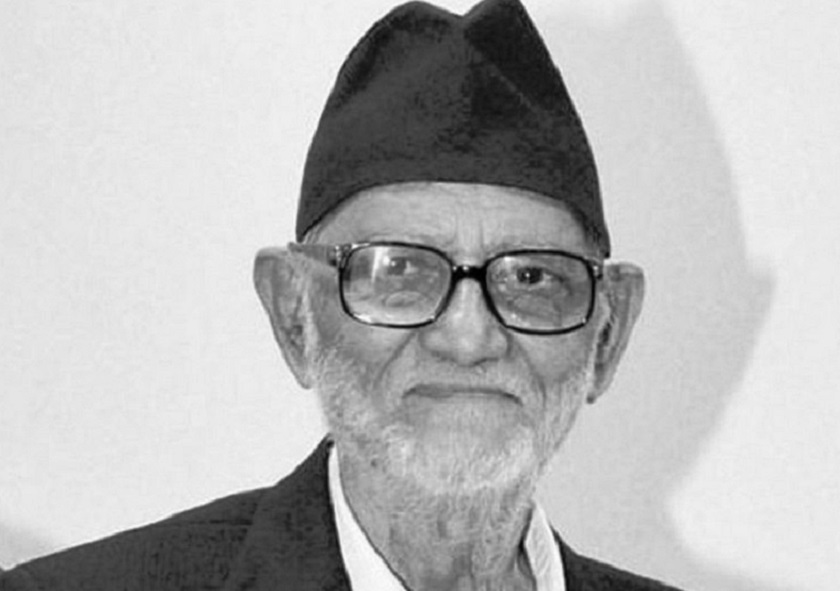
After the death of Girija Prasad on Chaitra 7, 2066 BS, Sushil was elected President at the 12th General Convention of Congress held in Falgun 2067 BS. He conducted the 2070 BS election under his leadership and was elected from Banke-3 and Chitwan-4. Koirala was elected from Banke-3 securing 10,753 votes, while his closest competitor Dhaval Shamsher Rana of RPP Nepal secured 8,809 votes. In Chitwan-4, Sushil Koirala was elected with 20,760 votes, while his closest competitor Chitra Bahadur Shrestha of Maoist secured 10,739 votes.
After the election, Sushil Koirala became Prime Minister with the support of UML. Under his leadership, the new constitution of the Federal Democratic Republic was promulgated by the Constituent Assembly. After the constitution was promulgated on Ashoj 3, 2072 BS, Koirala resigned from the post of Prime Minister on Ashoj 25. He passed away in Magh of the same year.
- Oli, Ousted by the 'Jeevanji' Movement, in the Race for Prime Minister
Former Prime Minister KP Oli, who lost power following the 'Jeevanji' movement in Bhadra last year, has entered the electoral arena for the eighth time. He has been contesting from Jhapa-5 continuously since 2048 BS. Oli has won all elections except the one in 2064 BS. Having served as Prime Minister four times, he is aiming to become Prime Minister for the fifth time if he wins this election, challenged this time by senior RSP leader Balen Shah. Elected Chairman for the third time at the 11th General Convention of UML held in Mangsir, he is eyeing the premiership.

In the 2070 BS election, Oli was victorious from Jhapa-7 securing 19,287 votes. His closest competitor Suresh Kumar Yongya of Congress secured 11,041 votes.
In the 2074 BS election, Oli was elected from Jhapa-5 securing 57,139 votes, while his closest competitor Khagendra Adhikari of Congress secured 28,297 votes. In the 2079 election, he was elected securing 52,319 votes. Oli's long-time competitor Adhikari secured 23,743 votes. This time, Congress has nominated Mandhara Chimariya. CPN (UML) has nominated Ranjit Tamang and RPP has nominated Laxmi Prasad Sangraula.
- Deuba, Undefeated So Far, Did Not Contest This Time
Former Congress President Sher Bahadur Deuba, who was severely beaten during the 'Jeevanji' movement, is not in the electoral contest this time. He had been continuously elected from Dadeldhura since 2048 BS and was preparing for his last election. However, after Gagan Thapa was elected President at the special general convention of Congress held in Poush, Deuba lost the party presidency as well. President Thapa did not give him a ticket. To avoid the election scheduled for Fagun 21, he flew to Singapore on Wednesday night. Deuba is the only politician to have won all parliamentary elections since 2048 BS. Having served as Prime Minister five times, he was aiming for a sixth term in Ashar 2083. But after the Congress-UML coalition government fell due to the 'Jeevanji' revolt in Bhadra, he lost both party and state power simultaneously.

In the 2074 parliamentary election, Deuba was elected with 28,446 votes. Deuba's closest competitor Khagendra Bhatt secured 21,498 votes. In the 2079 election, he won with 25,534 votes. His closest competitor, independent candidate Sagar Dhakal, secured 13,042 votes.
This specific news has been automatically translated by AI. As a result, there may be some inaccuracies or language errors.
_cvUCBlwFTZ.jpg)