Relocating Fast Track Zero Point to Pharsidole Likely to Increase Cost and Complicate City Access, Officials Warn

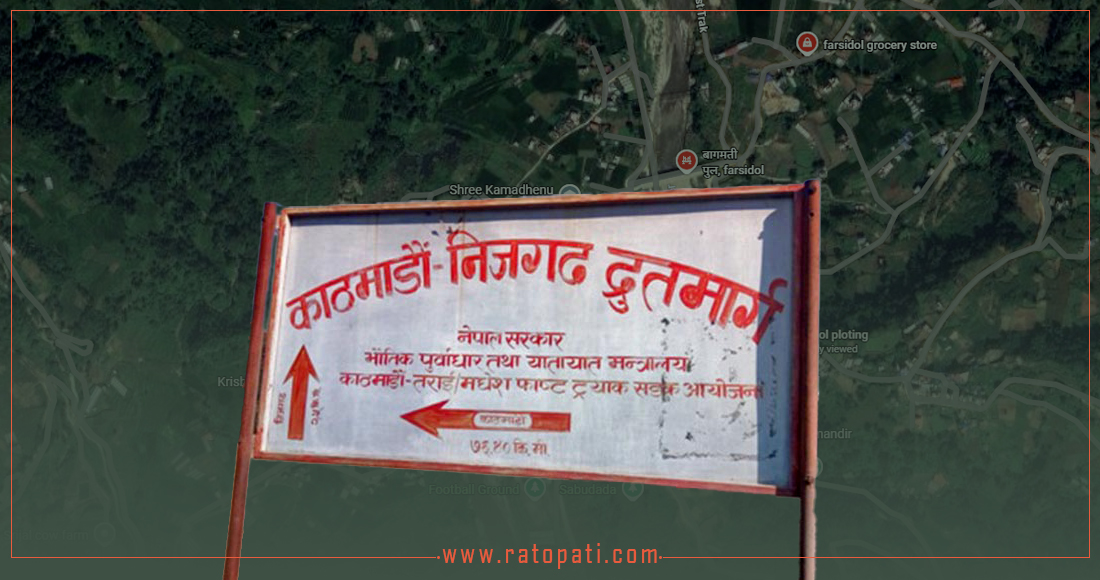
Kathmandu. Shifting the starting point (zero point) of the national pride project, the Kathmandu-Terai/Madhes Expressway (Fast Track), to Pharsidole is projected to increase the project's cost. An official from the Department of Roads involved in the feasibility study told Ratopati that placing the zero point at Pharsidole would raise the project's cost, add technical complexities, and cause further hardship for the general public trying to enter the city.
The government has chosen Pharsidole as an alternative after failing to resolve the land dispute concerning the original starting point of the Fast Track at Khokana. Preparations are underway to make Pharsidole in Lalitpur the alternative starting point after the land acquisition dispute in Khokana remained unresolved for the past eight and a half years.
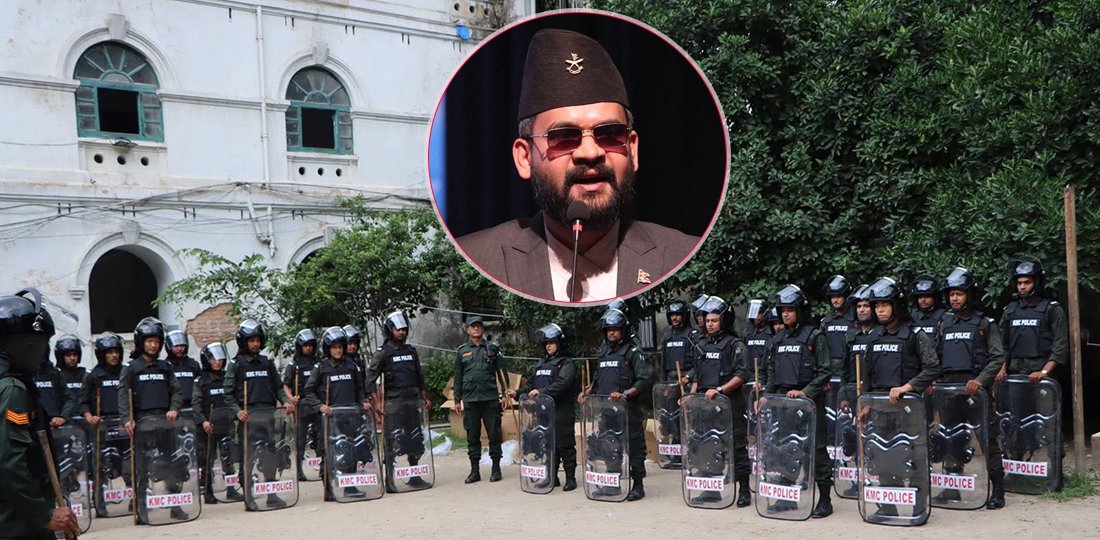
The Nepal Army stated that shifting the starting point to Pharsidole is feasible based on the feasibility study conducted by the Pulchowk Engineering College. According to Nepali Army Spokesperson and Brigadier General Rajaram Basnet, preparations are being made to start the Detailed Project Report (DPR) construction work once formal directives are received from the Council of Ministers.
Previously, there was uncertainty about where to establish the Fast Track starting point due to prolonged protests by locals demanding the preservation of Khokana's cultural and archaeological significance. During an on-site inspection of the under-construction expressway on Magh 3, a team including then Prime Minister Sushila Karki and Chief of Army Staff Ashok Raj Sigdel concluded that the dispute in the Khokana section was halting the overall project's momentum, increasing pressure to opt for an alternative.
The Karki-led government chose Pharsidole after a concrete decision regarding the expressway's starting point and traffic management could not be made for eight and a half years.
However, according to the Department of Roads official, establishing the zero point at Pharsidole could result in traffic congestion taking up to 4 hours to reach Balkhu, the main center of the valley, from there. He stated, 'One might reach Pharsidole in an hour and a half from the Fast Track, but entering the city from there will be extremely difficult. Without proper connectivity, why would people use a road built with such a massive investment?'
_hdzzD6T0Uu.jpg)
He claimed that if Pharsidole is considered the zero point, the project's cost and time will both increase, as the distance between Khokana and Pharsidole is approximately 6.5 kilometers according to mapping.
According to the study conducted by the team comprising technicians from Pulchowk Engineering Campus, 15 different link roads need to be added in the Khokana area to make the Fast Track successful. The official noted that the further the zero point is moved away from the city, the more complex the management becomes, and the greater the inconvenience for the general public.
The official also claimed that political interests played a role in the effort to shift the Fast Track's starting point. 'The tendency of leaders to try and route the project through their respective areas has also created the land dispute and uncertainty in Khokana,' the official said. He added that in the Pharsidole area, there are still shortages of adequate land and ongoing disputes for land acquisition and bus park construction.
Furthermore, the official argued that it is not appropriate for the government to push Pharsidole as the main alternative instead of resolving the local dispute in Khokana at this time.
_8UATqL1W3l.jpg)
- Additional Complications if Pharsidole is Chosen
According to Anil Marasini, the leader of the study team from Pulchowk Engineering Campus, shifting the starting point from Khokana to Pharsidole will cause major problems not only in distance and cost but also in 'connectivity' with the city.
Marasini stated that the study team examined six different potential alternatives for the start of the expressway. 'Pharsidole is one of those alternatives. However, every alternative has its own advantages and disadvantages. We have mentioned in the report that we should only move to Pharsidole or another alternative if establishing the zero point at Khokana proves impossible,' Marasini said.
If Pharsidole is considered the starting point, new roads will need to be built for vehicles to enter and disperse within Kathmandu city. According to Marasini, link roads are essential to direct vehicles coming from the expressway towards the Ring Road (Balkhu, Satdobato) or towards Thankot and Bhaktapur. 'The farther the zero point is taken from the city, the more link roads need to be built, which will reintroduce the problems of compensation and land acquisition,' he said.
- Challenge of Increased Compensation and Cost
Marasini stated that shifting to Pharsidole to avoid the Khokana dispute will again lead to land acquisition problems when building new roads to connect it to the city. The more new roads required, the more compensation needs to be distributed, increasing both the total cost and the time frame of the project.
'The expressway stopping at Pharsidole has no meaning unless it is effectively connected to the Ring Road,' Marasini said. If suitable link roads are not built, there is a possibility that travelers using the Fast Track could face hours of traffic jams trying to enter the city from Pharsidole, which could undermine the 'fast' objective of the Fast Track.
_zgdDowCmlo.jpg)
- What is in the Study Report?
The study report identified Khokana as the most suitable among the three locations studied for the Fast Track starting point. Studying alternatives showed an increase in cost.
Khokana: According to the study report, establishing the starting point at Khokana would require demolishing one church and two huts. It noted that due to the current narrow road, a significant amount of land in residential and commercial structures would be affected, requiring the removal of trees, which could lead to financial burdens and disputes. Furthermore, a large number of electric poles would need to be relocated, further complicating the feasibility of establishing the zero point.
Alternative 2: Bungamati: If the road on the left bank of the Bagmati River (towards Bhainsepati) is used, significant social impacts and damages would occur, and local residents have shown reluctance to provide land due to inadequate compensation. Dust pollution near the brick kilns is also a visible issue. Constructing the road on the right bank of the Bagmati River (towards Dakshinkali) appears to have less social and environmental impact. The right bank shows minimal social impact and less tree cutting.
Alternative 3: Dukuchhap: Located in Dakshinkali-7, Bairekula Makhubesi, Kathmandu, this location is considered the primary site for the expressway in the report. In this alternative, private land acquisition is only required at the zero point, not elsewhere. This point extends towards Pharping Ward 3 and connects to the expressway. The road is narrow (approximately 4 meters wide) with less forest area. The final section of the road is paved, while the rest is earthen.
_ip3m3kOYhq.jpg)
The positive impacts of placing the terminal at any alternative location outweigh the negative impacts. Since adverse effects can be mitigated or compensated for, the focus should be on maximizing positive impacts while minimizing negative ones.
According to the cost estimates for these alternatives, establishing the starting point at Dukuchhap has the lowest cost, totaling 40 billion 28 crore 51 lakh 58 thousand rupees. This is because this option does not require constructing additional length for the expressway, and the cost only includes link road development.
The estimated total cost for establishing the starting point at Khokana is 42 billion 16 crore 93 lakh 33 thousand rupees.
The total cost required to establish the starting point at Bungamati/Pharsidole is 42 billion 18 crore 30 lakh 53 thousand rupees.
The cost for constructing a viaduct from Dukuchhap to Khokana is the highest among these options, including link road upgrades and terminal facilities, estimated at 60 billion 26 crore 90 lakh 69 thousand rupees. However, it is noted that this cost can be reduced to 54 billion 81 crore 32 lakh 34 thousand rupees by using a shorter viaduct.
This specific news has been automatically translated by AI. As a result, there may be some inaccuracies or language errors.