History of Defeated Party Chairs in Nepal's House of Representatives Elections Since 2048 BS

Kathmandu. The House of Representatives election is scheduled for next Thursday, exactly one week away. Leaders of major political parties are contesting as candidates for direct seats in the House of Representatives in the election.
The chairpersons of Nepali Congress, CPN-UML, CPN (Maoist Centre) (now the Communist Party after merging with other parties), Rastriya Swatantra Party, Rastriya Prajatantra Party, Janata Samajbadi Party Nepal, and Janamat Party, which received national party recognition in the 2079 House of Representatives election, are all in the electoral arena for direct seats.
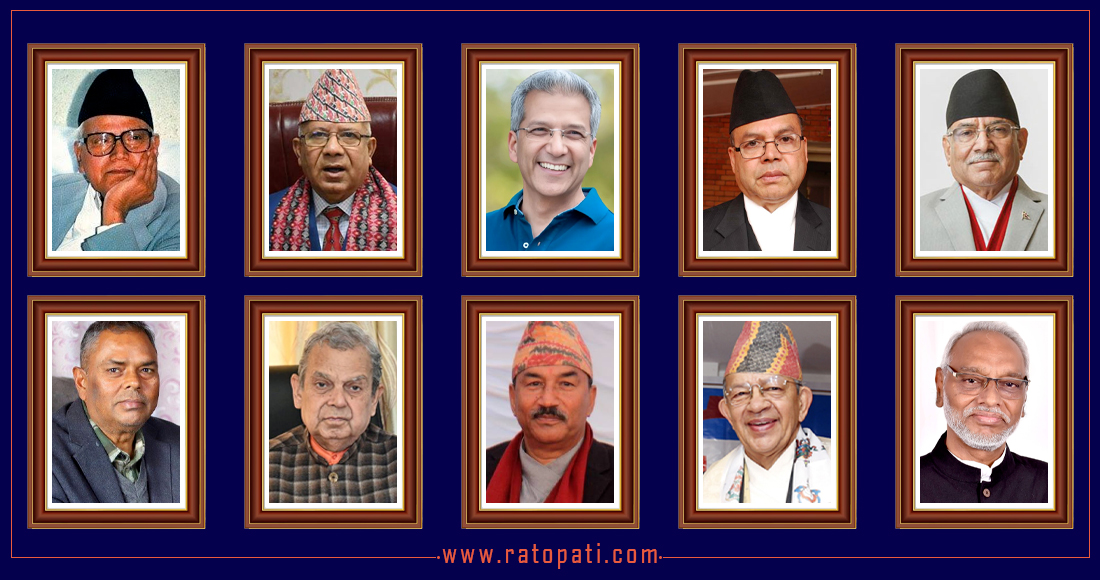
In the House of Representatives elections held since 2048 BS, following the second People's Movement, chairpersons of political parties have been defeated. We will discuss 10 leaders who were defeated in the House of Representatives while serving as the incumbent chairperson of their political party.
The following leaders were defeated in the House of Representatives elections while serving as incumbent party chairpersons: Krishna Prasad Bhattarai of Nepali Congress, Rabindra Mishra of Sajha Party, Madhav Kumar Nepal (General Secretary) of CPN-UML, Jhalanath Khanal (Chairman) of CPN-UML, Pushpa Kamal Dahal 'Prachanda' (Chairman) of CPN (Maoist Centre), Upendra Yadav (Chairman) of Janata Samajbadi Party Nepal, Mahantha Thakur (Chairman) of Terai Madhes Loktantrik Party, Pashupati Shamsher Rana and Kamal Thapa (Chairmen) of Rastriya Prajatantra Party, and Rajendra Mahato (Chairman) of Sadbhavana Party.
1) Krishna Prasad Bhattarai – Then President of Nepali Congress, and Prime Minister of the Interim Government
Krishna Prasad Bhattarai, the acting president of Nepali Congress, was the Prime Minister of the interim government formed after the success of the 2046 BS People's Movement. In the election held in 2048 BS under Bhattarai's leadership, he contested as a candidate for the House of Representatives from Kathmandu-1. However, he was defeated by CPN-UML candidate Madan Kumar Bhandari. Election Commission data indicates that Bhandari was elected by securing 27,372 votes, while Bhattarai received only 26,621 votes. After being defeated in the House of Representatives election, Bhattarai was unanimously elected as the President at the 8th General Convention of the Congress held from Falgun 1 to 3 of the same year.
2) Madhav Kumar Nepal – General Secretary of CPN-UML
Then General Secretary of CPN-UML, Madhav Kumar Nepal, was defeated in the first Constituent Assembly election held after the end of the Maoist's 10-year armed conflict. Nepal, who contested from two constituencies, was defeated in both. He contested from Kathmandu-2 and Rautahat-6 and was defeated in both places.
He was defeated by CPN (Maoist Centre) candidate Devendra Patel in Rautahat-6, and by CPN (Maoist Centre) candidate Jhakkup Prasad Subedi in Kathmandu-2. Maoist candidate Subedi was elected with 13,858 votes, while Nepal secured 12,325 votes. After being defeated in both constituencies while serving as the incumbent General Secretary, Nepal resigned from the post of General Secretary on moral grounds. However, he was later nominated as a member of the Constituent Assembly during the same term.
3) Jhalanath Khanal – Chairman of CPN-UML
Khanal was defeated from Sarlahi-1 in the second Constituent Assembly election held in 2070 BS while serving as the incumbent Chairman of CPN-UML. However, as he was a candidate in two constituencies, he still managed to reach the Constituent Assembly by winning from Ilam-1.
Khanal was defeated by Shambhulal Shrestha, the candidate from Unified CPN (Maoist Centre), in Sarlahi-1. Shrestha was elected with 9,476 votes, while Khanal secured 8,791 votes.
In Ilam-1, Khanal was elected with 17,342 votes. His closest competitor, Nepali Congress candidate Himalaya Karmacharya, secured 15,527 votes.
4) Pushpa Kamal Dahal 'Prachanda' – Chairman of Unified CPN (Maoist Centre)
Prachanda was defeated from Kathmandu-10 in the second Constituent Assembly election held in 2070 BS while serving as the party chairman. However, since he contested from two constituencies, his path to the Constituent Assembly was not closed.
In that election, Prachanda was a candidate in Kathmandu-10 and Siraha-5. Prachanda finished third in Kathmandu. In Kathmandu, Nepali Congress candidate Rajendra KC was elected with 20,392 votes, CPN-UML candidate Surendra Manandhar secured 13,619 votes, and Prachanda received 12,859 votes.
In Siraha-5, Prachanda was elected with 15,244 votes. His closest competitor, CPN-UML candidate Lilanath Shrestha, received 14,323 votes, according to Election Commission data.
5) Upendra Yadav – Chairman of Madhesi Jana Adhikar Forum Nepal
Upendra Yadav is the leader who was defeated twice in the House of Representatives election while serving as the incumbent chairman of his party. Yadav was defeated from Morang-5 in the second Constituent Assembly election in 2070 BS while he was the chairman of Madhesi Jana Adhikar Forum Nepal, and from Saptari-2 in the 2079 election while he was the chairman of Janata Samajbadi Party Nepal.
In 2070 BS, Yadav, who contested from two constituencies, was defeated in Morang-5 but won from Sunsari-5. This did not close his path to the Constituent Assembly. In Sunsari-5, Yadav was elected with 7,264 votes, while the closest competitor, Gafar Ansari of the then Forum Loktantrik Party, secured 6,881 votes.
In Morang-5, Nepali Congress candidate Amrit Aryal was elected with 15,254 votes, while Yadav secured only 12,566 votes.
In the 2079 election, the contest in Saptari-2 was between the chairpersons of two parties. Dr. CK Raut, chairman of Janamat Party, won the contest against Yadav, chairman of Janata Samajbadi Party Nepal.
Janamat Party Chairman Dr. Raut was elected with 35,042 votes, while Yadav secured less than half of that, only 16,979 votes.
6) Mahantha Thakur – Chairman of Terai Madhes Loktantrik Party
While serving as the chairman of Terai Madhes Loktantrik Party, Thakur was defeated from Sarlahi-6 in the second Constituent Assembly election held in 2070 BS. He was defeated by the Nepali Congress candidate, Amresh Kumar Singh.
Congress candidate Singh was elected with 17,400 votes, while Thakur finished third, securing only 7,032 votes. The candidate from Terai Madhes Samajbadi Party Nepal, Shivpujan Rai, who finished second, secured 10,365 votes.
7) Pashupati Shamsher Rana – Chairman of Rastriya Prajatantra Party
While serving as the chairman of Rastriya Prajatantra Party, Rana suffered a defeat in Sindhupalchok-3 in the second Constituent Assembly election held in 2070 BS.
In that election, Rana was defeated by CPN-UML candidate Sher Bahadur Tamang. CPN-UML candidate Tamang was elected with 14,527 votes, while Rana secured only 12,090 votes.
8) Rajendra Mahato – Chairman of Sadbhavana Party
In the second Constituent Assembly election held in 2070 BS, Rajendra Mahato, then chairman of Sadbhavana Party, was defeated from Sarlahi-4. Mahato was defeated by Mahendra Ray Yadav, chairman of Terai Madhes Sadbhavana Party Nepal.
Ray Yadav was elected with 11,534 votes, while Mahato was defeated with 8,790 votes.
9) Kamal Thapa – Chairman of Rastriya Prajatantra Party
In the 2074 House of Representatives election, Thapa, while serving as the chairman of Rastriya Prajatantra Party, was defeated for the post of House of Representatives member from Makwanpur-1. He was defeated by CPN-UML candidate Krishna Prasad Dahal. In that election, Dahal was elected with 40,631 votes, while Thapa secured 34,658 votes.
10) Rabindra Mishra – Chairman of Sajha Party
Mishra contested for the post of House of Representatives member from Kathmandu-1 in the 2074 House of Representatives election while serving as the chairman of Sajha Party. He was defeated by Nepali Congress leader Prakash Man Singh. Singh was elected with 10,936 votes, while Mishra was defeated with 10,118 votes.
This specific news has been automatically translated by AI. As a result, there may be some inaccuracies or language errors.