Political Defections Surge in Sudurpashchim as Election Day Nears


Dhangadhi. With only 7 days remaining until the election on Falgun 21, villages and cities across the country, including Sudurpashchim, are immersed in election fervor. Amidst this atmosphere, some leaders who have carried the flag of the same party for years are overnight switching allegiance and joining other parties. Observing the political developments of just the last three days, several leaders in Sudurpashchim have defected from one party to another.
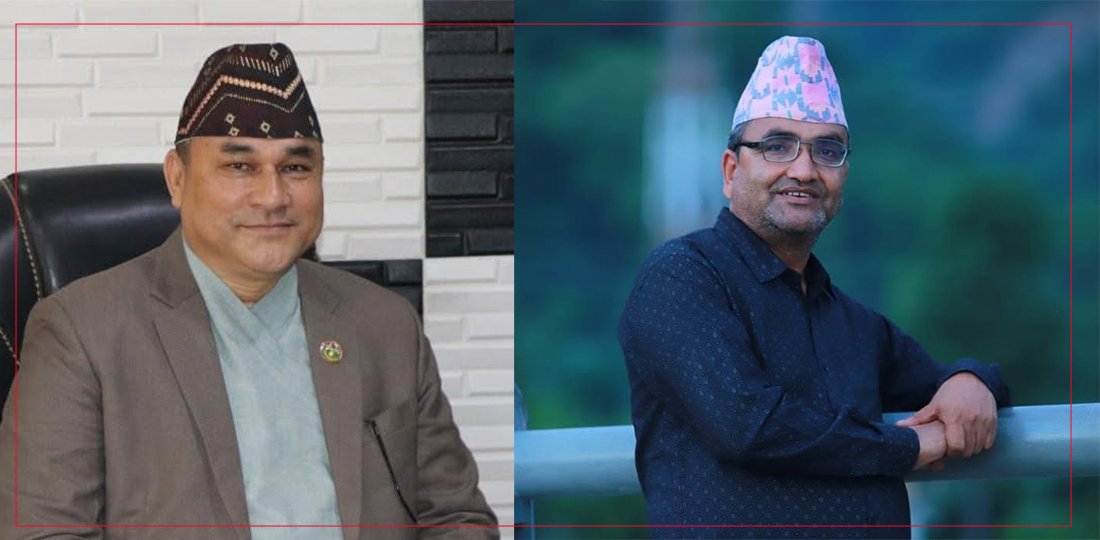
On Falgun 9, Ishwari Bisht, the founding city chairman of Dhangadhi Sub-Metropolitan City, announced his resignation from the party. In the 2079 elections, Bisht contested from Kailali-5 with the bell symbol, securing 3,405 votes, establishing himself as the candidate with the second-highest votes for the RSP in Sudurpashchim. This time, however, he announced his departure from the party altogether. He stated that he left the party due to perceived rigging in ticket distribution and a decline in values and principles.
Bisht was not only displeased when the RSP nominated Anand Bahadur Chand as its candidate for Kailali Constituency No. 5 this time; he also registered as an independent candidate. He is preparing to contest the election independently in Kailali-5 on Falgun 21.
"The party that was formed to establish the ideals, methods, and order it was founded upon has now fallen into the trap of nepotism and financial influence," Bisht mentioned in his resignation letter.
In Kailali-5, candidate Jagannath Chaudhary, who was contesting with the grinding stone symbol from the Nagarik Unmukti Party (NUP), joined the rival RSP just 9 days before the election, on Falgun 12.
Legally, his name and symbol will remain on the ballot paper, but he is currently campaigning for the RSP candidate, Anand Bahadur Chand. He was welcomed into the party by RSP Central Member Laxman Tharu. "I joined because RSP has effectively raised the issues of the Tharu community," Chaudhary said on the day he joined the party.
However, the underlying reason is different. The main cause is the internal feud and division within the Nagarik Unmukti Party, where Resham Chaudhary is the patron. The political and familial dispute between Resham Chaudhary and his wife, Ranjita Shrestha, has split the party.
In the current election, the Ranjita faction of Nagarik Unmukti has allied with the CPN (UML). Resham has also formed a new party and fielded candidates in some areas.
Meanwhile, in Baitadi, on Falgun 11, Janak Bisht, a member of the Nepali Congress's Sudurpashchim Provincial Committee, announced his departure from the Congress while standing on the UML platform.
The main reasons behind his party switch appear to be emotional hurt and resentment towards the leadership, rather than any major ideological disagreement. "No one even wished for the recovery of Chairman Deuba, who was injured in the Genji movement; a new Congress was formed by going against established procedures," Bisht had said. He has now sworn to ensure the victory of the UML candidate, Damodar Bhandari.
These incidents show that personal ego, factional fighting, and emotional ties between leaders and cadres still compel last-minute decisions in politics. A feeling of revenge, where one supports the opposition just to defeat their own party after feeling insulted within their own ranks, is evident here.
Why does this happen at the last minute in every election? Why do leaders switch parties? This has become a matter of interest now. Local political analyst Dharmananda Bhatta states that opportunism is the main reason behind the increasing trend of leaders and cadres changing parties in the final stages of the election.
According to him, most leaders and cadres assess the electoral atmosphere at the last moment. "Opportunistic leaders and cadres gravitate towards whoever seems more likely to win or whoever appears to have a surge of public support," he said. "The wave of people joining the RSP from Nagarik Unmukti signals exactly this. It shows an attempt to leave a sinking ship and seek safe harbor."
According to Bhatta, dissatisfaction with ticket distribution is another significant factor. He noted that when dedicated party workers who have served the organization for years see tickets given to others based on influence and money at the last minute, frustration mounts. "That frustration either manifests as a rebel candidacy or as party resignation," he said. "This is a consequence of weak internal democracy within the parties."
He added that last-minute party entries should also be viewed in connection with political transactions. "It is often seen that there is an unspoken agreement: 'I will help your candidate win, and in return, you must give me a political appointment or opportunity later,'" Bhatta stated. "This trend of switching parties at the final stage of the election has increased due to these very transactions."
This specific news has been automatically translated by AI. As a result, there may be some inaccuracies or language errors.