High-Stakes Battle in Sarlahi-4: Gagan Thapa Faces Off Against Incumbent Amidst Farmer Distress


Barthahawa, Sarlahi. On Monday, a crowd of local youth, women, and the elderly gathered in front of Ramnaresh Mahato's house in Ramnagar Rural Municipality-4, Sarlahi constituency number 4. Some young men were arranging chairs, while others were cleaning sofa-like seats and placing them on elevated platforms. Stronger men were rushing to set up tents, and women were busy preparing flower garlands. The reason for all this preparation was the door-to-door campaign of Gagan Thapa.
When Gagan Thapa arrived, chants of 'Gagan Sarkar' echoed through 'Ramnagar'. Thapa was personally meeting every voter. He was accompanied only by a few local leaders, including leader Mamata Sharma, who had recently left the Rastriya Swatantra Party (RSP) to join the Congress. As Gagan left after having cold drinks and biscuits at a local Congress leader's house, shaking hands, and taking photos, the area appeared completely energized. Workers were even emotional seeing Gagan in their own courtyards. Gagan Thapa was campaigning in a simple manner. Despite some language barrier issues, he was managing to communicate by adjusting as best as he could.

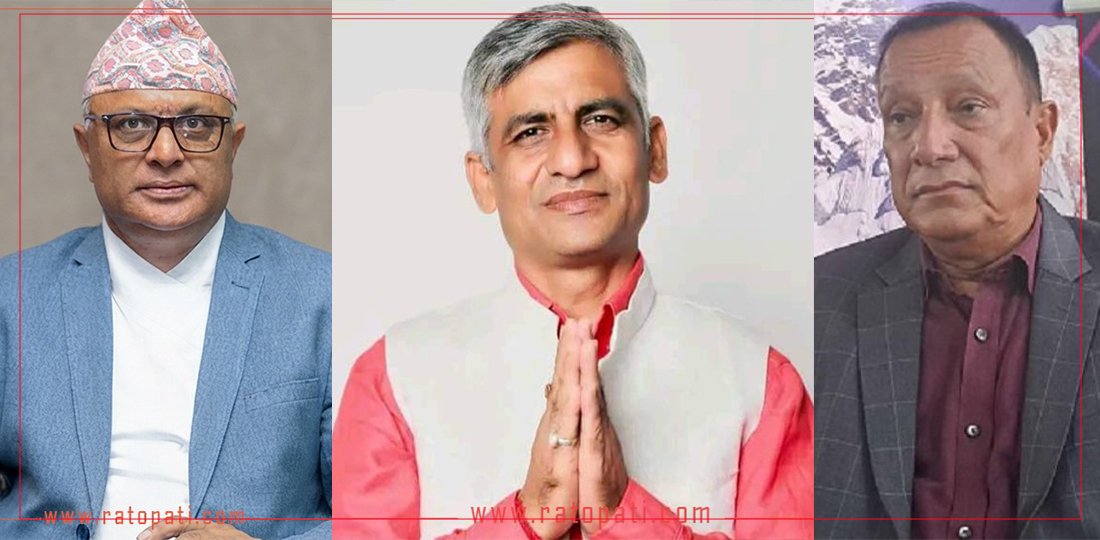
Sarlahi-4 has become the 'epicenter' since Gagan Thapa entered the electoral race. Party President Thapa himself is in the field to reclaim the lost prestige of the Congress and revitalize the organization. On the other side, the incumbent MP from this constituency, the ever-discussed Amresh Kumar Singh, is striving to protect his legacy through his personal influence and shrewd political maneuvers. Meanwhile, the competition has become more interesting as Shivpujan Yadav, considered the 'kingmaker' in this constituency's politics, has fielded his son, Amanishkumar Yadav, under the banner of CPN-UML.
Gagan Faces Ease as Congress 'Backs' Him
Looking back at the political history of this constituency, the changing psychology of Ramnagar Rural Municipality has greatly encouraged the Congress. Ramnagar, once considered an impregnable fortress of the Congress, fell into the lap of the CPN (Maoist Centre) in the last local elections. However, according to local political analysts and workers, that victory was not due to the Maoist Centre's own organizational strength but rather a result of extreme internal sabotage and division within the Congress.
Specifically, Amresh Kumar was accused of playing a role in defeating the Congress by fielding his own panel against the party's official candidate. But now, old Congress leaders who followed Amresh and became rebels, or left the party, are rapidly returning to their mother party. Congress leaders claim that the return of influential local leaders like KS Rahul Verma, Ram Binod Rai, and Abhinandan Sahani from this area has severely shaken Amresh's political foundation.
Amresh Relies on 'Bell' Craze
RSP candidate Amresh Kumar Singh is not a new face in this constituency. He is known as a shrewd player capable of turning adverse situations to his advantage. Singh, who has been elected and represented this constituency in parliament for a long time, still holds strong personal sway here.
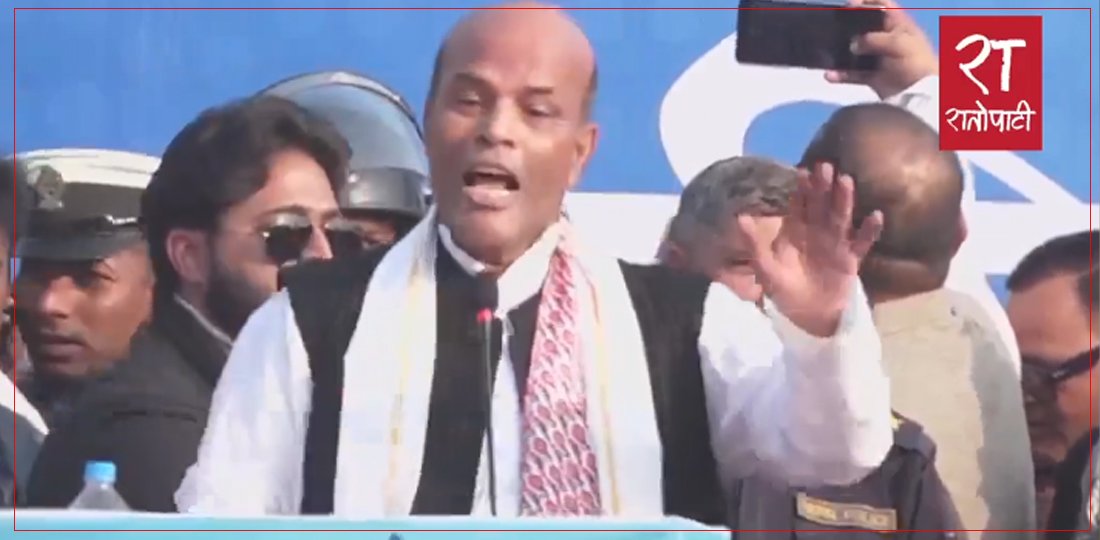
He is particularly adept at using the strategy of 'Sama, Dama, Danda, Bheda' (conciliation, bribery, punishment, and division) in election strategy. However, serious allegations leveled against him this time have put him on the defensive. He is often accused of failing to bring concrete development to the area despite being in power for a long time, only offering assurances to voters, and causing rifts within the party for his personal gain. Being tagged as someone who failed to develop and discussions about betraying workers have made his electoral journey difficult.
Nevertheless, Amresh's strong point is his personal connection and networking. His influence still remains strong in the southern belt of Madhesh. Furthermore, he is cleverly trying to leverage the growing craze for the Rastriya Swatantra Party and the atmosphere created by Balen Shah's presence in Madhesh to his advantage. He is using the emotional slogan 'A son of Madhesh must become Prime Minister' and the increasing attraction towards the 'Bell' symbol as his electoral weapons.
Amresh's supporter, Binay Singh, says, 'Whatever Daile Amresh does, he is a man of this soil. Outsiders do not understand the pulse of this place. There is a wave of independents in the country now, and the atmosphere surrounding Balen and the Bell symbol will ultimately strengthen him.'
Another local youth influenced by the RSP wave, Pramod Yadav, says, 'The old parties have cheated us. The Bell is a hope, and the path Amresh Singh has taken now seems to be trying to connect with youth who desire change.'
Challenges Are Not Small for Gagan Either
Gagan Thapa's presence has generated great attraction among the youth of Sarlahi-4. Gagan's personal image, eloquence, and high stature in national politics have greatly influenced the voters here. Old Congress workers who were sidelined due to Amresh have now returned to the party, energized by Gagan's call. However, the challenges for Gagan are not few here.
The acceptance of a leader of Pahadi origin in the inner areas of Madhesh and language barriers might cause some problems. In the rural areas of Madhesh, caste politics and linguistic proximity are still given great importance, where Gagan will have to work very hard to establish his development agenda. There is still a suspicion among local voters—the question, 'Gagan Thapa is from the hills, how will he understand the problems of the Madhesh soil?'—is heard in every street and alley. But Gagan appears to be trying to dispel this suspicion through his local representatives and workers.
A great enthusiasm is visible among the old and disgruntled Congress workers since Gagan Thapa himself entered the field. Local Congress leader Rampreet Yadav from Hajariya says, 'Yesterday, some people from within our own ranks tried to destroy the party, but today, hearing that Gagan Thapa is coming, we have new energy. Madhesh now needs a leader who delivers results, not one who just abuses, which we see in Gagan.'
Similarly, another worker from Barahathwa, Shivji Sah, says, 'We have elected many people, but no one spoke for the sentiments of Madhesh in Kathmandu. Although Gagan Thapa is from the hills, his thinking is national. We all forget past grievances and unite in the belief that development here will gain momentum with his arrival.'
Local leader Ram Binod Rai, who returned to the party, shares a similar view: 'Amresh Singh only made Congress a laughing stock. Now, the vision of young leaders like Rahul Verma and Gagan Thapa is bringing Congress back to its old stronghold. We will no longer follow individuals, but ideas and organization.'
The Decisive 'Shivpujan Factor'
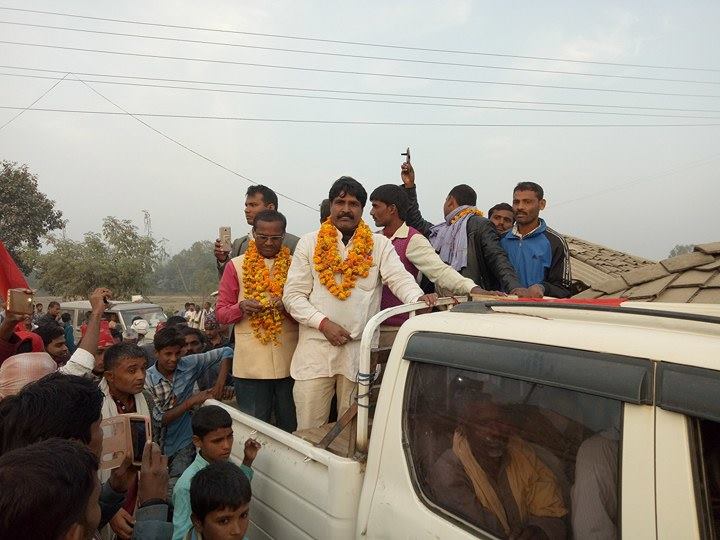
In the politics of Sarlahi-4, Shivpujan Yadav is such a powerful name that no political equation can be complete without acknowledging him. He is a huge 'vote bank' in himself. The fact that his daughter Madhumala secured over 14,000 votes independently in the previous election proves Shivpujan's grip and power. This time, he has fielded his son, Amanishkumar Yadav, from the CPN-UML.
When the organizational votes of UML are added to Shivpujan's personal 'reserved' vote bank of over 10,000, he appears as an extremely powerful competitor. If Shivpujan can secure his base area votes and fully mobilize the organizational votes of the UML, no one can deny the strong possibility that the results could go in their favor.
Analyzing the proportional votes received in the 2079 elections makes it easier to understand the real balance of power in this constituency. According to the Election Commission, Congress received 16,029 votes in the previous election. The Janmat Party, which came in second, received 12,595 votes. This shows that Dr. CK Raut-led Janmat Party is also strong here. CPN (Maoist Centre) received 9,790 votes and UML received 9,472 votes. Thus, this area indicates a multi-cornered competition rather than a triangular one. Since JSP Nepal received 5,152 votes and Lospa received 3,673 votes in the last election, they can also be decisive in determining victory or defeat.
It is very challenging for the Congress to maintain its lead, as the traditional votes cut by Amresh Kumar and the rise of RSP are likely to deal a major blow to the Congress vote bank.
Geographical and Caste Cards Too
The election in this constituency is not limited to political agendas; it is also surrounded by deep geographical and caste challenges. Sarlahi-4, with over 121,000 voters, is geographically very diverse. The area spans from the urban and semi-urban wards of Barahathwa Municipality to the remote rural areas of Dhankul and Ramnagar.
While slogans of development and good governance work in urban areas, the role of caste equations and 'money-muscle power' still appears decisive in rural areas. The victory of the candidate who secures the votes of the Yadav, Dalit, and Muslim communities is almost certain. Shivpujan Yadav has a strong hold on the Yadav community, while Congress and Amresh Kumar Singh are vying to attract votes from the Dalit and backward classes.
The wave of the RSP's 'Bell' is more visible in the northern region (Hajariya and Barahathwa), while the battle in the southern region is between Amresh's personal influence and the organizational strength of the Congress. The emotional atmosphere created by Balen Shah's entry into Madhesh also has an equal possibility of pulling many voters away from traditional parties.
Candidates' Maneuvers Continue, Voters' Hearts Burn
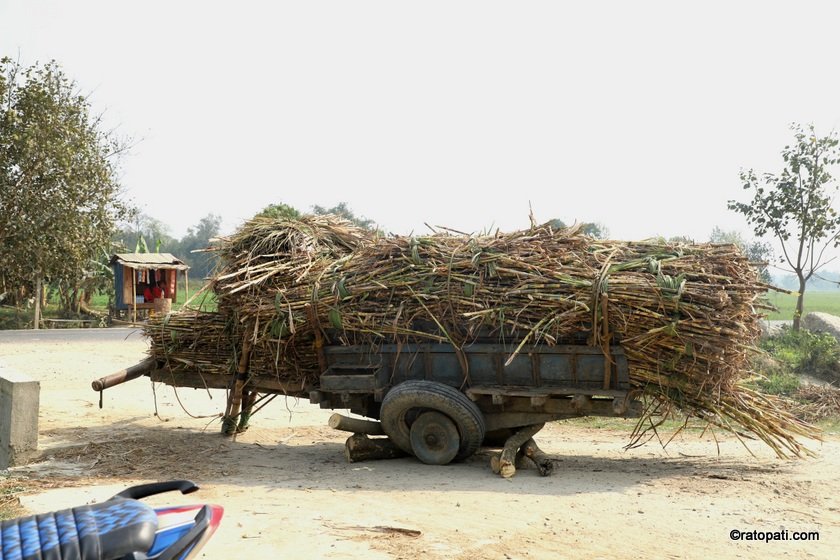
While candidates are engaged in maneuvers to attract votes, voters are worried about their daily problems. The condition of sugarcane farmers in Sarlahi-4 is extremely pathetic. The issue of sugarcane farmers, whose sugarcane is grown in mills located here, is the biggest issue in the election.
These mills are causing distress to the farmers. The problem of sugarcane farmers is the biggest electoral issue here. According to local farmer Gaurishankar Sah, mill owners Shailendra Sah and Birendra Kanodia have withheld millions of rupees owed to the farmers. Farmers are finding it difficult to light their hearths because they are not receiving payment for the sugarcane they cultivated with their blood and sweat.
.jpg_nRdpjLJWhQ.jpg)
They say, 'Leaders only come to ask for votes, but no one returns to solve our problems.' The reality here is that promises of payment from the mill every week turn into months without payment. Farmers are trapped in a debt cycle because they receive neither the subsidy promised by the government nor the price from the mill.
The state of other development infrastructure is equally disappointing. The local people are plagued by dusty roads, irregular electricity, and a lack of clean drinking water. According to local youth Mantus Kumar Singh, the youth are now searching for change. He says, 'Amresh Singh won three times, but he showed no interest in building roads and hospitals here. That's why the youth today seem to favor a visionary leader like Gagan Thapa.'
However, voters here sound somewhat disappointed. According to them, all leaders are the same; they make promises during elections but are never seen after winning. The condition of education and health is even more dire. Sarlahi-4 lacks hospitals and doctors, forcing people to travel to Birgunj or India's Sitamarhi for even basic treatment.
Tears of Sugarcane Farmers Overshadowed by 'High-Profile' Clash
The politics of Sarlahi-4 is currently at the center of the nation's attention. The clash involving Nepali Congress General Secretary Gagan Thapa, incumbent MP Amresh Kumar Singh, and Amanish Yadav, son of influential leader Shivpujan Yadav, has drawn national attention. But far from the convoy of flashy vehicles, the voters here have one common question: 'When will we get paid for our sugarcane?'
This area is considered a 'hub' for sugarcane cultivation, but for the farmers here, sugarcane has become a 'crop of sorrow.' Political parties have made it an electoral agenda, but the empty pockets and hearths of the farmers are not a priority for anyone. The two large sugar mills in Bagdaha and Dhankul have become more of a curse than a blessing for the farmers here. Gaurishankar Sah, a local farmer from Dhankul, has both anger and tears in his eyes. He says, 'Mill owners Shailendra Sah and Birendra Kanodia have withheld millions of rupees belonging to us. They build mansions from our blood and sweat, but we have to borrow money from moneylenders to marry off our daughters and pay our grandchildren's school fees.'
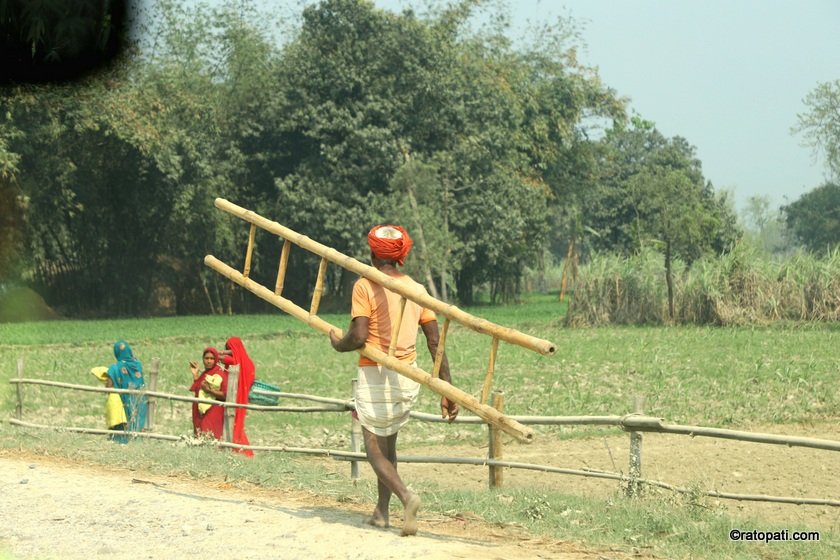
Another farmer, Ramvriksha Mahato, adds, 'The subsidy given by the government is taken by the clever ones. The mill says it will pay in a week, but even a year passes without payment. We don't care who comes, Gagan Thapa or Amresh Singh; whoever ensures we get paid for our sugarcane on time and provides fertilizer on time, that is the leader for us.' Complaints are heard in every village that leaders come during elections, distribute assurances, but never show their faces after winning.
Health and Infrastructure: Fear of Death on the Road Due to Lack of Treatment
While major political discussions are ongoing, the health services in Sarlahi-4 are extremely pathetic. In key locations like Sisaot and Barahathwa, there are only nominal health centers. According to local youth Mantus Kumar Singh, even for a minor illness, they are forced to search for an ambulance and travel to Birgunj or Sitamarhi in India.
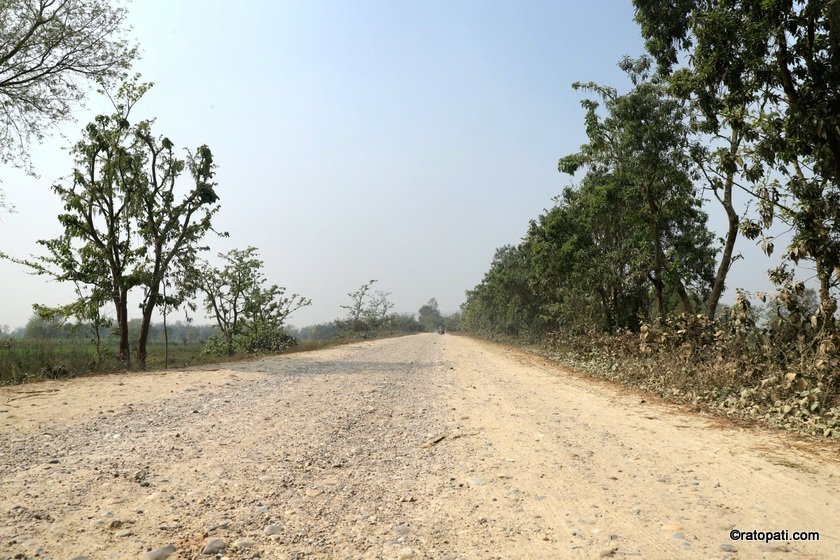
'The condition of the dusty roads is such that a patient might die on the way before reaching the hospital,' says Singh. 'Amresh Singh won three terms, but he couldn't build a single well-equipped hospital. Now we need hospitals and doctors, not speeches.'
Photo/Video: Manoj Khadka
This specific news has been automatically translated by AI. As a result, there may be some inaccuracies or language errors.
_cvUCBlwFTZ.jpg)