Nepali Congress Candidate Kiran Kishore Ghimire Outlines Development Agenda for Dang-2 Constituency


Kiran Kishore Ghimire of the Nepali Congress is contesting the upcoming House of Representatives election from Dang Constituency No. 2. Ghimire has been actively involved in Nepali politics for a long time.
He has launched his election campaign focusing on the overall development and pro-people agenda for Dang. In this context, here is an edited excerpt of an interview conducted by Sudarshan Acharya with Ghimire regarding his election agenda, development plans, and competition with rivals:
What agendas are you presenting to your constituents?
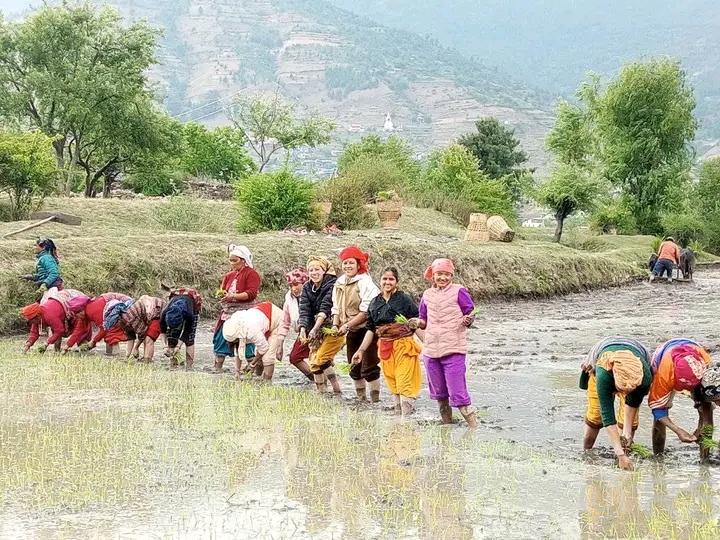
My main agenda is the manifesto of the Nepali Congress. Additionally, based on my constituency, which is the drought-prone Dang Constituency No. 2, arranging irrigation facilities is my priority. Dang Valley has about 56 thousand hectares of land. By prioritizing irrigation, I want to transform Dang into a beautiful city. Furthermore, drinking water, roads, education, and health are among my priorities.
Another point is that the Tharu community are the indigenous people of Dang. They have an organic culture that they have preserved to this day. I have also been living in Dang for eight generations, and my family is involved in agriculture. Therefore, I have a close affinity with the Tharu community. My first priority is to uplift them and promote their organic culture.
Moreover, Dang has numerous tourism potentials. Swargadwari is the holiest pilgrimage site in this region. A large number of pilgrims come here from Uttar Pradesh, India. A route can be constructed to reach Swargadwari from Bhaluwang via a shorter path. Furthermore, connecting Ratnanath, Gorakhnath, and Patheshwori to create a religious tourism circuit could attract Indian tourists.
Besides this, Dang can be transformed into an Information Technology (IT) hub, similar to Silicon Valley in the United States. Dang is also a valley, and new students here are being drawn to IT. By coordinating with Nepalis and Dang residents living abroad, this can be made an IT hub. It is not necessary to stay in Kathmandu for this. Foreign investment can be attracted by utilizing the resources available right here in Dang.
You have discussed so much. However, individuals who have served as federal ministers and chief ministers have come from this district. What development has actually occurred in Dang so far?
It is not that no development has taken place. Development has occurred. But if we create a narrative that no development has happened, we will fall into a quagmire ourselves. In 2046 BS, there were no paved roads here; we used to walk on footpaths and dirt tracks. Later, road connectivity increased, and paved roads started around 2054/55 BS.
The decision to establish the Institute of Medical Sciences in Dang was made during Sushil Koirala's tenure. Similarly, the talk about the four-lane road also progressed during his time. After that, who the local contractors and candidates were, that is something that has emerged later. But looking at it overall, major development works have been carried out under the leadership of the Congress.
There are two reasons for this. First, the issue of state-controlled economy. After 2046 BS, Congress freed the economy from state control and introduced a liberal economic policy. This made it easier for the private sector to engage in development. The Nepali Congress is the party that encourages the private sector. The second point is that we have a scarcity of resources. In a least developed country, spending should be on projects where the return on investment is quick. Development does not happen just by talking about big things.
In addition to this, administrative and technical capacity is also important. How we work when we take the lead depends on coordination with the bureaucracy. I started politics in 2036 BS. I have always been with the people. I am more focused on small development issues such as irrigation and roads. My competitors talk about big plans, but those have not been implemented.
What do you see as the main challenge in this election?
The main challenge in the election is that both major parties consider me a competitor. I have just come from the villages and have seen the enthusiasm of the people. Wherever I go, I receive the enthusiasm and support of the people. People like development-oriented and simple individuals. I have seen and experienced many countries. I feel I am more comfortable than other candidates when it comes to connecting with the people.
The people who were elected in the last election could not perform according to the expectations of the people. That is why there is an 'anti-incumbency' atmosphere now. There is a complaint that even those who secured an overwhelming majority last time could not deliver. For that reason, the people are seeking change this time.
Even though I do not hold any position, I have always remained among the people. I have been working with the motto that 'Kiran Kishore' should be there for development, 'Kiran Kishore' for sorrow, and 'Kiran Kishore' from the womb to the grave.
How do you evaluate your competitors, such as the former Chief Minister and the General Secretary of the party?
They are all my competitors. I do not underestimate anyone. They are also candidates from major parties. But what delivery did they provide during their tenure? The people are asking that question.
New parties and candidates have also emerged. There are questions about them too. We must choose a leadership that can deliver rather than one that only talks big. Excitement and impulse alone do not work in today's society. Division in society cannot lead to nation-building.
Congress played a role in bringing multiparty democracy in 2036 BS. Bringing the armed conflict into the peace process was also done under the leadership of Congress. Even now, Congress leadership is necessary to manage the grievances and impulses present in society. A wave of transformation and change is currently sweeping through the Nepali Congress. The general public and intellectuals also trust this. Therefore, I am confident that I will receive good support in this election.
This specific news has been automatically translated by AI. As a result, there may be some inaccuracies or language errors.
-pm-office_YZG9ToBodL.jpg)