Farmers Receive Training on Advanced Wheat Cultivation Techniques in Rupandehi

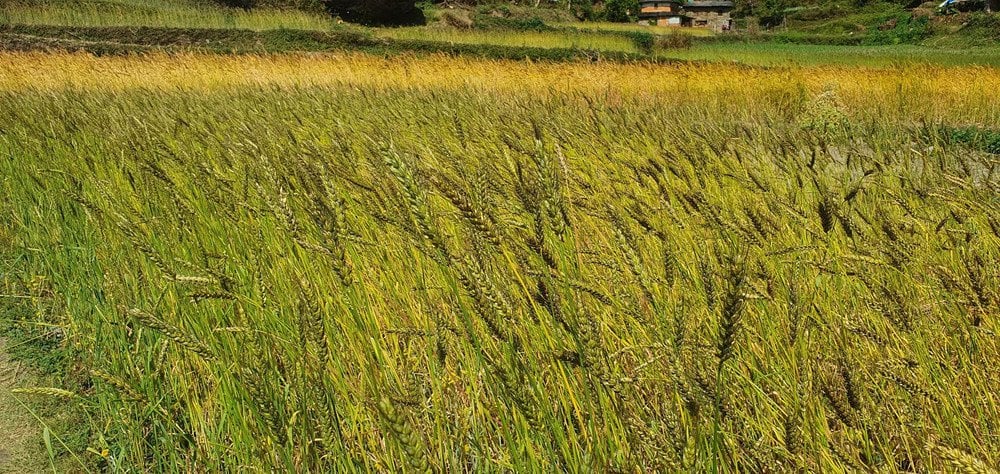
Ajaykumar Yadav, a farmer from Sammarimai Rural Municipality in Rupandehi, used to cultivate wheat using traditional methods. Being close to the Indian border, he often used wheat seeds imported from India. Due to a lack of necessary technical knowledge, he was unable to achieve sufficient production. With the aim of earning a good income from wheat production, Yadav participated in an advanced wheat cultivation technology training organized by the National Wheat Research Program.
During the training, he acquired technical knowledge on selecting certified seeds of improved varieties, sowing methods, balanced fertilizer management, timely irrigation, pest and disease management, and modern practices for increasing yield. Yadav committed not only to implementing the skills learned in the one-week training but also to teaching his fellow farmers in the village.
Twenty-five farmers from 24 districts participated in the training held in Rupandehi. In addition to the farmers, 15 students from relevant subjects also attended the training. For one week, farmers were taught advanced wheat cultivation technology through theoretical and practical methods. Most of the participating farmers were unaware of the newly developed wheat varieties. Many shared their experience that they didn't even know which variety of wheat seed they were sowing.
Dr. Roshan Basnet, Coordinator of the Bhairahawa National Wheat Research Program, stated that the training taught farmers how to select appropriate varieties, seed treatment, timely planting, and line sowing methods. Farmers were also taught about balanced fertilizer application based on soil testing, irrigation management, pest and disease control, weed management, harvesting, and storage.
According to Dr. Tek Prasad Gotame, Director of Crop and Horticulture Research at the Nepal Agricultural Research Council, the National Wheat Research Program has developed 54 advanced wheat varieties over the last six decades, prioritizing food security as well as nutritional security. Currently, four more varieties are in the recommendation stage, and 13 old varieties have been removed from the recommendation list.
He informed that the research program has developed Zinc Wheat-1, Zinc Wheat-2, and Borlaug-2020 varieties for the Terai region, and Khumalshakti, Bheriganga, and Himganga varieties for the hilly regions. It is claimed that these varieties have higher levels of zinc and iron and possess high resistance to pests, diseases, and the effects of climate change. Scientists claim that yields of up to 5.5 tons per hectare can be achieved with the new varieties. According to scientists, if the improved varieties are effectively delivered to the farmers and fertilizer and irrigation are managed properly, the country can not only become self-sufficient in wheat but also reach a stage of exporting it.
This specific news has been automatically translated by AI. As a result, there may be some inaccuracies or language errors.