Nepali Congress Manifestos Show Shift in Priorities Amidst Leadership Change

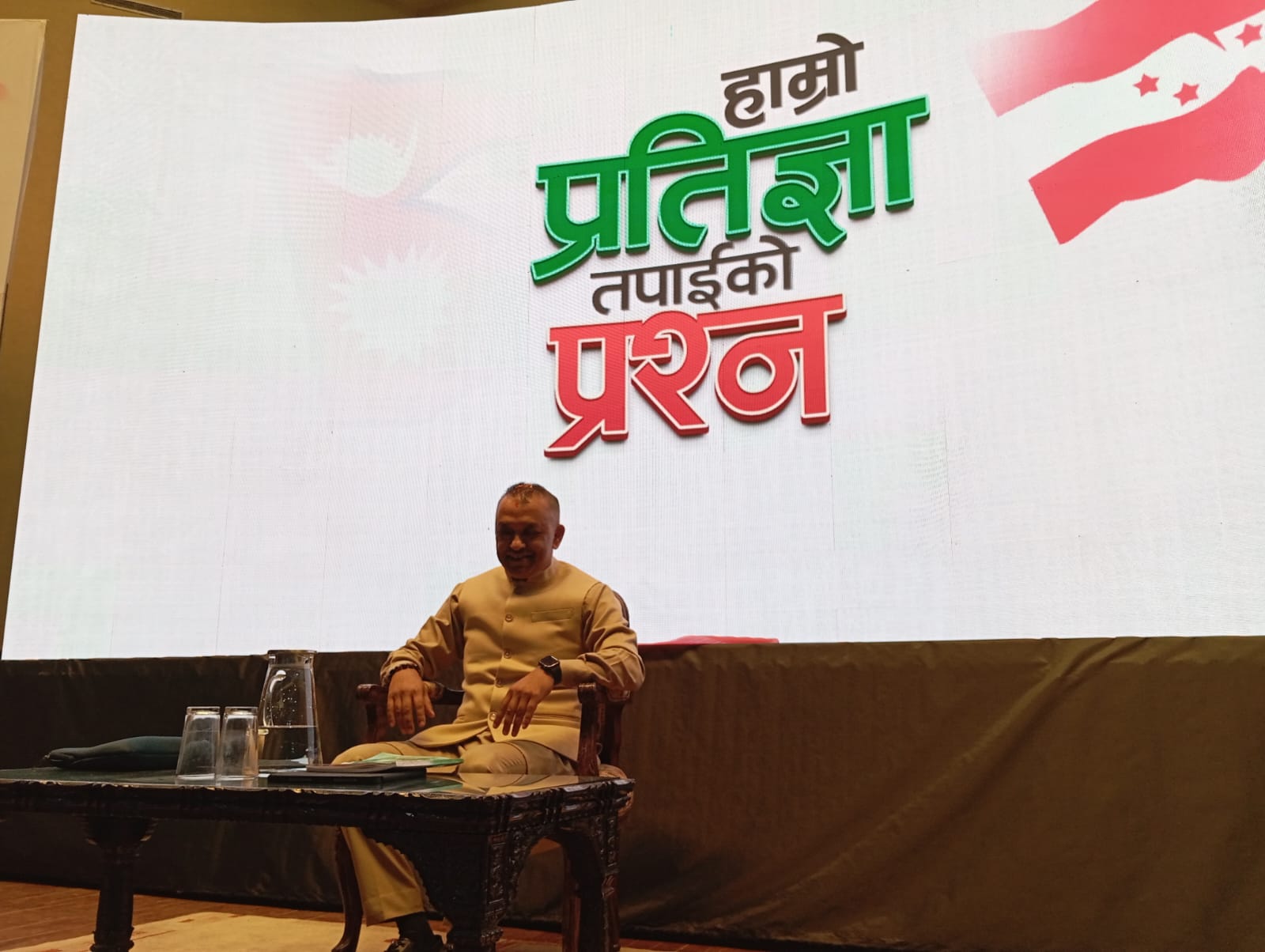
When the Nepali Congress went into the House of Representatives election in 2079 BS, Sher Bahadur Deuba was the party president. As the party heads into the House of Representatives election in 2082 BS, Gagan Thapa has taken over as president.
With the change in party president, differences in plans and strategies are inevitable. This impact is visible in the party's manifestos released for the two elections held three years apart, as the priorities in the manifestos have also shifted.
In the 2079 manifesto, the Congress prioritized eight sectors. Now, the Congress has released its manifesto based on the 'Vision-10' concept.
2079 Congress Priorities
1) To develop a capable, accountable, and honest governance mechanism for the purification of democracy and good governance, to reform laws and mechanisms to control corruption, and to free public institutions from partisan interference.
2) To limit extreme poverty to a single digit by creating an enterprise-friendly environment, to create respectable employment opportunities at home while reducing dependence on foreign employment, and to develop a knowledge-based economy.
3) To provide integrated social security (health insurance, free treatment, education, employment, old-age allowance, etc.) from birth to death through the state, and to end social discrimination and promote cultural tolerance and harmony.
4) To make the nation a zero-carbon emission nation by 2045, to develop a green economy, and to strengthen disaster management and early warning systems.
5) To adopt an independent and balanced foreign policy based on a non-aligned foreign policy, protecting national interests and self-respect, and to strengthen relations with neighbors and internationally.
Top 5 Economic Agendas
1) To substitute imports and promote exports, and to reduce inflation by controlling loans flowing into non-productive sectors.
2) To adopt frugality in government spending, restructure the revenue administration, and maintain fiscal discipline.
3) To encourage domestic production, internalize technology, and implement the slogan 'Nepali Industry, Employment in Nepal, Own Production, Own Trade'.
4) To upgrade technical education institutions to eliminate the shortage of labor supply in skill-based sectors, and to create employment opportunities at home instead of foreign employment.
5) To generate 10,000 MW of electricity in the next 5 years, to increase per capita annual electricity consumption to 1,200 units, and to increase the use of electric vehicles and stoves.
2079 Priorities
1) Education: To ensure access to quality, free, and technology-enabled education for all, to increase female literacy to 95 percent, and to ensure internet access in 80 percent of schools.
2) Health: Free treatment for children under three years and senior citizens above 73 years, and to bring all citizens under the scope of health insurance within 5 years.
3) Enterprise, Employment, and Private Sector: To create 1.25 million new jobs in 5 years, to achieve an annual minimum economic growth rate of 7%, and to encourage the private sector.
4) Science, Technology, Communication, and Digitalization: To build a 'Digital Nepal' and utilize information technology in economic activities, good governance, and citizen services.
5) Agriculture: To develop agriculture based on modern technology, ensure food security, and increase production by implementing land use policy.
6) Physical Infrastructure: To expand access to paved roads, energy, irrigation, drinking water, and communication nationwide, and to complete ongoing national pride projects.
7) Tourism: To bring 2 million foreign tourists annually in 5 years, to develop tourism infrastructure, and to promote adventure and rural tourism.
8) Arts, Culture, and Sports: To conserve and promote Nepali art, culture, language, and literature, to develop the careers of creators and writers, and to invest professionally in the sports sector.
On Federalism
To fully adhere to the principles of cooperation, coexistence, and coordination among the federal, provincial, and local levels, and to facilitate lawmaking by making provincial and local governments empowered and effective.
Dos and Don'ts
Do: Implement federalism in line with the spirit of the constitution, control corruption, make appointments to public posts based on merit and transparency, and increase domestic production and employment.
Don't: Dissolve the House of Representatives due to internal disputes of parties or conflicts between different parties, misuse public property, make any decision under economic temptation or personal influence, or encourage caste discrimination, violence, or social vices.
Vision-10 of the 2082 Pledge Paper
1) Nepal where one can live as a respected Nepali
2) Nepal where one can dream
3) Nepal that encourages wealth and employment creation
4) Nepal of farmers who feed the hungry and make the country known
5) Nepal that provides medicine and shelter
6) Nepal where educating children does not impose a financial burden
7) Nepal with the rule of law, free from mismanagement and harassment
8) Modern Nepal that can be proud of its identity
9) Self-respecting Nepal respected by the world
10) Nepal marching towards prosperity
The main slogan of the detailed 10-point vision, published with the objective of establishing good governance and prosperity in the country, is 'Prosperous Nepal, Respected Nepali'. The manifesto, named the Pledge Paper, mentions goals to be achieved within five years and pledges to uplift the standard of living of citizens with the declaration 'Congress Changed, Country Will Change'.
Ending discrimination based on caste, religion, gender, or region so that every citizen can live with their head held high, strictly implementing the rule of law to end privileges gained through access to power and authority, ensuring administrative service delivery free from mismanagement and harassment, controlling corruption, ending delays in government services, arranging for citizens to receive services from home, and in the context of economic prosperity, the Congress has put forward a policy to promote the private sector and encourage wealth creation.
The pledge paper also covers creating employment opportunities at home, stopping the exodus abroad, developing agriculture as a respectable profession, ensuring proper management of necessary technology and markets for agricultural produce grown by farmers, and developing tourism, energy, and infrastructure.
The goal is to increase the state's responsibility in education and health, ensure that no one becomes poor due to treatment costs, implement a quality health insurance system, guarantee quality education so that parents are not financially burdened by educating their children, and produce a competitive workforce.
Different Presentation, Same Content
The process of including content in the 2079 and 2082 manifestos is different. However, there is not much fundamental difference in the issues raised. In 2082, the content is presented in a novel way under the name Vision-10. In 2079, it was presented in a traditional manner.
For instance, in 2079, the goal was set to ensure access to quality, free, and technology-enabled education for all, increase female literacy to 95 percent, and ensure internet access in 80 percent of schools. In health, it mentioned free treatment for children under three years and senior citizens above 73 years, and bringing all citizens under the scope of health insurance within 5 years.
In 2082, the same issues are framed differently: increasing the state's responsibility in education and health, ensuring no one becomes poor due to treatment, implementing a quality health insurance system, guaranteeing quality education so that parents are not financially burdened by educating their children, and producing a competitive workforce. There is no fundamental difference in the substance, but the style of presentation differs.
Looking at employment, the 2079 manifesto stated the goal to create 1.25 million new jobs in 5 years. The 2082 version uses phrases like creating employment opportunities at home and stopping the exodus abroad. Most of the content is similar; only the presentation differs.
This specific news has been automatically translated by AI. As a result, there may be some inaccuracies or language errors.