
Political Analyst Dambar Khatiwada Expresses Skepticism Over Upcoming Elections and the Unaddressed Issues of the 'Genji Movement'


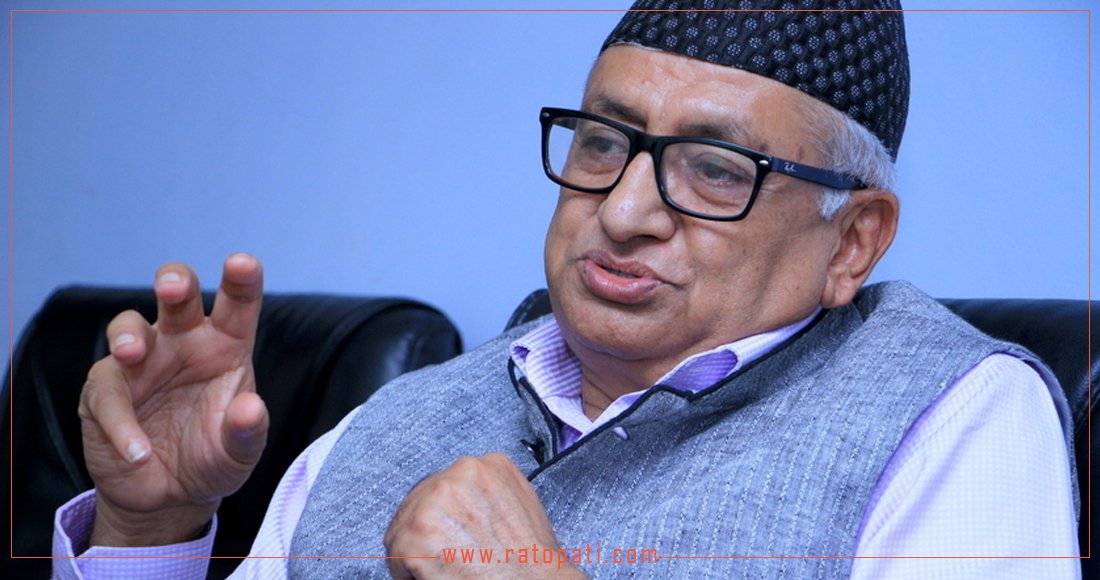
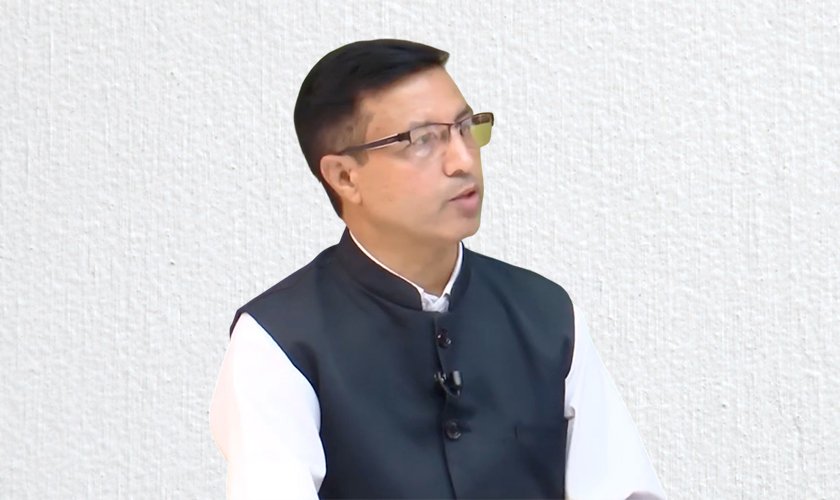
Sharp yet realistic expression and a powerful pen are hallmarks of Dambar Khatiwada. Khatiwada, who has a deep understanding of national politics, also possesses the capability to analyze international events and occurrences with equal depth.
Known as a political analyst, he now prefers to call himself the leader of the 'People First Party'. Khatiwada does not see an alternative to the current election, but he has many questions about this election. There is the question of what kind of election this is, and why it is being held.
He fears that an election held without addressing the demands of the Genji movement will invite another crisis. Amidst fears that the spirit and sentiment of the Genji movement will not be addressed after the election, that the structure of the parliament will be extremely difficult, that no one will secure a majority, and that the parties will face a moral crisis in forming a government together, analyst and People First Party leader Khatiwada spoke with Ratopati.
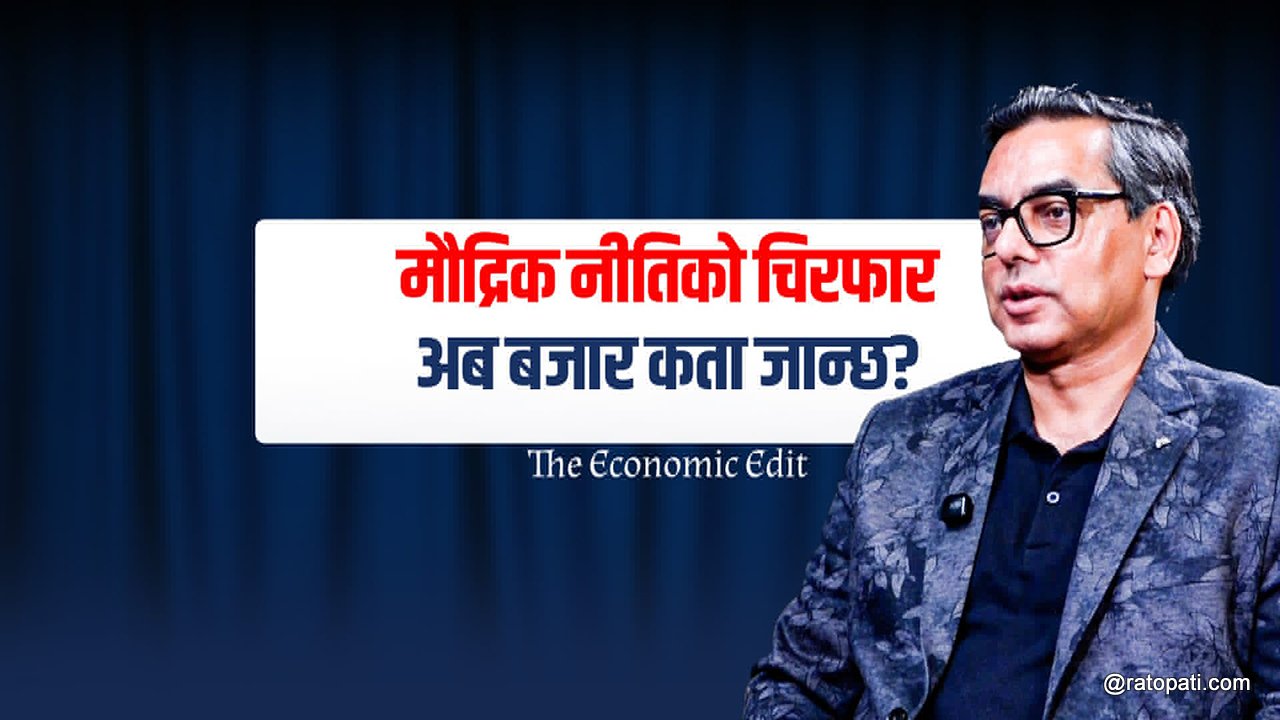
(The detailed interview can be watched in the video)
- Why is this election being held?
It is important to consider the circumstances and the reason why the election is being held. Is this a periodic election of 5-5 years according to our constitution? No. Is this a mid-term election? No. Is it an election being held under a new constitution after a system collapse? That is not it either. The kind of election being held in Nepal has never happened before.
- If it doesn't match any of these three characteristics, what kind of election is this?
This election should have been one to do justice to the Genji movement. But unfortunately, our election does not have that capacity. This election has only one justification: to bring the constitution, which was 'derailed' by the Genji movement, back on track. This might be the only argument in favor of the election.
The justification for this election is very minimal. This election cannot address the issues that caused the Genji revolt in our country.
- And was the Genji movement just a movement to derail or collapse the system and governance?
They messed up, and now we are fixing it through elections. The interim government says so, and the President says so. Those who claim they supported or led the so-called Genji movement are also saying the same thing. This means the objective of the Genji movement was not elections. But in a democratic country, elections will happen sooner or later. However, the circumstances under which the election is being held, by whom, under what power structure, and in accordance with what legal and constitutional arrangements, also matter.
- Does this mean this election has no meaning or justification?
The justification for this election is very minimal. This election cannot address the issues that caused the Genji revolt in our country. Not only can it not address them, but I feel the situation will worsen after this election.
- How will it worsen?
What happens after the election is that the spirit and sentiments of the Genji movement will not be addressed, the structure of the parliament will be very difficult, no one will get a majority, and there will be a moral crisis for parties to form a government together because the issues won't align. In a situation where one has to take action against the other, how can they form a government together? Or will we have to dissolve parliament immediately and go for another mid-term election? That situation might arise after the election.
- According to you, this election might not happen?
The election seems set to happen. Since I am a person who believes in democracy, I cannot oppose or boycott the election.
- Then why hold a meaningless election?
Those who are conducting the election, all parties, should have understood that.
The Genji movement had stated that changes in the form of governance and the electoral system were also necessary.
- Why and how is this election meaningless?
After any revolt, movement, or revolution—is the reason why that revolt, movement, or revolution occurred investigated or not? In Nepal, the cause was not even investigated. Why did the Genji revolt happen? Because social media was banned, is that the only reason?
- Weren't those the only demands of Genji?
I don't think so. The Genji movement had stated that changes in the form of governance and the electoral system were also necessary. Many major corruption scandals occurred in this decade, and reliable investigations and actions were not taken; there should have been investigations into those. There was a demand for investigation into the assets of political and administrative leaders who reached major state positions through illicit means. Financial crises in the country were continuously escalating. There were discussions on how the state could implement administrative reforms to guarantee good governance. There was a need for certain reforms in the electoral system itself and in party regulations. We didn't do any of these things.
- Where did it go wrong then?
Everything went wrong on Bhadra 27th when Sushila Karki's government was given a sole mandate to hold elections within six months.
- The mandate for the government was to hold elections, wasn't it?
Is the mandate given by the President, or is it given by the movement? Do we have no responsibility towards the movement? Is there no responsibility towards the 76 people killed in the Genji movement? Once in government, they should have taken ownership, right? And they did neither, just organized an election and ran away! Fine, that was the extent of her courage; let her run away now. Was this sole mandate what Karki wanted to take, or what Poudel wanted to give? They can clarify that when they write their autobiographies.
The commission kept extending its deadline, and now it seems it won't submit a report before the election. If this election is happening because of the Genji movement, shouldn't the Gauribahadur Karki Commission have submitted its report before the election?
- Would it have been better to prolong the transitional period like in Bangladesh?
Yunus in Bangladesh took 18 months. 18 months is not a long period. There were rumors that Yunus was prolonging his rule and wouldn't hold elections. But what was different about the process there? First, they investigated who was responsible for the deaths of about 1400 people in the movement. Sheikh Hasina was even sentenced to death. Of course, we don't have the death penalty law. But we do have laws to prosecute and imprison or punish people. Should the repressors of the Genji movement be given immunity?
- Isn't the Gauribahadur Karki Commission working?
The commission kept extending its deadline, and now it seems it won't submit a report before the election. If this election is happening because of the Genji movement, shouldn't the Gauribahadur Karki Commission have submitted its report before the election? Based on that report, the public would have known who was responsible and whom to punish or reward through the election.
- Why didn't it submit the report before the election? Genji hasn't demanded it either. Instead, they have gone for the election too.
The Genji movement didn't even have a leader; it turned out to be a wayward movement now. Either there are repressors of the Genji movement in this country, or there are exploiters of the Genji movement. There are murderers, or there are hijackers. Both are afraid if the reality of the Genji movement comes out. The murderers are also afraid of being suppressed.
The election would have been a bit delayed, what difference would it have made? One year, one and a half years instead of six months.
- What was done differently in Bangladesh compared to here?
They formed a constitutional reform commission. They recognized it as the 'July Revolution'. They named it the 'July Charter' and created a proposal for a 47-point constitutional amendment. They held a referendum along with the election, asking the people if they accepted this 47-point constitutional amendment proposal. That is reform work.
- As you said, was it possible to hold elections in this country after taking action against all the repressors from the 23rd and hijackers from the 24th?
The election would have been a bit delayed, what difference would it have made? One year, one and a half years instead of six months. Even if the election was delayed by up to 2 years, it wouldn't have gone beyond our regular process, right? Our election would have been in 084, wouldn't it?
- Your views on the election sound similar to those of the former King!
Perhaps the former King's view is that elections should be held while he is kept on the throne. My view is that any movement, revolt, or revolution must be justly addressed. We didn't take action against the repressors. We didn't give new political parties time to polarize or form. Does the Genji have any party now?
- What's the use of having a party? Didn't you see the plight of Genji in Bangladesh?
They say the Genji party lost in Bangladesh, right? At least a party was formed there. Here, no political force could unite in the name of Genji.
- Does this mean this election will yield nothing?
I already said that. It will bring the constitution back on track.
The old ones will win, and they will lose; both will happen. My estimate is that no one will get a majority. But who do we call new again?
- Will it bring that?
That much will happen.
- Whatever you say, the election will happen now, right? Or not?
The election will happen now. It must happen now because it is very close. Disturbing it now will disturb the work that is already underway. I am not criticizing anyone in the overall historical context. I am expressing my disagreement with history. I say this so that future generations can read about how the Genji movement was betrayed and know that there were people who held such views at that time. I am not saying to disrupt the election.
- Parties that claim to do justice to the movement might win. Can we hope they will do the work you mentioned? Or do you think the same old parties will win after this election?
The old ones will win, and they will lose; both will happen. My estimate is that no one will get a majority. But who do we call new again? The one being called new is not new themselves.
Is the party called RSPa formed after the Genji movement? Is it a party that hasn't shared power with the old ones? What is its commitment to good governance? What is its commitment regarding fraud?
- Congress President Gagan Thapa has said, 'I am the newest; I became president through the general convention last Magh.'
In that case, did the history of the Congress start from Magh 1, 082? Will Congress no longer start from 2003? Were B.P. Koirala, Ganesh Man Singh, Deuba not in the Congress?
- Isn't that an achievement of the Genji movement?
It is, I said that the Congress adjusted a bit. But no one else did.
- Isn't RSPa also new?
Is the party called RSPa formed after the Genji movement? Is it a party that hasn't shared power with the old ones? What is its commitment to good governance? What is its commitment regarding fraud? Can a party whose chairman is going around paying millions in bail in five courts in the country become new just because an independent mayor entered it?
- But they say a wave has come again, don't they?
I have experienced 12 or 15 such waves since 036 until now.
- CPN-UML Chairman KP Oli keeps saying, 'This election is between burning the country and saving or building the country.' Isn't that correct?
Nonsense. They are the ones who burned and ruined the country. If they hadn't banned social media, if they hadn't engaged in corruption, if they hadn't formed a coalition of the two major parties, if one major party had led the government and the other had played the role of the opposition, would the Genji movement have happened? What is the role of the second party in parliament? Isn't it to lead the opposition? If they hadn't committed all-encompassing, cross-party corruption scandals like Yeti, Omni, what-not, the 33 kilos, quintals of gold, Giri Bandhu, Bhutanese refugees, would the Genji movement have happened? Who is building the country? The parties in parliament were all parties that ruined the country. If they had built the country, the Genji movement wouldn't have happened at all.
- You say everyone is bad. Leaders cannot be bought from other countries like goods. So what should be done?
We will have to suffer more misfortune. What can you do? You choose one from what you have, and that's what will be delivered to you. Then another Genji movement will come. Another revolt will happen. The constitution will be derailed again. This process will continue.
- Do you have any prediction about the election results? About the position of the parties? An estimate?
That shouldn't be said now; it would violate the election code of conduct. No one will get a majority. There will be a moral crisis for parties to form a government together.
- A moral crisis how?
Because one has abused the other and made serious and grave accusations. Now, how will the murderers and hijackers of Genji sit together? How will the corrupt and fraudsters sit together? That question will arise. How will the new and the old sit together?
- Didn't they sit in government with those who contested elections saying 'No, Not Again'?
If they sat together, the question is settled. What new, what old? They just said, 'Let's eat together, you and I,' and it's over.
- It is also said that the current election is being held between populism and the status quo?
Both are enemies of the country. There are also many candidates from outside both camps. For example, in Jhapa-5, are there only Oli and Balen? They say one of the two must win. What happens if both lose?
- If the people want that, what can you and I do?
How did you know beforehand that the people want that? I will accept it after the votes are counted! But if you keep saying 'that's it, that's it, that's it' now, isn't that sponsored polarization? Is democracy sponsored polarization or not? That is my question.
There are good parties and good candidates outside the kind of sponsored polarization they are trying to create. And why don't you consider Hark as an alternative? Why don't you consider Kulman as an alternative to Kulman? Why don't you consider the People's First Party?
- You tell me, what will be the result in Jhapa-5?
It is good for the country if both Oli and Balen lose. It is good if both the status quo and populism lose. It is good if both the murderers and exploiters of Genji, the hijackers, lose. It is good if both the fraudsters and the corrupt lose.
- They are the ones being discussed now...
There are good parties and good candidates outside the kind of sponsored polarization they are trying to create. I will vote for a party outside both of them. And why don't you consider Hark as an alternative? What is lacking in him? For a moment! Why don't you consider Kulman as an alternative? Why don't you consider the People's First Party?
- According to you, will the country go into further instability and uncertainty even after this election?
It could be good if the leaders of Nepal suddenly change their minds, become serious, reach a national consensus in parliament, make constitutional reforms, make legal reforms, and focus on fulfilling the demands of Genji. But my point is only that there are no signs of that happening.
This specific news has been automatically translated by AI. As a result, there may be some inaccuracies or language errors.
_Eqo5W0NMVM.jpg)