From Two Calves to Commercial Success: Nepali Graduate's Thriving Buffalo Farm in Gandaki Province

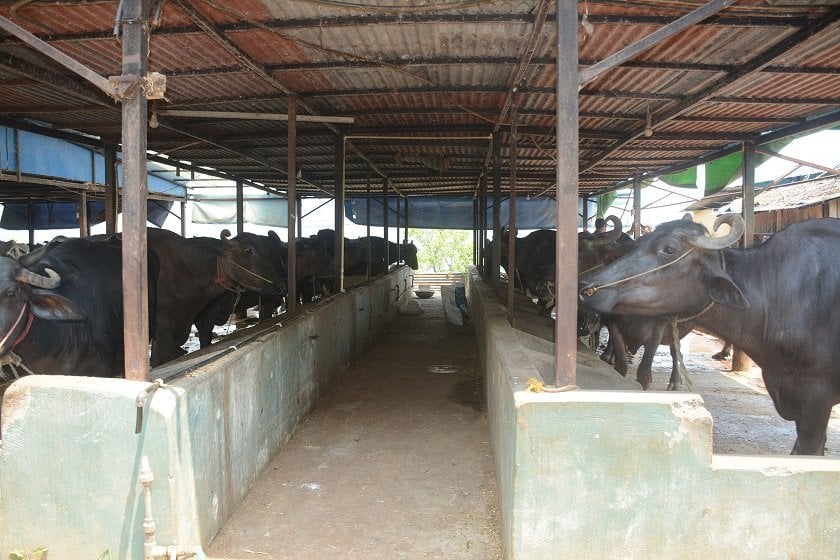
Pokhara. Ramesh Acharya of Bharatpokhari, Ward-33 of Pokhara Metropolitan City, has transformed his buffalo farming venture, which began seven years ago with just two calves, into a commercial success. At a time when negative perceptions about agriculture persist in society, he started raising two calves at Tikhedhunga in Suraudi, Bharatpokhari, despite having completed postgraduate studies.
In those early days, Acharya was often looked down upon and mocked by his own neighbors and acquaintances for his choice of work. However, times have changed; those who once scorned and ridiculed him are now envious of his flourishing buffalo farming and commercial agricultural endeavors. As his buffalo farming has become commercial, Acharya himself is proud of his profession. He recounted that when he started raising calves, the area at Tikhedhunga was nothing but dense bushes, which he cleared to set up a temporary shelter.
“I started this business by setting up a temporary shelter amidst the jungle surrounding me,” Acharya said, “Later, I built a shed and a barn to systematize it, and now I have 30 buffaloes in the shed.”
Acharya stated that he sells milch buffaloes every year in recent times. He sold 18 milch buffaloes last year. There is no problem in selling buffaloes. Generally, one milch buffalo sells for up to NPR 100,000. Acharya, who holds a bachelor's degree, has now fully engaged in commercial agriculture after gaining experience in a 10-year teaching career, three years of foreign employment, and as an electrical technician.
Acharya, who registered Tikhedhunga Bagmara Animal Husbandry and Agriculture Farm in B.S. 2078 and engaged in commercial agriculture, is also cultivating watermelon commercially alongside buffalo farming, along with producing vegetables, fruits, and various agricultural products. At the farm, he is currently cultivating maize, watermelon, cucumber, garlic, and onion. Acharya initially started commercial agriculture in 2076 by taking a loan of NPR 300,000 from a small farmer, and later, after the farm was registered, he started his commercial journey by taking a loan from the Agricultural Development Bank.
Acharya, who enjoys experimenting with new things in commercial agriculture, initially tested 15-20 watermelon plants on a trial basis. The next year, he added two ropanis of land. After getting good yields, he cultivated the crop jointly on about 35 ropanis of land the previous year. Acharya is enthusiastic about his farming work with the support of his wife, Dhanlaxmi, and his children who are studying at the bachelor's level. He suggests that the water from the Suraudi River, which is being eroded by floods every year, should be controlled and utilized for irrigation.
Acharya lamented that due to the lack of a concrete bridge over the river and unmanaged roads, he cannot transport milk to the market. Monkey menace is also a significant problem in Suraudi. Acharya mentioned that the agricultural products produced on the farm are consumed within Bharatpokhari itself. He stated that if the road up to Suraudi is further managed and a bridge is built over the Tunikhola stream, it would be easier to transport the produce to Pokhara and Dulegauda in Tanahun.
Acharya points out that despite having a water source in the Suraudi River area, the lack of proper management leads to irrigation difficulties. He believes that if managed properly, the available water source here can be linked to production. Acharya states that local residents in the watershed area are facing problems as fertile land turns into riverbeds every year due to uncontrolled erosion of the Suraudi River.
This specific news has been automatically translated by AI. As a result, there may be some inaccuracies or language errors.


_iL3K2wYemS.jpg)