Political Parties Address Gen Z Demands in Election Manifestos Following Recent Protests


Kathmandu. The main backdrop for the House of Representatives election scheduled for February 21st is the mass movement of Bhadra. The interim government formed after the dissolution of parliament following the movement on the 23rd and 24th of Bhadra is holding this election for a fresh mandate.
This very movement, which demanded an end to corruption, good governance, opposition to nepotism, and youth participation, fundamentally changed the political course of Nepal. In this context, all political parties have published their manifestos for the upcoming election.
Looking at the party manifestos, it appears that political parties, which have been content with traditional agendas for decades, are compelled to become youth- and technology-friendly, even if only for self-preservation. The impact of the rebellion staged by youth on the streets, who carried no party flag but advocated for 'stability and good governance,' is clearly visible in the election manifestos.
Most major parties have attempted to understand the psychology of the Gen Z generation, addressing in detail issues concerning their digital rights, economic self-reliance, and direct partnership in governance.
- Rastriya Swatantra Party (RSP): Promise of System Reform and Advocacy for Youth Leadership
The Rastriya Swatantra Party, through its 'Pledge Letter-2082,' has interpreted the movement of Bhadra 23rd and 24th as the new political direction for the country. RSP accepts Gen Z youth not just as 'tomorrow's leaders' but as 'today's partners' and has introduced the concept of 'faceless' and 'paperless' administration to address their dissatisfaction.
RSP seeks to address the youth's anger against the corrupt system by promising to provide all services through a 'single digital portal,' eliminating the need to visit government offices. Specifically, RSP attempts to integrate the digital lifestyle of Gen Z into the mainstream state by guaranteeing a separate labor law and social security for the generation involved in the 'gig economy' and freelancing.
- UML: Focused on Digital Package and Economic Incentives
CPN-UML has put forward directly beneficial plans in its election manifesto to attract the Gen Z and youth demographic. To counter the despair generated among youth by the Bhadra movement, UML has announced the provision of '10 GB of free internet data' every month for youth aged 18 to 28.
Similarly, it has arranged a '$10,000 Dollar Card' for youth wishing to compete in the global market and an 'interest-free loan' of up to 2 million rupees for technical education. UML's plan appears to adopt a strategy to make youth self-employed within the country through technology and capital, transforming their 'global' thinking into the national economy.
- Nepali Congress: 'Report Card' for Accountability and Policy Partnership
The Nepali Congress has taken the demand for 'transparency and accountability' raised by Gen Z on the streets seriously through its 'Pledge Paper.' To dispel the mistrust generated towards old parties by the movement, Congress has pledged a new democratic practice of publishing a 'Report Card' every month after the government is formed.
Furthermore, it has introduced the 'Nepal Fellowship Program' to ensure direct youth involvement at the policy-making level, through which 5,000 youths will be able to participate directly in important tasks of ministries and the National Planning Commission. Congress has addressed Gen Z's desire to 'earn while studying' through a plan to make vocational education mandatory up to Grade 12, linking education with skills, and providing a monthly incentive allowance of 10,000 rupees to interns.
- CPN (Communist Party): Gen Z Entry into Administrative Structure
The Nepali Communist Party considers the Gen Z movement as the main basis for changing the form of governance and administrative structure. To address the aversion shown towards bureaucratic sluggishness by the Bhadra revolt, this party has set a target of bringing in 30% 'new and capable' manpower into government service within the next 5 years.
It claims this will provide youth access to the permanent machinery of the state and channel their energy into good governance. Additionally, it has made a strong commitment to investigate the assets of all elected representatives since 2048 BS to address the issue of investigating the assets of those holding high office.
- Other Parties: Employment and Enterprise as Key Points
The Rastriya Prajatantra Party (RPP) views the Bhadra movement as an expression of anger against the inaction of major parties and links it to the agenda of 'Constitutionalism' and 'Radical Change.' RPP has advocated for a directly elected executive and a balanced foreign policy to institutionalize the youth rebellion.
The Progressive Democratic Party has strategically addressed political instability and unemployment, making 'guarantee of employment' a key issue for the youth. It has put forward a plan to provide at least 100 days of employment annually to unemployed youth aged 21 to 30, and if unable to provide employment, to offer unemployment allowance equivalent to that period.
Ujyalo Nepal Party has introduced a plan to provide up to 500,000 rupees in 'startup grants' and low-interest loans to young entrepreneurs. It aims to organize 'Ujyalo Youth Employment Fairs' in all seven provinces and train 600,000 youths in high-level digital skills such as coding, AI, and cybersecurity in the next 5 years.
The Janata Samajbadi Party (JSP) has committed to 'reserved quotas' and proportional representation based on population to bring Gen Z youth from Dalit, Janajati, and Madhesi communities to decisive levels of the state. Similarly, the Shram Sanskriti Party has unveiled a concept to connect the Gen Z generation with 'labor and production.'
Overall, it appears that Nepal's political parties have somewhat understood the essence of the Gen Z mass movement of Bhadra 23rd and 24th. Therefore, their manifestos this time are not limited only to traditional assurances.
Through plans such as internet data, dollar cards, monthly report cards, and a fixed percentage entry into government services, parties have attempted to win the hearts of the new generation. Whether this election establishes Gen Z's agendas will depend on the successful implementation of these commitments.
- What Does Gen Z Say?
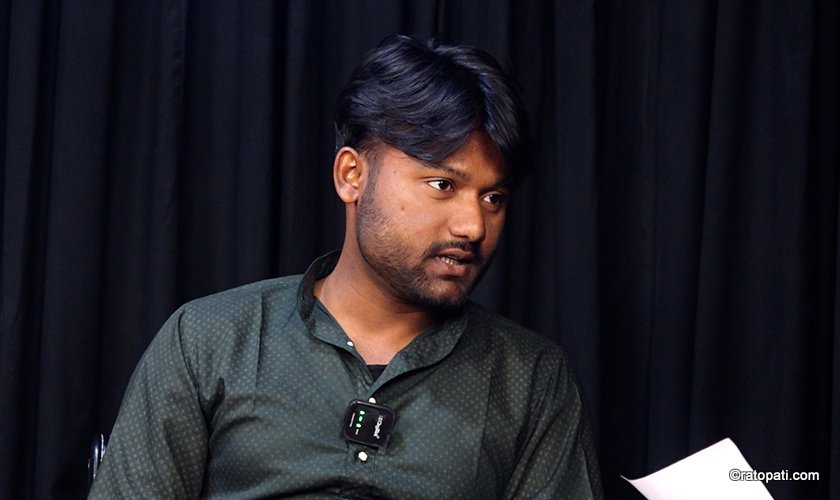
Gen Z activist Majid Ansari commented that the political party manifestos contained more abstract points than concrete plans. He noted that while corruption investigation was mentioned, the corruption from the Panchayat era and the 10-point demands raised by Gen Z were not clearly incorporated. He expressed disappointment that the issue of amending the law allowing police to use force and fire during demonstrations, which he emphasized, was missing from the manifestos.
He stated that while parties talked about spending a lot of budget on physical infrastructure, they failed to focus on human capital and administrative ease. He pointed out that the announcement to return money to cooperative victims was welcome, but there was no clarity on the source.

Another activist, Rijan Rana Magar, stated that a detailed analysis of the political parties' manifestos is underway. Informing that they are preparing to release an institutional opinion by next Tuesday, he said, 'Only how much of what is written in the manifesto is implemented matters.'
Similarly, activist Monisa Chaudhary said that the manifestos of the major parties were mixed. She mentioned that Congress included the subject of implementing the agreement with the youth, and RSP and Progressive Democratic Party also recognized Gen Z issues.
However, she stated that since not all issues from the 10-point agreement were concretely included, they would bring a more detailed analysis regarding this.
This specific news has been automatically translated by AI. As a result, there may be some inaccuracies or language errors.