Freed Kamaiyas in Far-West Nepal Still Live in Precarious Conditions, Ignored After Elections

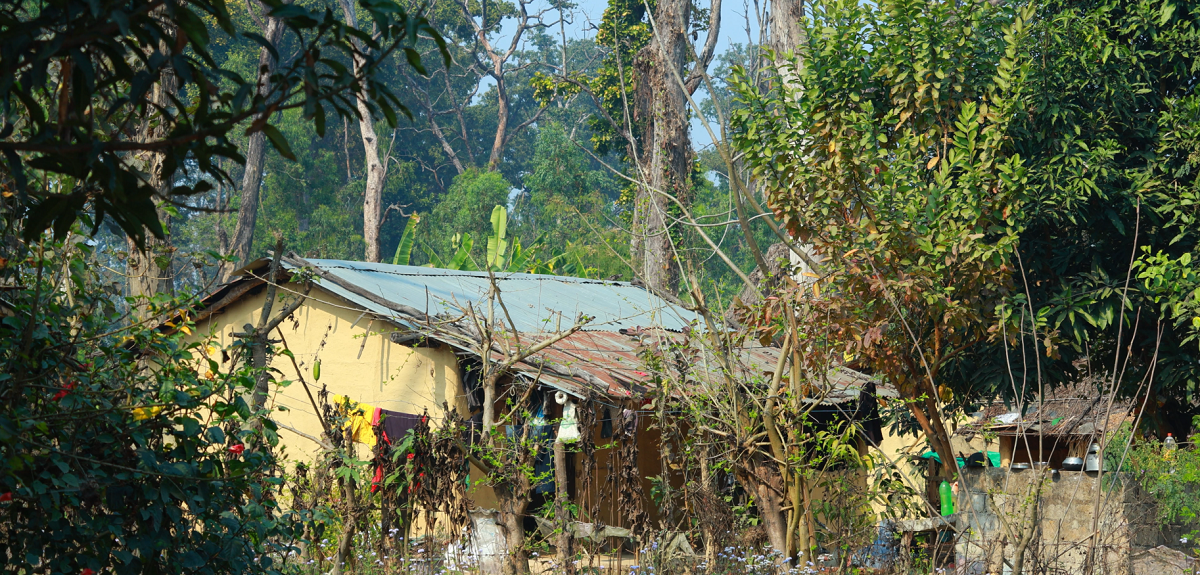
Dhangadhi. The condition of freed Kamaiyas in the Terai districts of the Far-West remains the same. Although the government declared them 'free,' it has failed to manage them. Forced to live a life of hardship, they currently reside on public land. Many still live in the forest. During elections, candidates from various parties visit these settlement camps and listen to their problems, meaning they only visit for votes.
One such settlement is the Ekata Nagar camp in Kailali Constituency No. 2. It is just a few meters away from Lamki Bazaar. It falls under Lamkichuha Municipality-4. This settlement belongs to those who were declared free by the government back in 2057 BS (2000/2001 AD). However, not everyone received the facilities they were supposed to get from the government. They were either left out or excluded during the management process by the government, and they continue to live in deprivation.
This camp, established nearly 19 years ago, currently has 120 houses. An attempt to organize this settlement began around 2065 BS (2008/2009 AD) with the consensus of the then seven political parties. Years have passed, yet the residents have neither received land ownership deeds nor a guarantee of safe housing.
The time for strong winds and storms has begun. The old trees in the settlement could fall at any moment. Due to the fear of storms, children and the elderly are afraid to stay inside their homes, especially at night.
Two years ago, a storm caused a tree to fall directly onto the house of Bijay Chaudhary, injuring his parents and damaging the house. Bijay was in India at the time. He says, 'I wasn't home; I felt very bad hearing the news that my parents were hurt.'
Villagers managed to treat his parents with great effort. With everyone's help, his parents were treated, and the house was rebuilt. He worries, 'During the storm season, we don't know what will happen; the settlement is full of such risks.'
Pramila Chaudhary, met in the settlement, also says that they cannot stay in their homes when a storm hits. 'We have to take shelter in someone else's relatively safer house,' she shares her sorrow.
This settlement faces not only the threat of storms but also the terror of wild animals. Residents spend their days and nights in constant fear of elephants and tigers.
These settlements, struggling with a lack of food, shelter, and clothing, only gain attention during elections. Candidates flock here seeking votes.
The mobile phone of Sukdaiya Chaudhary, the headman of the settlement, is currently flooded with calls from politicians. Leaders say the same thing: 'Gather the villagers, we will solve all the problems, please cooperate.'
Sukdaiya has cast his vote five times so far. He trusted everyone from the Maoists and UML to the Nagarik Unmukti Party. The result, however, has always been zero.
_BPn10iDtqP.jpg)
'When asking for votes, they promise to cut down trees and give land deeds, but once elected, they never show their faces again,' Chaudhary says.
In the previous election, this settlement gave a block vote to the Nagarik Unmukti Party, considering it a party of their own community. But now they are disappointed.
'Our sentiments were played with. Resham Chaudhary and his party did nothing for us,' says local Bhim Chaudhary. 'Now we don't even recognize the people from the new RSP party. We feel that even if they don't have a majority, they can't do anything. We think about voting for someone we know, but we trust no one—who should we vote for?'
The biggest demand of the residents of Ekata Nagar camp is land ownership deeds. The residents here have only 1-2 Katha of land but no ownership title. Due to a lack of irrigation, they cannot cultivate crops. Although water taps have been installed for drinking water now, the sanitation and health conditions are very poor.
The state of education is even more pathetic. There are only one or two people who have studied up to the graduate level. Even those who are educated are unemployed. They do not have the money to go to the market and stay there to prepare for the Public Service Commission exams. Two men work as laborers in the municipality's waste management. So far, no one from this settlement has a government job. Residents complain that they can never move up in life while earning a living through daily labor.
'Because we lack access and power, we are forced to live in this disorganized settlement, risking our lives,' says local Kevalpati Chaudhary.
The Division Forest Office, Mahanagpur, cites a lack of legal basis for removing the dangerous trees in the settlement. They complain that their settlement, which catches the attention of political parties during elections, is forgotten by leaders after the polls.

This specific news has been automatically translated by AI. As a result, there may be some inaccuracies or language errors.