Rastriya Swatantra Party Unveils Election Manifesto with '100 Pillars of Policy Departure'


Surkhet. The Rastriya Swatantra Party (RSP) has unveiled its election manifesto (declaration document) along with the '100 Pillars of Policy Departure'.
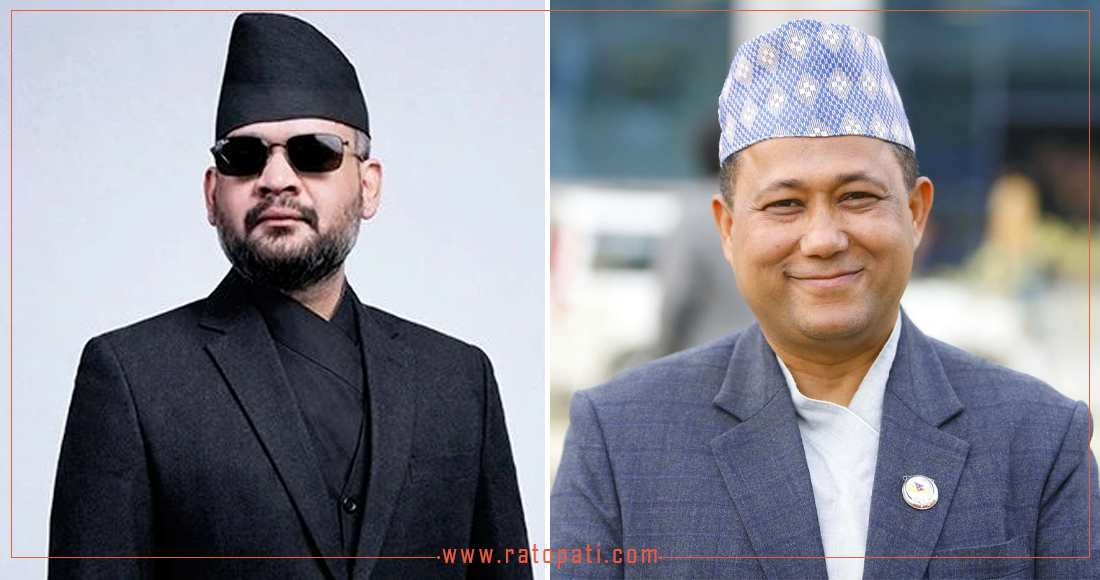
The manifesto was jointly released by top leaders including party chairman Rabi Lamichhane, senior leader Balen Shah, and vice-chairman Swarnim Waglé during a special ceremony held in Surkhet on Thursday.
Presenting a clear outline for the government after Falgun 21 and the upcoming budget, RSP declared a radical transformation in the country's economy and good governance. While reading the main points of the manifesto, Vice-chairman Dr. Swarnim Waglé presented an ambitious plan to increase the size of Nepal's economy to over $100 billion (above 100 Kharba Rupees) within the next 5 to 7 years.
During his address, Dr. Waglé stated, 'We had already publicized our goals through a contract paper with the citizens on Falgun 3. Today, Falgun 7, we have presented the 100 pillars of policy departure. The government to be formed next will bring the budget and policy/program for Jestha 15 based on these pillars.'
RSP announced it will work in a 'Mission Mode' to boost the economy. The manifesto sets a target of achieving an annual economic growth rate of at least 7% at stable prices and increasing the per capita income of Nepalis to $3,000 (approximately 4 Lakh Rupees) within 5 to 7 years. 'According to World Bank standards, we are currently a low-income country; in the next 5 years, we will reach the level of a respectable middle-income country,' Waglé claimed.
Good governance and service delivery have been given high priority in the manifesto. RSP committed to implementing the concept of 'Online, Not Queuing' for government services, establishing meritocracy in judicial reform, and building a non-partisan state mechanism. The party also declared it would abolish dozens of laws and regulations considered obstacles to economic progress simultaneously to create an environment for private sector investment.
Vice-chairman Waglé stated that with Balen Shah, who won independently in Kathmandu Metropolitan City and challenged the established power structure, now joining as a senior leader of RSP, generational transition politics has entered a new phase.
He said, 'The efficiency shown by Balen Shah as the Mayor of Kathmandu and the risk taken by Rabi Lamichhane in building the party have brought the alternative force together today.'
RSP considers agriculture, tourism, hydropower, and Information Technology (IT) as the main pillars of the economy, dreaming of bringing an economic revolution to the hills and plains of Karnali. The private sector has been assured that the situation of 'having to knock on the government's door will end, and the government will come to their doorstep.'
Finally, RSP called upon the general voters to vote for the bell election symbol this time and give a clear majority to end political instability and ensure good governance. Leaders pointed out that piecemeal reforms are not enough, and a stable government for 5 years is necessary to steer the ship of state in the right direction.
Did you miss?
This specific news has been automatically translated by AI. As a result, there may be some inaccuracies or language errors.