Candidates in Myagdi Make Implementation of Himalayan District Status Key Election Issue

Myagdi. Candidates in Myagdi have made the implementation of the Himalayan district status a central election issue. Although the government listed Myagdi as a Himalayan district by amending some Nepal Acts seven years ago, it has not been practically implemented, leading local candidates to make this issue a key part of their campaign.
Candidates in the upcoming House of Representatives election have committed to prioritizing the amendment of laws, regulations, and procedures to implement the Himalayan district status. The government had listed Myagdi as the 21st Himalayan district by publishing it in the Nepal Gazette on Baisakh 19, 2075 BS.
Due to the lack of amendment to acts and laws, Myagdi has not been receiving the budget allocated by the Federal and Provincial governments, plans implemented, grants received by local levels, and service benefits for teachers and employees according to the standards of a Himalayan district.
Nepali Congress candidate Karna Bahadur Bhandari stated that the primary necessity is to implement the Himalayan district standards received by Myagdi to facilitate the execution of development projects and streamline public service delivery.
CPN (UML) candidate Hari Krishna Shrestha emphasized the need to amend the law because the standards and procedures for Terai, urban, and accessible districts are negatively impacting development construction and public service delivery in Myagdi.
CPN candidate Arjun Thapa mentioned that the Himalayan district standard must be implemented to resolve issues in public service delivery, such as complexities in implementing development projects and staff reluctance to come or seeking transfers to accessible areas.
Independent candidate Mahabir Pun highlighted the importance of implementing the Himalayan district standard for balanced development. Teachers and employees are not attracted because they do not receive additional financial benefits and performance evaluation scores according to the Himalayan district standard.
Candidates stated that because plans for remote and Himalayan districts are based on the standards of accessible areas, the allocated budget is insufficient, leading projects to be left incomplete or unfinished, placing a greater burden on citizens and local levels to finalize them. They also noted that the lack of facilities and evaluation leads to a shortage of staff against the sanctioned positions in government offices.
Jhak Bahadur Chhantyal, Ward Chairman of Dhaulagiri Rural Municipality-1 Gurja, stated that settlements near the Himalayas, listed under the hilly region, have deprived residents of remote settlements in Myagdi of the services and facilities provided by the state to residents of other Himalayan districts.
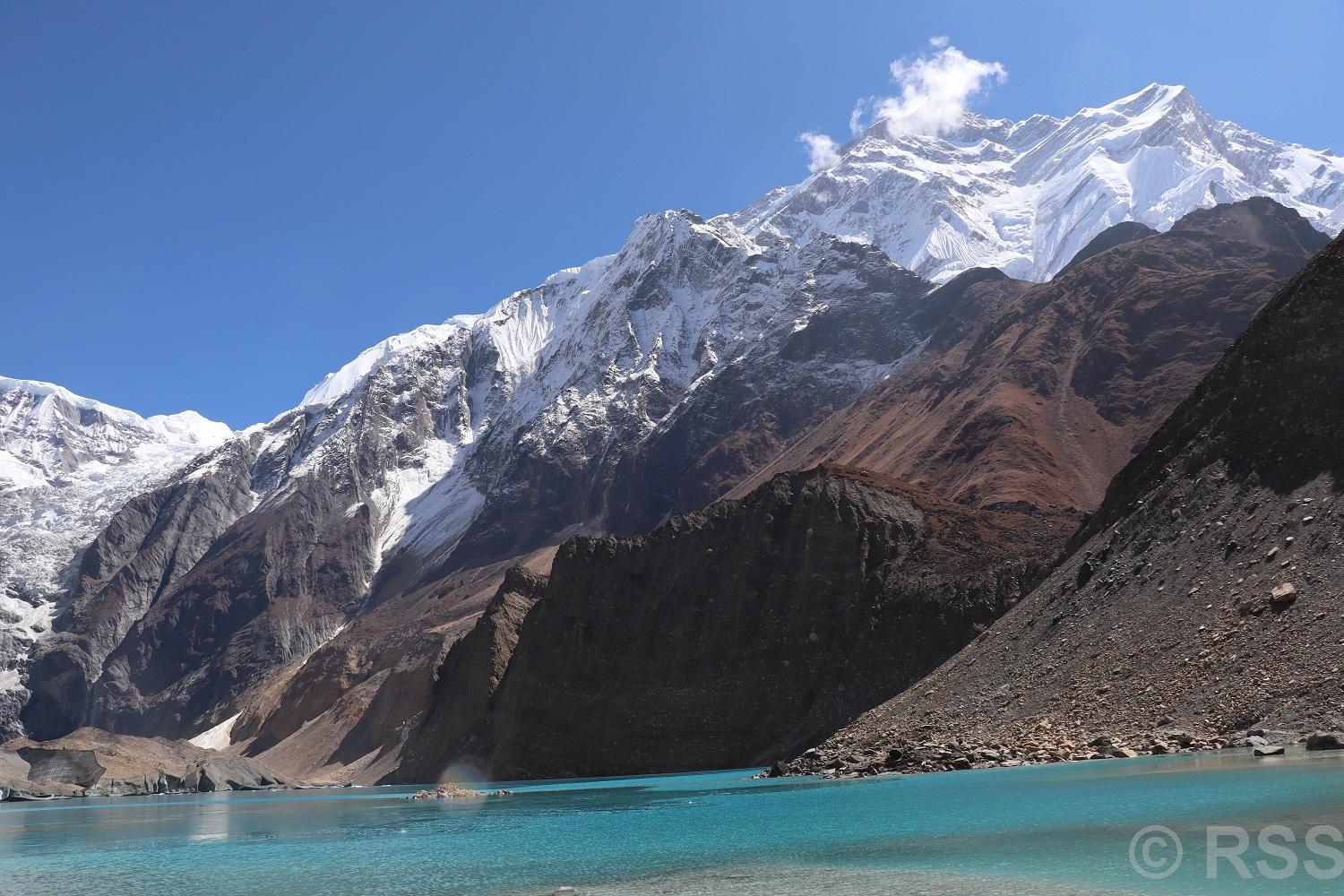
Ward Chairman Chhantyal informed that the areas of Dhaulagiri I to VI, including the world's seventh-highest peak (8,167 meters) Dhaulagiri, along with Manapathi, Gurja, Churen, Putha, Annapurna I, Baraha Shikhar, and the south and east faces of Nilgiri Himal, are covered within Myagdi's geography.
In Myagdi, which has 45 wards and 6 local levels, 11 parties and one independent candidate are competing in the upcoming election. Bhandari of the Congress, Shrestha of the UML, Thapa of the CPN, and independent candidate Pun appear to be the main contenders.
Meanwhile, Yubaraj Roka of the Rastriya Swatantra Party has announced his support for Pun, although his candidacy remains valid.
Dambar Bahadur Subedi of the Rastriya Prajatantra Party (RPP), Kshetar Bahadur Ghimire of CPN (Maoist Centre), Devendra Kami of Pragatisheel Loktantrik Party, Binod Rana of Shram Sanskriti Party, Chhem Bahadur Bishwakarma of Rastriya Janamorcha, Bhim Bahadur Lama of Mongol National Organization, and Tul Prasad Garbuja of National Republican Nepal are also candidates.
Myagdi has 86,397 voters, with 82 polling stations and 120 polling centers established.
This specific news has been automatically translated by AI. As a result, there may be some inaccuracies or language errors.
-pm-office_YZG9ToBodL.jpg)