Tight Race Expected in Kailali-3 Constituency as Major Parties Face Challenge from New Entrants
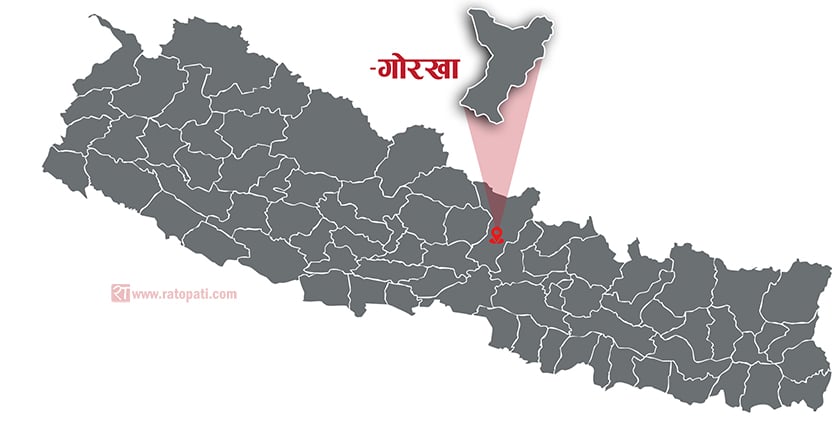
Dhangadhi. In the House of Representatives election, Congress, UML, and CPN (Maoist Centre) appear as the main competitors in Kailali Constituency No. 3. The Rastriya Swatantra Party (RSP) has also positioned itself as a strong contender, fueled by the youth's desire for change and disillusionment with older parties.
There is significant public interest regarding the influence of the Nagarik Unmukti Party Nepal in this constituency, which has a large Tharu voter base.
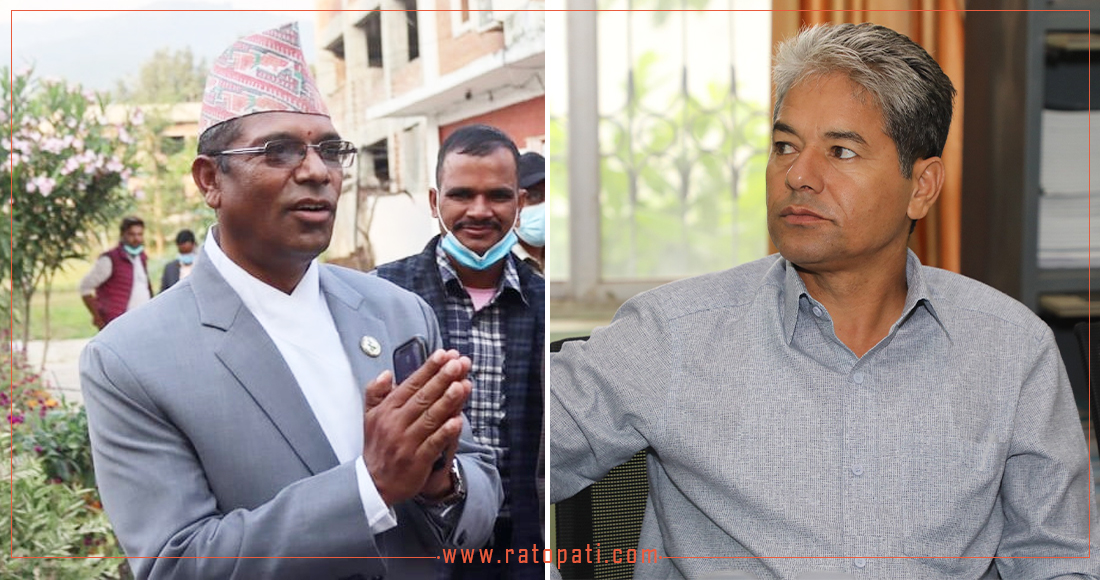
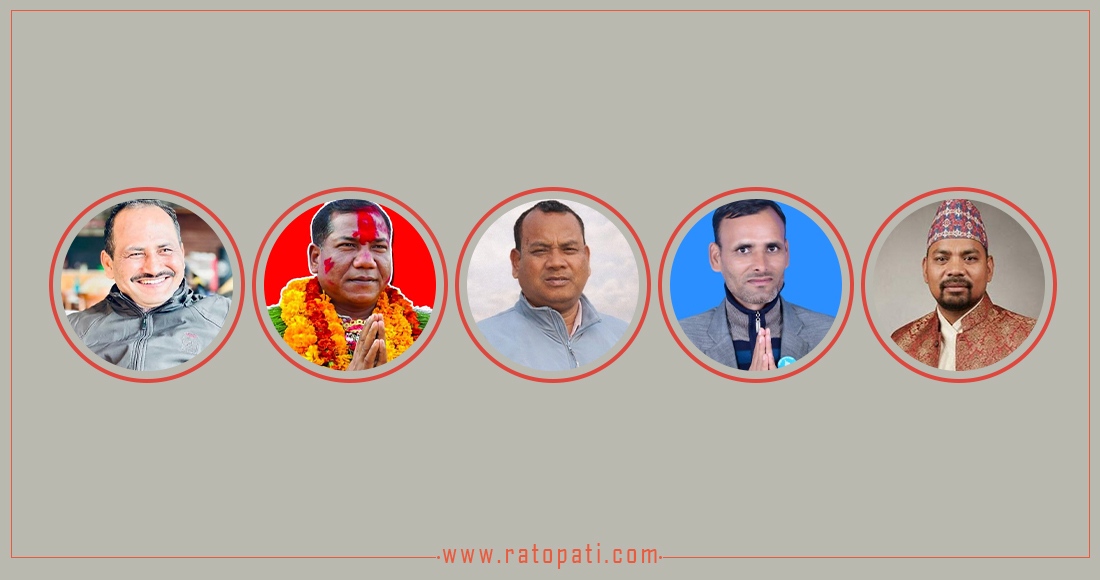
The UML has once again nominated former Maoist leader Gaurishankar Chaudhary this time. Chaudhary is a veteran and well-known leader in this area. He was elected from the Maoist party in the 2070 and 2074 elections, and he got the chance to contest as a candidate after joining the UML in the last election. However, he was defeated.
The Nepali Congress has nominated Bhim Bahadur Baduwal, the district vice-president, who is banking on organizational strength to secure a win.
Similarly, former Provincial Assembly member Birman Chaudhary from the Communist Party of Nepal (CPN) is also emerging as a strong competitor. The presence of Jagat Prasad Joshi from RSP, which carries the banner of change, and Bikram Chaudhary from Nagarik Unmukti Nepal, which seeks to capture local sentiment, has made the electoral competition more interesting. The Nagarik Unmukti Party Nepal was formed under the patronage of influential Tharuhat leader Resham Chaudhary. This time, the Nagarik Unmukti Party led by Ranjita Chaudhary has allied with the CPN (Maoist Centre).
Although election fervor is visible in the towns and markets, farmers in Bhajani and Kailari Rural Municipalities are currently found in their fields. The daily routine of Kuiridevi Chaudhary of Bhajani Municipality-8 is spent in the fields. Election rallies and speeches have not affected her much.
Explaining why she remains confined to the fields on the eve of the election, Kuiridevi said, “Farming is the most important thing for us. When the voting day comes, we will vote after consulting with neighbors.”
Many farmers like Kuiridevi are more worried about the weather than the speeches of politicians. Since the area faces flooding during the monsoon, they are currently busy planting Chaithe paddy, hoping to secure some grain before the floods arrive.
The style of election campaigning is also different in the Tharu-majority settlements. In these villages, the decisions made by the Bhalmansa and Badghar (the main person of the village) still hold significant weight. Therefore, political leaders are seen clinging more to the Bhalmansa's phone calls than directly approaching voters' homes.
Local resident Maniram Chaudhary of Kailari said, “Leaders are currently trying hard to appease the Bhalmansa. Influencing the Bhalmansa is an easy path for them to capture the entire vote bank of the village.”
Geeta Chaudhary of Bhajani complains about the state's indifference towards farmers' problems. “We never get a fair price for paddy, and fertilizer is not available on time. Houses get submerged and fields are washed away during the monsoon, but no government has come to wipe away our tears so far. Therefore, we have to think carefully before casting our votes now,” she said.
Talking to local traders and youths reveals a clear picture—people are no longer willing to look only at party flags. In an informal conversation conducted by Ratopati with 50 farmers, traders, and youths, only 13 stated they would vote for someone they already knew. Twenty-seven expressed the view that it is time to give a chance to new faces, while the remaining 10 said they would decide after consultation.
Looking at the vote results from past elections, the political landscape here has changed significantly. In the proportional representation votes of the 2079 House of Representatives election, the Nagarik Unmukti Party was leading with 21,549 votes. Congress was second with 10,007 votes, and CPN (Maoist Centre) was third with 8,416 votes. The UML was reduced to 7,531 votes, while the RSP, as a new force, had already established its presence by securing 3,821 votes.
The current situation has changed. Local teacher Motiram Rijal said, “The proportional vote gave a signal, but the direct contest is a bit different. The candidate's personality, the balance between Tharu and non-Tharu votes, and the role of the Bhalmansas will determine the final result.”
He claims that the situation where older parties won easily as in previous elections is no longer the case.
In the 2079 House of Representatives election, Gangaram Chaudhary of the Nagarik Unmukti Party was elected here. While Chaudhary received 23,120 votes, his competitor, Krishna Kumar Chaudhary of the then CPN (Maoist Centre), received 17,749 votes.
Similarly, Gaurishankar Chaudhary, the candidate from CPN (UML), received 9,874 votes, and Birendra Bahadur Bam of the Rastriya Prajatantra Party received 7,045 votes.
Voters in this constituency, which includes parts of Ghodaghodi Municipality, Bhajani, and Kailari Rural Municipalities, state that they are currently looking for someone who can work rather than just someone they know. Ghodaghodi local Dhaniram विक said that while older leaders are recounting their experience and past achievements, new candidates are enticing voters with slogans of change and new vigor.
This specific news has been automatically translated by AI. As a result, there may be some inaccuracies or language errors.