Path to Socialism: Addressing Nepal's Deep-Rooted Socio-Economic and Political Crises

It is not that simply adding some provisions to the constitution and the system will automatically lead to socialism. However, it will certainly be oriented towards socialism. Neoliberal capitalism is in crisis. Humanity is also in crisis, because the public disclosure of the Epstein files also shows that we must move towards socialism, and we have no other alternative. Democracy is the path to socialism, and socialism is a higher form of democracy. The world cannot be understood and changed without these two philosophical categories. What is needed is a strong force with a left-wing political ideology to lead the Fourth Industrial Revolution through a multi-linear philosophical category path, rather than the single linear philosophical category of the past, and that party must secure a majority in the elections on Falgun 21.
Only a party with the ideological perfection of liberty, equality, and fraternity can lead the industrial revolution in Nepal. The Fourth Industrial Revolution will ensure citizens are free and happy, ending the problem of youth migration abroad. Citizens will be free from unemployment, poverty, hunger, suffering, and scarcity, and the gap between the rich and the poor will end. The nation must achieve a sustained double-digit economic growth rate for two decades by exporting goods and services instead of labor abroad, and there must be a formidable resolve to raise today's per capita income of $1,400 to $14,000 in a short time. The Gen Z and progressive forces must make a resolve in the upcoming elections. The idea and strategy must be adopted to complete the First Industrial Revolution, followed sequentially by the Second, Third, and simultaneously the Fourth Industrial Revolution. The state must formulate a policy for a great leap economic development, like a rapid or frog-like jump. Nepal will leap forward to become a nation competing with the countries of the Global South. One nation, one resolve; one Nepali, one resolve; one party, one resolve will be expressed in the elections on Falgun 21. Nepal must take the resolve to move from the Third World to the First World.
Numerous contradictions collide simultaneously in society and the state, leading to explosions of social, economic, political, and cultural contradictions. It is more appropriate to say that the internal contradictory factors have been at work rather than attributing the events in the country to foreign powers manipulating them. Analyzing separately from this is not and should not be rational. The socio-economic contradictions that have been simmering for a long time are severe. Absolute poverty and unemployment are our main problems, along with widespread corruption and the complex issue of low factor productivity growth. The low level of economic development and the extensive plundering of national wealth by rulers using state power, coupled with policy corruption exceeding all limits, have created complex problems of class, ethnic, regional, gender, and caste-based discrimination, inequality, and exclusion. All these problems became the factors leading to the Gen Z rebellion. The responsibility to consciously guide the Gen Z rebellion, related to socio-economics, towards a revolutionary direction rests on the shoulders of all Nepalis. The Gen Z rebellion must be institutionalized as quickly as possible, otherwise, the issues raised by the rebellion will be hijacked, and there is a danger of even the sovereign power of the people being lost, requiring future generations to struggle for many years to regain it.
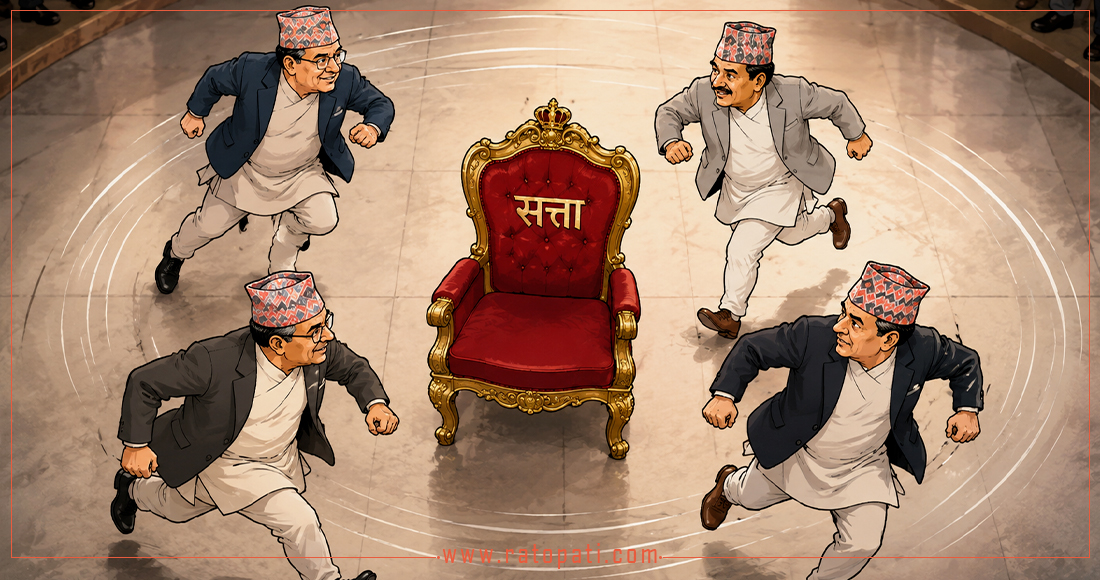
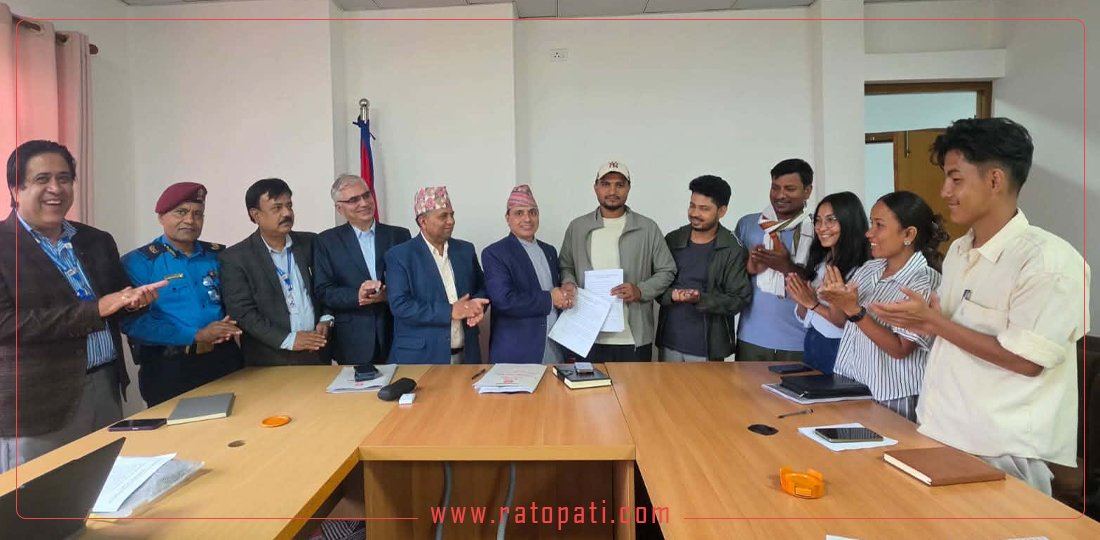
The Gen Z rebellion has succeeded in bringing about the dissolution of parliament and the formation of an interim government. However, many issues facing the country remain unresolved. We must remember that the rebellion has turned into a ceasefire, but the war has certainly not ended because the issues raised by the rebellion are still unfulfilled. The Nepali people became sovereign through the Constituent Assembly promulgated in 2072 BS, and while they succeeded in achieving freedom and equality, the reality is that the Constituent Assembly failed to resolve many of the people's issues. For instance, the Constituent Assembly failed to change the direct governance structure and electoral system. The State Restructuring Commission and the State Power Sharing Committee presented reports recommending a federal structure based on four bases of capability and five bases of identity, but the Constituent Assembly could not take such an important matter seriously, and the concerns of Madhesis, women, Dalits, and indigenous nationalities were not heard, and these issues remain unresolved today. Furthermore, the aspect of economic prosperity and development was significantly pushed back. Not only this, political instability escalated, leading to frequent government changes and 'musical chairs' over ten years, while the people continued to suffer from disease and hunger, and their condition did not change. The unprecedented development in digital technology, networking, the digital revolution, and the widespread expansion of social media amplified the spirit of rebellion among the Gen Z generation. Frequent government changes in the form of musical chairs due to political instability further ignited the flames of rebellion among the youth. Major corruption scandals further fueled the rebellion. Access to public education, health, and public services became increasingly difficult for ordinary citizens. The gap between the rich and the poor widened. The country's trade deficit soared. Economic stagnation, the gap of unemployment and poverty deepened, and economic dependence on foreign nations increased. Despair and the general trend of emigration grew. The country became trapped in the vicious cycle of corruption and misgovernance. Economic development stalled, obstacles arose on the path of progress, internal national problems became more complex to solve, the concept of federalism was discredited, caste-based issues were ignored, and fuel was added to the division between the hills, mountains, and Madhes. Using one another's weaknesses instead of resolving complex geopolitical issues—it is clear that the country is passing through a multifaceted crisis due to all these problems. As a result, the Gen Z rebellion occurred, and the country suffered great losses. What is clear from these problems is that the Gen Z rebellion has not yet transformed into a revolution; it has merely resulted in a ceasefire. Fortunately, an agreement was reached between the Government of Nepal and Gen Z representatives through a 10-point agreement, creating a compulsion to amend the constitution, and the Gen Z rebellion has achieved a degree of fundamental success. The 10-point agreement allowing the Nepali democratic movement to reach fruition should be considered a great success for the country and the people. Amending and implementing the constitution after the elections presents a significant challenge. It must be called unfortunate that political parties that sacrificed for the democratic movement are now denouncing the Gen Z movement and its achievements as the work of foreign agents, which is the height of ignorance, and rejecting the 10-point agreement is to deprive the country of economic prosperity and development.
The election on Falgun 21 is nothing less than a referendum between accepting and rejecting the ten-point agreement reached between the government and Gen Z representatives. This election is certain to witness a fierce struggle between the opposing and supporting factions of the ten-point agreement, and the failure of the opposing side and the success or majority of the supporting side are certain.
Two types of challenges still remain before the Nepali people: one, the counter-revolutionary challenge in the country, and two, the concern about whether the country will revert to the status quo. These two tendencies or forces pose a living threat to the sovereign power vested in the Nepali people and the constitution. Status quoist forces are making every possible effort to sabotage the rebellion, while regressive forces are attempting to overturn the system. If the Gen Z rebellion had succeeded in declaring a direct governance structure and a complete electoral system, it would have proven to be a very fruitful revolution. However, the Gen Z rebellion has succeeded in forming an interim government and dissolving parliament and is close to the opportunity to achieve historical milestones by charting the future course. The interim government formed on the strength of the Gen Z rebellion should have declared a direct governance structure and a fully proportional electoral system at the federal and provincial levels, to be ratified by the subsequent parliament, and announced the election of a directly executive president as soon as possible. As long as there is no fundamental change in the governance structure and electoral system, policy corruption scandals will continue. We have an old process-oriented bureaucracy and exploitative laws and judiciary; the web of corruption cannot be broken until these are fundamentally changed. Our bureaucracy is process-oriented; it must be made result-oriented, and fundamental reform is essential. All state mechanisms must be reformed to end all anomalies in the economic and political sectors. A strong, impartial, and independent anti-corruption mechanism must be established. A Janlokpal (People's Ombudsman) with the authority to prosecute all corrupt individuals must be created.
(5) Land is the primary source of wealth, and scientific land reform must be implemented as soon as possible. In other words, we cannot have happiness without preparing the foundation for the Fourth Industrial Revolution. Let us bring radical reforms to the education sector, the foundation of which must be entrepreneurship, innovation, developing industrialists for the country, and the state must spend a large amount of money on technical education. The current education system must be restructured. Let us reform the legal and judicial system. The administration is old; let us change it and make it result-oriented, not process-oriented, so that it can provide administrative leadership for the country's industrialization. Let us understand what we and our country Nepal are. Amidst the complexity of India- and China-centric geopolitics, our economy is situated between the first and third largest economies; let us align our footsteps with these two future economic superpowers and chart an economic strategy of sailing a boat rather than suffocating between two large oceans. Let us integrate value chains in production and move towards rapid industrialization. Let us prepare the theoretical basis for our federalism; it will prove to be a boon for the country's economic development, not a curse. Let us adopt an economic development model that goes from the bottom up, not from the top down at Singh Durbar.
Let us turn empowered provinces and local levels into industrial zones. Our economy is approximately 100 trillion rupees, and let us invest the 18 trillion capital held by the central bank into industrial production. And let us invest the remaining 91 trillion capital not just in trade but also in agriculture, industry, and the service sector. Let us resolve the recent financial crisis and promptly formulate a state policy to protect the industrialists and businesspersons who are in a coma. Let us resolve the contradiction between financial capital and industrial capital and make financial management access easy and smooth for energy production-oriented sectors, large infrastructure, medium industries, and small industries. Policies must be adopted to prioritize non-resident Nepalis living abroad and Nepalis living in the country to invest in industries, while also attracting foreign investment.
Let us also learn from the positive concepts of Buddhism, Hinduism, and Taoism in Eastern philosophy and change the caste system prevalent in Nepali society, transforming Nepali society into a scientific social system. Let us amend the constitution in the first meeting of the House of Representatives to be formed after the elections and implement the 10-point agreement made by the interim government with the Gen Z representatives. High-level task force, declaration of martyrs, compensation, treatment, education, employment, relief, meaningful equation—excessive use of force, extrajudicial killings, human rights violations, impartial investigation, provision of voting rights for non-resident Nepalis, investigation of assets of public officials, political and policy corruption, end of party-based politics, Right to reject, Right to recall, Primary Election, voting facility for temporary residents, good governance, corruption control, increased representation, implementation of one person two terms, guarantee of participation in state power for women, Dalits, indigenous people, Madhesis, Muslims, Tharus, marginalized, disabled persons, and gender and sexual minorities, and all others. We cannot have happiness without developing a participatory direct democratic system based on inclusive proportional representation rather than representative democracy, and the state system must be oriented towards socialism; we have no other alternative.
This specific news has been automatically translated by AI. As a result, there may be some inaccuracies or language errors.