Debate on Tolerance and Personal Beliefs Ignited by Former PM Bhattarai's Family Rituals

Background
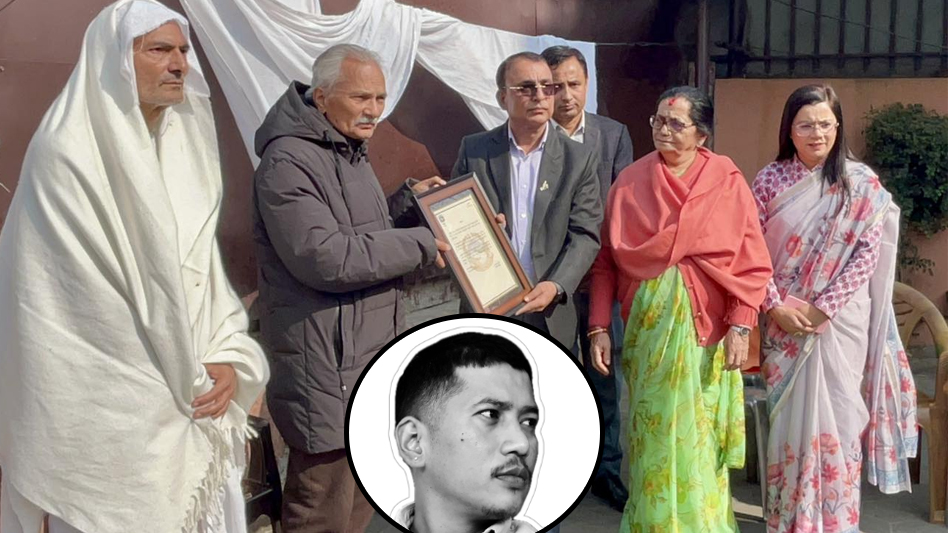
Social debates sometimes begin with personal incidents and transform into larger social, political & philosophical discussions. The recent incident sparked such a debate. Certain personal matters discussed during the death rites of Dr. Baburam Bhattarai's father became subjects of public commentary, criticism, and sarcasm.
Generally, mourning and funeral rites are private family matters, but this time, perhaps due to his status as a former Prime Minister and political figure, that private moment became a subject of public debate on social media.
This debate was less against any individual and more about the tolerance, culture, and conscience of our society. The question arose: How strong is the culture in our society to accept deviations from traditional methods as a matter of personal belief? It also questioned why differing opinions are not respected in a politically democratic society.
Nepali Society: Diversity and Coexistence
Nepali society is built on diversity. Various forms of religion, language, culture, tradition, and lifestyle coexist here. The heartfelt unity amidst this diversity has made the practice of coexistence possible. Our society is strengthened by the culture of accepting differing opinions, making room for disagreement, and respecting personal beliefs.
However, in recent years, intolerant expressions have increased with the expansion of social media. There is an observable rise in personal attacks, antisocial commentary, and sarcasm, rather than civil dialogue concerning the nature of disagreement. Such tendencies can weaken our coexistence.
Antisocial comments made during sensitive times not only hurt the individual but also question the maturity of society. Serious reflection is needed on the kind of public culture we are building.
Dr. Baburam Bhattarai and Scientific Humanism Philosophy
Recent scientific studies of human development show that two opposing qualities coexist in humans. On one hand, there are qualities of competition and self-interest, and on the other, qualities of cooperation and empathy. Research concerning the Human Genome confirms the fact that both these tendencies are inherently built into the biological structure of humans. It is through the practice of this dialectical coexistence—competition and cooperation—that humanity has built its current consciousness and civilization.
Dr. Baburam Bhattarai presented a new political philosophy based on this historical-scientific reality—'Scientific Humanism'. The 'Naya Shakti' (New Power) evolving into the Progressive Democratic Party is serving as the laboratory for this, with a prosperous socialism as its destination.
Amidst the intolerance, blind imitation, and emotional polarization seen in Nepali society today, Scientific Humanism shows a balanced path. It views humans primarily as human beings, as real, complete individuals possessing both competitive and cooperative qualities, rather than based on caste, religion, class, gender, or appearance. The state does not oppose any belief to promote social coexistence; it stands for secularism to ensure the civil rights of both theists (those who believe in religion) and atheists (those who believe in science). It emphasizes policy and structure over rituals for societal transformation, keeping human happiness at the center through long-term, nature-friendly planning.
Human history is a witness: when humans make science and reason their guide, civilization progresses. When superstition and emotional impulse prevail, society is pushed backward. If the social structure is unjust, competition turns into exploitation; if the structure is just, cooperation turns into prosperity. Therefore, a balanced social structure is necessary to direct the inherent competitive and cooperative qualities within human nature correctly. Scientific Humanism stands for this structural transformation.
Dr. Baburam Bhattarai's life and political journey are a direct example of this principle. His life's motto is to understand and change the world from a scientific perspective while remaining unwavering in the pursuit of truth and justice. His characteristic is to respect social traditions while modifying them according to the times, taking a scientific perspective as a guide, and striving to make society just and egalitarian.
He has also put this perspective into practice in his personal life. Decisions made during the sensitive time of mourning—such as not shaving his head or not observing the traditional mourning period (kiriya)—are personal beliefs associated with him. In reality, he lived as he thought; he did not pretend. However, traditionalists launched antisocial, vile attacks on his scientific beliefs.
Despite criticism, sarcasm, and personal attacks, he has responded with restraint and patience. His exemplary qualities include living according to his beliefs, remaining unwavering in the pursuit of truth and justice rather than following the crowd, and maintaining composure amidst public criticism.
Challenge for Nepali Society
This context also exposed the level of tolerance and conscience in Nepali society. Diversity and coexistence are our social characteristics, but if the tendency to reject different beliefs, practices, and thoughts grows, minorities may become afraid to live according to their own beliefs in the future.
Our society has witnessed many historical changes. Political systems changed, constitutions changed, state structures changed, but problems have arisen because the development of social consciousness has not kept pace with political change.
If society fails to respect an individual's private beliefs and independent decisions, modern democratic values remain confined only to paper. Talking about coexistence without developing a culture of accepting different thoughts, practices, and lifestyles is nothing but hypocrisy.
Conclusion
Truth, justice, and reason are necessary not only for individual but also for social progress.
Nepali society must strengthen the practice of respecting different beliefs and ideas while preserving its diversity and coexistence. Scientific Humanism suggests this very path—contributing to the creation of a just and egalitarian society by reducing the selfish and animalistic qualities within oneself and enhancing cooperative and human qualities.
This context is not just about personal remarks or criticism; it is a test of the tolerance and conscience of the entire society. It depends on our judicious decision whether we strengthen the coexistence of our society by respecting different ideas, beliefs, and practices, or whether we promote intolerance.
This specific news has been automatically translated by AI. As a result, there may be some inaccuracies or language errors.