GenZ Activist and ProloPa Candidate Bikash Rasaili on Post-Protest Politics and Elections
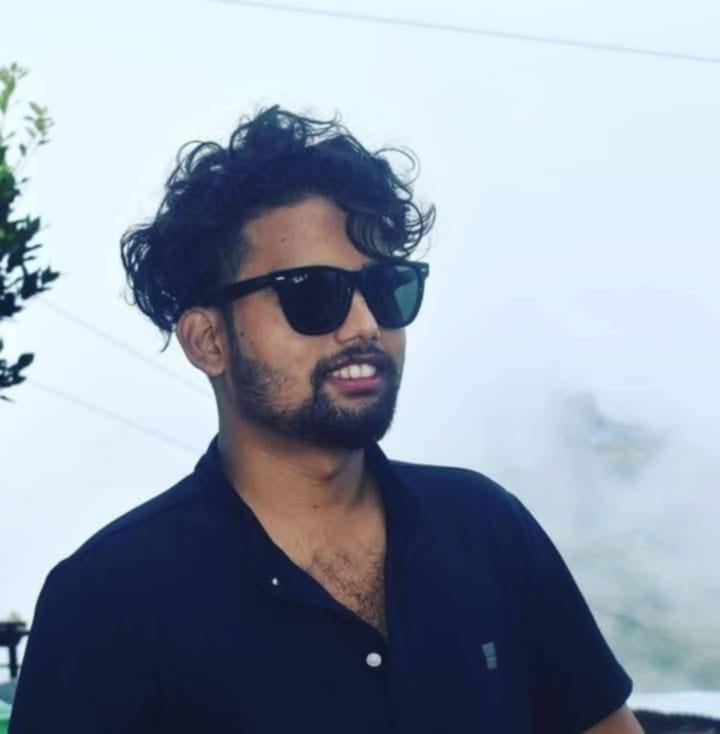

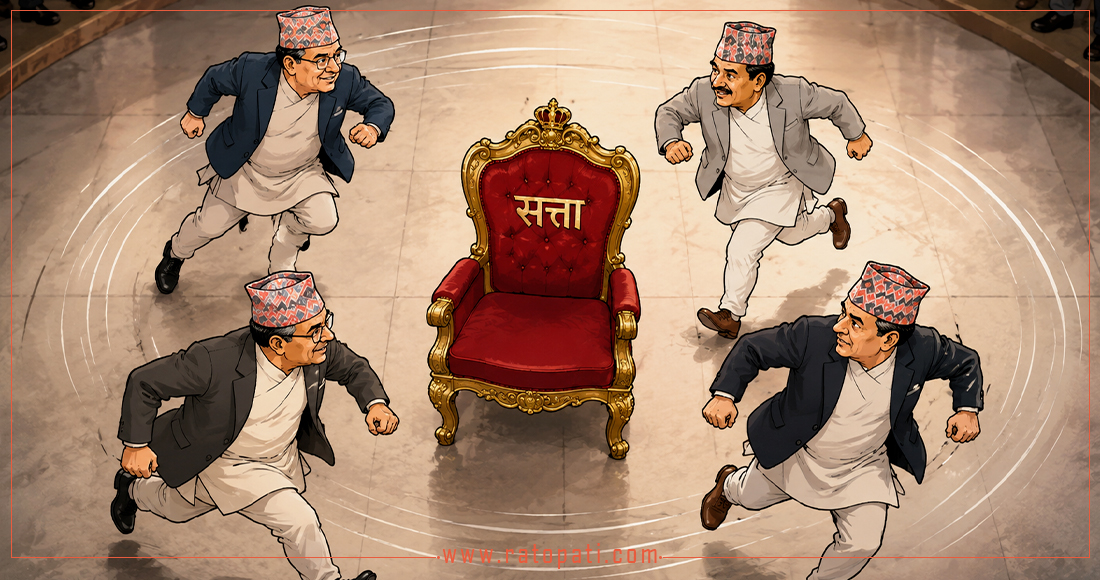
Kathmandu. The GenZ movement was not just a small spark; it was a massive explosion of frustration that had been simmering in Nepali society for decades. The House of Representatives election is taking place on Falgun 21. The election is happening on the strength of the GenZ movement that occurred on Bhadra 23 and 24.
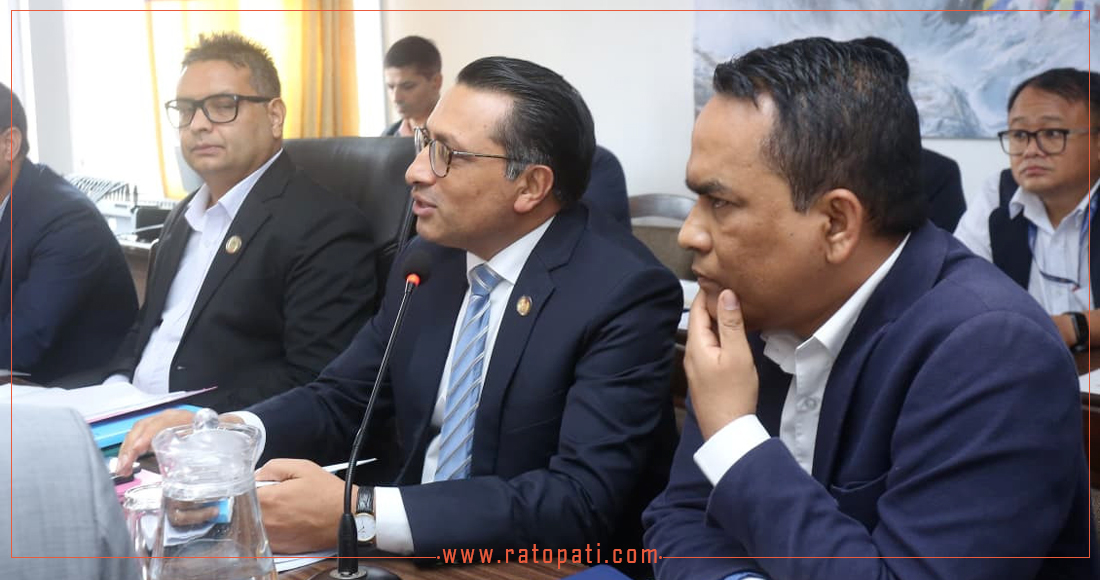
The government formed on the foundation of the GenZ movement, which demanded good governance and an end to corruption, is preparing to hand over power to the elected representatives after conducting the elections. But will the elections alone fulfill the essence of the GenZ movement? What issues should the political parties contesting the elections raise? Focusing on these very topics, Ratopati spoke with Bikash Rasaili 'Snehi', an activist of the GenZ movement and a candidate from the Progressive Democratic Party (ProloPa) for Chitwan Constituency No. 1 in the House of Representatives election. Here is the edited excerpt of the interview (the full version can be watched in the video):
The country's politics took a new turn after that historic GenZ movement on Bhadra 23 and 24. An interim government was formed under the leadership of Sushila Karki, and the country is now on the verge of elections. As a leader, can you tell us why and how that movement was actually possible?
The GenZ movement was not just a small spark. It was a huge explosion of frustration that had been suppressed in Nepali society for decades. We have been saying on various platforms that this movement was built on the foundation of dreams shown by all transformative and revolutionary movements so far, but which were never fulfilled by the leaders.
In 2052 BS, when the Maoists started the People's War, they gave slogans of free education, health, and an end to ethnic discrimination for every citizen. The Madhes movement raised issues of oppression and identity. The Tharuhat movement, the identity-based movements—all these gave hope to the citizens. But tragically, once the leaders of those movements reached power, they forgot the basic needs of the people. When people's hope dies and trust breaks, a deep sense of despair is born from there. The incident of Bhadra 23 was the result of that despair. This generation did not want to say 'wait and see'; it intervened directly.
There were many allegations that external forces infiltrated and 'hijacked' this movement. How much truth is there to this?
Every movement in the world has a certain character. The movement is spontaneous in itself, but both internal and external factors can be active behind it. When internal factors (such as poor governance, corruption, and unemployment) reach their peak, it is natural for external forces to seek or try to play their own interests.
In Nepal's history, whether it was the revolution of 2007 BS or the movement of 2062/63 BS, there was external influence somewhere. In the GenZ movement too, centers of power tried to turn the atmosphere in their favor. But conscious youth like us gave it the right leadership. We saved the movement from becoming anarchic and did not let its essence die. The real agenda of a movement does not die just because someone tries to 'hijack' it, provided the leadership is conscious. We succeeded in bringing this movement to a definite conclusion (government and elections).
Now that the elections have been announced, a narrative is being created that the GenZ movement is over. Was this movement only for holding elections?
This is a completely wrong understanding. Elections are just a constitutional process; they are not the end of the movement. As long as the livelihood issues of the citizens are not resolved, as long as economic prosperity does not reach every home, this movement will not end.
The movement has opened a closed door. The remaining work must be done through legal, parliamentary, and administrative processes. We are now in the electoral arena to complete that process. The movement is not only on the streets; it is in ideology, in the agenda. Now, through elections, we are trying to institutionalize that very ideology. As long as sources of despair remain in society, such movements will continue to occur in new forms.
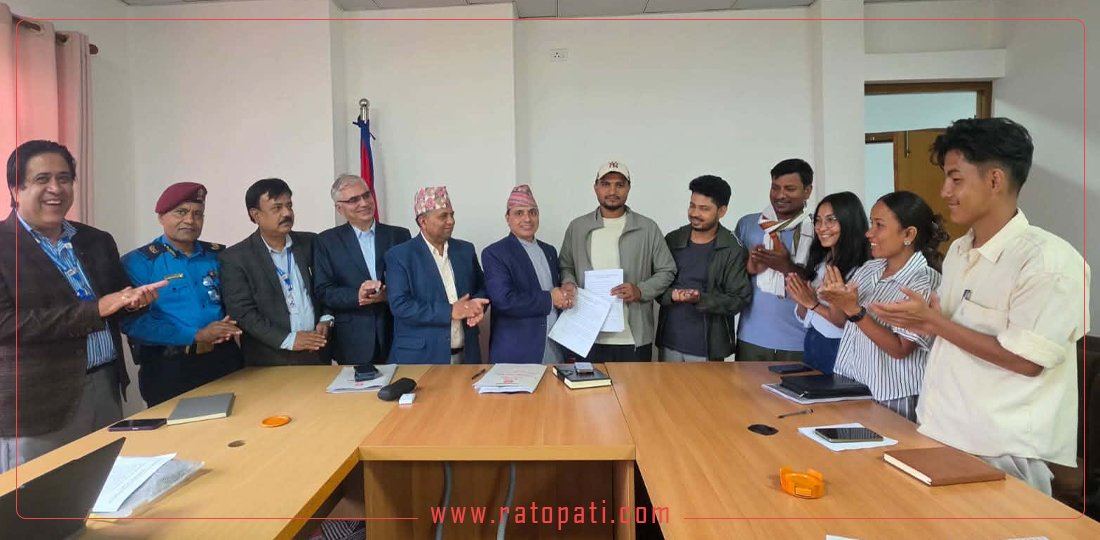
You had a 10-point agreement with the government. But the major and old political parties do not seem to give it much importance now?
If any political party or force ignores the public sentiment of Bhadra 23 and 24, it will have to pay a heavy price. It is their weakness not to understand the psychology of this society. We have clearly warned the parties. If you throw our 10-point agreement into the dustbin, the streets may heat up again. This is also a fight for generational change. They need to understand that the country cannot run on the old track anymore.
The parties are currently writing their manifestos. In your opinion, what issues should be prioritized in the election manifesto?
The 'manifesto' cannot just be a bundle of empty talk. It must have a concrete action plan for ending corruption. There must be clear frameworks for good governance and transparency. Most importantly, there must be a radical change in Nepal's economic structure.
We have changed the political system so far, but we have failed to change the economic and production system. The production system today is almost the same as it was in 2007 BS. Our consumption and distribution systems are very weak and traditional. The manifesto must clearly outline what the economic and governance structure of Nepal will look like in the next 10 years. Eighteen to twenty years of parliamentary practice is not enough; a change in the fundamental structure of the state is now being sought.
You are a candidate from Chitwan Constituency No. 1. This geography has a long history of major and old powers. How will you win the trust of the people there as a new youth?
I am a son of that geography, an ordinary elder brother and son. I grew up playing in the dust there, and I am someone who studied in government schools there. My strength is my ground reality.
The citizens of Chitwan-1 have always been revolutionary and change-loving. They have always supported new and progressive ideas. But tragically, those who won never understood the real problems of that geography. They became 'VIPs,' and the distance between them and the people grew. I have come to erase that distance. No one needs an appointment to meet me. I am always available at the tea stall, in the hospital queue, or in the farmers' fields.
What are the main local problems there that you wish to raise in parliament?
The problems there are numerous. First, there is the problem of education and unemployment. Why are our youth forced to go abroad? I myself am someone who returned from foreign employment; I know the pain of not getting opportunities in one's own country.
Second, the health sector is in a terrible state. For even a simple treatment, the citizens of Chitwan are forced to go to expensive private hospitals in Bharatpur and pay exorbitant fees. Two years ago, my own grandmother lost her life because she could not get treatment; I have not forgotten that pain.
Third, there are farmers' problems. Chitwan-1 is a hub for vegetables, bananas, milk, and poultry. But the farmers here do not get fair prices; middlemen are reaping the benefits. The conflict between the national park and human settlements is another major problem. The problems of the landless and the landless remain as they are. Concrete work has not been done for the cultural and economic upliftment of the Chepang and Tharu communities. I have entered the electoral field to find solutions to all these issues.
Your competitors are considered quite 'heavyweights.' How will you compete against individuals like Hari Dhakal, Rajendra Burlakoti, and Dawa Dorje Lama?
They are the age of my grandfather and great-uncle; I respect them. But in politics, age and experience are not the only big things; vision and delivery are the main things. The public has already seen what they did in their time.
The current generation is looking for a representative who walks with them. Who speaks their language. The public is fed up with the culture where one has to exert power in ten places and talk through a PA to meet big leaders. I don't need any fanfare or a PA. I want to be a representative who is directly accessible to the people. This time, the public is in the mood to change not just the 'character' but also the 'tendency.'
Nepal's electoral system is very expensive. How can a common youth like you fight against the power of money?
This is the biggest challenge. Nepal's electoral system has been made so corrupt and expensive that an honest person should be afraid even to think of contesting an election. Big parties spend immense wealth, hold feasts, and try to buy votes with money.
We are in the field with a kind of 'stubborn foolishness' against this. We do not have money, but we have ideology and the trust of the people. We are making the people understand that the five thousand rupees or one meal of meat someone gives today will make your next five years dark. We have come to sell ideas, not money. We are confident that the conscious citizens of Chitwan will not be sold out this time.
You see flaws in Nepal's administrative and judicial structure; could you clarify this a bit?
Our administrative structure is based on the Act of 2027 BS. In today's age of technology, administration cannot run on a 50-year-old system. Look at the judicial system; the Panchayat-era mentality and delays are still the same. A poor person has to wait for years and spend their assets to get justice.
Look at the education system; education from Britain was brought to India, and Indian education was imposed on Nepal. There is no place for our own indigenous knowledge and traditional education. The bureaucracy is equally traditional. Nothing will change just by changing the characters unless all these structures are changed. We want an 'overhauling' (restructuring) of all these components of the state.
Your party (ProloPa) has an alliance with CPN-UML in some places. But you have been calling UML regressive and opposed to the GenZ movement. Isn't this a contradiction?
We are having a very big rebellion and debate within the party on this issue. The party might have formed an alliance in some places citing geographical necessity, but I am not in favor of it in principle. An alliance with the force that suppressed our movement yesterday, called us 'foreign agents' and 'anarchists,' is not accepted by my personal and political ethics.
I have not entered politics to make any single leader win. I have come to change the system and the situation of this country. We have made it clear within the party as well. The alliance with those who do not understand the essence of change will not last long.
What kind of government should the country get after the Falgun 21 elections, and what will be your role?
The next government should not just be a mishmash of coalitions. It should get a clear majority and be able to work without worry for five years. We envision a government that creates an environment for the 8 million youth who have gone abroad to return home. A government that values the sweat of the farmers and ensures that no one dies due to lack of treatment in hospitals when they fall ill.
My role will be that of a conscious watchdog in the parliament. I will not just talk about the development of my constituency; I will play an interventionist role in lawmaking that changes the overall state structure. We are the generation that shows results by working, not by talking.
What do you want to say to the general voters, especially the GenZ generation?
I want to tell everyone this: do not forget the sacrifice of Bhadra 23 and 24. The blood of 76 martyrs and the dreams of thousands of injured are in your hands. This time, casting a vote is not just stamping a symbol; it is deciding the future of yourself and your descendants.
Not everything new is good, and not everything old is bad. Look at the background and ideology of the candidate. We have to give this country a new direction.
This specific news has been automatically translated by AI. As a result, there may be some inaccuracies or language errors.