Human Rights Commission Probe Panel on Recent Protests to Submit Report Within a Week
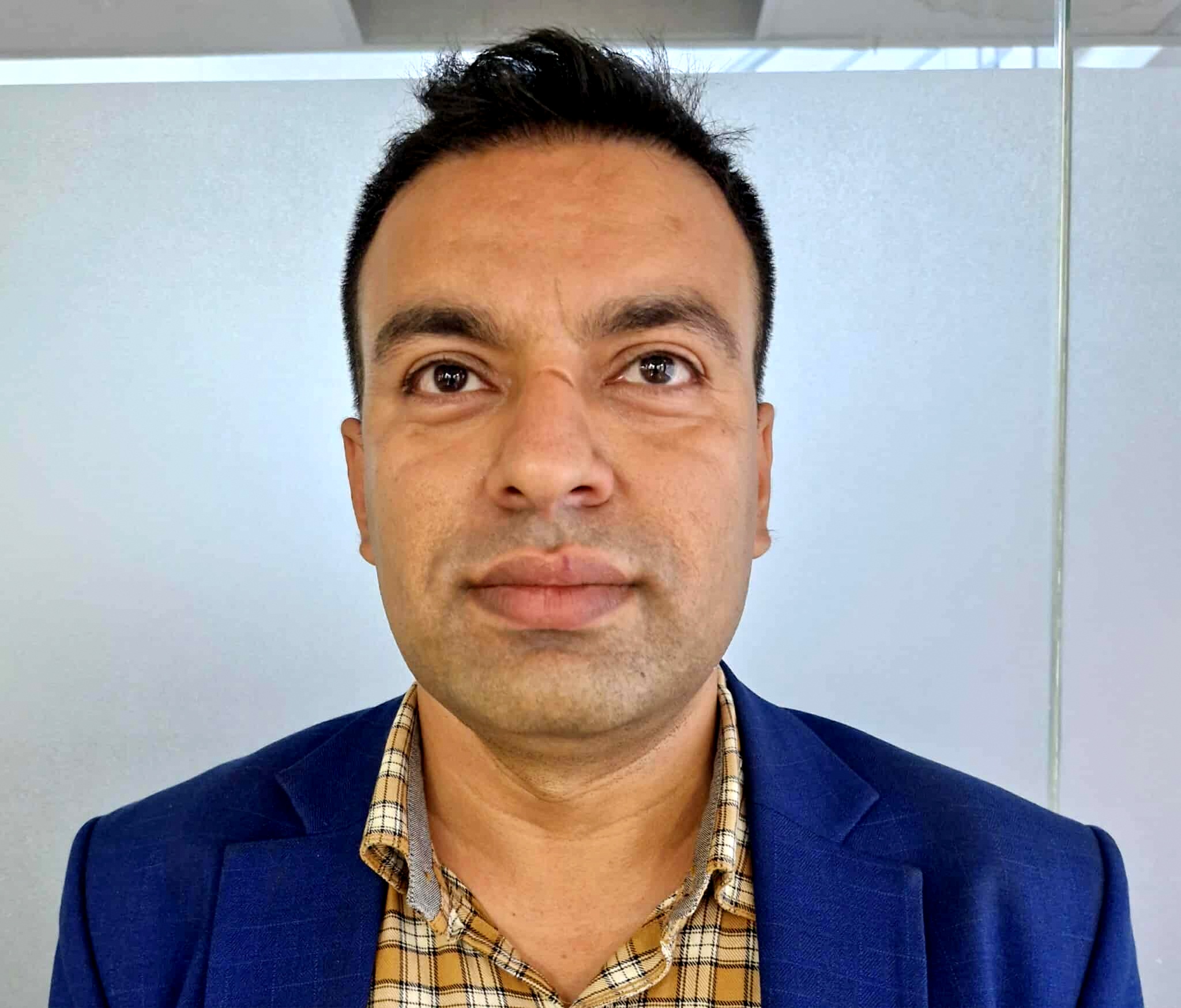

Kathmandu. The investigation committee formed by the Human Rights Commission to probe the crackdown and damages resulting from the 'Genji' protests on Bhadra 23 and 24 is set to submit its report within a week. Although the commission's investigation committee completed testimonies a month ago, it has yet to finalize the report.
The Commission had initiated the investigation by forming a committee under the convenorship of Commission member Dr. Lily Thapa on the very day of the 'Genji' protest. On Bhadra 24, the Commission issued a press release announcing the formation of the investigation team, demanding an end to extrajudicial killings in the name of law and order.
The Commission's statement that day read, 'It cannot be accepted in any way that the responsible officials give unpolitical statements and security personnel use excessive force, leading to the killing of innocent children and youth, instead of the government addressing the dissenting voices raised by the new generation in a timely manner.'
The Commission's preliminary monitoring indicated that such incidents seriously violate the fundamental rights guaranteed by the Constitution of Nepal and the human rights ensured by international human rights law.
After forming the investigation committee, the Commission took statements from the then Prime Minister KP Sharma Oli, the then Home Minister Ramesh Lekhak, heads of security agencies, and Kathmandu Metropolitan City's then Mayor Balendra Shah (Balen), among others, regarding the crackdown during the 'Genji' protests on Bhadra 23 and 24.
The committee has already taken statements from the then Chief District Officer of Kathmandu, the Home Secretary, and police in-charges who commanded during the protests, using various questionnaires. The investigation committee stated that it summoned everyone to the Commission's office for testimony.
Dr. Thapa, Chairperson of the Commission's investigation committee, informed that the committee has started the report writing process after completing the testimonies. 'We are finalizing the report writing process,' Dr. Thapa told Ratopati, 'It took a long time because detailed investigation was required; we will submit the report within the next week.'
High-Level Investigation Commission's Work Incomplete
The high-level investigation commission, formed by the Government of Nepal under the chairmanship of former Justice Gauribahadur Karki to investigate the crackdown and destruction that occurred on Bhadra 23 and 24, has still not fully completed its report writing. After the government extended the deadline twice, the decision was made on Magh 26 to extend the deadline again for another 25 days. Due to the inaction of the investigation commission, the report writing has not been finalized.
The Commission completed the testimony process after receiving a written statement from former Prime Minister KP Sharma Oli at the last moment. The Commission had already collected details and other data related to the 'Genji' protest. After taking statements from lower-level security officials, the Commission took statements from the then Kathmandu Police Chief, the Metropolitan Police Office, and high-ranking officials at the Police Headquarters.
The inquiry commission began its work on Ashoj 8, 2082. The three-month deadline expired on Poush 9. As the work was not completed within this period, the deadline was extended for another month as per the cabinet decision. After the first extension expired on Magh 8, it was further extended for two weeks. At the time of the last extension, 20 percent of the work remained. However, since the work was not completed even at the last moment, the deadline was extended for a third time.
The Commission completed the testimony process after receiving a written statement from former Prime Minister KP Sharma Oli at the last moment. The Commission had already collected details and other data related to the 'Genji' protest. After taking statements from lower-level security officials, the Commission took statements from the then Kathmandu Police Chief, the Metropolitan Police Office, and high-ranking officials at the Police Headquarters.
Furthermore, the Commission took statements from officials of the Armed Police Force and the National Investigation Department, as well as the Chief District Officer of Kathmandu, the then Home Secretary, and the Chief Secretary. Army Chief Ashok Raj Sigdel also appeared before the commission to give testimony along with his officers.
Political leaders have expressed anger as the Commission failed to submit its report even after completing testimonies and receiving two deadline extensions. Nepali Congress leader Arjun Narsingh KC strongly objected to the repeated extensions of the deadline for the commission formed to investigate the Bhadra 23 and 24 incidents. Calling it an attempt to render the commission 'orphaned' like previous commissions, he termed it 'another spectacle' of the state mechanism. Leader KC shared his views on social media, expressing concern that the old trend of forming commissions to investigate serious incidents in Nepal and then shelving their reports without implementation is being repeated.
Quoting historical context, leader KC said, 'A commission was formed under the chairmanship of Supreme Court Justice Janardanlal Mallick to investigate the repression and atrocities during the 2046 People's Movement. A commission was formed under the chairmanship of former Justice Krishna Jung Rayamajhi to investigate the brutality of the 2062-63 Movement. But the reports of both these commissions were shelved without even being made public.' He argued that these past precedents show that the state is more inclined to cover up incidents than to punish the culprits.
The inquiry commission formed to investigate the repression and physical structure damage during the 'Genji' protest, which resulted in 76 deaths, must submit a report with recommendations for action within the next month. The inquiry commission is also mandated to recommend action against those who played a major role in suppressing the protest and are found guilty.
Leader KC stated that the re-extension of the commission's deadline for another 25 days regarding the Bhadra 23 and 24 incidents reflects the state's lethargy and lack of political will. According to him, this delay is not just a means to pass time but an insult to the victims awaiting justice and the conscious 'Genji' generation's movement. KC claimed that the current government's delay in the investigation will raise questions about its legal and political ownership in the future. 'It is certain that the future government will not take ownership of this, and a new committee will be formed, or the entire incident will become orphaned. This is very sad and regrettable,' KC said.
Reports of Previously Formed Inquiry Commissions Were Not Implemented, What Now?
The inquiry commission formed to investigate the repression and physical structure damage during the 'Genji' protest, which resulted in 76 deaths, must submit a report with recommendations for action within the next month. The inquiry commission is also mandated to recommend action against those who played a major role in suppressing the protest and are found guilty.
Similar to the 'Genji' protest, the government has formed inquiry commissions for various incidents in the past. However, the reports of all inquiry commissions are not implemented. Following demands for action against those involved in suppressing the People's Movement, an inquiry commission was formed on Jestha 9, 2047, under the chairmanship of then Chief Justice Janardanlal Mallick. The commission started its work on Ashar 10, 2047. The commission members included then Justices Udayaraj Upadhyay and Indraraj Pandey.
The commission was given four tasks: to investigate the loss of life and property during the People's Movement from Falgun 7 to Chaitra end, 2046; to determine whose fault led to the loss of life and property; and to submit a report determining what action the government should take during the People's Movement.
After six months of study, the commission submitted its report, but that report has not been implemented to date. The report held former Prime Ministers Marichman Singh Shrestha and Lokendra Bahadur Chand, then Chairman of the Panchayat Policy and Investigation Committee Navraj Subedi, then State Ministers Kamal Thapa and Niranjan Thapa, leaders Pashupati Shamsher Rana and Sharad Singh Bhandari, among others, responsible for taking action against those involved in suppressing the movement following the restoration of democracy. However, the report was not implemented. Instead, those deemed guilty by the Mallick Commission repeatedly reached high positions in the country and participated in governance.
The second People's Movement took place in 2062/063. 25 people died and over four thousand were injured during the movement. Alleging repression during the movement, an inquiry commission was formed under the chairmanship of former Supreme Court Justice Krishna Jung Rayamajhi. Members included former Chairman of the Federation of Nepali Journalists Harihar Birahi, former Vice-Chairman of the Nepal Bar Association Ramprasad Shrestha, Advocate Ramkumar Shrestha, and then General Secretary of the Nepal Medical Association Dr. Kiran Shrestha.
The report, prepared by the commission after seven months of work, was submitted to the government on Kartik 30, 2063, but that report could not be implemented. The report suggested enacting laws to take action against 31 individuals who were in government from Magh 19, 2061, until the end of Chaitra of that year, including Deputy Prime Ministers and Assistant Ministers.
Those involved in suppressing the People's Movement were later given political responsibilities. Lokman Singh Karki, who was accused of playing a role in suppressing the People's Movement, was removed from his post as Chief of the Commission for the Investigation of Abuse of Authority due to incompetence, a process in which the inquiry commission's report also played a role. Among the investigations into repression and human rights violations during the People's Movement, some have yielded positive results, while others have been shelved.
What are the Mandates Given to the Commission?
As per the mandate given to the commission, the deadline was extended for the third time after the work could not be completed in three months. According to the mandate given to the commission, the responsibility was to investigate the physical and human losses that occurred during the protests in Kathmandu and various parts of the country on Bhadra 23 and 24. The government's published mandate mentioned the duty to investigate the cause of the incident and submit a report with confirmed opinions and suggestions.
The commission can direct the initiation of action against those found guilty after completing the investigation. There is a provision to summon any person for written submission, receive evidence, and request documents and copies from government offices and courts for the investigation. Section 4 of the Commission Act provides for searching premises and seizing items found if there is reason to believe that documents or evidence related to the subject of the inquiry are present.
The mandate also included receiving and analyzing information or complaints related to physical and human loss, and providing opinions for action. Furthermore, the commission was tasked with presenting measures and suggestions to be adopted to prevent the recurrence of such incidents in the future and presenting a clear action plan for the implementation of the suggestions. The commission was formed by the cabinet meeting on Ashoj 5, and it was given a deadline of three months from the date of commencement of work to submit the report.
The commission can direct the initiation of action against those found guilty after completing the investigation. There is a provision to summon any person for written submission, receive evidence, and request documents and copies from government offices and courts for the investigation. Section 4 of the Commission Act provides for searching premises and seizing items found if there is reason to believe that documents or evidence related to the subject of the inquiry are present.
The Act also states that the inquiry commission can 'exercise other powers in accordance with prevailing laws.' Under the use of other powers according to prevailing laws, the commission has the authority to impound passports and arrest any suspicious person.
However, inquiry commissions to date have not practiced arresting or detaining individuals. Following the 2062/063 People's Movement, the much-discussed Rayamajhi Commission summoned then King Gyanendra for testimony, but no coercive measures were taken against him.
This specific news has been automatically translated by AI. As a result, there may be some inaccuracies or language errors.