Nepal Communist Party Unveils Manifesto for Upcoming Elections, Pledging Governance Reform and Economic Growth


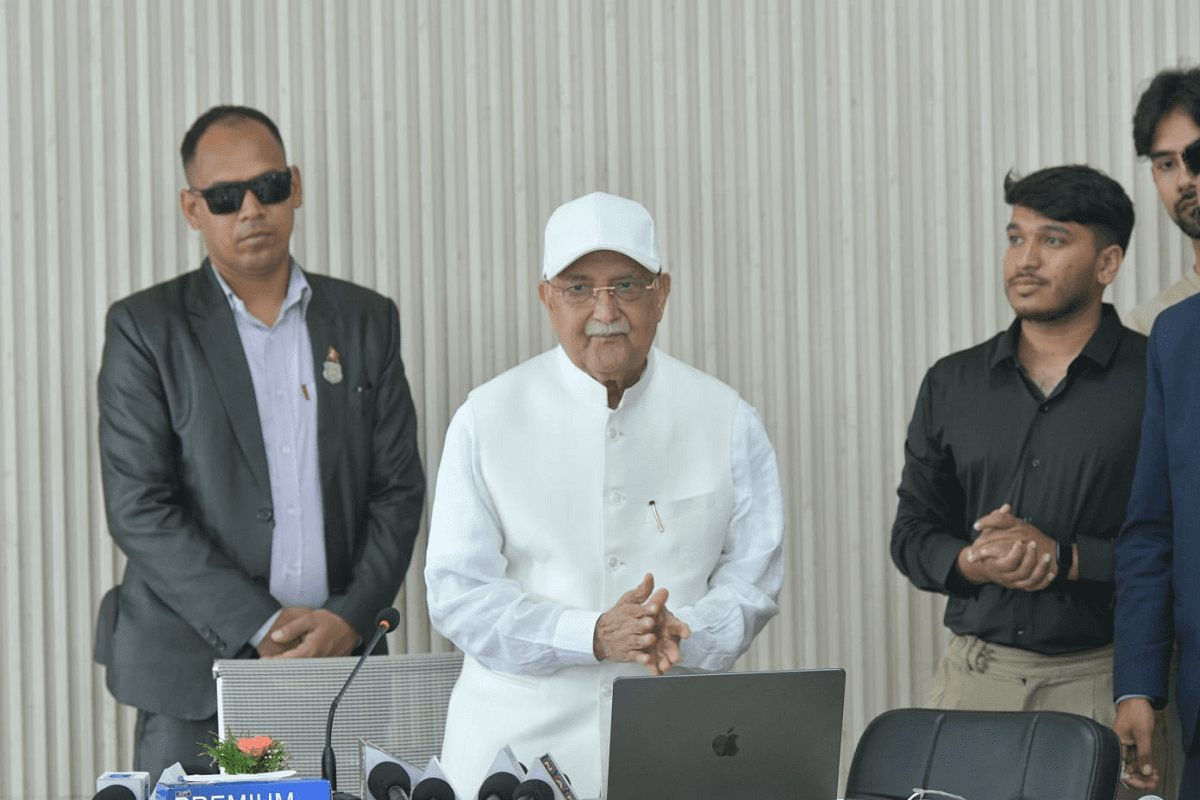
Kathmandu. The Nepal Communist Party (NCP) has publicly released its commitment paper for the House of Representatives elections scheduled for Falgun 21, 2082 BS.
Contesting under the 'Star' election symbol, the party presented its roadmap for building an independent and prosperous Nepal on Tuesday, under the main slogans of 'Good Governance and Preparation for Socialism through Employment' and 'Defense of Nationality and Democracy'.
The party claims leadership in past political changes and has resolved to transform the country's economic and social conditions. The commitment paper prioritizes political stability, corruption control, a new phase of economic reform, and prosperity with social justice.
Political Stability and Governance Structure Reform: The party has concluded that the current electoral system is expensive and promotes corruption, proposing extensive reforms. 'The governance structure and electoral system will be modified according to the aspirations of the Gen Z generation and the needs of the country,' the commitment paper states.
Under this, plans have been put forward to form a smaller cabinet, limit parliamentarians strictly to their legislative roles, and redistribute authority in line with the spirit of federalism.
Guarantee of Corruption Control and Good Governance: Making good governance its main starting point, the party has committed to forming a 'High-Level Asset Investigation Commission' with a one-year deadline to investigate the assets of all individuals who have held public office. It also pledges to nationalize the assets of the corrupt, integrate the Commission for the Investigation of Abuse of Authority (CIAA) and the Office of the Auditor General to form a powerful 'Lokpal' (Ombudsman), and make government services 'faceless and paperless' through digital administration.
Economic Reform: 10% Economic Growth and 500,000 Jobs: The party has set an ambitious target of achieving double-digit economic growth (above 10%) within the next five years. The plan is to reduce multidimensional poverty, currently at 20.15 percent, to 5 percent. It aims to create 500,000 jobs annually, turn 100,000 returning youths into entrepreneurs, and attract foreign investment into productive sectors.
Furthermore, strategies have been devised to encourage domestic industries by reducing production costs and minimizing the trade deficit.
Revolutionary Steps in Agriculture and Land Management: Declaring the next decade as the 'Decade of Agricultural Investment,' the party has put forward a plan to achieve self-sufficiency in major food grains within two years. With the resolve of a 'Hunger-Free Nepal,' commitments include farmer pensions, advance declaration of support prices, and guaranteed agricultural insurance. The commitment paper also mentions the pledge to distribute land ownership certificates (Lalpurja) to landless Dalits and squatters within two years, declaring Nepal free of squatters.
Free Healthcare, Quality Education, and Sports Development: The party's policy is to implement health services as a fundamental right, making them completely free. The NCP plans to enroll 100% of citizens in health insurance by BS 2088 and bring treatment for non-communicable diseases to the community level. In education, the concept of 'One Municipality, One Smart School' will be implemented, and appointments in universities will be based on merit, ending political favoritism. Considering sports as a basis for prosperity, the party commits to doubling prize money for athletes and constructing a 50,000-capacity memorial national stadium.
Infrastructure, Energy, and Tourism Development: The goal is to generate 15,000 MW of electricity within the next five years and increase per capita consumption to 750 kWh. Plans include expanding the East-West Highway to four lanes, building a metro rail in Kathmandu, and completing the Nijgadh International Airport within five years.
In tourism, the focus is on promoting 'Smart Tourism' and eco-tourism, developing Nepal as an international wedding and hill station hub.
Social Justice, Inclusivity, and Foreign Policy: The party is committed to amending the constitution to ensure proportional representation for Dalits, women, indigenous nationalities, Muslims, and marginalized communities, and launching a national campaign against caste-based untouchability.
Regarding foreign policy, the commitment paper states a commitment to strengthening non-alignment and resolving border disputes such as Kalapani, Lipulekh, and Limpiyadhura through diplomatic negotiations, keeping national interests paramount.
Political Stability and Governance Reform: The manifesto proposes radical changes in the form of governance to end political instability. Plans include modifying the governance structure to ensure checks and balances, limiting the cabinet size to 25 members, and focusing parliamentarians entirely on their legislative roles. Specifically, to ensure good governance, a powerful commission will be formed to investigate the assets of all individuals holding public office since 2046 BS, and a commitment to 'zero tolerance' for corruption is expressed. Furthermore, for the effective implementation of federalism, necessary laws will be enacted within one year, and 60% of the budget will be sent to provincial and local levels.
Social Justice, Education, and Health: Emphasizing the full implementation of fundamental rights guaranteed by the constitution in education and health, the party commits to transforming education and health from profit-making businesses into service-oriented sectors.
It mentions extending health insurance to 100% of citizens, with the state covering premiums for the poor and destitute, and arranging free treatment for non-communicable diseases.
In education, the concept of 'One Municipality, One Smart School' is planned, along with making universities free from political interference. Policies are also in place to ensure the rights of Dalits, women, indigenous groups, Madhesis, and marginalized communities, and to expand social security throughout the life cycle based on contributions.
This specific news has been automatically translated by AI. As a result, there may be some inaccuracies or language errors.