Nepal's History of Political Instability Explored Amidst Recent Unrest
Kathmandu. For three days from Bhadra (24-27) last year, Nepal experienced a state of statelessness for the first time in its history. A nationwide revolt erupted on Bhadra 24 following the government's severe crackdown, which resulted in the killing of 23 people during protests led by the Gen Z generation against corruption and mismanagement.
After enraged protestors set fire to national heritage sites including Singha Durbar, the Parliament building, and the Supreme Court, then-Prime Minister KP Sharma Oli resigned. However, the Nepali Army had to be deployed to bring the situation under control.
The situation normalized after President Ramchandra Paudel appointed former Chief Justice Sushila Karki as Prime Minister late on the night of Bhadra 27, mediated by Chief of Army Staff Ashok Raj Sigdel. Immediately upon taking office, PM Karki dissolved the House of Representatives and announced elections for Falgun 21. With only 24 days remaining until the election, the political circle does not seem entirely confident that a political resolution will be reached.
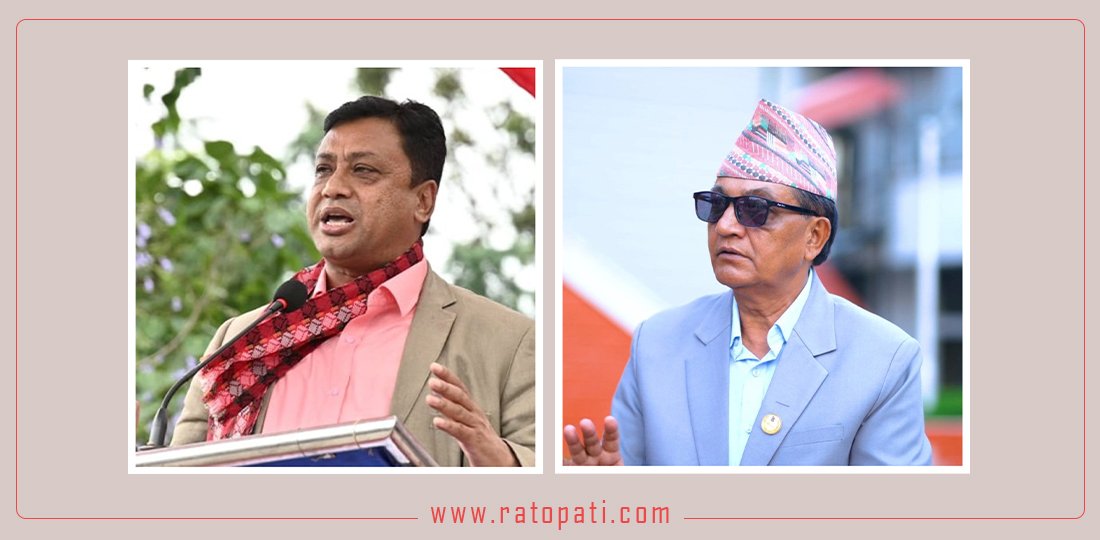
Historian and analyst Dr. Surendra KC argues that the party responsible for bringing instability must clarify the future roadmap.
‘The one who created the statelessness must bring a clear roadmap. The current government looks like a dummy for someone, KC tells RatoPati. ‘It seems the government is trying to create further instability rather than control the situation.’
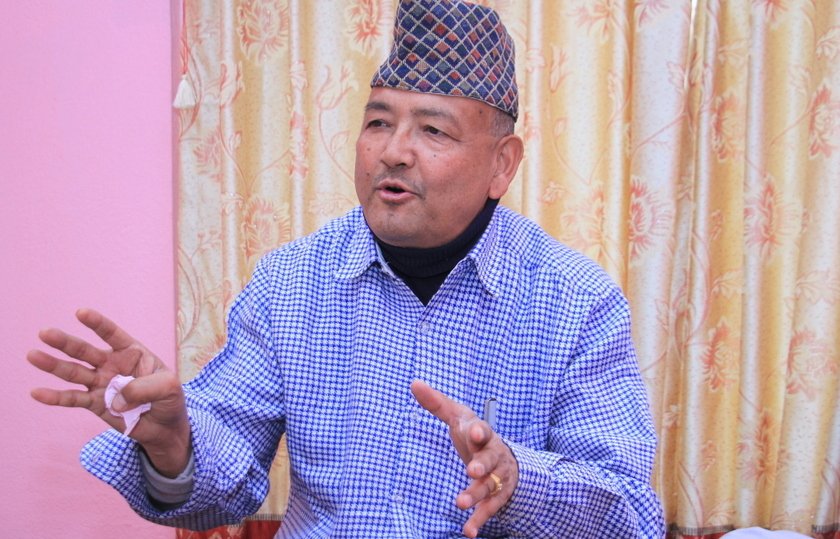
He notes that statelessness was observed for the first time during the Gen Z protests in Nepal's history. ‘This has never happened before. Being new is not enough; those who seek to run the state must be able to unite all factions,’ he says. ‘It depends on what the power equation looks like after the election.’
KC warns that if the next government fails to address sensitive geopolitics, a critical economy, and deteriorating social relations, the country could head towards further disaster.
A Chain of Political Vicious Cycles
Historians consider Bhimsen Thapa as the first Mukhtiyar, or Prime Minister. Thapa, who became Prime Minister in 1863 BS, governed for 32 years until 1894 BS. After the 104-year autocratic Rana regime fell on Falgun 7, 2007 BS, democracy was established.
Nepal's first general election, spanning 45 days from Falgun 7 to Chaitra 21, 2015 BS, was held for the first time. After the end of the absolute Rana regime in 2007 BS, King Tribhuvan announced that the country's governance would operate according to the constitution drafted by the people-elected Constituent Assembly. However, the election for the Constituent Assembly, as announced by Tribhuvan, did not take place. The election intended for the Constituent Assembly ultimately became a parliamentary election in 2015 BS. This was the first general election in Nepal based on universal adult suffrage. The Nepali Congress won a two-thirds majority, securing 74 out of 109 seats. On Jestha 13, 2016 BS, Congress President BP Koirala became the first popularly elected Prime Minister.
Ten elections have been held in Nepal from 2015 BS to 2079 BS. Among these, there were two National Panchayat elections, two mid-term elections, two Constituent Assembly elections, and four periodic elections. Elections were held in 2015, 2038, 2043, 2048, 2051, 2056, 2064, 2070, 2074, and 2079 BS.
However, in the 64 years since parliamentary elections began, no government has completed its full term. On Poush 1, 2017 BS, King Mahendra staged a coup, dismissing the popularly elected government led by BP Koirala. He dissolved parliament and banned political parties. Mahendra imposed the autocratic Panchayat system through his own initiative. It is seen that Nepal fell into a vicious cycle of instability from that very point.
After Mahendra's death in 2028 BS, King Birendra conducted a referendum in 2037 BS to reform the Panchayat system according to public aspirations. The Panchayat side won the majority in the referendum. Under the name of the reformed Panchayat system, Birendra held National Panchayat elections on Baisakh 27, 2038 BS, and Baisakh 29, 2043 BS. These two elections did not provide a solution. The Congress and Leftists jointly announced a United People's Movement against the autocratic system starting from Falgun 7, 2046 BS. On Chaitra 26, 2046 BS, the 30-year Panchayat system ended, and democracy was restored. The Constitution of the Kingdom of Nepal was implemented on Kartik 23, 2047 BS. The King was bound within the constitutional framework.
A general election was held on Baisakh 29, 2048 BS. In that election, Congress won 110 seats, securing a majority. UML sat on the strong opposition bench, winning 69 seats. It was believed that with the restoration of democracy, the country would establish economic prosperity along with social justice. However, due to power struggles between Girija Prasad Koirala, Ganesh Man Singh, and Krishna Prasad Bhattarai within the ruling Congress party, parliament was dissolved in 2051 BS.
Prime Minister Girija Prasad dissolved parliament and announced mid-term elections after the Ganesh Man-Kishunji faction defeated the government's motion of thanks presented in parliament.
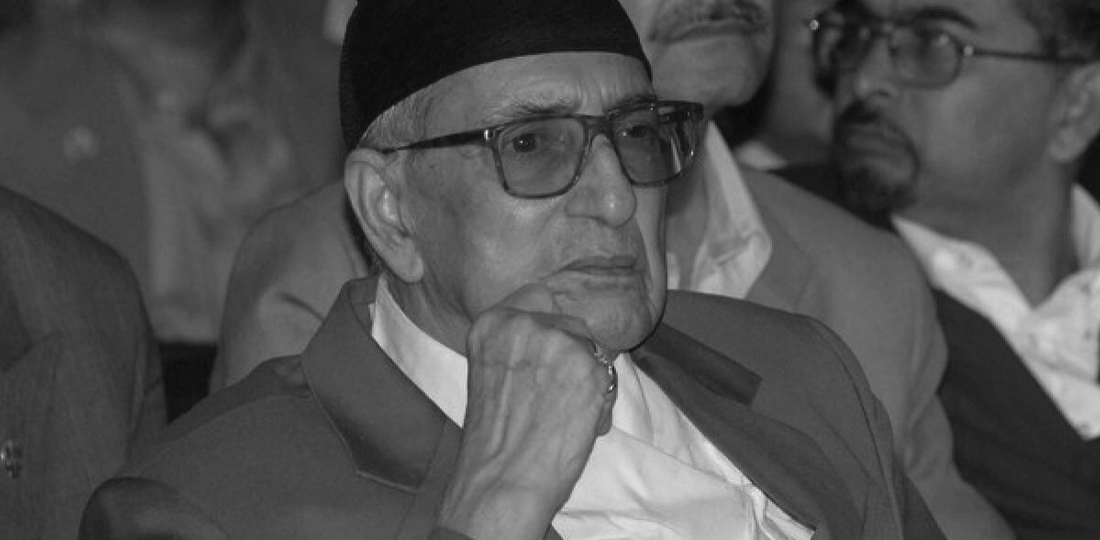
In the election, UML emerged as the leading party, winning 88 seats, and formed a minority government. Congress, with 83 seats, remained in opposition. The nine-month government led by Chairman Manmohan Adhikari implemented popular policies favoring social justice. However, the opposition Congress overthrew Adhikari's government and formed a coalition with RPP, the third-largest party in parliament.
The government led by Sher Bahadur Deuba, formed on Bhadra 27, 2052 BS, was accused of increasing corruption and mismanagement by introducing vices such as MP trading and the Pajero scandal. The Deuba government is considered responsible for plunging parliamentary democracy into a vicious cycle of political instability after the restoration of democracy.
Professor Lokraj Baral states that political instability increased because no party secured a majority after the mid-term election announcement.
‘No party got a majority in the mid-term election after the dissolution of parliament. After Manmohan's minority government fell, Sher Bahadur Deuba formed a coalition government with Lokendra Bahadur Chand of RPP. This brought instability to politics,’ Baral says. ‘In the 2056 BS election, Girija Babu moved forward by proposing Krishna Prasad Bhattarai as Prime Minister again. They won the election, and Krishna Prasad became Prime Minister. But Girija could not tolerate that either. He overthrew Kishunji's government and formed his own government.’
_JPoryT35wX.jpg)
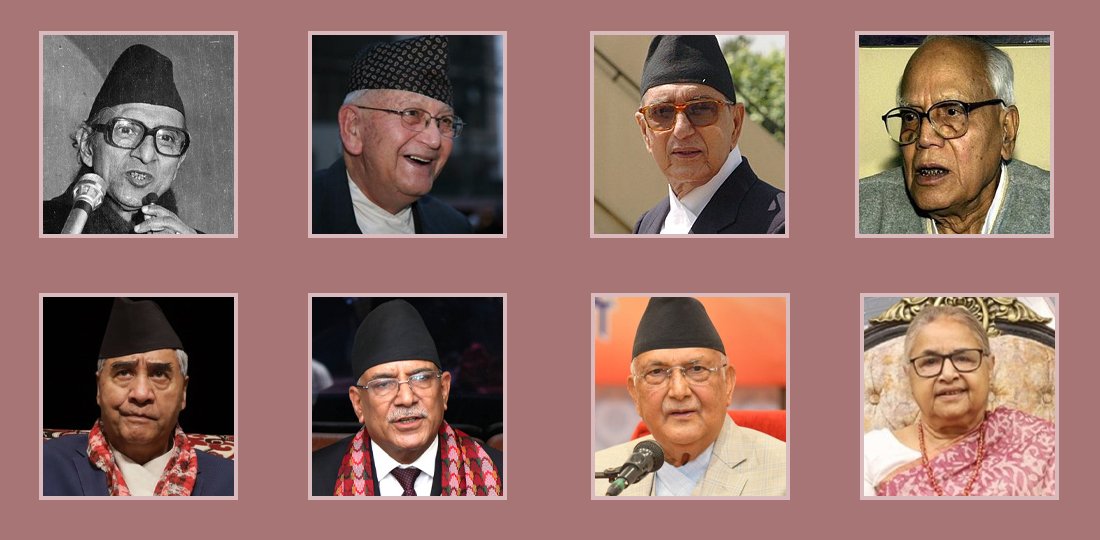
Baral points out that the main problem to date has been the leaders' personality clashes and self-centered politics. He concludes that the current situation arose because all leaders from Manmohan Adhikari (who became PM after 2048 BS) to Girija Prasad, Sher Bahadur Deuba, Prachanda, and KP Sharma Oli were engrossed in self-centered and self-serving politics, leading to internal party conflicts. Baral states that this personality-centric politics dominating the scene led to the current situation.
Another professor, Krishna Pokhrel, states that while every movement seeks change, political instability arises when those in power fail to perform according to public expectations.
‘The problem was that corruption became institutionalized. State exploitation reached its peak,’ Pokhrel says. ‘They even made Nepalis Bhutanese refugees and took commissions from it. Policy-level corruption, including Giri Bandhu, Lalita Niwas, Patanjali, Yati Holdings, etc., crossed all limits. This created extreme public frustration. The Gen Z revolt was the result of that.’
Pokhrel warns that if the government formed after the upcoming election also fails to end the extreme frustration, there will be a ‘Revolution of Rising Frustration.’
11 Elections, 49 Governments in 67 Years
After the government led by BP Koirala, formed from the general election of 2015 BS, was deposed, Nepal has seen 49 governments formed across the Panchayat era, multi-party system, and the Federal Democratic Republic system. During the periods from Poush 1, 2017 BS to Chaitra 20, Chaitra 31, 2026 BS to Baisakh 1, 2028 BS, Ashwin 18, 2059 BS to Ashwin 25, 2059 BS, and from Magh 19, 2061 BS to Baisakh 11, 2063 BS, the King ruled directly.
The CPN (Maoist) launched an armed insurgency against the royal regime in 2052 BS. After the entire lineage of King Birendra was wiped out in the Royal Palace Massacre on Jestha 19, 2058 BS, Gyanendra, who became King, took power into his own hands on Magh 19, 2061 BS, and ruled directly. After Gyanendra staged a coup and banned political parties, a 12-point agreement was reached between the seven parliamentary parties and the rebel Maoists on Mangsir 7, 2062 BS. Based on this agreement, the People's Movement of 2062/63 overthrew the monarchy.
The Federal Democratic Republic was established in the country on Jestha 15, 2065 BS. However, the republican government also encouraged government formation/dissolution, corruption, and mismanagement, reminiscent of the monarchical era, leading to public dissatisfaction exploding into the Gen Z revolt.
Who Served as Prime Minister and For How Long?
BP Koirala: Jestha 13, 2016 BS to Poush 1, 2017 BS
Panchayat Era
Mahendra Bir Bikram Shah: Poush 1, 2017 BS to Chaitra 20, 2019 BS
Tulsi Giri: Chaitra 20, 2019 BS to Poush 8, 2020 BS
Surya Bahadur Thapa: Poush 8, 2020 BS to Falgun 14, 2020 BS
Tulsi Giri: Falgun 14, 2020 BS to Magh 13, 2021 BS
Surya Bahadur Thapa: Magh 13, 2021 BS to Chaitra 25, 2025 BS
Kirtinidhi Bista: Chaitra 25, 2025 BS to Chaitra 31, 2026 BS
Gehendra Raj Bhandari (First Minister): Chaitra 31, 2026 BS to Baisakh 1, 2028 BS
Kirtinidhi Bista: Baisakh 1, 2028 BS to Saun 1, 2030 BS
Nagendra Prasad Rijal: Saun 1, 2030 BS to Mansir 15, 2032 BS
Tulsi Giri: Mansir 15, 2032 BS to Bhadra 27, 2034 BS
Kirtinidhi Bista: Bhadra 27, 2034 BS to Bhadra 16, 2036 BS
Surya Bahadur Thapa: Bhadra 16, 2036 BS to Asar 29, 2040 BS
Lokendra Bahadur Chand: Asar 29, 2040 BS to Chaitra 7, 2042 BS
Nagendra Prasad Rijal: Chaitra 7, 2042 BS to Asar 2, 2043 BS
Marichman Singh: Asar 2, 2043 BS to Chaitra 26, 2046 BS
Lokendra Bahadur Chand: Chaitra 26, 2046 BS to Baisakh 6, 2047 BS
After Restoration of Democracy
Krishna Prasad Bhattarai: Baisakh 6, 2047 BS to Jestha 12, 2048 BS
Girija Prasad Koirala: Baisakh 12, 2048 BS to Mansir 14, 2051 BS
Manmohan Adhikari: Mansir 14, 2051 BS to Bhadra 27, 2052 BS
Sher Bahadur Deuba: Bhadra 27, 2052 BS to Falgun 29, 2053 BS
Lokendra Bahadur Chand: Falgun 29, 2053 BS to Ashwin 21, 2054 BS
Surya Bahadur Thapa: Ashwin 21, 2054 BS to Baisakh 2, 2055 BS
Girija Prasad Koirala: Baisakh 2, 2055 BS to Jestha 17, 2056 BS
Krishna Prasad Bhattarai: Jestha 17, 2056 BS to Chaitra 9, 2056 BS
Girija Prasad Koirala: Chaitra 9, 2056 BS to Saun 11, 2058 BS
Sher Bahadur Deuba: Saun 11, 2058 BS to Ashwin 18, 2059 BS
Gyanendra Bir Bikram Shah: Ashwin 18, 2059 BS to Ashwin 25, 2059 BS
Lokendra Bahadur Chand: Ashwin 25, 2059 BS to Jestha 22, 2060 BS
Surya Bahadur Thapa: Jestha 22, 2060 BS to Jestha 21, 2061 BS
Sher Bahadur Deuba: Jestha 21, 2061 BS to Magh 19, 2061 BS
Gyanendra Bir Bikram Shah: Magh 19, 2061 BS to Baisakh 12, 2063 BS
Republic Era
Girija Prasad Koirala: Baisakh 12, 2063 BS to Jestha 15, 2065 BS
Girija Prasad Koirala: Jestha 15, 2065 BS to Bhadra 2, 2065 BS
Pushpa Kamal Dahal ‘Prachanda’: Bhadra 2, 2065 BS to Jestha 11, 2066 BS
Madhav Kumar Nepal: Jestha 11, 2066 BS to Magh 23, 2067 BS
Jhalanath Khanal: Magh 23, 2067 BS to Bhadra 12, 2068 BS
Dr. Baburam Bhattarai: Bhadra 12, 2068 BS to Chaitra 1, 2069 BS
Khil Raj Regmi: Chaitra 1, 2069 BS to Magh 28, 2070 BS
Sushil Koirala: Magh 28, 2070 BS to Ashwin 25, 2072 BS
KP Sharma Oli: Ashwin 25, 2072 BS to Srawan 20, 2073 BS
Pushpa Kamal Dahal ‘Prachanda’: Srawan 20, 2073 BS to Jestha 24, 2074 BS
Sher Bahadur Deuba: Jestha 24, 2074 BS to Falgun 3, 2074 BS
KP Sharma Oli: Falgun 3, 2074 BS to Baisakh 30, 2078 BS
KP Sharma Oli: Baisakh 30, 2078 BS to Asar 29, 2078 BS
Sher Bahadur Deuba: Srawan 29, 2078 BS to Poush 10, 2079 BS
Pushpa Kamal Dahal ‘Prachanda’: Poush 10, 2079 BS to Asar 30, 2081 BS
KP Sharma Oli: Asar 30, 2081 BS to Bhadra 24, 2082 BS
Sushila Karki: Bhadra 27, 2082 BS to present
This specific news has been automatically translated by AI. As a result, there may be some inaccuracies or language errors.