Nepali Congress Factional Dispute Reaches Supreme Court Over Leadership Claim


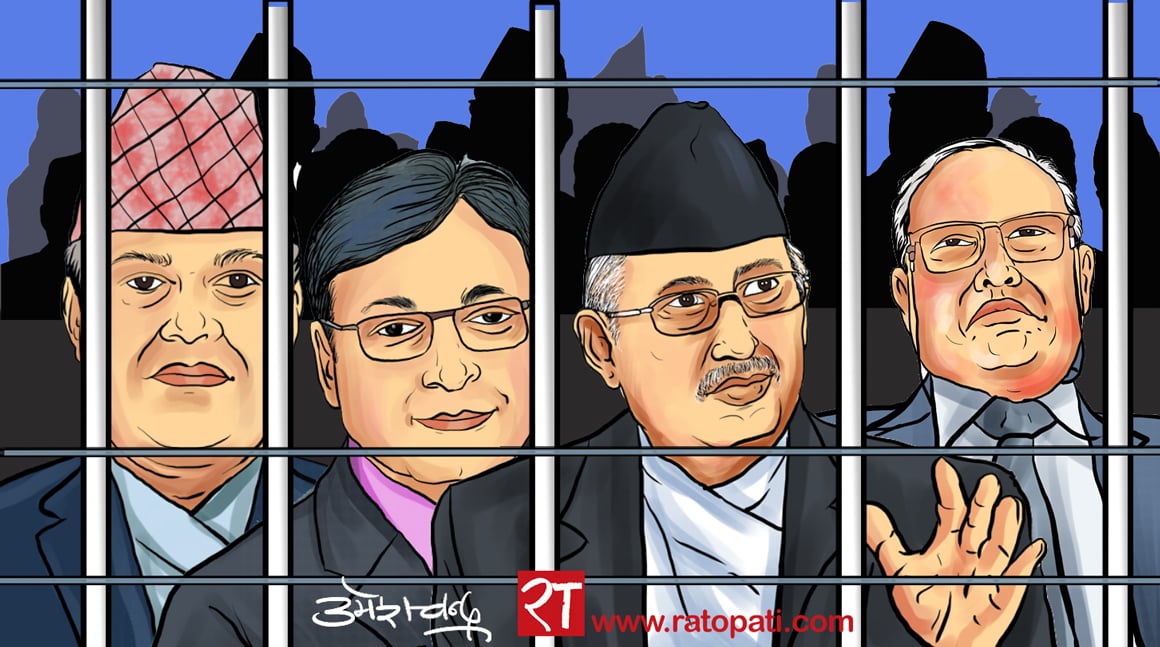
Kathmandu. Former President Sher Bahadur Deuba and Acting President Purnabahadur Khadka filed a writ petition at the Supreme Court on Magh 4, demanding that the official recognition of the Nepali Congress be granted to them.
The dispute began after Gagan Thapa and Bishwaprakash Sharma, elected as General Secretaries in the 14th General Convention, organized a special general convention from Poush 27 to 30 in Bhrikutimandap, Kathmandu, without the decision of the Central Working Committee, leading to the selection of a new leadership. The matter proceeded through the Election Commission and eventually reached the Supreme Court.
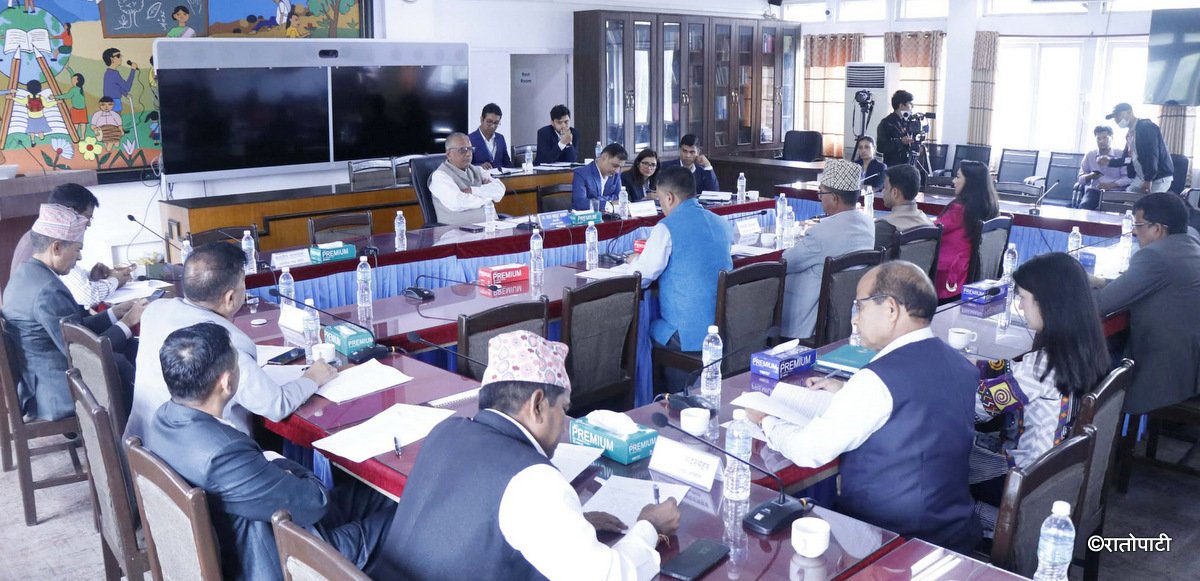
The special general convention, held amidst disagreement between the faction of President Deuba and the faction led by Dr. Shekhar Koirala, selected a new working committee under the leadership of Thapa on the morning of Magh 1. Claiming they had selected the new working committee, Thapa and Sharma approached the Election Commission on the 2nd. The Deuba and Dr. Koirala factions also went to the Commission, arguing that the special general convention conducted by Thapa was not legitimate. The Commission, by majority decision on Magh 2, decided to update the working committee according to the special general convention conducted by Thapa. Dissatisfied with that decision, Deuba and Khadka approached the Supreme Court on Magh 4, naming the Election Commission, Thapa, and Sharma as respondents.
Hearing the writ on Magh 6, the bench of Supreme Court Justice Sunil Pokharel ordered the respondents—the Election Commission, Thapa, and Sharma—to submit a response within 15 days of receiving the order, excluding travel time. The bench ordered the respondents to submit their written response either in person or through a legal counsel or representative.
Nineteen days after the bench issued the order, Acting Chief Secretary of the Congress Central Office, Krishna Prasad Dulal, collected the summons at the Supreme Court. The Supreme Court administration informed that the Election Commission had already received the summons previously.
Now, the respondents must submit their written response to the court within 15 days of receiving the summons. The respondents can request an extension of the travel time beyond the 15 days by showing special circumstances.
Even without an extension of the travel time, the 15-day period will conclude, and the written response will reach the Supreme Court only on Falgun 11. After the written response is submitted, the Supreme Court will determine whether the writ meets the procedural requirements. Following this, the process of setting a hearing date or case listing will begin. The law does not specify how many days after receiving the response a hearing date must be set.
The House of Representatives election is scheduled for Falgun 21. By the time the response is submitted to the Supreme Court and its procedural completeness is examined, the election date will be approaching. Since this is a case related to a political party, the Supreme Court administration will have to decide whether to list the case before or after the election.
This specific news has been automatically translated by AI. As a result, there may be some inaccuracies or language errors.